
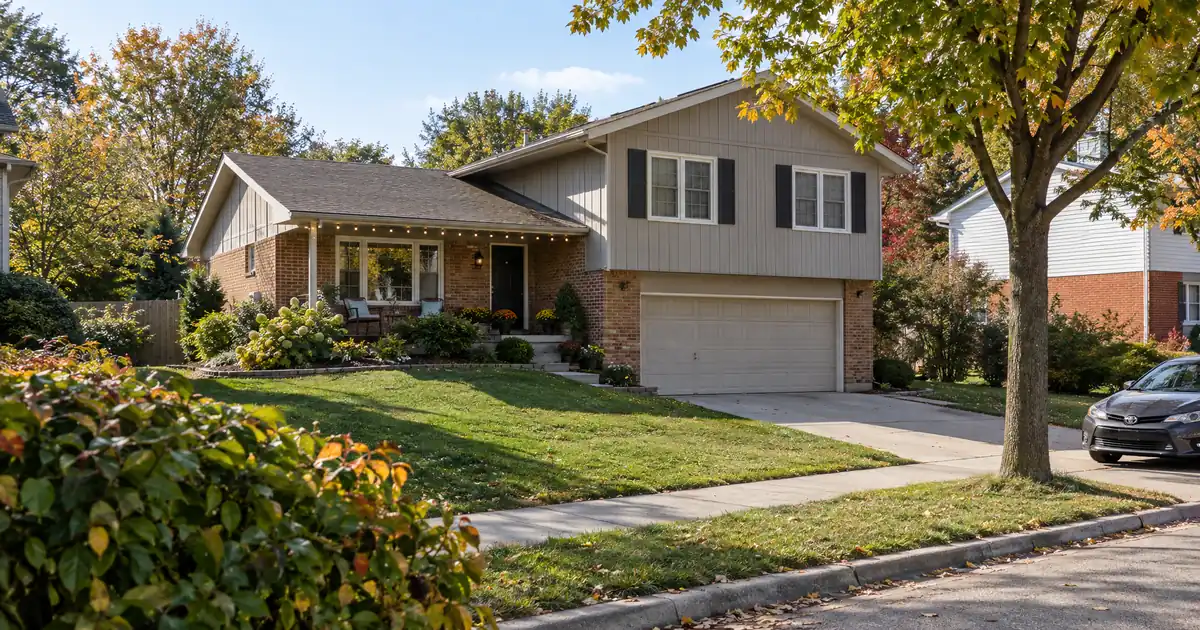
The Quick Read: A bank statement loan is reviewed for a self-employed trades owner on twelve months of business or personal deposits instead of traditional personal-income documentation, and buying new construction adds a second, separate file for the builder, the appraisal on plans, and the certificate of occupancy. Your income file and the house file move on parallel tracks. Each has its own paperwork.
- Qualifying income is built from deposit averages, minus an expense factor the lender sets. You do not pick it.
- On a primary-residence purchase or rate-and-term refinance, select lenders in Lendmire’s wholesale network go up to 90% loan-to-value (LTV, the loan as a share of the property’s value).
- New construction adds an appraisal on plans, a completion check, and usually a certificate of occupancy before permanent financing.
- Lumpy deposits, mixed personal and business money, and builder deposits are where files stall.
- Qualification is subject to lender guidelines, credit approval, and property review.
Key Terms Defined
Short definitions first, because the rest of this article leans on them.
- Expense factor: the share of your business deposits a lender assumes went to costs. The program sets it, and it is deducted before income is counted.
- Debt-to-income ratio (DTI): your monthly debts divided by your qualifying monthly income. The bank statement lane still counts your personal debts.
- Subject-to-completion appraisal: a value opinion based on plans and specifications for a home that is not finished yet.
- Certificate of occupancy (CO): the local sign-off that a new home is safe to live in. Lenders usually want it, or a local equivalent, before permanent financing.
- Draw: a staged release of construction funds as work is finished and inspected.
- Two-time close: a construction loan first, then a separate permanent loan once the house is done.
- Large-deposit letter: your written explanation, with paper behind it, for a deposit well above your normal pattern.
What your deposits qualify you for.
Alt-doc programs read 12 months of business or personal bank deposits instead of tax returns. Enter your average monthly deposits and see the income a lender would credit you.
The expense factor is set by the lender from your business type and profit-and-loss statement; it is not a number you choose. This widget quotes no rate and no payment.
Program parameters shown update from Lendmire’s centralized guideline source.
Estimate
Illustrative estimate only — not a quote, Loan Estimate, approval, or commitment to lend. Deposit average, expense factor, and housing ratio are editable assumptions; the expense factor a lender applies is set from your business type and documentation. No interest rate or monthly payment is quoted here. Purchase capacity is a simplified illustration and does not account for taxes, insurance, HOA dues, or other debts. Alt-doc income documentation is available on consumer mortgages in the states where Lendmire is licensed for consumer lending; actual terms vary by lender, borrower, and property.
Why Tax Returns Sell a Trades Owner Short
A trades owner’s returns often show low net income because the business deducts trucks, tools, labor, and materials. The cash moving through the account tells a different story. A bank statement loan reads that cash flow directly.
That is the whole appeal. A plumber, electrician, or framing contractor can run a healthy business and still show a thin bottom line on paper. Deposit-based underwriting reads what actually landed in the account.
It is still underwriting. The lender verifies, averages, and adjusts. You qualify on documented income under the applicable program, subject to lender guidelines. Nothing about it is a shortcut.
How Underwriting Reads Your Deposits, Step by Step
Underwriting turns deposits into income in a fixed sequence: choose the statements, screen the deposits, apply an expense factor, then compare the result to your debts. Each step has a trades-specific wrinkle.
1. Pick the statement type. Twelve months of business or personal statements is the typical window across the network. A few programs may look longer.
2. Screen the deposits. Transfers between your own accounts, loan proceeds, and one-off deposits come out. What remains has to look like the business you say you run.
3. Apply the expense factor. Add up eligible deposits, divide by the number of months, then reduce that average by the factor. Business statements generally carry a heavier factor than personal ones. An accountant-prepared expense letter can sometimes change the treatment, depending on the program.
4. Compare income to debts. Your DTI includes the new housing payment, existing mortgages, auto loans, and cards. This is the big difference from a rent-based investor loan.
5. Verify the business. Expect proof the company is active, plus a letter for outsized deposits.
Here is how a trades owner’s deposit stream typically sorts. This is an illustration of how reviewers think, not a program formula.
| Deposit type | Usually treated as | Why |
|---|---|---|
| Progress payment from a GC | Counts | Matches the business |
| Customer final payment | Counts | Ordinary revenue |
| Supplier refund or credit | Often excluded | Not new revenue |
| Transfer from your savings | Excluded | Your own money moving |
| Equipment loan proceeds | Excluded | Borrowed, not earned |
| Unusually large one-off deposit | Needs a letter | Outside normal pattern |
A trades owner’s deposits arrive lumpy, which is normal. Reviewers expect lumps. They just want to see them tie to jobs.
The Document Checklist for a Trades Owner
Expect five groups of paper: statements, business proof, an accountant letter where used, identity and credit items, and the purchase and property documents. Here is the version a trades owner should gather first.
| Document | What it proves | Trades tip |
|---|---|---|
| 12 months of statements | Deposit history | Every page, every account used |
| Business license or registration | The business is real | Keep trade license current |
| Accountant or CPA letter | Ownership, expense ratio | Ask for the expense ratio in writing |
| Large-deposit letters | Source of outsized deposits | Attach the invoice or contract |
| Purchase contract | The deal itself | Includes builder addenda |
| Source of funds for cash to close | Where down payment came from | Keep business and personal separate |
Reserves matter too. Programs in the network commonly look for around six months of the housing payment in liquid reserves, subject to lender guidelines. Loan amounts generally run from $125,000 to $3,500,000.
Two Tracks, One Loan
Income underwriting and construction underwriting are separate reviews. Your deposits prove you can carry the loan. The plans, builder, and appraisal prove the collateral exists and is worth the money.
New construction does not change how your deposits are counted. It changes what the lender needs to know about the house.
The appraiser values the home on plans and specs, subject to completion. A completion report follows when the work is done. (The form is the agency 1004D, mentioned here only as a name.) The collateral file also asks for the builder’s contract, plans, permits, and the CO.
Working appraisers don’t all handle the CO the same way. A practitioner discussion among appraisers shows some make the report subject to a CO while others treat it differently. For you, that means the lender’s checklist decides, not local habit.
When Each Document Is Requested During a Build
Most lenders ask for income paper at application and again near closing, while the construction paper shows up in stages. Here is the typical sequence, though program sheets differ.
| Stage | Income file | Construction file | Common snag |
|---|---|---|---|
| Application | Statements, business proof | Contract, plans | Missing statement pages |
| Appraisal | Deposit letters if asked | Plans-and-specs appraisal | Plans not final |
| Underwriting | Expense factor applied | Builder review | Mixed accounts |
| During the build | Keep saving statements | Inspections, draws | Statement set goes stale |
| Completion | Possible refresh | Completion report, CO | CO not yet issued |
| Final funding | Updated asset proof | Final sign-off | Reserves moved |
Notice that statement months keep rolling. A set that was fresh at application can age out. Ask your loan officer which statement window the program wants at final funding.
Deposits That Raise Questions
Builder deposits, option payments, owner transfers, cash deposits, and supplier or GC lumps draw the most questions. Source them before you move them, because a paper trail is easier to build before the money shifts.
Builder deposits and upgrade payments. If you pay the builder from a business account, the withdrawal appears on your statements. Reviewers then ask whether you drained the business. Pay from the account you plan to document as your funds, and keep the receipt.
Owner transfers. Moving money from the business account to personal right before applying makes a clean deposit trail messy. Move it well ahead and keep a log.
Cash deposits. Cash is fine if it ties to invoices. Cash with no story is a problem.
Supplier and GC lumps. A progress payment that is five times your normal month needs a letter and the contract behind it. Across files like these, the pattern is consistent: the deposit itself is rarely the issue. The missing explanation is.
Business funds used as a down payment or reserves may be haircut.
What If the Build Runs Long?
A long build ages your file in two places: the statements and the appraisal. Both have program-set shelf lives, and both may need refreshing.
That means fresh statements, possibly a new look at large deposits, and sometimes an updated appraisal. The practical move is to keep every statement during construction and avoid big unexplained moves. A refresh is routine when your account looks like the account you applied with. It turns painful when it doesn’t.
One-Time or Two-Time Close, From the Document Side
In a two-time close, the construction loan and the permanent loan are separate decisions, so you may document twice.
Programs vary here, and some bank statement lenders don’t offer a one-time structure at all. Ask which you are getting before you sign a builder contract. If the permanent loan comes later, your statement window will have moved by then.
Does Occupancy Change the Paperwork?
Yes. Occupancy decides which disclosure rules apply, and it changes how much personal-income paper you carry.
An owner-occupied purchase, meaning your primary residence or second home, is a consumer mortgage. The consumer disclosure regime, TRID, applies, and the lender must make a reasonable, good-faith repayment determination. The CFPB’s ability-to-repay guide says that rule does not ban particular loan features. It also does not mean income goes unchecked. Non-QM (loans outside standard agency guidelines) means different documents, not no documents.
A bank statement loan on a non-owner-occupied rental, including a short-term rental, is business-purpose. Business-purpose credit is exempt from those consumer rules, including TRID. The label alone isn’t the test, though. A compliance training summary notes the lender looks at the loan’s purpose, not just the property type. Short-term rental rules can vary by city, county, HOA, and property type, so investors should confirm local rules before relying on projected rental income.
Leverage follows occupancy. Here are the typical network figures:
- Primary residence purchase or rate-and-term refinance: up to 90% LTV, with the top of the range for stronger files.
- Primary residence on asset depletion (qualifying from liquid assets): up to about 80% LTV.
- Owner-occupied cash-out, primary or second home: up to 80% LTV, with a fixed expense ratio (75% with an accountant-prepared ratio).
- Investment-property cash-out: tops out around 75% LTV.
- Investment purchase on bank statement documentation: varies by lender.
Owner-occupied bank statement files are arranged in 16 states, subject to program terms. Only owner-occupied files carry TRID, so don’t mix the two regimes.
Bank Statement or DSCR? (A Trades Owner’s Real Decision)
If you are buying to live in the home, the bank statement lane is the fit. If you are buying a rental, you may not need your personal income documented at all. The choice follows the occupancy and the goal.
A debt service coverage ratio (DSCR) loan is reviewed primarily on property-level rental income covering the payment, subject to lender guidelines. The comparison:
| Factor | Bank statement loan | DSCR loan |
|---|---|---|
| Reviewed on | Your deposits | Property rent |
| Personal DTI | Yes | Generally not |
| Fits | Owner-occupied homes | Non-owner rentals |
| New-build rent support | Not needed | Appraiser’s rent schedule |
For a never-leased new build, DSCR files usually lean on market rent from the appraiser’s rent schedule (the agency 1007 for single-family, 1025 for two-to-four units). The lender sets the lease-up treatment. Lendmire’s complete DSCR loans guide covers that side in full.
Where the General Rule Breaks
The standard sequence above holds for most files. Four situations bend it.
- You are the builder. A trades owner building on their own lot is a different file from one buying a finished spec home. Some programs restrict or reprice owner-builder transactions, so ask before you assume.
- Mixed accounts. If personal and business money share one account, the lender may treat it as personal and apply a different expense factor. Clean separation helps.
- Seasonal or lumpy income. Averages smooth lumps, but a weak recent stretch can pull the number down.
- Existing mortgages. In the bank statement lane, other housing debt counts in your DTI.
Lendmire’s piece on super jumbo bank statement requirements for new construction covers the larger-loan end of this lane. For how construction funds are released, see its explanation of how a super jumbo bank statement loan funds draws.
When This Path Isn’t a Fit
Skip it, or fix things first, if any of these describe you.
- Your deposits don’t match your stated business, or you can’t explain them.
- You are mixing personal and business money heavily.
- Your reserves are thin after the down payment.
- You can’t carry the new payment alongside existing debt.
- You are buying a rental and personal income documentation adds nothing.
Tax treatment can depend on how the funds are used and how the property is held; investors should keep clear records and speak with a qualified tax professional before relying on any deduction.
Pre-Application Self-Audit
Run this before you talk to a loan officer.
1. Pull twelve months of statements for every account you might use.
2. Mark each deposit that isn’t plainly customer revenue, and find the paper for it.
3. Separate personal and business flows going forward.
4. Ask your accountant whether they can write an expense-ratio letter.
5. List every monthly debt, since each one hits DTI.
6. Confirm the builder’s contract, plans, and permit status.
7. Decide whether you are occupying the home or renting it.
Frequently Asked Questions
Can I use bank statements to buy a new-construction home?
Yes, on programs that accept new construction. Your income is documented the same way as on a resale. The builder, appraisal, and CO add a separate collateral file.
Do I need different income documents for a new build?
No. The statements, business proof, and letters stay the same. What changes is the property paperwork, such as the contract, plans, appraisal on plans, and the completion sign-off.
What if my deposits mix personal and business money?
The lender may treat the account as personal and apply that factor. Separating the flows well before you apply gives a cleaner file. Do not shuffle money right before applying.
What if I’m the builder on my own lot?
It is a different file from buying a finished home. Program sheets treat owner-builders differently, and some restrict them. Raise it with your loan officer at the start.
Does a long build change my statements?
Statement months keep rolling, so a set can age out. You may need to refresh them near final funding. Keep every statement and avoid unexplained moves.
Next Step
Reach the team at 828-256-2183. Not a commitment to lend.
For a trades owner, the cleanest new-build file is the one where every lump in the account already has an invoice behind it before the first draw is requested.
About Lendmire
Lendmire — NMLS# 2371349 — is a DSCR and non-QM mortgage brokerage with investor loan programs in 41 markets, including Washington, D.C. DSCR eligibility is commonly reviewed by the lender around property-level rent rather than personal income documentation, subject to lender guidelines, and the brokerage helps arrange financing for LLC-owned portfolios beyond conventional financed-property limits. Recognized by Scotsman Guide as a Top Mortgage Workplace in 2025 and 2026.
Get Started
Ready to find the right loan for you?
In about 30 seconds you can review financing options available for your home or investment property. No commitment required.
Informational only. Not a Loan Estimate, approval, or commitment to lend. Program availability and eligibility are subject to lender guidelines, credit approval, property review, and underwriting.
References
1. CFPB ATR/QM Small Entity Compliance Guide
2. eCFR, 12 CFR 1026.3 (Exempt transactions)
3. Compliance Alliance, Regulation Z and Investment Properties
This article is part of Lendmire’s bank statement loan program — full qualification details, guidelines, and scenarios live on the program page.
Related reading: Can You Get a Bank Statement Loan With Seasonal Deposits? · Can You Get a Bank Statement Loan Without a Business License? · Can You Get a Bank Statement Loan With a 620 Credit Score?
Brandon Miller
Founder & CEO, Mortgage Loan Originator, Lendmire LLC
- Mortgage Loan Originator · NMLS# 1129696 · Verify on NMLS Consumer Access
- North Carolina Real Estate Broker · License# 343312 · Verify on NCREC
- North Carolina Insurance Producer · License# 19053198 · Property, Casualty, Life, Health · Verify on NAIC SBS
- Lendmire LLC · Firm NMLS# 2371349 · Verify firm licensure
Disclosure information. Lendmire is a state-licensed mortgage brokerage under NMLS# 2371349. Lendmire is not a depository institution, direct lender, or financial advisor — all loans referenced are placed through wholesale lender partners and are subject to each lender's underwriting standards. This article is provided for general informational purposes and is not a commitment to lend, nor does it constitute financial, legal, or tax advice. Loan programs, terms, rates, and qualification standards change without notice and depend on borrower profile, property type, and the state in which the subject property is located. Equal Housing Opportunity provider. NMLS Consumer Access: nmlsconsumeraccess.org.