
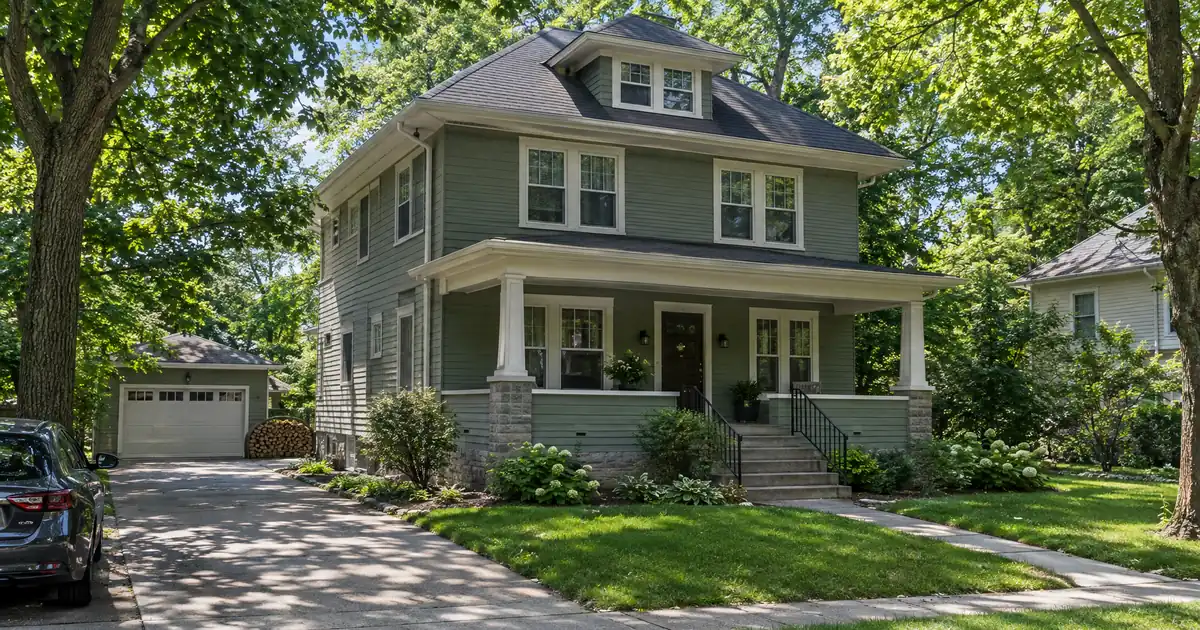
The Quick Read: Being a sole proprietor does not change which properties a bank statement loan can finance, because the property and how you will use it set those limits, while your deposits only prove income. Most programs in a wholesale network cover primary residences, second homes and investment properties, but leverage and the rules tighten as the property moves away from your own home. A strong income file cannot rescue a property the lender will not take.
- Two tests run side by side: an income test on your deposits and a property test on the collateral.
- Occupancy decides leverage: up to 90% LTV on a primary-residence purchase or rate-term refinance, but only up to about 75% on an investment cash-out.
- Owner-occupied cash-out tops out at 80% LTV, not the purchase ceiling.
- Loan sizes run roughly $125,000 to $3,500,000, with reserves commonly near six months of the housing payment.
- Exact property eligibility sits in each lender’s program sheet, so the property gets checked before the income file gets built.
Every program varies by lender, and every file is underwritten individually, subject to lender guidelines.
What your deposits qualify you for.
Alt-doc programs read 12 months of business or personal bank deposits instead of tax returns. Enter your average monthly deposits and see the income a lender would credit you.
The expense factor is set by the lender from your business type and profit-and-loss statement; it is not a number you choose. This widget quotes no rate and no payment.
Program parameters shown update from Lendmire’s centralized guideline source.
Estimate
Illustrative estimate only — not a quote, Loan Estimate, approval, or commitment to lend. Deposit average, expense factor, and housing ratio are editable assumptions; the expense factor a lender applies is set from your business type and documentation. No interest rate or monthly payment is quoted here. Purchase capacity is a simplified illustration and does not account for taxes, insurance, HOA dues, or other debts. Alt-doc income documentation is available on consumer mortgages in the states where Lendmire is licensed for consumer lending; actual terms vary by lender, borrower, and property.
Key Terms Defined
Bank statement loan: A mortgage that is reviewed on documented income under the applicable program, using deposit averages from your bank statements instead of traditional personal-income documentation.
Occupancy: How you plan to use the property: as your primary residence, as a second home, or as a rental you will not live in.
Expense factor: The percentage a lender subtracts from business deposits to estimate what the business spent. The lender sets it, not you.
LTV (loan-to-value): The loan amount as a percentage of the property’s value or price.
Non-warrantable condo: A condo in a project that fails standard project review, often because of high rental share, pending litigation or thin reserves.
DSCR loan: An investor loan that qualifies primarily on property-level rental income covering the payment, subject to lender guidelines.
Two Tests, Not One
A bank statement file gets judged twice. The income test asks whether your deposits support the payment. The property test asks whether the lender will take this building as collateral.
They do not trade off. Great deposits cannot fix a property that is off the menu. A perfect house cannot fix thin income.
| Factor | Income test | Property test |
|---|---|---|
| What is checked | Deposit averages, expense factor | Type, condition, occupancy, project |
| Typical documents | 12 months of statements | Appraisal, project info, title |
| Common failure | Transfers, commingled funds | Project fails review, ineligible type |
| Can it offset the other? | No | No |
Sole-proprietor status mostly shapes the left column. You have no entity, so you can generally use personal or business statements. HousingWire’s non-QM guide describes bank statement loans as using 12 to 24 months of statements, with an expense factor on business accounts. Across the programs Lendmire places files with, 12 months is the working standard.
How Underwriting Treats the Property, Step by Step
Here is the order a lender works through, and the order you should too.
1. Classify the occupancy. Primary residence, second home or rental. This single answer sets your maximum leverage and the paperwork regime.
2. Check the property type. Single-family, townhome, condo, PUD (a planned community with shared amenities) and small multi-unit buildings are the usual candidates. Programs differ on the rest.
3. Run the income test. The lender averages eligible deposits and subtracts its expense factor. Transfers between your own accounts and loan proceeds are generally stripped out.
4. Underwrite credit, reserves and debt. Reserves commonly run about six months of the housing payment.
5. Order the appraisal and review title. The appraiser needs comparable sales. Odd properties often have few, and that is where files stall.
Notice that the property gets classified first. Spending weeks assembling statements for a building a lender will not touch is the most avoidable mistake in this lane.
How Occupancy Changes the Property Rules
Occupancy is the dial that moves everything else. On a primary residence, select lenders go up to 90% LTV on a purchase or rate-term refinance. An asset-depletion alternative, which is reviewed against liquid assets instead of deposits, runs to about 80% LTV on a primary residence. Leverage, reserves, and pricing vary by lender and program; the final terms follow the full file review.
Second homes sit in the middle. Owner-occupied cash-out on a primary or second home goes up to 80% LTV, with a fixed expense ratio of 75% if an accountant prepares the ratio. That is a cash-out ceiling. Do not read it as the purchase number. Terms vary by lender guidelines, property type, leverage, credit profile, and full file review.
Investment properties get the tightest treatment. An investment cash-out tops out around 75% LTV. Investment purchase leverage on bank statement documentation varies by lender, so treat any single number you see online with suspicion.
One more thing about occupancy: say it honestly. Calling a rental a second home to get better leverage is misrepresentation, and lenders check for it.
Why the Investment Label Alone Does Not Decide It
Nothing in federal law gives a single list of banned property types here. Eligibility is a program-guideline question. What the law does decide is which disclosure regime applies, and that is where occupancy and purpose matter.
Credit extended mainly for a business purpose falls outside most consumer-mortgage rules, per CFPB Regulation Z § 1026.3. The official commentary treats credit to buy a non-owner-occupied rental as business purpose regardless of unit count, per the eCFR official interpretations. The same commentary says a property you expect to occupy for more than 14 days in the coming year cannot use that special rule.
In practice, an owner-occupied bank statement loan is a consumer mortgage and TRID disclosures apply. A bank statement loan on a pure rental, including a short-term rental, is business-purpose and exempt from TRID. Pricing and payment details are covered in your individual file review, not here.
The Properties That Trip People Up
A strong rule of thumb: the more a property depends on project-level or unusual facts, the more likely it is to fail even with clean income.
Condos and condotels. The building gets reviewed along with you. A non-warrantable project, or a condotel run like a hotel, narrows the list of lenders. Some programs take them with adjusted leverage. Others do not.
Short-term rentals. Lenders may also cap leverage differently on short-term-rental collateral.
Rural land and acreage. Appraisers struggle to find comparable sales, and many programs limit acreage or rural classification.
Leasehold. You own the building but not the land. Many lenders want specific lease terms, and some decline outright.
Two to four units versus five or more. One to four units is residential lending territory. Five or more moves toward commercial financing, a different product altogether.
Mixed-use and live-work. A storefront with an apartment above is common for self-employed buyers. It often falls outside standard residential eligibility, depending on how much of the building is commercial.
Manufactured homes. Alternative-documentation programs commonly exclude them. Check the specific sheet instead of assuming.
Here the honest answer is that guidelines differ by lender, and the strictest overlays are much stricter than the friendliest ones. That spread is the reason brokers shop a file across many programs.
What Is Specific to a Sole Proprietor
The property rules are the same for you as for anyone. Three practical points are specific to your setup.
Title. With no entity, you typically hold title in your own name. Moving a rental into an LLC later is possible, subject to lender program eligibility, but that is a separate decision from the loan.
Which statements. You can generally use personal or business statements. Pick the account that actually receives your customer payments. If business and personal money are mixed in one account, expect questions, and expect deposits to be excluded.
Expense factor. You do not choose it. A lower, documented factor may be possible with an accountant-prepared ratio or profit-and-loss statement, depending on the program. The accountant route is how some borrowers reach the 75% fixed-ratio structure on owner-occupied cash-out.
For a home office or live-work space inside your own residence, the question is usually whether the property still reads as a normal residence to the appraiser. A spare room with a desk does. A converted storefront does not.
Bank Statement or DSCR: The Property Decides
Many investors use both products. Bank statement documentation fits the home you live in. DSCR fits the rentals.
| Factor | Bank statement loan | DSCR loan |
|---|---|---|
| What is tested | Your deposits | The property’s rent |
| Occupancy | Primary, second, investment | Non-owner-occupied rentals |
| Each added loan | Counts in your personal debt | Judged on that property |
| Best fit | Your own home | A growing rental portfolio |
Each added mortgage on a bank statement file counts against your personal debt-to-income ratio. That ceiling arrives sooner than most new investors expect. A DSCR loan is reviewed primarily on property-level rental income covering the payment, subject to lender guidelines. Some select lenders in the network offer programs below 1.00 coverage, though leverage and terms adjust. For a deeper side-by-side, see Lendmire’s piece comparing a bank statement loan with DSCR for a sole proprietor who owns rentals. The complete DSCR loans guide covers the rental side in full.
Where the General Rule Breaks
House-hacking. Buy a duplex and live in one unit, and the file becomes owner-occupied. Primary-residence leverage may apply, and the consumer-mortgage regime follows. The owner-occupancy test, not the number of rental units, governs.
Personal-use cash-out. Pull cash from a rental to cover personal expenses and the purpose is consumer, not business. That changes the disclosure treatment even though the building is a rental. Be straight with your loan officer about where the money is going.
Business-purpose is not rule-free. Exempt from consumer disclosure rules does not mean unregulated. Other requirements still apply.
Non-QM still means a real review. On owner-occupied files, the lender must verify income with reasonably reliable records, per the CFPB ability-to-repay compliance guide. That guide says the review generally covers loans secured by one-to-four-unit dwellings, and it is not limited to primary residences. Bank statement loans do not skip underwriting. They swap traditional personal-income documentation for statements.
Three Scenarios
A condo in a project that fails review. You are buying a condo as your primary residence with strong deposits. The income test passes. The project fails the lender’s review because of a high share of rented units. Options: find a program that accepts non-warrantable projects, accept lower leverage, bring more cash, or pick a different building.
A mixed-use building. You want a storefront with an apartment above for your business and your home. The income file is fine. The property may sit outside residential guidelines because of the commercial share. Options: a different property, or commercial financing, which is a separate product.
A rural second home. The deposits clear easily. Acreage pushes the appraisal into thin comparables and may trip a rural limit. Options: a program with a higher acreage allowance, a smaller parcel, or a larger down payment.
In all three, the income was never the problem. That is the point of running the property test first.
Pre-Application Checklist
- Decide the occupancy honestly: primary, second home or rental.
- Confirm the property type against the program sheet before ordering anything.
- If it is a condo, ask whether the project has been reviewed.
- Note any acreage, leasehold or mixed-use feature.
- Separate business deposits from personal money for 12 months, where you can.
- Ask whether your accountant can prepare an expense ratio.
- Decide whether this is a bank statement deal or a DSCR deal.
Frequently Asked Questions
Can a sole proprietor use a bank statement loan to buy a rental?
Often yes, subject to the lender’s program. Investment occupancy is eligible under many programs, though leverage on a purchase varies by lender and investment cash-out tops out around 75% LTV. If the property is a pure rental, DSCR is usually the more scalable path.
Can strong deposits override a property exclusion?
No. Income and collateral are separate tests. A property type the program excludes stays excluded however clean your statements look. The fix is a different program, a different property or a different structure.
Are manufactured homes eligible?
They are commonly excluded from alternative-documentation programs. Eligibility follows each lender’s program sheet, so confirm before spending time on the income file.
What happens if the condo project is non-warrantable?
Fewer lenders will take it, and leverage may drop. Some programs accept these projects with adjustments. Others do not. A broker who sees many lenders’ guidelines can usually tell you early which way it will go.
Does a short-term rental change the rules?
Yes, it can. A non-owner-occupied short-term rental is a business-purpose loan, and lenders may treat leverage differently on that collateral.
Next Step
Tax treatment varies; consult a qualified professional.
Whatever you buy, check the property against the program sheet first, because a building that clears the sheet makes every later step easier.
About Lendmire
Lendmire is a mortgage brokerage (NMLS# 2371349) licensed for consumer mortgage lending in 16 states, arranging bank statement and other alternative-documentation mortgages (P&L-only, 1099-only and asset-based paths) through a wholesale lending network. Eligibility is determined by the lender on each file. Scotsman Guide named Lendmire a Top Mortgage Workplace in both 2025 and 2026.
Get Started
Ready to find the right loan for you?
In about 30 seconds you can review financing options available for your home or investment property. No commitment required.
Informational only. Not a Loan Estimate, approval, or commitment to lend. Program availability and eligibility are subject to lender guidelines, credit approval, property review, and underwriting.
References
1. HousingWire Non-QM Loans Guide
3. eCFR Supplement I to Part 1026
This article is part of Lendmire’s bank statement loan program — full qualification details, guidelines, and scenarios live on the program page.
Related reading: Can You Get a Bank Statement Loan on a 2-4 Unit or Condotel? · How Much Can Attorneys Borrow With a Bank Statement Loan? · How Super Jumbo Bank Statement Loan Limits Work
Brandon Miller
Founder & CEO, Mortgage Loan Originator, Lendmire LLC
- Mortgage Loan Originator · NMLS# 1129696 · Verify on NMLS Consumer Access
- North Carolina Real Estate Broker · License# 343312 · Verify on NCREC
- North Carolina Insurance Producer · License# 19053198 · Property, Casualty, Life, Health · Verify on NAIC SBS
- Lendmire LLC · Firm NMLS# 2371349 · Verify firm licensure
Legal disclosures. Lendmire (NMLS# 2371349) is a state-licensed mortgage brokerage that arranges financing through wholesale lender relationships. Lendmire is not a direct lender, depository institution, or registered financial advisor. The discussion above is general informational content about real estate financing — it is not financial, legal, or tax advice, and readers should consult licensed professionals for guidance on their individual circumstances. Loan inquiries are subject to lender underwriting; this article does not represent a commitment to lend. Loan terms, rates, and qualification standards vary by borrower, property, and state, and are subject to change at any time. Equal Housing Opportunity. NMLS Consumer Access: nmlsconsumeraccess.org.