
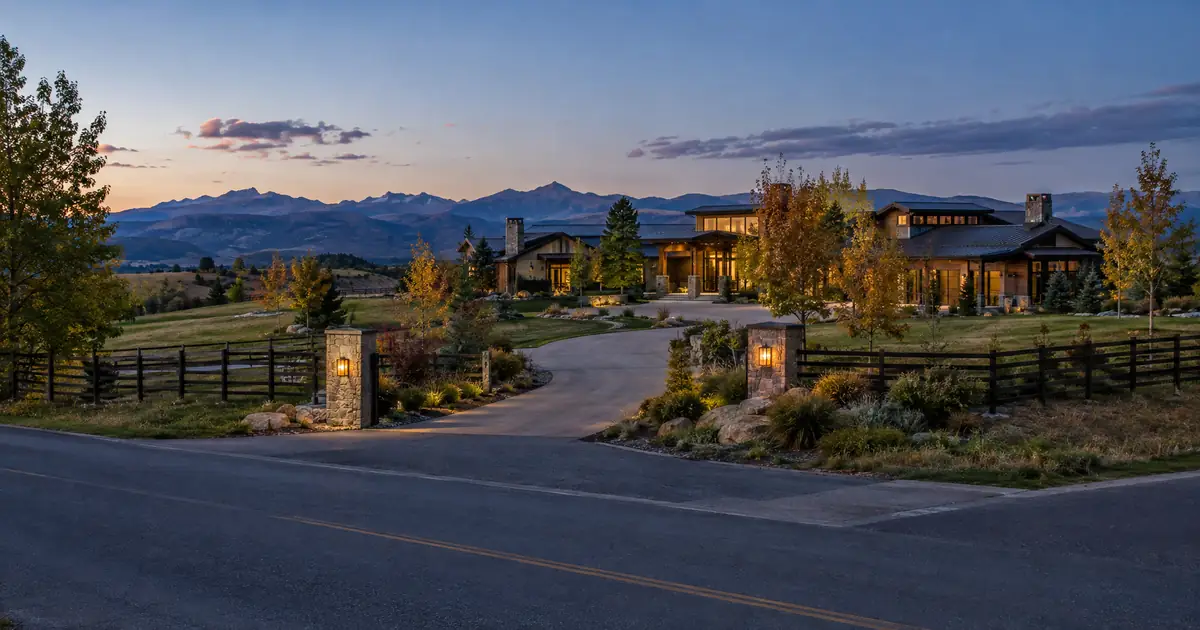
The Quick Read: Your deposits decide whether you qualify, but a separate valuation check decides how much the property can support, and on acreage that check often values the home and home site while giving the extra land little or no credit. That is why a contract price can come in above the appraised value.
- Income and value are two separate tests, and either one can stop a file.
- The appraiser compares nearby sales and adjusts for land. Unusable or extra acres count for less than most buyers expect.
- Loan-to-value is figured on the lower of price and the value the lender relies on.
- Larger balances often add a second look, usually a desk or field review rather than a second inspection.
- Above $4,000,000, every file is reviewed case by case before submission.
None of this is a commitment to lend. Lendmire arranges loans through select wholesale programs as a broker, so the lenders in its network make the final calls, subject to full underwriting.
Two Tracks: Income Is One Test, Value Is Another
A bank statement loan proves your income from deposits, and the property is then valued separately. Strong deposits cannot rescue collateral the lender cannot value. Weak collateral does not care how well your business runs.
Founders, physicians, attorneys and other self-employed borrowers often show low taxable income on paper. Bank statement programs solve that on the income side. Across the wholesale network Lendmire places files with, the typical path uses 12 or 24 consecutive months of personal or business statements.
Business statements need at least 25% ownership. Lenders apply an expense ratio to the deposits, commonly 20%, 40% or 50% depending on the business. Transfers from your own business into your personal account count in full. Those are the income rules. None of them values the land.
| Question | Income track | Valuation track |
|---|---|---|
| What is checked? | Deposits after an expense ratio | Appraised value of the property |
| Who checks it? | Underwriter | Appraiser, then a reviewer |
| What can fail? | Gaps, large unexplained deposits | Thin comps, excess land, rural flag |
| What does it limit? | Whether you qualify | How large the loan can be |
Most stalled acreage files do not fail on income. They fail on the right-hand column, which is why the rest of this guide stays there.
How an Appraiser Values a Home on Acreage
The appraiser starts with sales comparison. That means finding similar nearby sales and adjusting for differences in size, condition, location and acreage. On a suburban lot, that works well. On acreage, the comparable sales may be few and far apart.
In thin rural markets, the appraiser widens the search. The comps may sit farther away and be older than usual. Each added distance or year requires more adjustments, and more adjustments make the value easier to question.
Land does not add value in a straight line. Cade Appraisals, a rural appraisal firm, explains that the first usable acre carries the most value and extra acres add value at a decreasing rate. It also describes effective area. Wetland, steep slope or limited access can mean fifty acres does not behave like fifty usable acres.
Three things in particular tend to widen the gap between price and value:
- Comp availability. Fewer close sales means more adjustment and more judgment.
- Usable share. Acres that cannot be built on, farmed or accessed add little.
- Improvements. Outbuildings that are not permitted must be disclosed, and a second dwelling can change how the property is classified.
What Happens to Excess Land?
Excess land is acreage beyond what the home needs, and it often comes out of the value the loan is built on. Surplus land is similar but cannot be sold off separately, so it usually contributes less per acre.
Residential appraisers often apply a simple per-area lot-size adjustment without separating excess land from surplus land. A site larger than a typical residential site creates a surplus-land problem that needs adjustment.
Lenders add their own acreage lines on top. Those lines are lender policy, not law. Acreage beyond the line may be carved out of the value no matter what you paid for it.
Here is how that plays out. The figures are illustrative percentages, not a market claim. Say an investment-property purchase lands in the $2,000,000 to $2,500,000 band, where the ceiling is typically 80% on a purchase through select wholesale programs, subject to full underwriting.
| Step | Illustration |
|---|---|
| Contract price | 100% of price |
| Appraised value after excess land is stripped | 85% of price |
| Purchase LTV on the lower figure | 80% |
| Resulting loan | 68% of contract price |
| Cash you bring | 32% of price, not 20% |
The contract price barely mattered. The value the lender relied on set the loan, and the gap became your cash.
A Cash-Out Feels It More
A purchase is capped by the lower of price and value. A cash-out refinance is capped by appraised value alone. Strip the excess land and the number the whole loan is built on drops. For an investment property in that same band, the cash-out ceiling is typically 70% through select wholesale programs, subject to full underwriting, and it applies to the reduced value. Tax treatment can depend on how the funds are used and how the property is held; investors should keep clear records and speak with a qualified tax professional before relying on any deduction.
Why Larger Loans Get a Second Look
On bigger balances, many lenders add a second opinion of value, and that is almost always lender policy rather than law. The second look is often a desk review or field review of the first appraisal. Some lenders order a second full appraisal instead, so practice varies by program.
If two values exist, they are not averaged. Reconciliation follows a documented process, and the lender relies on the value it finds supportable. Many programs lean toward the lower figure. A conservative second value can still work when your equity cushion absorbs it.
The only federal second-appraisal mandate is narrow. The Federal Register rule on appraisals for higher-priced mortgage loans covers quick resales of a property:
- A resale within a short window of the seller’s purchase at a sizable price increase
- A resale somewhat later, within a longer window, at an even larger price increase
It requires a different appraiser for the second report. It also carries exemptions, including for rural counties. Because investor loans are business-purpose and the rule is aimed at consumer mortgages, it generally does not reach them. So a second valuation on your file almost always comes from the size of the loan, not from federal law.
Who Decides What
Several parties shape the outcome, and each has a different job.
| Layer | What it decides |
|---|---|
| Program rules | Maximum LTV, loan size, occupancy, property types |
| Overlays | Extra limits at the largest sizes, such as acreage caps |
| Appraiser judgment | Comps, adjustments, how much land value counts |
| Review function | Whether the first value holds up |
Here are the lines that matter most for acreage, all through select wholesale programs and subject to full underwriting. Rural property is typically allowed to 80% leverage on ten acres or less, and never above $3,000,000. The strictest overlays apply above $3,500,000 on a primary residence and above $3,000,000 on a second home or investment property. At those sizes, the programs typically require a 700 credit floor, allow no rural property and cap acreage at ten acres.
Above $4,000,000, everything is reviewed case by case before submission, and any leverage figure at that size is a case-by-case answer rather than a flat ceiling.
Two points are easy to miss. No regulator defines a super jumbo, so each lender draws its own line. And there is no single definition of rural either, which is why one lender’s rural flag may not be another’s.
For more on how the requirements stack up, see Lendmire’s overview of super jumbo bank statement loan requirements for acreage properties.
Property Traits That Stall a File
Some features raise a flag before the appraiser finishes. Across the network, the usual ones are:
- Agricultural zoning or farm-type use, where value depends on soil, drainage and the usable share.
- A second dwelling or non-permitted outbuildings.
- Value driven mostly by land rather than the home.
- A rural designation on the appraisal.
- Acreage above the program’s line.
One broker observation from deal flow: files that clear these items before an appraisal is ordered tend to hold up better than files that discover them in the report. Ask the lender about use, zoning, outbuildings and utilities first.
If the Value Comes In Low
A low value is the most common stall point, and you have real options, but only evidence moves the number. Work through them in order:
1. Read the report line by line. Look for factual errors, missing improvements or wrong acreage.
2. Find better comps. Sales the appraiser missed, with the details to support them, are the strongest grounds. Arguing that the market is up is weak. Saying the property is unique is weaker.
3. Request a reconsideration of value. Submit the comps through your lender or broker, not directly to the appraiser.
4. Ask about a second appraisal. Some programs allow one, and not all do.
5. Restructure the deal. Renegotiate the price, put more cash in, or ask whether the parcel can be separated.
6. Change the program. A different program in the network may treat the land differently.
Lendmire’s guidance on how to support an acreage appraisal on a super jumbo bank statement loan goes deeper on the evidence side.
Before You Apply: A Short Checklist
- Gather 12 or 24 consecutive months of statements. Transaction histories do not substitute for statements.
- Confirm your ownership share if you are using business statements.
- List the property features: acreage, outbuildings, dwellings, well, septic and road access.
- Ask the lender for its acreage line and how it handles excess land.
- Expect reserves of 3, 6 or 9 months by loan size, typically through select wholesale programs. Cash-out proceeds cannot satisfy reserves under the strictest overlays.
When This Program Is Not the Right Fit
Bank statement financing may not fit if the land drives the value more than the home does. It may also not fit if the acreage runs past a program’s line or the property is a working farm. It also does not fit when the borrower needs rural property above $3,000,000.
If the property earns strong rent, an investment loan that qualifies primarily on property-level rental income covering the payment, subject to lender guidelines, may work better. Lendmire’s complete DSCR loans guide covers that path. Programs below 1.00 coverage are available through select lenders in the network, but leverage and terms adjust.
Key Terms Defined
Comparable sale (comp): A recent sale of a similar nearby property that an appraiser uses to support a value.
Excess land: Acreage beyond what the home needs, which can be valued separately or removed from value.
Surplus land: Extra acreage that cannot be sold off separately and usually adds less value per acre.
Desk review: A reviewer checks an existing appraisal from the file, without a new inspection.
Reconsideration of value: A formal request for the appraiser to revisit the value with new evidence.
Effective area: The usable share of acreage that actually contributes to value.
Frequently Asked Questions
Does a bank statement loan skip the appraisal?
No. Bank statements change how income is proven, not whether the property is valued. The property still gets a full appraisal and review.
Is a second appraisal a legal requirement on large loans?
Usually it is lender policy. The federal rule covers quick resales on certain higher-priced consumer loans and has exemptions. Your loan size, not the law, is the more common trigger.
Which value does the lender use if the two differ?
Lenders generally rely on the value they find supportable, and many lean toward the lower one. The values are not averaged. A documented reconciliation decides it.
Why would the appraisal come in below my contract price on acreage?
The contract may have bundled in land the appraiser discounts. Extra acres, unusable ground and thin comps all push the value down. Your loan is then sized on the lower number.
Can I get rural acreage financed on a super jumbo bank statement loan?
Sometimes, within limits. Through select wholesale programs, rural property is typically allowed to 80% on ten acres or less and never above $3,000,000. Above the super-jumbo overlays, rural property is excluded, and anything above $4,000,000 is case by case.
Next Step
If you are financing a high-balance property on business or personal bank statements and want to see how the numbers work, Lendmire can help you compare super jumbo bank statement loan options based on your deposits, the property, credit profile, leverage, and your goals.
About Lendmire
Lendmire is a non-QM mortgage brokerage (NMLS# 2371349) arranging DSCR investor loans in 41 markets, including Washington, D.C. DSCR eligibility is generally reviewed around property-level rental income rather than personal income, subject to lender and program guidelines, a fit for self-employed investors and LLC-owned portfolios. Lendmire was recognized as a Scotsman Guide Top Mortgage Workplace in 2025 and 2026.
Get Started
Ready to find the right loan for you?
In about 30 seconds you can review financing options available for your home or investment property. No commitment required.
Informational only. Not a Loan Estimate, approval, or commitment to lend. Program availability and eligibility are subject to lender guidelines, credit approval, property review, and underwriting.
References
1. Federal Register — Appraisals for Higher-Priced Mortgage Loans
This article is part of Lendmire’s super jumbo bank statement loan program — full qualification details, guidelines, and scenarios live on the program page.
Related reading: 12 vs. 24 Months on a Super Jumbo Bank Statement Loan With Mixed Accounts · How Super Jumbo Bank Statement Loan Appraisal Options Work for a Rural Estate · How Much Can You Borrow With a Super Jumbo Bank Statement Loan?
Brandon Miller
Founder & CEO, Mortgage Loan Originator, Lendmire LLC
- Mortgage Loan Originator · NMLS# 1129696 · Verify on NMLS Consumer Access
- North Carolina Real Estate Broker · License# 343312 · Verify on NCREC
- North Carolina Insurance Producer · License# 19053198 · Property, Casualty, Life, Health · Verify on NAIC SBS
- Lendmire LLC · Firm NMLS# 2371349 · Verify firm licensure
Legal disclosures. Lendmire (NMLS# 2371349) is a state-licensed mortgage brokerage that arranges financing through wholesale lender relationships. Lendmire is not a direct lender, depository institution, or registered financial advisor. The discussion above is general informational content about real estate financing — it is not financial, legal, or tax advice, and readers should consult licensed professionals for guidance on their individual circumstances. Loan inquiries are subject to lender underwriting; this article does not represent a commitment to lend. Loan terms, rates, and qualification standards vary by borrower, property, and state, and are subject to change at any time. Equal Housing Opportunity. NMLS Consumer Access: nmlsconsumeraccess.org.