
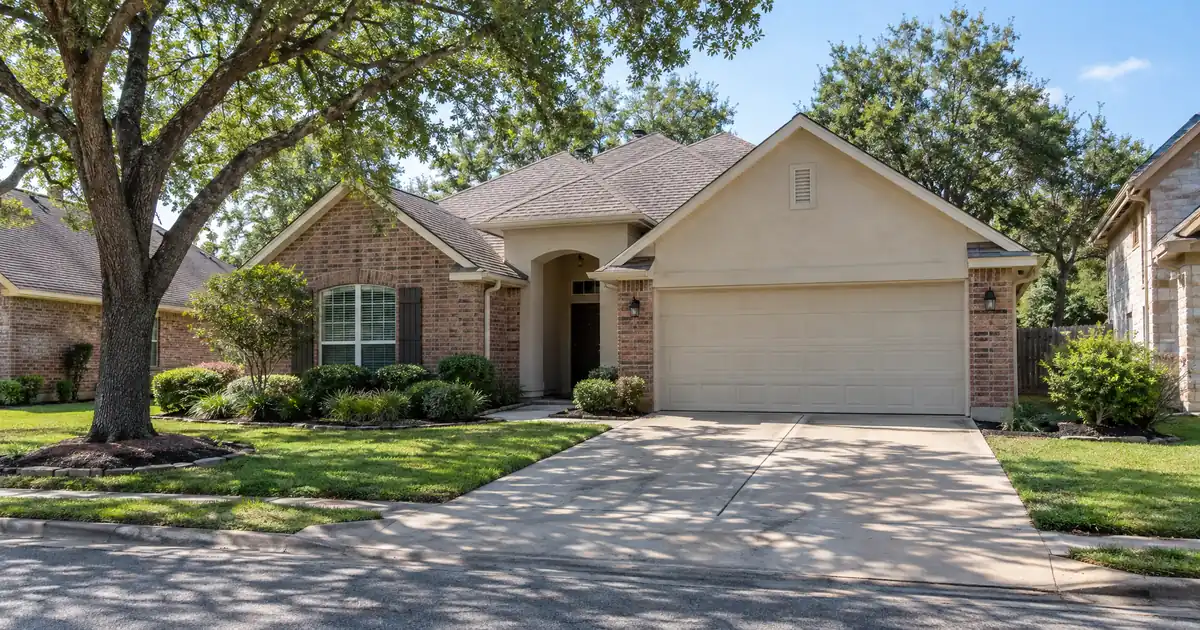
The Quick Read: Yes, bank statement loans are available in Texas on primary homes for purchases and rate-and-term refinances, and you qualify on documented income from your deposits rather than traditional personal-income documentation, subject to lender guidelines, but cash-out on a Texas homestead runs into a state limit that caps total debt against the home at 80% of its value. The loan is built for self-employed borrowers whose traditional personal-income documentation understates what actually comes in. Texas adds one real wrinkle, and it only touches cash-out.
- Purchase and rate-and-term refinance on a primary residence: up to 90% LTV (loan-to-value, the loan as a percentage of the home’s value) through select lenders, with the strongest files earning the top of that range.
- Owner-occupied cash-out: up to 80% LTV with a fixed expense ratio, or 75% with an accountant-prepared ratio. In Texas the state’s own cap on all debt against the home applies on top.
- Documentation: 12 months of business or personal bank statements, averaged into qualifying income.
- Loan sizes: roughly $125,000 to $3,500,000, with reserves commonly around 6 months of the housing payment.
What Is Available on a Texas Primary Home, by Transaction?
The answer changes with what you are doing. Buying and rate-and-term refinancing are straightforward. Cash-out is where Texas steps in.
What your deposits qualify you for in Texas.
Alt-doc programs read 12 months of business or personal bank deposits instead of tax returns. Enter your average monthly deposits and see the income a lender would credit you.
The expense factor is set by the lender from your business type and profit-and-loss statement; it is not a number you choose. This widget quotes no rate and no payment.
Program parameters shown update from Lendmire’s centralized guideline source.
Estimate
Illustrative estimate only — not a quote, Loan Estimate, approval, or commitment to lend. Deposit average, expense factor, and housing ratio are editable assumptions; the expense factor a lender applies is set from your business type and documentation. No interest rate or monthly payment is quoted here. Purchase capacity is a simplified illustration and does not account for taxes, insurance, HOA dues, or other debts. Alt-doc income documentation is available on consumer mortgages in the states where Lendmire is licensed for consumer lending; actual terms vary by lender, borrower, and property.
| Transaction | Bank statement loan? | Typical ceiling |
|---|---|---|
| Primary purchase | Yes | Up to 90% LTV |
| Primary rate-and-term refi | Yes | Up to 90% LTV |
| Primary cash-out | Yes, with Texas limits | Up to 80% LTV |
| Second-home cash-out | Yes | Up to 80% LTV |
| Investment cash-out | Yes | Around 75% LTV |
These are typical ranges from select wholesale lenders, not promises. Credit, loan size, reserves, and the property all move the number. Never assume the purchase ceiling carries over to cash-out. It does not, in Texas or anywhere else.
A related option: if your income sits in brokerage or savings accounts rather than business deposits, an asset-depletion program is reviewed against liquid assets instead. On a primary residence it runs to about 80% LTV. Terms vary by lender guidelines, property type, leverage, credit profile, and full file review.
How Does a Bank Statement Loan Work on a Home You Live In?
The lender replaces traditional personal-income documentation with your deposit history. It reads your statements, strips out what is not real income, averages what is left, and compares that to your new housing payment and other debts.
Across the wholesale network Lendmire works with, 12 months of statements is the standard ask. Scotsman Guide describes a market-wide window of 12 to 24 months. A longer window mostly helps when income is seasonal or lumpy.
The process runs in this order:
1. Choose personal or business statements. Business accounts get an expense factor. Personal accounts usually do not, but they must show business income clearly.
2. Screen the deposits. Transfers between your own accounts, refunds, and loan proceeds come out.
3. Average what remains over the statement period.
4. Apply the expense factor to business deposits. The factor is lender-specific. Some programs accept an accountant-prepared ratio instead of the fixed one, which can help if your real costs run low.
5. Compare qualifying income to the new housing payment and your other monthly debts.
6. Review credit, reserves, and the appraisal.
Picture a self-employed contractor whose returns show heavy write-offs. The tax return reads thin. The deposits tell a stronger story, and a deposit-based program reads that story. The loan is reviewed on documented income under the applicable program, subject to lender guidelines. It is not a shortcut around underwriting.
What decides the outcome is consistent deposits with a flat or rising trend, how the lender classifies your business, your credit, your reserves, and whether the deal is a purchase, rate-and-term refinance, or cash-out.
What Does Texas Change?
Texas changes cash-out and nothing else. If you pull equity out of a Texas primary home, the loan falls under the state’s home-equity rules, often called A6 after the constitutional section that creates them. Those rules apply no matter how you document income. A bank statement cash-out is still an A6 loan.
The biggest limit is the cap. Per the Texas Real Estate Research Center at Texas A&M, the new principal plus all other debt secured by the home may not exceed 80 percent of fair market value. The cap counts every lien, not just the new loan. No lender can waive it. It is written into the constitution.
Say you own a primary home with a sizable first mortgage already on it. The room for new cash is the gap between that 80% line and what you already owe. Program ceilings and the Texas cap both apply, and the lower one governs.
There is a reason homestead lending follows set categories. A Texas Attorney General opinion notes that the constitution invalidates liens on a homestead unless the debt is one the provision lists, such as purchase money.
A6 loans carry other features too, including limits on lender fees, waiting periods, how often you can take one, and a rule that the loan keeps its A6 status afterward. Confirm the details with a Texas title company or real estate attorney before you plan around them.
One more Texas point. A homestead belongs to a natural person, so an LLC cannot hold one. A bank statement loan to an entity is an investment-property scenario, not a primary-home one.
Tax treatment can depend on how the funds are used and how the property is held; investors should keep clear records and speak with a qualified tax professional before relying on any deduction.
Primary, Second Home, or Investment: Why Occupancy Decides Everything
Occupancy sets the rules. It sets your leverage, your paperwork, and which disclosure regime governs the loan.
| Factor | Primary home | Second home | Investment property |
|---|---|---|---|
| Loan type | Consumer mortgage | Consumer mortgage | Business-purpose |
| Purchase leverage | Up to 90% LTV | Lender-specific | Varies by lender |
| Cash-out ceiling | Up to 80% LTV | Up to 80% LTV | Around 75% LTV |
| Disclosures | Loan Estimate and Closing Disclosure | Same | Exempt |
A primary home is a consumer-purpose loan. The lender must make a good-faith determination that you can repay, and that review looks at your debts and income. The CFPB’s ability-to-repay compliance guide says the rule does not require any particular underwriting model. Deposit-based underwriting is one way to meet it.
That is also why bank statement loans are not a way to skip verification. Non-QM simply means the loan sits outside the standard Qualified Mortgage box. A reviewer still checks your numbers.
Owner-occupied files, meaning primary residences and second homes, are consumer mortgages, so the standard consumer disclosures apply. A bank statement loan on a non-owner-occupied rental, including a short-term rental, is business-purpose and exempt from those disclosures. For your own home, the consumer rules apply.
Occupancy also has to be true. You are signing that you will live there. Misstating it is a serious problem, not a technicality.
Where DSCR Fits (and Where It Doesn’t)
DSCR loans do not work on the home you live in. DSCR stands for debt service coverage ratio, a check of whether a property’s rent covers its payment. Those loans are designed for non-owner-occupied investment properties. Because they are business-purpose investor loans, they are reviewed differently from a standard owner-occupied mortgage. Your own home has no rent to underwrite.
Many investors run both tracks. A bank statement loan finances the home they live in, based on their deposits. DSCR finances the rentals, based on each property’s rent. Same borrower, two different questions asked. Lendmire’s complete DSCR loans guide covers the rental side.
Bank statement documentation can also finance a rental. Investment purchase leverage on that documentation varies by lender, so treat any single number with suspicion. Investment cash-out tops out around 75% LTV. If you are buying a pure rental, DSCR is usually the cleaner fit.
For a Texas investor planning to pull cash from a primary home for down payments, plan around the 80% combined cap. Build the budget on what is left after existing liens, not on the program headline.
Clean Up Your Deposits Before You Apply
Most surprises on these files come from messy accounts. A few habits help.
- Keep business and personal money separate. Commingled accounts force the lender to untangle them.
- Document big deposits. A one-time spike needs a paper trail or it gets excluded.
- Watch overdrafts. Repeated ones signal strain and invite questions.
- Keep income steady through the window. Deposits that trend up help. Deposits that fall late in the window hurt.
- Pay down revolving debt. The qualifying income is only half the ratio.
Who Should Skip This Loan?
Skip it if your traditional income documentation already shows the income you need. A conventional loan usually costs less in that case. Skip it if you are newly self-employed with little history, or if deposits swing wildly and you cannot explain the swings. Declining income is the hardest case of all. In these situations general guidance breaks down, and a lender will look at the file one-on-one.
Expect the trade-off. A bank statement loan generally costs more than a conventional mortgage, and terms follow each lender’s program sheet. Weigh that against what the home or the equity is worth to you. If you are weighing equity access, Lendmire’s bank statement HELOC page covers that option separately.
Common Myths
“Bank statement loans skip income verification.” That is false: the lender verifies deposits, debts, and credit.
“Texas bans cash-out on primary homes.” False. Texas allows it, under A6 limits.
“A lender can grant an exception to the 80% cap.” False. It is a constitutional limit.
“Bank statement loans are only for investors.” No. They are mainly designed for self-employed borrowers across primary, second-home, and investment occupancy.
Key Terms Defined
Non-QM: A mortgage outside the standard Qualified Mortgage rules, usually with flexible income documentation.
LTV: Loan-to-value, the loan amount as a percentage of the property’s value.
Expense factor: The share of business deposits a lender treats as operating costs rather than income.
A6 loan: A Texas home-equity cash-out loan on a homestead, governed by the state constitution.
Reserves: Liquid savings the lender wants you to hold after closing, with the required amount varying by lender and loan file.
Rate-and-term refinance: A refinance that changes the loan’s terms without taking out cash.
Frequently Asked Questions
Can I get a bank statement loan in Texas if my conventional personal-income paperwork looks low?
Yes, that is the main use case. The lender reviews your file on documented income from your deposits under the applicable program, subject to lender guidelines. Credit, reserves, and debts still count.
How much can I borrow against a Texas primary home on a cash-out?
Programs go up to 80% LTV on owner-occupied cash-out, but the Texas combined-lien cap of 80% counts your existing mortgage too. The lower of the two governs, so existing debt shrinks your available cash. Exact terms depend on the lender’s guidelines, property type, leverage, and a full review of the borrower’s file.
Does an LLC qualify for a primary-home bank statement loan?
No. A homestead belongs to a person, not an entity. A loan to an LLC is an investment-property scenario with different rules and leverage.
Can I use a bank statement loan to buy a rental instead?
You can, but leverage varies by lender. Many investors prefer DSCR for pure rentals because it is reviewed on the property’s rent instead of your deposits.
Can Lendmire arrange these loans on a Texas primary home?
Lendmire’s consumer mortgage licensing covers 16 states, and the brokerage confirms with you directly whether a Texas owner-occupied file can be placed before you plan around any program. Call 828-256-2183 for that answer. Business-purpose rental files follow a separate footprint.
Next Step
Reach the team at 828-256-2183 or request a quote. Texas buyers with a cash-out plan should bring their current lien balances, because the 80% cap decides how much room the homestead really gives you.
About Lendmire
Lendmire (NMLS# 2371349) is a mortgage broker that arranges financing through select lenders in its wholesale network. It does not lend directly, and every file is reviewed and approved by the lender. This is not a commitment to lend. Scotsman Guide named Lendmire a Top Mortgage Workplace in both 2025 and 2026.
Get Started
Ready to find the right loan for you?
In about 30 seconds you can review financing options available for your home or investment property. No commitment required.
Informational only. Not a Loan Estimate, approval, or commitment to lend. Program availability and eligibility are subject to lender guidelines, credit approval, property review, and underwriting.
References
1. Scotsman Guide, Rev Up the Engine for Non-QM Lending
2. Texas Real Estate Research Center at Texas A&M, What to Know About Home Equity Loans in Texas
3. Texas Attorney General, Opinion JC-0357
4. CFPB, Ability-to-Repay and Qualified Mortgage Rule Compliance Guide
This article is part of Lendmire’s bank statement loan program — full qualification details, guidelines, and scenarios live on the program page.
Related reading: How Bank Statement Cash-Out Rules Work for a Primary Home With a Return Loss · How a Bank Statement Home Equity Loan Works · How to Refinance an Interest-Only Jumbo Into a Bank Statement Loan
Guides: Bank Statement Loans in Texas
Brandon Miller
Founder & CEO, Mortgage Loan Originator, Lendmire LLC
- Mortgage Loan Originator · NMLS# 1129696 · Verify on NMLS Consumer Access
- North Carolina Real Estate Broker · License# 343312 · Verify on NCREC
- North Carolina Insurance Producer · License# 19053198 · Property, Casualty, Life, Health · Verify on NAIC SBS
- Lendmire LLC · Firm NMLS# 2371349 · Verify firm licensure
Required disclosures. Lendmire (NMLS# 2371349) operates as a licensed mortgage broker, not a direct lender or depository. The discussion in this article is general in nature and should not be relied upon as financial, legal, or tax advice — every investment scenario is unique and should be reviewed by a qualified professional. Any loan inquiry is subject to lender underwriting, and this article is not a commitment to lend or a guarantee of approval. Mortgage rates, loan terms, and program guidelines vary by borrower, property, and state, and may change without notice. Equal Housing Opportunity. Verify licensure at NMLS Consumer Access.