
The Quick Read: The loan-size floor, not your deposits, is usually what blocks a small purchase, so the fix is structural: raise the loan amount above the program minimum, change how the purchase is funded, or move to a lender whose guidelines fit a small balance. Which route fits depends on which minimum you actually missed.
- Bank statement programs on Lendmire’s wholesale network generally start at a loan amount of about $125,000, so a low-priced property can fail on size alone.
- A strong income profile does not override a loan floor. The two tests run separately.
- If the problem is thin deposits, a short history, or low reserves, the fix is different from a loan-size problem.
- Cash purchase then refinance, a local portfolio lender, bundling several properties, and a DSCR loan on a rental are the main alternatives.
- Every option has a trade-off in cost, documentation, or leverage. Qualification is subject to lender guidelines, and none of this is a commitment to lend.
What Does “Minimum” Actually Mean Here?
It means one of three different things, and each has its own fix. Borrowers often blur them together and then chase the wrong solution.
What your deposits qualify you for.
Alt-doc programs read 12 months of business or personal bank deposits instead of tax returns. Enter your average monthly deposits and see the income a lender would credit you.
The expense factor is set by the lender from your business type and profit-and-loss statement; it is not a number you choose. This widget quotes no rate and no payment.
Program parameters shown update from Lendmire’s centralized guideline source.
Estimate
Illustrative estimate only — not a quote, Loan Estimate, approval, or commitment to lend. Deposit average, expense factor, and housing ratio are editable assumptions; the expense factor a lender applies is set from your business type and documentation. No interest rate or monthly payment is quoted here. Purchase capacity is a simplified illustration and does not account for taxes, insurance, HOA dues, or other debts. Alt-doc income documentation is available on consumer mortgages in the states where Lendmire is licensed for consumer lending; actual terms vary by lender, borrower, and property.
The first is the minimum loan amount. This is a program floor. The lender will not write a loan below a certain size, no matter how clean the file is. Where that floor sits is subject to lender guidelines and a full review of property, leverage, and credit.
The second is the statement threshold. Bank statement programs review your file on deposits. Lenders look at 12 months of business or personal statements, average the deposits, and apply an expense factor. If the averages are too low, the income you can qualify on is too low for the payment.
The third is the reserve requirement. Reserves are cash left over after closing. Across the programs Lendmire places files with, about six months of the housing payment is common. Terms depend on the lender’s guidelines, the property type, the leverage, and a full review of the credit profile.
A small purchase usually fails the first test. A small business owner with modest deposits can fail the second. Someone who spends everything on the down payment can fail the third. Figure out which one you hit before you pick a fix.
Why Does a Small Purchase Fail the Loan Floor?
Loan size, not price, is what gets tested. The lender takes the purchase price, applies the leverage the file earns, and ends up with a loan amount. That number has to clear the program minimum.
Across the wholesale network, bank statement loans run from roughly $125,000 up to $3,500,000. On a primary residence, select lenders go up to 90% LTV on a purchase. LTV, or loan-to-value, is the loan as a percentage of the property’s value. Stronger files earn the top of that range.
Here is the catch. A property priced below $125,000 cannot produce a loan that large even at 100% financing. A property priced a bit above it still falls short once you subtract your down payment. The price has to be high enough that price times your LTV clears the floor.
Why do lenders set floors? Underwriting, legal review, and closing work cost about the same on a small loan as on a large one. Revenue, however, shrinks along with the balance, so lenders set a minimum loan amount to make the work worthwhile. A smaller loan is not “easier because the risk is smaller.” It often faces more friction.
Some programs also set a minimum appraised value on top of the loan minimum. Programs differ here, so ask before you spend money on an appraisal.
How Underwriting Treats a Bank Statement File, Step by Step
Here is how a typical alt-doc file moves through review.
1. Documentation. The file includes 12 months of statements. The lender reviews deposits and removes transfers and one-time items.
2. Income calculation. The lender averages qualifying deposits and applies an expense factor. That factor is lender-specific. Some programs use a fixed ratio, and a few accept an accountant-prepared one. Never assume a universal formula.
3. Payment test. Qualifying income is compared with the full housing obligation. Taxes, insurance, and association dues count.
4. Collateral. An appraisal sets the value. LTV is calculated against that value.
5. Reserves and source of funds. Statements prove you have cash for the down payment and closing costs. Large recent deposits need a letter and a paper trail.
6. Size check. The final loan amount is compared with the program floor and ceiling.
Income on a bank statement file comes from deposits. On a rental, a DSCR loan is reviewed primarily on property-level rental income covering the payment, subject to lender guidelines. Lendmire explains that split in its piece DSCR Loan Vs Bank Statement Loan For Investors.
Key Terms Defined
LTV (loan-to-value): The loan amount divided by the property’s value, shown as a percentage.
Loan floor: The smallest loan a program will fund, set by the lender and separate from your credit or income.
Reserves: Liquid cash you still hold after closing, usually counted in months of the housing payment.
Deposit averaging: Adding up qualifying deposits over the statement period and dividing by the number of months to get monthly income.
Expense factor: The percentage of business deposits a lender treats as operating costs when it calculates qualifying income.
Blanket loan: One note and one mortgage that covers several properties at once.
Asset depletion: A way to qualify using liquid assets instead of deposits. On a primary residence, select lenders allow this up to about 80% LTV. The exact numbers vary by lender and program and follow a full review of property, leverage, and credit.
Which Minimum Did You Miss?
Use the table to match the symptom to the fix.
| Symptom | What the lender sees | Best fix |
|---|---|---|
| Price too low | Loan under the program floor | Change the structure (see below) |
| Low average deposits | Income too low for the payment | Lower the price, add a co-borrower, or try asset depletion |
| Short statement history | Fewer than 12 months of deposits | Wait and build the record |
| Uneven deposits | Income that swings month to month | Document the swings; expect a conservative average |
| Thin reserves | Cash near zero after closing | Lower the down payment or delay the purchase |
| Big recent deposit | Unexplained funds | Gather a letter and paper trail |
Only the first row is about loan size. The others are about documented income and cash.
Options When the Loan Is Too Small
| Route | How it verifies you | Best for | Watch-outs |
|---|---|---|---|
| Buy a higher-value property | Bank statements | Owner-occupants with room to move up | Higher price, higher payment |
| Cash purchase, refinance later | Statements at refinance | Buyers with cash or short-term funds | Cash-out has its own size and waiting rules |
| Local portfolio lender | Often full documentation | Small balances, local deals | Traditional personal-income documentation, slower underwriting |
| Blanket loan | Property and borrower review | Several small rentals | Minimum totals; release terms |
| DSCR loan on a rental | Property rental income | Non-owner-occupied rentals | Loan floors still apply |
| Seller or private financing | Negotiated | Creative deals | Cost and short terms |
Cash first, refinance after
Buy with other money, then refinance. This sidesteps the purchase floor, but it brings its own rules. The refinance still has to clear the loan floor and the lender’s waiting period after purchase. On an investment property, cash-out tops out around 75% LTV. On an owner-occupied home, cash-out runs up to 80% LTV with a fixed expense ratio, and 75% with an accountant-prepared ratio, by loan size and credit. Final terms depend on the lender’s guidelines, the property type, and the borrower’s complete credit picture.
Those are cash-out ceilings. They are lower than the 90% purchase ceiling on a primary residence. Do not mix the two when you plan.
Local portfolio lenders
Community banks and credit unions often keep loans in-house. That makes small balances workable for them. The price is full documentation. Expect traditional personal-income documentation and a closer look at your finances. This is a real alternative if your income is easy to document.
Bundling
A blanket loan covers several small-value properties under one note. It can turn three cheap houses into one reviewable package. Programs usually set a minimum total amount and a minimum property count, so a single cheap house rarely qualifies. Ask how selling one property works before you sign, because a partial-release clause controls that.
Other paths
Seller financing and private lenders can fund a small deal without a loan floor. Hard money is usually too costly for a long-term hold. House-hacking with owner-occupied financing is a different product.
Where the General Rule Breaks
The floor is firm, but a few situations bend it.
Investment purchases. Bank statement leverage on an investment purchase varies by lender, and some programs do not offer it at all. Investor leverage guidance belongs to the DSCR side. Start with the complete DSCR loans guide if the property is a rental.
Small loans cost more. Lenders often add a pricing adjustment on smaller balances. Fixed closing costs also weigh more on a small loan. At some point, paying cash may beat borrowing. Run that comparison before you commit.
Leverage cap versus payment cap. Your loan is limited by whichever test gives the smaller number: the program’s maximum leverage or the largest payment your documented income supports. A high LTV ceiling does nothing if the income test binds first. Lendmire covers that mechanic in its piece on how a super jumbo bank statement loan adjusts income when expenses are high.
Strong income does not waive the floor. The loan minimum is a lender policy. No amount of deposits changes it.
Which Disclosure Rules Apply to Your Property?
Occupancy decides the paperwork. An owner-occupied purchase, such as a primary residence or second home, is a consumer mortgage, and TRID disclosure rules apply. A bank statement loan on a non-owner-occupied rental, including a short-term rental, is business-purpose and exempt from TRID.
The exemption comes from Regulation Z. The CFPB’s text on exempt transactions excludes credit extended primarily for a business purpose. The Compliance Alliance notes that the rule looks at the purpose of the loan, not just the collateral. The OCC’s Comptroller’s Handbook on TILA lists the same exemption.
An exemption does not mean anything goes. Lenders still set their own credit, asset, and collateral rules. The calculator quotes no rate and no payment; it gives an illustrative estimate only.
A Worked Example
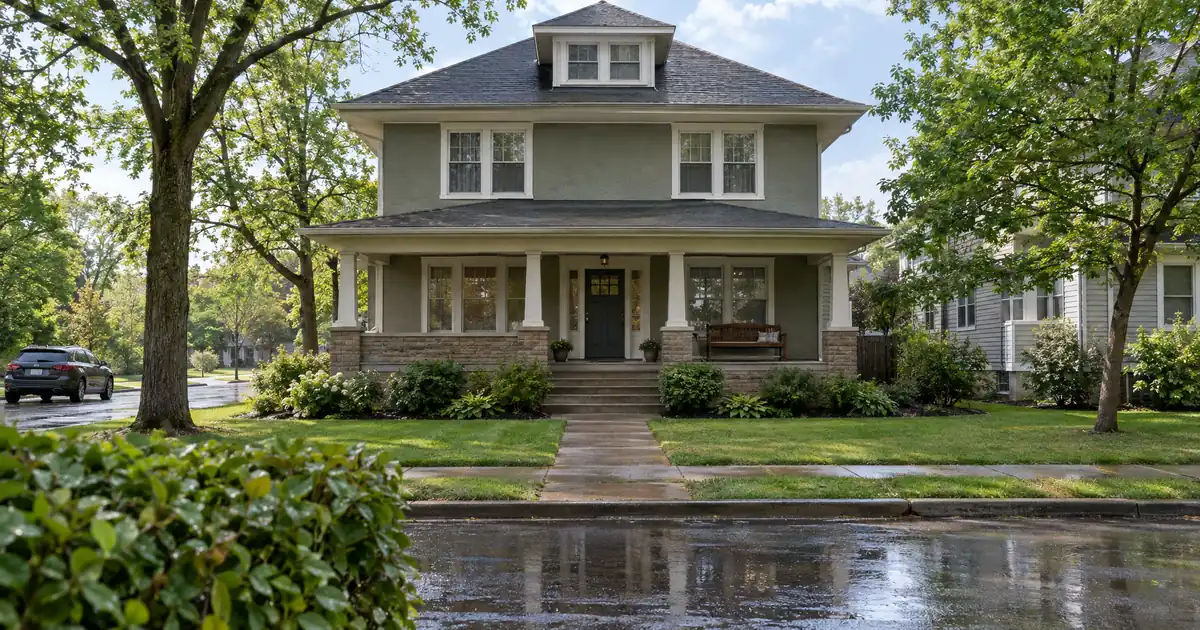
Picture a self-employed buyer eyeing a modest starter home at a price just above the loan floor. They plan to buy as a primary residence with strong credit. The best-case leverage is 90% LTV on a purchase, subject to lender guidelines.
At that leverage, the loan still lands under the $125,000 floor. Their deposits are healthy, so income is not the issue. Size is.
They have four moves:
1. Look at a higher-value home in the same area, so the loan clears the floor.
2. Pay cash from savings and refinance later, mindful that a cash-out on a primary residence is capped at 80% LTV, not 90%.
3. Ask a local lender whose guidelines include smaller balances, and accept fuller documentation.
4. Wait, and save toward a slightly larger purchase. Each figure is subject to lender guidelines and a complete review of property type, leverage, and credit.
Now picture a different buyer buying a rental. The property cleared coverage comfortably, with rent covering the full monthly obligation at a ratio well above 1.0x. It still fell short on loan size. Strong rent did not fix that, because the floor is a separate test. This is why more affordable properties, often the best rent-to-price deals, hit the wall most often.
The better outcomes tend to come from deciding on structure before an offer, not after an appraisal comes back.
Common Mistakes
- Moving money around before applying. Large transfers and fresh deposits trigger paper-trail requests. Leave your accounts alone.
- Opening new accounts. A short history on a new account does not help the 12-month review.
- Assuming strong rent clears a floor. It does not.
- Spending reserves on the down payment. You may then fail the reserve test.
- Ignoring seasoning on a cash-then-refinance plan. Waiting periods vary by program.
- Treating all lenders alike. Guidelines differ widely, and the strictest overlays are not the only ones.
What Should You Decide First?
Start with the property’s use. If you will live in it, bank statement documentation and a higher price are the first path to test. If it is a rental, compare a DSCR structure with a bundled or portfolio route. Then check your cash against the reserve target, around six months of the housing payment on most files.
Tax treatment can depend on how the funds are used and how the property is held; investors should keep clear records and speak with a qualified tax professional before relying on any deduction.
Frequently Asked Questions
What is the smallest loan a bank statement program will fund?
Across the wholesale network Lendmire works with, bank statement loans generally start around $125,000. Individual lender sheets differ, and every file is underwritten on its own. A property that produces a smaller loan will usually need another structure.
Can a bigger down payment help me qualify on a small purchase?
No. A bigger down payment shrinks the loan, which moves it further below the floor. A smaller down payment, up to the leverage the file earns, raises the loan amount. On a primary residence purchase, select lenders go up to 90% LTV. Leverage, reserves, and pricing vary by lender and program; the final terms follow the full file review.
Do bank statements prove income on a DSCR loan?
No. On a DSCR file, statements mainly show funds for the down payment, closing costs, and reserves. Qualification runs primarily on property-level rental income covering the payment, subject to lender guidelines. A bank statement loan is the product that uses deposits as income.
Can I buy with cash and borrow against the property afterward?
Often, yes, though it brings its own rules. The refinance has to clear the loan floor and any waiting period. Cash-out on an investment property tops out around 75% LTV. On an owner-occupied home it runs up to 80% LTV by loan size and credit.
Is a blanket loan a good fix for one cheap house?
Rarely. Blanket programs usually require several properties and a minimum total amount. They fit an investor with a small portfolio. Ask how a single-property sale works before you sign.
Next Step
Lendmire is a broker that arranges financing through select lenders in its wholesale network, and its consumer mortgage licensing covers 16 states. Programs and eligibility are subject to lender guidelines, and none of this is a commitment to lend.
About Lendmire
As a non-QM mortgage broker (NMLS# 2371349), Lendmire facilitates DSCR investor loans across 41 markets, including Washington, D.C. DSCR eligibility is generally reviewed around property-level rental income instead of personal income documentation, subject to lender guidelines, serving LLC-structured portfolios and self-employed borrowers who don’t fit conventional boxes. A two-time Scotsman Guide Top Mortgage Workplace (2025, 2026).
Get Started
Ready to find the right loan for you?
In about 30 seconds you can review financing options available for your home or investment property. No commitment required.
Informational only. Not a Loan Estimate, approval, or commitment to lend. Program availability and eligibility are subject to lender guidelines, credit approval, property review, and underwriting.
References
1. CFPB – Regulation Z § 1026.3, Exempt transactions
2. Compliance Alliance – Regulation Z and Investment Properties
3. OCC – Comptroller’s Handbook, Truth in Lending Act
This article is part of Lendmire’s bank statement loan program — full qualification details, guidelines, and scenarios live on the program page.
Related reading: In an LLC 24-Month Bank Statement Loan vs Portfolio Loan · In an LLC DSCR Loan vs Bank Statement Loan · How Bank Statement Loans Work for 1099 Contractors
Brandon Miller
Founder & CEO, Mortgage Loan Originator, Lendmire LLC
- Mortgage Loan Originator · NMLS# 1129696 · Verify on NMLS Consumer Access
- North Carolina Real Estate Broker · License# 343312 · Verify on NCREC
- North Carolina Insurance Producer · License# 19053198 · Property, Casualty, Life, Health · Verify on NAIC SBS
- Lendmire LLC · Firm NMLS# 2371349 · Verify firm licensure
Legal disclosures. Lendmire (NMLS# 2371349) is a state-licensed mortgage brokerage that arranges financing through wholesale lender relationships. Lendmire is not a direct lender, depository institution, or registered financial advisor. The discussion above is general informational content about real estate financing — it is not financial, legal, or tax advice, and readers should consult licensed professionals for guidance on their individual circumstances. Loan inquiries are subject to lender underwriting; this article does not represent a commitment to lend. Loan terms, rates, and qualification standards vary by borrower, property, and state, and are subject to change at any time. Equal Housing Opportunity. NMLS Consumer Access: nmlsconsumeraccess.org.