
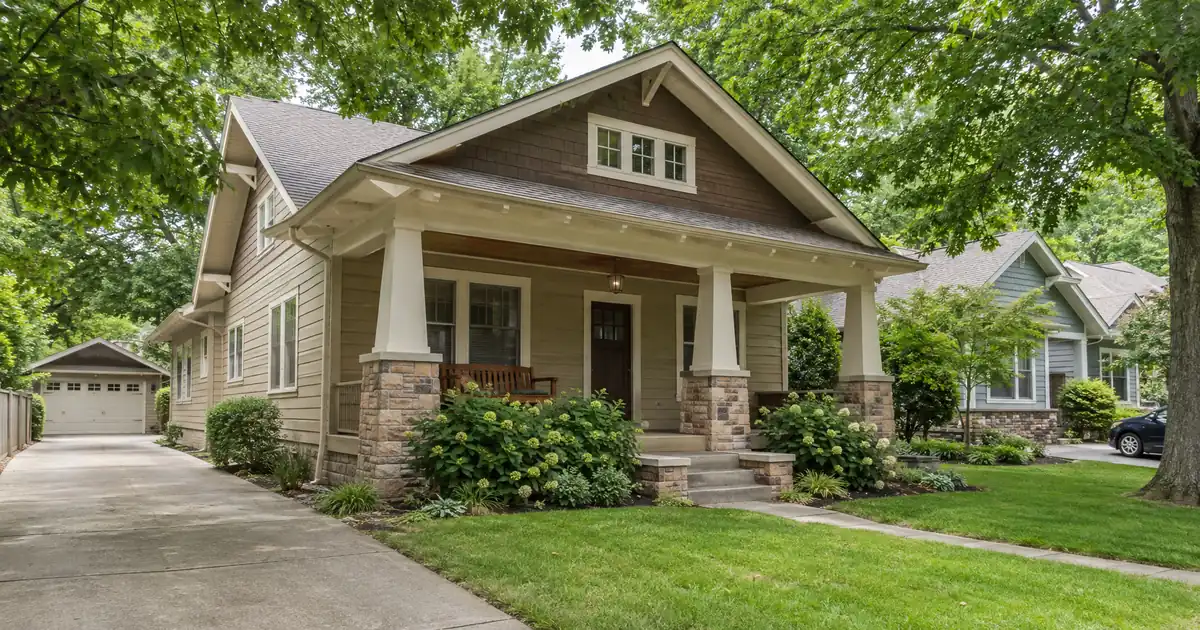
The Quick Read: A bank statement mortgage lets you qualify as a self-employed builder on 12 months of deposits in your business or personal accounts, rather than the net income on your traditional personal-income documentation, and the lender trims those deposits for transfers, loan proceeds, and business expenses before counting them as income. Builders get a closer look than most, because customer payments often pass straight through to subcontractors and suppliers.
- Qualifying income comes from your average deposits after the lender applies an expense factor, which varies by program.
- Pass-through money, such as draws you forward to subs, is the biggest swing factor in a builder’s number.
- On a primary residence purchase, select lenders in Lendmire’s network go up to 90% LTV (loan-to-value, the loan as a share of the property’s value), subject to lender guidelines.
- This product is for your own home. Rentals you hold for investment usually belong on a DSCR loan, which qualifies the property instead of you.
Why Builder Tax Returns Understate Your Real Cash Flow
Your tax return and your bank account tell two different stories. Equipment purchases, depreciation, work in progress, and ordinary write-offs push taxable income down. That is good for your tax bill. It is bad for a mortgage application built on net income.
What your deposits qualify you for.
Alt-doc programs read 12 months of business or personal bank deposits instead of tax returns. Enter your average monthly deposits and see the income a lender would credit you.
The expense factor is set by the lender from your business type and profit-and-loss statement; it is not a number you choose. This widget quotes no rate and no payment.
Program parameters shown update from Lendmire’s centralized guideline source.
Estimate
Illustrative estimate only — not a quote, Loan Estimate, approval, or commitment to lend. Deposit average, expense factor, and housing ratio are editable assumptions; the expense factor a lender applies is set from your business type and documentation. No interest rate or monthly payment is quoted here. Purchase capacity is a simplified illustration and does not account for taxes, insurance, HOA dues, or other debts. Alt-doc income documentation is available on consumer mortgages in the states where Lendmire is licensed for consumer lending; actual terms vary by lender, borrower, and property.
A conventional file divides your monthly debts by that low number, and the ratio breaks. A builder with a full pipeline and healthy deposits can look like a weak borrower on paper. Bank statement lending exists for exactly this gap. Scotsman Guide describes these loans as a way for self-employed borrowers to qualify on actual income rather than the figure on their returns.
None of this means the loan is easy. The lender still reviews credit, assets, the property, and your other debts. Cash flow gets measured differently, and that is the whole difference. Tax treatment can depend on how the funds are used and how the property is held; investors should keep clear records and speak with a qualified tax professional before relying on any deduction.
Who Qualifies?
It depends on the kind of builder you are.
Most programs we place files with want a documented operating history, commonly two years in the same line of work. Proof is usually a CPA or tax-preparer letter, a business license, or a secretary of state filing. If you own part of the business, expect to document your ownership percentage, because income is counted in proportion to your share.
| Builder type | Statements that usually fit | Main watch-out |
|---|---|---|
| Spec builder | Business account | Lumpy sale proceeds need paperwork |
| Custom builder | Business or blended | Draws that pass through to subs |
| Remodeler | Business or personal | Many small deposits, some cash |
| Subcontractor | Personal or business | Fewer pass-throughs, cleaner math |
| Partial owner | Business, scaled by share | Proof of ownership percentage |
A business younger than the program’s minimum history often stalls the file. Some underwriters will weigh strong credit and liquid assets, but that is the exception. Plan on the history requirement.
12 Months or 24: Choosing the Statement Window
Across Lendmire’s wholesale network, the documentation standard is 12 months of statements, business or personal. Market-wide, Scotsman Guide’s non-QM overview describes a 12 to 24 month range. That is the broader picture, and the 12-month figure is the network norm.
How should you choose when a lender offers both? Look at the shape of your year. If the last 12 months were your strongest, a 12-month window shows that. If a slow stretch sits in the middle, a longer window averages it out, but it also drags the number down. Builders with seasonal swings should look at both and compare before committing.
Personal or Business Statements?
You can document with either account type, or a blend, depending on the program. The choice changes how deposits are counted.
| Factor | Business statements | Personal statements |
|---|---|---|
| What deposits represent | Gross revenue | Closer to take-home |
| Expense factor | Applied by lender | Usually lighter or none |
| Best for | Clean, separate business account | Owner pays self from business |
| Watch-out | Pass-through to subs | Commingled non-income deposits |
The usual formula is simple. Eligible deposits, times your ownership percentage, times one minus the expense factor, divided by the number of months. Scotsman Guide’s overview uses a flat 50% factor as its example. Treat that as an illustration. Each program sets its own factor, and some accept a profit-and-loss statement or an expense statement from a third-party tax professional instead. No one can promise you a specific factor before a lender reviews your file.
How Underwriters Treat a Builder’s Deposits
This is where builder files are won or lost. The lender screens every deposit and asks one question: is this your income, and can we show it? Here is how the common builder deposits usually land.
| Deposit type | Usual treatment |
|---|---|
| Customer payments with contract or invoice | Generally counts |
| Progress draws with a draw schedule | Generally counts if documented |
| Transfers between your own accounts | Removed |
| Construction loan draws | Removed as loan proceeds |
| Supplier refunds and reimbursements | Removed or questioned |
| Large one-time deposits, no paper trail | Questioned |
Underwriters want to see paper behind anything unusual. A closing statement documents a spec home sale. A contract or draw schedule documents a progress payment. Cash jobs deposited later get questioned, so keep invoices and job records for every one.
One caution about subcontractor pass-through. If a customer pays you and the money leaves within days to subs and suppliers, programs vary. Some exclude those deposits, others apply a heavier expense factor, and some accept an accountant-prepared expense ratio. A general contractor who mostly routes owner payments to trades may find the qualifying figure far below gross deposits. A lean-overhead trade with a documented low expense ratio may do much better. Undocumented claims of low expenses typically get the default factor.
A Worked Example With Made-Up Proportions
These inputs are modeled assumptions, not market data, and no dollar amounts are used on purpose. Picture a builder who owns 100% of the business and documents 12 months of business statements. Think of total deposits as 100 parts.
- Total deposits: 100 parts.
- Removed as transfers, construction draws, and refunds: 20 parts.
- Eligible deposits: 80 parts.
- Expense factor applied, using the common 50% illustration: 50% of eligible deposits.
- Qualifying income: 40 parts, divided by 12 months.
That 40 parts is the number the lender compares against your housing payment and other debts. If the program accepts an accountant-prepared expense ratio lower than the default, the same deposits produce a bigger number. If a large piece of those deposits were pass-through for subs and the lender screens it out, the number shrinks. The same builder can land in very different places depending on documentation, which is why preparation matters more than the headline deposit total.
The Process, Start to Finish
1. Check your history. Confirm you meet the program’s time-in-business minimum and can document it.
2. Pick the account. Decide whether business, personal, or a blend shows your income most cleanly.
3. Clean up the statements. Stop mixing personal spending into the business account. Label large deposits with invoices or contracts.
4. Gather the file. Expect 12 months of statements, a business license or CPA letter, ID, and proof of ownership percentage.
5. Run the numbers with a broker. The broker compares deposit treatment and expense factors across several programs, since they differ.
6. Underwrite the full file. Credit, assets, reserves, the property, and your debts are all reviewed under the lender’s guidelines.
7. Close on the property. Disclosure rules depend on how the property will be used, covered below.
Start the cleanup in the months before you apply, ideally across the whole statement window. If you wait until you are ready to apply, you can only fix what happens next, not what is already on the statements.
What the Program Looks Like
Select lenders in the network offer these ranges, typically and subject to lender guidelines. Credit, loan size, and the strength of the file all move them.
- Primary residence purchase or rate-term refinance: up to 90% LTV. The top of the range goes to stronger files.
- Primary residence, asset-depletion alternative: up to 80% LTV, qualifying from liquid assets instead of deposits.
- Owner-occupied cash-out (primary or second home): up to 80% LTV with a fixed expense ratio, or 75% with an accountant-prepared ratio. The 90% figure above is a purchase ceiling and does not apply to cash-out.
- Investment property cash-out: tops out around 75% LTV. Investment purchase leverage on bank statement documentation varies by lender.
- Loan size: roughly $125,000 to $3,500,000.
- Reserves: commonly around 6 months of the housing payment.
Reserves matter for builders because so much of your liquidity sits in the business. Lendmire’s piece How to Use Business Cash as Reserves on a Second-Home Bank Statement Loan covers how that works.
Occupancy also decides which disclosure rules apply. Buying your own residence or a second home makes the loan a consumer mortgage, and TRID disclosure rules apply. A loan on a non-owner-occupied rental, including a short-term rental, is business-purpose and exempt from TRID. Keep the two straight, and ask your broker which applies to your property.
Consumer mortgage lending through Lendmire covers 16 states. The loan is reviewed on documented income under the applicable program, subject to lender guidelines. It is not a commitment to lend.
Where the General Rule Breaks
Some builder situations fall outside the standard treatment. Here are the ones that come up most.
Heavy subbing. Covered above. The expense factor or exclusion can shrink a general contractor’s number far below gross deposits.
Spec home sale proceeds. A big closing deposit looks like income until the underwriter asks what it was. Provide the settlement statement and show where the money went. Lumpy deposits can help or hurt, depending on the paper behind them.
Construction-loan draws in your account. If you deposit draws from a construction loan, they are loan proceeds, not income. They come out.
A business under the minimum history. This commonly ends the conversation with a bank statement program. Credit and liquid assets may soften it with some underwriters, but do not count on that.
Building your own house versus buying one as a builder. These are two different products. A bank statement mortgage documents your income for a home purchase or refinance. A construction loan finances the build itself, with draws released as work is verified and an appraisal that assumes completion. Income documentation and construction financing run on separate tracks. Some borrowers need both, and a broker can help you sort which comes first.
A rental portfolio. If you hold rentals for investment, a bank statement loan is usually the wrong tool. More on that next.
Bank Statement Loan, Construction Loan, or DSCR?
| Product | What it qualifies | Best for |
|---|---|---|
| Bank statement mortgage | You, on deposits | Your own home or second home |
| Construction loan | The build and draw schedule | Financing the project itself |
| DSCR loan | The property’s rent | Rentals held for investment |
A DSCR loan (debt service coverage ratio loan) qualifies primarily on property-level rental income covering the payment, subject to lender guidelines. Your personal income is not the test. DSCR loans are designed for non-owner-occupied investment properties. Because they are business-purpose investor loans, they are reviewed differently from a standard owner-occupied mortgage. Many DSCR programs allow LLC borrowers, depending on program guidelines.
This is why a builder with several rentals often does better on DSCR for those properties and on a bank statement loan for the family home. The complete DSCR loans guide covers the rental side in full.
Where Federal Rules Fit
Non-QM means a loan sits outside the federal Qualified Mortgage definition. It does not mean the lender skips verification. The ability-to-repay rule applies to consumer-purpose loans secured by a dwelling, such as your own residence. It requires a reasonable, good-faith determination that you can repay. The CFPB’s ability-to-repay compliance guide lists the factors a lender must consider, including verified income or assets and credit history. It also says the rule does not dictate one underwriting model. That flexibility is why lenders can design their own deposit-based formulas.
Key Terms Defined
Expense factor: the percentage of business deposits a lender subtracts to estimate operating costs before counting income.
Non-QM: a loan outside the federal Qualified Mortgage box, built for borrowers whose income does not fit standard documentation.
Pass-through deposit: money a customer pays you that you quickly forward to a sub or supplier, so it never becomes your profit.
LTV: the loan amount divided by the property’s value.
Reserves: liquid funds, usually counted in months of housing payments, that you hold after closing.
Asset depletion: a way to qualify by converting liquid assets into a monthly income figure instead of using deposits.
Common Mistakes Builders Make
- Commingling. Paying personal bills from the business account makes deposits and expenses harder to sort.
- Unexplained large deposits. If you cannot document it, expect it to be removed.
- Assuming every deposit counts. Transfers, loan proceeds, and refunds do not.
- Treating the expense factor as a federal number. It is a lender setting, and it varies.
- Applying for rentals on a bank statement loan. Rentals usually fit DSCR better.
- Waiting too long to clean up. Fixes made after the statement window closes do not change what the statements show.
Frequently Asked Questions
Can I use a bank statement mortgage if I only do remodeling work?
Yes, remodelers qualify the same way as other builders if they meet the operating history requirement. Many small deposits and some cash payments are common in remodeling. Document them with invoices and deposit records so they can be counted.
Do subcontractor payments reduce my qualifying income?
Often, yes. Draws or customer payments that leave your account for subs and suppliers can be excluded or hit with a heavier expense factor. Programs differ. An accountant-prepared expense ratio may help, if the lender accepts it.
Can I use a bank statement loan to buy a rental?
Usually not the best fit. Bank statement lending is a personal-income product, aimed at your own residence or second home. Investment purchase leverage on this documentation varies by lender. For rentals, a DSCR loan is reviewed for the property instead.
How much can I borrow on a cash-out refinance?
On an owner-occupied cash-out, select lenders go up to 80% LTV with a fixed expense ratio, or 75% with an accountant-prepared ratio. An investment-property cash-out tops out around 75% LTV. Both are subject to lender guidelines, credit, and loan size.
Is a bank statement mortgage the same as a construction loan?
No. A bank statement mortgage documents your income for buying or refinancing a home. A construction loan funds the build through draws. They answer different questions, and some projects involve both.
Next Steps
Reach out at 828-256-2183 or request a quote to start with your own statements.
For current guidelines and terms, see Lendmire’s bank statement loan programs page.
About Lendmire
Lendmire — NMLS# 2371349 — is a DSCR and non-QM mortgage brokerage with investor loan programs in 41 markets, including Washington, D.C. DSCR eligibility is commonly reviewed by the lender around property-level rent rather than personal income documentation, subject to lender guidelines, and the brokerage helps arrange financing for LLC-owned portfolios beyond conventional financed-property limits. Recognized by Scotsman Guide as a Top Mortgage Workplace in 2025 and 2026.
Get Started
Ready to find the right loan for you?
In about 30 seconds you can review financing options available for your home or investment property. No commitment required.
Informational only. Not a Loan Estimate, approval, or commitment to lend. Program availability and eligibility are subject to lender guidelines, credit approval, property review, and underwriting.
References
1. Scotsman Guide: Don’t Shut the Door on Quality Borrowers
2. Scotsman Guide: Rev Up the Engine for Non-QM Lending
3. CFPB Ability-to-Repay and Qualified Mortgage Small Entity Compliance Guide
This article is part of Lendmire’s bank statement loan program — full qualification details, guidelines, and scenarios live on the program page.
Related reading: In an LLC 12-Month Bank Statement Loan vs. 24-Month Bank Statement Loan · Bank Statement Loan vs Portfolio Loan From a Local Bank · Bank Statement Loan on a Condo vs. a Single-Family Home
Brandon Miller
Founder & CEO, Mortgage Loan Originator, Lendmire LLC
- Mortgage Loan Originator · NMLS# 1129696 · Verify on NMLS Consumer Access
- North Carolina Real Estate Broker · License# 343312 · Verify on NCREC
- North Carolina Insurance Producer · License# 19053198 · Property, Casualty, Life, Health · Verify on NAIC SBS
- Lendmire LLC · Firm NMLS# 2371349 · Verify firm licensure
Legal disclosures. Lendmire (NMLS# 2371349) is a state-licensed mortgage brokerage that arranges financing through wholesale lender relationships. Lendmire is not a direct lender, depository institution, or registered financial advisor. The discussion above is general informational content about real estate financing — it is not financial, legal, or tax advice, and readers should consult licensed professionals for guidance on their individual circumstances. Loan inquiries are subject to lender underwriting; this article does not represent a commitment to lend. Loan terms, rates, and qualification standards vary by borrower, property, and state, and are subject to change at any time. Equal Housing Opportunity. NMLS Consumer Access: nmlsconsumeraccess.org.