
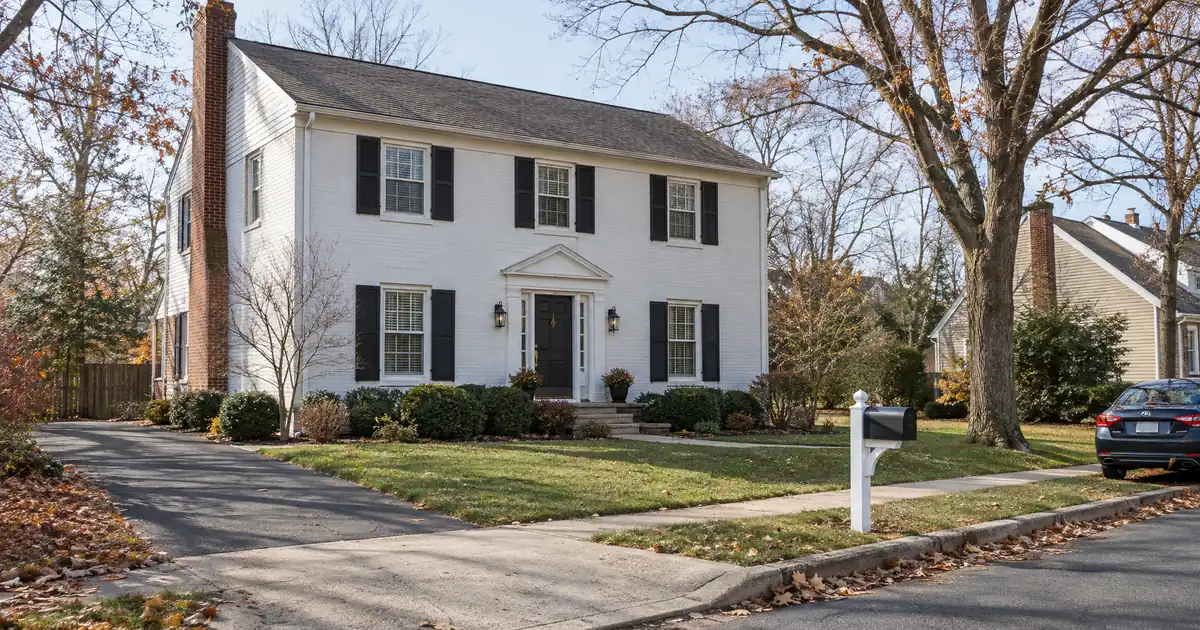
The Quick Read: Occupancy decides which product fits, and income documentation follows from it. A bank statement second home loan is for a property you will personally use for part of the year, with your income proven through deposits. A DSCR investment loan is for a property run as a rental, where the property’s rent carries the file.
- A second home needs real personal use, exclusive control, and a home suited to year-round living.
- A DSCR file starts from the opposite premise: you do not live there, and the rent is the point.
- Bank statements change how income is proven. They do not change what “second home” means.
- Picking the wrong label creates contract and misrepresentation risk, not just a pricing difference.
- Bank statement loans can also be placed on non-owner-occupied rentals, so the two products overlap on documentation but not on occupancy.
Here is the honest answer on who each option is for. The bank statement second home suits a self-employed buyer with a lake house, a mountain cabin, or a beach condo they truly use themselves. Their traditional personal-income documentation shows heavy write-offs, but their deposits tell the real story. The DSCR investment route suits an investor whose plan is to rent the property out, whether long-term or short-term. If your plan is a bit of both, you are in the gray zone, and the sections below walk through it.
What your deposits qualify you for.
Alt-doc programs read 12 months of business or personal bank deposits instead of tax returns. Enter your average monthly deposits and see the income a lender would credit you.
The expense factor is set by the lender from your business type and profit-and-loss statement; it is not a number you choose. This widget quotes no rate and no payment.
Program parameters shown update from Lendmire’s centralized guideline source.
Estimate
Illustrative estimate only — not a quote, Loan Estimate, approval, or commitment to lend. Deposit average, expense factor, and housing ratio are editable assumptions; the expense factor a lender applies is set from your business type and documentation. No interest rate or monthly payment is quoted here. Purchase capacity is a simplified illustration and does not account for taxes, insurance, HOA dues, or other debts. Alt-doc income documentation is available on consumer mortgages in the states where Lendmire is licensed for consumer lending; actual terms vary by lender, borrower, and property.
Side-by-Side
The table shows published industry norms for each column, plus the documentation and reserve figures Lendmire sees across select wholesale lenders. Exact terms vary by lender, and every file is underwritten individually.
| Factor | Bank Statement Second Home | DSCR Investment Occupancy |
|---|---|---|
| Reviewed on | Documented income under the applicable program | Property rent vs. monthly obligation |
| Documentation | 12 months of bank statements | Lease or rent survey, credit, entity papers |
| Occupancy | You use it part of the year | You do not occupy it |
| Rental income | Generally not used to qualify | Central to qualifying |
| Property types | Typically one-unit, year-round suitable | SFR through small multifamily, STRs |
| Vesting | Usually individual name | LLC common, per lender program terms |
| Disclosure regime | Consumer mortgage; TRID applies | Business-purpose; TRID-exempt |
| Reserves | Commonly around 6 months | Varies by program and file |
Two lines deserve a closer look. The first is “Rental income.” On a second home, the rent is not part of the story. On a DSCR file, it is the story. The second is “Vesting.” Because a DSCR loan is business-purpose, borrowing through an LLC is common, subject to lender program eligibility. A true second home is a consumer loan to you personally, and most programs expect it in your own name.
Key Terms Defined
Second home: a property you occupy for part of the year, keep under your own exclusive control, and that is suited to year-round living. It is not a rental, a timeshare, or a rental pool unit.
Investment occupancy: the classification for a property you do not live in, held to produce rental income.
DSCR (debt service coverage ratio): the property’s monthly rent divided by its monthly obligation (principal, interest, taxes, insurance, and HOA dues). A result of 1.00 means rent just covers the payment.
Bank statement loan: a loan where qualifying income comes from averaging deposits across 12 months of business or personal statements, then applying an expense factor.
Occupancy certification: the signed statement at closing saying how you will use the property. It is the document lenders rely on.
Business-purpose loan: credit used primarily for a business or investment purpose, reviewed differently from an owner-occupied mortgage.
Two Separate Decisions: Occupancy and Documentation
Most confusion comes from treating these as one choice. They are two. The first decision is how the property will be used. The second is how your income gets proven.
Picture a simple grid. Down the side: owner-occupied use or rental use. Across the top: income proven by deposits or by the property’s rent.
- Personal use, deposit-based income: the bank statement second home.
- Rental use, property-rent-based lender review: the DSCR investment loan.
- Rental use, deposit-based income: possible on some bank statement programs placed on non-owner-occupied rentals, with leverage that varies by lender.
- Personal use, property-rent-based lender review: this box is essentially empty. Rent does not carry a second-home file.
That third box is why the topic gets muddy. Bank statement documentation is not limited to second homes. Across Lendmire’s wholesale network, some programs will review a rental on deposit income. Occupancy still sets the rules around it.
When the Bank Statement Second Home Is the Better Fit
It fits when you will really use the property and your income is easier to prove through deposits than through traditional personal-income documentation.
You are self-employed and the property is truly yours to enjoy. Think of a business owner whose returns show large deductions. The deposits are strong, and the home is a weekend retreat the family uses. Qualifying income comes from deposit averages over 12 months, with a lender-specific expense factor applied. Scotsman Guide describes this pattern for self-employed borrowers, who provide 12 to 24 months of statements while the lender applies an expense factor or a third-party prepared statement.
You want to keep personal control. A second home needs exclusive control. If a management company decides who stays and when, the property starts to look like a rental. Most second-home programs steer away from that.
Leverage is a real advantage here. On a primary residence, bank statement programs reach up to 90% LTV on a purchase or rate-term refinance through select lenders. On an owner-occupied cash-out, which covers a primary or second home, the ceiling is up to 80% LTV with a fixed expense ratio, or 75% with an accountant-prepared ratio, depending on loan size and credit. Do not confuse the two. The 90% figure is a primary-residence purchase and rate-term number, not a cash-out number. Loan sizes run roughly $125,000 to $3,500,000, and stronger files earn the top of each range.
You prefer not to rely on rental income. Because rent is not part of qualifying, a slow rental season does not threaten the file. The trade-off is that your own deposits carry the loan.
Asset-depletion is another documentation path. Qualifying from liquid assets can reach about 80% LTV on a primary residence. It is worth asking about if you hold large balances but irregular deposits. Final terms depend on lender guidelines, property type, leverage, and the borrower’s complete credit picture.
Because this is an owner-occupied file, it is a consumer mortgage, and consumer disclosure timing applies. That is a feature, not a flaw. It simply means the paperwork follows the consumer path from start to finish.
When DSCR Investment Occupancy Is the Better Fit
It fits when the property is a rental business and you want the property, not your personal income, to do the heavy lifting.
The plan is rent. A duplex, a fourplex, a single-family rental, or a short-term rental all belong here. DSCR is the property’s rent divided by its monthly obligation. Scotsman Guide notes that DSCR lending looks mainly at whether the property can cover the payment, with the appraisal, rental agreements, and a current credit report as the main requirements. Your credit still matters. The property just carries the income case.
You hold several properties. Personal debt-to-income math gets crowded fast when you own multiple rentals. A file that is reviewed on the property avoids stacking each new purchase against your personal income. Qualification runs primarily on property-level rental income covering the payment, subject to lender guidelines.
You want an LLC. Many investors want rentals titled in an entity, subject to lender program eligibility. A DSCR loan is business-purpose, and that supports entity vesting in a way a consumer second-home loan generally does not.
The rent number is the whole game. For small multifamily, the appraisal uses a different operating-income form. Short-term rentals can be underwritten on projected or trailing income, usually with an expense haircut.
Coverage below 1.00 is not automatically a dead end. Select lenders in the network offer programs below 1.00 coverage, though leverage and terms adjust. A deal sitting just under break-even on long-term rent is worth a conversation, not a walk-away.
Because the loan is business-purpose, TRID does not apply, and consumer disclosure timing does not govern the file. DSCR loans are designed for non-owner-occupied investment properties, and as business-purpose investor loans they are reviewed differently from a standard owner-occupied mortgage. Lendmire’s complete DSCR loans guide covers the mechanics from the ground up.
The Reclassification Trap
The most expensive mistake in this space is signing the wrong occupancy certification. A second-home borrower agrees to occupy the home for personal use, typically through a rider at closing. If the real plan is to list it and collect bookings, that statement was not accurate.
Several things push a “second home” toward investment territory:
- Listing it on a rental platform as a core income plan.
- Handing occupancy control to a property manager or rental pool.
- Buying a multi-unit building. Second-home programs generally stop at one unit.
- Counting on rent to make the purchase work.
The reverse also happens. An investor declares a rental, is reviewed on the rent, then moves in. That is equally a misstatement. Signing a false occupancy statement can carry serious legal consequences, so treat the certification as a contract, not a formality.
“Investment” is not a magic word either. Whether a loan is truly business-purpose turns on the actual purpose, and the lender makes that call file by file. The CFPB’s commentary on Regulation Z says the creditor must decide in each case whether a transaction is primarily for an exempt purpose. The OCC’s TILA handbook lists factors such as the size of the transaction and how much of the borrower’s total income comes from the property.
Owner-occupied small multifamily is its own wrinkle. If you live in one unit of a duplex through fourplex, the file is not a simple second home or a pure investment. That house-hack situation follows its own rules, and it is worth raising early with your broker.
DSCR vs. conventional financing
There are two common ways to finance an investment property, and they qualify you differently — here’s how investors weigh them.
Why investors choose it
- Qualifies on the property’s rental income — no personal tax returns, W-2s, or pay stubs needed to document income.
- No personal debt-to-income ceiling to clear, so existing mortgages and obligations don’t cap your borrowing the same way.
- Can be closed in an LLC, keeping the property inside a business entity.
- Built for scaling — not held to the limit on number of financed properties that conventional financing applies.
- Underwriting centers on the deal: generally qualifies when the rent covers the payment, a 1.00x coverage ratio being a common baseline (confirmed in underwriting).
- Designed specifically for investment property, including long-term and, where the program allows, short-term rentals.
Where it’s strong
- Often the lowest ongoing financing cost for a buyer who fully qualifies on personal income — a fit for a first property or a cost-first purchase.
Trade-offs for investors
- Requires full personal income documentation and must fit within a debt-to-income limit — salary, existing debts, and other mortgages all count.
- Typically held in your personal name rather than a business entity.
- Caps how many financed properties you can carry, which can become a ceiling as a portfolio grows.
- Evaluates you as a borrower as much as the property, which usually means more paperwork.
How investors usually choose: a first or single property often optimizes for the lowest financing cost; portfolio builders often optimize for leverage, vesting in an LLC, and scaling past conventional caps. The right answer depends on your goals, the property, and current guidelines — both paths run through select lenders in Lendmire’s wholesale network, with eligibility and terms confirmed in underwriting.
The Mixed-Use Buyer
Many buyers want two weeks of personal use and a rental calendar the rest of the year. Neither label fits cleanly. Here is the plain truth: a second-home certification expects genuine personal use and your control, while an investment certification expects you are not occupying it.
The realistic options look like this:
1. Be honest about the dominant purpose. If bookings pay for the property, treat it as an investment and use DSCR documentation or a bank statement program placed on a non-owner-occupied rental.
2. Keep rental activity truly incidental. If you want a true second home, rent income should not be part of qualifying, and control should stay with you.
3. Hold off on the rental plan. Some borrowers close as a second home and keep the rental idea out of the file. That only works if the plan genuinely changes later and the loan paperwork permits it. ValuePenguin advises reading the loan documents for restrictions on how long a home must be used as a second home before converting it to a rental.
The stronger play for most mixed-use buyers is option one. It costs a bit of flexibility, but it matches the paperwork to the plan.
Scenario Guide: Which Path Fits
| Buyer Profile | Likely Path | Why |
|---|---|---|
| Lake house used by the family | Bank statement second home | Real personal use |
| Cabin run mainly as a rental | DSCR investment | Rent is the purpose |
| Duplex held in an LLC | DSCR investment | Multi-unit, entity vesting |
| Self-employed, wants a rental, thin traditional personal-income documentation | Alt-doc on a non-owner-occupied rental | Deposits prove income |
| Plans change after closing | Review loan documents first | Occupancy covenants apply |
For the self-employed investor in row four, leverage depends on the lender. Investment-property cash-out on bank statement documentation tops out around 75% LTV. Investment purchase leverage varies by lender, and investor-focused leverage guidance usually sits on the DSCR side.
One observation from the broker’s chair: files get stuck less often on the income math than on a mismatch between the stated plan and the property. A buyer who says “second home” on the application and “we’ll list it on weekends” in the same conversation creates a problem that no document package can fix. Stating your intent clearly up front is one of the simplest ways to keep underwriting on track.
What If Plans Change After Closing?
Plans do change. A job moves, a family outgrows the lake house, or a buyer decides to rent it out. What matters is what you signed.
A second-home rider usually covers a defined period of personal use, often around a year. Renting during that window can breach the covenant. After that period, converting to a rental may be possible, but you should read the paperwork and talk to the servicer or your broker before listing. If the rental plan is permanent, a refinance into an investment-occupancy product may be the clean path. Investment cash-out tops out around 75% LTV on bank statement programs, and DSCR cash-out follows the lender’s own guidelines.
Tax treatment can depend on how the funds are used and how the property is held; investors should keep clear records and speak with a qualified tax professional before relying on any deduction.
Frequently Asked Questions
Can I use a bank statement loan to buy a rental property?
Yes, on some programs, though not all. Bank statement documentation can be placed on a non-owner-occupied rental, and that file is business-purpose. Leverage on an investment purchase varies by lender, so ask for the options rather than assuming the primary-residence figures apply.
Can a DSCR loan finance my second home?
No, not when the property is a true second home. DSCR loans are designed for non-owner-occupied investment properties. If you want part-year personal use and exclusive control, a second-home program with documented income fits better.
Can I rent out my second home occasionally?
Occasional rental activity may exist, but rental income generally cannot be used to qualify, and control restrictions apply. A property whose plan depends on bookings usually belongs in the investment category. Talk to the lender before listing.
Does an LLC change the occupancy rules?
An LLC changes the vesting, not the occupancy. Entity ownership is common on business-purpose investment loans, subject to program terms. It does not turn a property you personally use into a rental or the other way around.
What happens if I misstate occupancy?
It is a material misrepresentation, and the consequences can be serious, including loan-contract and legal exposure. Signing a false occupancy statement can carry criminal penalties under federal law. Choose the label that matches your real plan.
How to Decide
Ask yourself three questions. Will I personally use this property for part of the year, with real control? Does the rent need to cover the loan? Would I be comfortable signing a statement describing exactly how I plan to use it?
If the answers are yes, no, and yes, a bank statement second home fits. If they are no, yes, and yes, DSCR investment occupancy fits. If your answers are mixed, that mix is information. It tells you the file needs a conversation before it needs an application.
For occupancy specifics, Lendmire’s piece Bank Statement Loan Occupancy: Primary, Second Home or Investment goes deeper. Bank statement loan programs are available through Lendmire’s consumer mortgage licensing in 16 states, and all terms are subject to lender guidelines. This is not a commitment to lend.
The cleanest deals in this corner of the market start with a buyer who can say, in one sentence, what the property is for.
For current guidelines and terms, see Lendmire’s bank statement loan programs page.
About Lendmire
Lendmire, NMLS# 2371349, is a non-QM mortgage broker serving real estate investors in 41 markets, including Washington, D.C., through DSCR investor loan programs. Qualification is generally reviewed around the subject property’s rental income, not the borrower’s W-2 history — a practical fit for LLC-titled portfolios and self-employed investors. All scenarios remain subject to lender review and program guidelines. Two consecutive Scotsman Guide Top Mortgage Workplace recognitions (2025, 2026).
Get Started
Ready to find the right loan for you?
In about 30 seconds you can review financing options available for your home or investment property. No commitment required.
Informational only. Not a Loan Estimate, approval, or commitment to lend. Program availability and eligibility are subject to lender guidelines, credit approval, property review, and underwriting.
References
1. Scotsman Guide, Rev Up the Engine for Non-QM Lending
2. Scotsman Guide, Reach Real Estate Investors by Becoming an Expert in These Loans
3. CFPB, Regulation Z §1026.3 commentary
4. OCC Comptroller’s Handbook, Truth in Lending Act
5. ValuePenguin, Second Homes vs. Investment Properties
This article is part of Lendmire’s bank statement loan program — full qualification details, guidelines, and scenarios live on the program page.
Related reading: Interest-Only DSCR Loan or 24-Month Bank Statement Loan for a First Rental? · Can You Get a Bank Statement Loan on a 2-4 Unit Home You Live In? · Bank Statement vs P&L vs 1099 vs DSCR for a Self-Employed Mortgage
Brandon Miller
Founder & CEO, Mortgage Loan Originator, Lendmire LLC
- Mortgage Loan Originator · NMLS# 1129696 · Verify on NMLS Consumer Access
- North Carolina Real Estate Broker · License# 343312 · Verify on NCREC
- North Carolina Insurance Producer · License# 19053198 · Property, Casualty, Life, Health · Verify on NAIC SBS
- Lendmire LLC · Firm NMLS# 2371349 · Verify firm licensure
Compliance and disclosures. Lendmire (NMLS# 2371349) is a licensed mortgage broker and is not a direct lender, depository institution, financial advisor, or tax professional. Content in this article is general market analysis and educational information — not financial, legal, or tax advice for any specific situation. Lendmire does not guarantee loan approval; every transaction is subject to underwriting by the funding lender. Mortgage pricing and loan program guidelines are subject to change at any time without notice and vary by borrower characteristics, property type, and state regulations. Lendmire complies with Equal Housing Opportunity. Licensure verification: NMLS Consumer Access.