
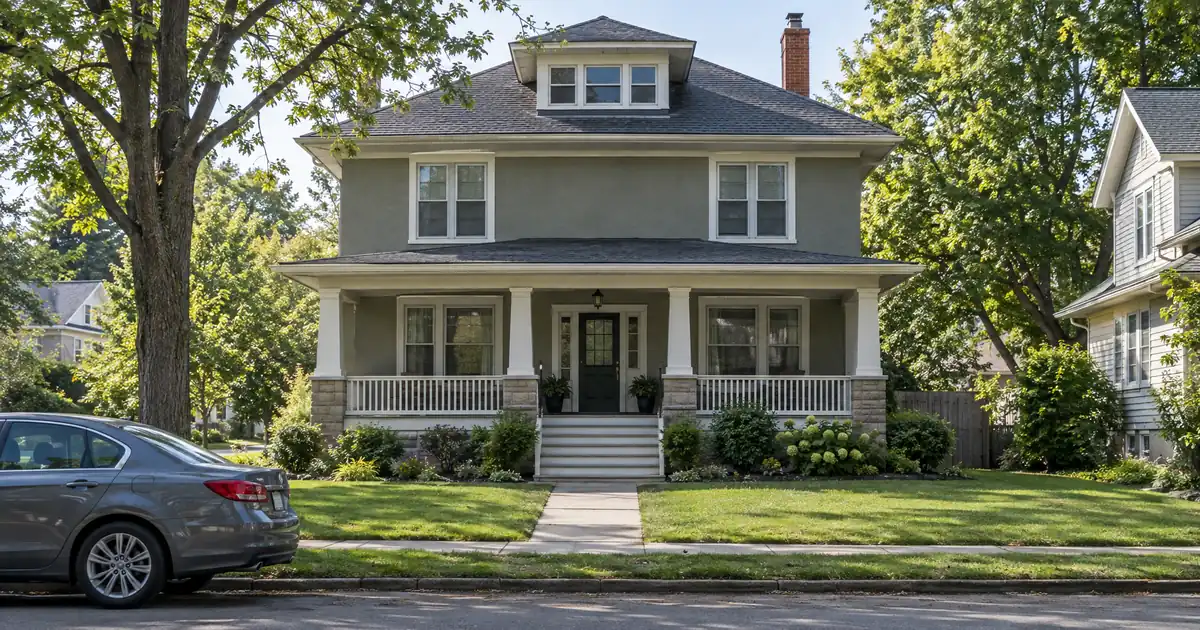
The Quick Read: A DSCR loan cannot finance a home you, a relative, or an LLC member will live in. It finances a non-owner-occupied rental, and it qualifies primarily on property-level rental income covering the payment, subject to lender guidelines. The late-summer window is still worth planning for. Buy the rental, line up the appraisal and paperwork early, and stress-test the coverage number before you write the offer.
Key Takeaways
- A primary residence, second home, or house-hack where you live in a unit does not fit a DSCR loan.
- Most purchase files land at 75%-80% LTV, and select programs reach 85% with roughly a 700+ score.
- Clearing a 1.00 coverage ratio is not the same as positive cash flow.
- The appraisal and rent schedule, not underwriting, usually set your pace.
- Seasonal rent lift is not something to underwrite. Underwrite the property.
Can a DSCR Loan Buy the “New Family Home”?
No. The title of this piece reads like a consumer mortgage. DSCR lending is a different product.
DSCR Calculator
Run the numbers in your market
Rate source: Freddie Mac 30-yr average via FRED® — Federal Reserve Bank of St. Louis · effective Sep 24, 2026
Prefilled with starting assumptions — enter your own rent or nightly figures, taxes, insurance, and HOA for a more accurate picture.
Program parameters update from Lendmire’s centralized guideline source. Taxes and insurance are editable estimates.
As of Sep 24, 2026 · General Freddie Mac market benchmark, not a Lendmire loan offer. Rent, nightly rate, occupancy, taxes, and insurance are editable estimates. Short-term rental figures are estimates only and vary significantly by season, property type, management approach, and local short-term-rental rules — confirm local regulations before relying on them. Qualifying income for short-term rentals varies by program — some use appraisal market rent, others use documented STR history or projections — and is confirmed in underwriting. Not a Loan Estimate, approval, or commitment to lend. Program availability and eligibility are subject to lender guidelines, credit approval, property review, and underwriting.
DSCR loans are designed for non-owner-occupied investment properties. Because they are business-purpose investor loans, they are reviewed differently from a standard owner-occupied mortgage.
The borrower signs an occupancy certification at closing. That certification is about who actually lives in the property and what the owner intends. Titling the deal in an LLC does not change it. Neither does renting a room to a relative, since occupancy is about who lives there, not whether rent changes hands.
If you need a home to live in, you want a primary-residence loan. If you want a rental to be ready for the late-summer leasing window, you are in the right place. That is an investor decision, and the rest of this article covers it.
How Do You Beat the Back-to-School Rush as a Rental Buyer?
Work backward from your target date and treat the appraisal as the critical path. Across the wholesale network Lendmire works with, the files that stall are almost never stalled by the underwriting desk. They stall on appraisal scheduling, missing entity documents, and insurance binders.
The sequence that works looks like this:
1. Stress-test before the offer. Divide expected monthly rent by the full monthly obligation: principal, interest, taxes, insurance, and any HOA dues. Then trim the rent by a modest cushion, such as 5%, and see whether the number still holds.
2. Assemble a light application package. That means the loan application, a credit authorization, the executed purchase contract, and a current lease if the property is tenant-occupied. If you are buying in an entity, add the operating agreement and articles. Add an insurance quote or binder.
3. Order the appraisal and rent schedule right after contract. Waiting costs you the most time here.
4. Run title, insurance, and entity work in parallel. Do not wait for one to finish before starting the next.
5. Clear underwriting, sign, and fund. Lender guidelines, credit approval, and property review apply to every file.
Timing is the one thing this article will not put a number on. Every file is underwritten individually, and the honest answer is that file readiness and appraisal scheduling decide the calendar. The practical rule is to sign the contract early enough that none of those steps gets squeezed against your target date.
What Does Underwriting Actually Look At?
Lenders in the network look at rent against the full monthly obligation, then at the borrower and property around it. You do not submit W-2s and traditional personal-income documentation as the core of the file. The property income carries the qualification.
The coverage ratio. DSCR is gross monthly rent divided by PITIA. At 1.00, rent exactly covers the obligation. A stronger ratio typically opens better pricing and more leverage. Coverage below 1.00 is available through select lenders in the network, with leverage and terms adjusted.
Some programs start at 1.00, but that is a floor for specific programs, not a universal standard.
Which rent counts. Most programs use the lower of the in-place lease rent and the appraiser’s market rent. The appraiser documents market rent on a rent schedule. Form 1007 covers one-unit properties, and Form 1025 covers two to four units. These form names come from appraisal practice. DSCR loans are not agency products.
Credit. A 620 floor exists in parts of the network. Most programs want around 660. A score of 700 or more unlocks the strongest leverage tiers.
Leverage. Purchases typically run 75%-80% LTV, which means 20%-25% down. Select high-leverage programs reach 85% LTV with roughly a 700+ score. Cash-out refinances top out around 75% LTV on standard rentals, with about six months of seasoning as the common expectation.
Loan size. Standard programs run up to $3,000,000. Above $2,500,000 the network generally holds to 30-year fixed structures.
Reserves. Reserves vary by lender, leverage, loan size, and transaction type. Around six months of PITIA is common. Conservative rate-term files at modest leverage under $1,500,000 can see reserves waived. Larger loans typically step up to about nine months.
All of this is guidance from select wholesale-network guidelines, not a commitment to lend. The full picture sits in the complete DSCR loans guide.
Key Terms Defined
DSCR: Debt service coverage ratio, meaning monthly rent divided by the full monthly housing obligation.
PITIA: Principal, interest, taxes, insurance, and association dues, which together make the monthly obligation in the DSCR formula.
Rent schedule: The appraiser’s written opinion of market rent, which sets rent used for lender review on many purchases.
Seasoning: The time you have owned a property before a lender will allow a cash-out refinance against its value.
Occupancy certification: The written statement that you will not live in the property and that it is a business-purpose loan.
Reserves: Liquid funds held after closing, typically counted in months of PITIA.
Which Structures and Variations Exist?
A few structures change how the file looks, but none of them removes the core tests. The spine is the 30-year fixed. Extended terms such as 40-year and interest-only periods are available through select lenders in the network. ARM structures exist for investors who want them.
On an interest-only file, some lenders calculate coverage on interest, taxes, insurance, and dues rather than on full PITIA. Ask how the lender runs it before you assume the ratio.
A larger down payment lowers the monthly obligation and can lift the ratio. It never erases leverage caps, credit floors, reserve rules, or property eligibility. The strongest files clear both tests: enough equity and enough rental coverage.
Many programs also carry prepayment penalties. If you plan a short hold, factor that in before you pick a structure.
Where Does the General Rule Break?
The rules above hold most of the time. These are the edge cases where they bend or fail.
The house-hack. A duplex where you live in one unit pulls the deal back toward owner-occupied treatment. That includes a two-to-four-unit property with the owner in one unit. Sources differ on exactly where legal lines sit for small multi-unit buildings. Keep your structure conservative and confirm the specifics with counsel.
Occasional personal use. A second home and a DSCR loan sit on opposite sides of the occupancy line. Federal Reg Z commentary treats a property as owner-occupied when the owner expects to use it for more than 14 days in the coming year. A beach house you use for a month and rent the rest of the year is not a rental in the eyes of that rule.
Vacant purchases. A property needs no current tenant or lease. The appraiser’s market-rent opinion carries the qualification. That matters a lot if you plan to close before the fall leasing push, because the rent schedule is the whole story. Some lenders discount vacant-property rent, so run your stress test on a trimmed number.
Desktop valuations. One practitioner source, ICON Capital, reports that some lenders increasingly use desktop valuations on standard single-family homes. It adds that multi-unit properties still need a full interior inspection. Treat that as program-dependent, not a given.
Complex files. New construction, complex entity structures, foreign investors, and properties needing extra inspections add steps. Condo documents and HOA processing are common sources of delay. Plan extra room when any of these apply.
Short-term rentals. STR purchases run up to 75% LTV, refinances around 70%, and cash-out refinances at 70%. Expect a 640+ score and about 12 months of hosting history. Purchases and refinances both carry a 1.00 coverage floor. Short-term rental rules can vary by city, county, HOA, and property type, so investors should confirm local rules before relying on projected rental income. Every figure here varies by lender and program — guidelines, property type, leverage, and credit profile all apply.
Property types. DSCR on manufactured homes (single- and double-wide), log homes, and barndominiums is not offered in the network.
Does Seasonal Leasing Change the Math?
Not the way most buyers hope. Rent used for lender review comes from the lease or the appraiser’s schedule. The coverage ratio is a snapshot built from comps at the time of appraisal. Closing in peak season does not lock in a peak-season rent.
The market data is also a caution. Rentometer’s mid-year single-family report shows national single-family rents declined 1.6% year over year in the first half, and the usual spring and early-summer lift did not raise the national median. Single-family homes house 41% of U.S. renters, so that softness reaches a large share of the market.
The practical answer is to stress-test harder, not chase a seasonal premium.
A Worked Scenario With Ratios
Consider an investor buying a single-family rental at 75% LTV. The appraiser’s rent schedule produces a coverage ratio of roughly 1.2x on the full PITIA. That clears a 1.00 floor with cushion. Final terms depend on lender guidelines, property type, leverage, and the borrower’s complete credit picture.
Now trim the rent by 5%. The ratio slips, but it still clears 1.00. The file survives the stress test.
Change one input. Suppose insurance comes in materially higher than the early estimate, and the ratio falls near 1.00. The investor has three levers: a larger down payment, a different structure such as interest-only, or a different property. A sub-1.00 result may still be reviewable through select lenders in the network, with leverage and terms adjusted. It is also a signal to revisit the purchase price.
One more point. Clearing 1.00 is not positive cash flow. DSCR compares rent to PITIA only. Repairs, vacancy, management, utilities, and capex sit outside the calculation. An investor who sizes a purchase to a 1.00 coverage ratio and nothing else can own a property that loses money.
Tax treatment can depend on how the funds are used and how the property is held; investors should keep clear records and speak with a qualified tax professional before relying on any deduction.
Should You Use DSCR or Something Else?
It depends on the investor profile. If you have a clean traditional employment income picture, one or two financed properties, and plan to hold personally, a conventional loan may carry a lower cost. If you hold in an LLC (subject to lender program eligibility), are self-employed, or own several financed properties, DSCR often becomes the practical lane.
The flip point usually comes around the third or fourth financed property. It can come earlier if your traditional personal-income documentation does not cleanly show your income.
Common Mistakes Before a Late-Summer Close
- Treating the title as a product. A home you live in is not a DSCR file.
- Skipping the stress test. A ratio that only works at full expected rent is fragile.
- Ordering the appraisal late. This is the most common self-inflicted delay.
- Assuming “light paperwork” means none. Appraisal, title, and insurance still apply.
- Underwriting to the season. Summer rent swings do not carry into your coverage figure.
- Ignoring insurability. Get an insurance quote before you apply, not after.
Next Step
If you are buying or refinancing a rental property and want to see how the numbers work, Lendmire can help you compare DSCR loan options based on the property income, credit profile, leverage, and investor goals. Reach the team at 828-256-2183 or request a quote.
Frequently Asked Questions
Can I use a DSCR loan to buy a house my family will live in?
No. DSCR loans are for non-owner-occupied property, and the borrower signs an occupancy certification. A family member living there counts as occupancy, even if they pay rent. If you need a home to live in, look at primary-residence financing instead.
What down payment do most DSCR purchases need?
1.00 is where many select programs start. Most files land at 75%-80% LTV, which is 20%-25% down. Terms vary by lender, credit profile, property type, and reserves, and all of it is subject to lender guidelines.
Do I need a tenant in place before I buy?
No. A property needs no current lease, because the appraiser’s market-rent opinion can carry the qualification. Most programs use the lower of lease rent and market rent when both exist. Some lenders discount rent on vacant properties, so stress-test the number.
Does a 1.00 coverage ratio mean the property cash flows?
No. DSCR compares rent to PITIA only. A property can clear 1.00 and still lose money after real operating costs.
What if my coverage falls below 1.00?
Sub-1.00 coverage is available through select lenders in the network, with leverage and terms adjusted. Expect lower LTV and possibly stronger credit or reserves. If you only reach that number on every property you look at, revisit the market or the purchase price rather than the loan type.
About Lendmire
Lendmire (NMLS# 2371349) is a DSCR-focused mortgage broker that helps arrange investor financing across 41 markets, including Washington, D.C., through wholesale and investor-lending channels. DSCR eligibility is generally reviewed by the lender on the property’s rental income rather than personal income documentation, subject to lender guidelines — which works for self-employed investors, LLC operators, and portfolios above four financed properties. Scotsman Guide named Lendmire a Top Mortgage Workplace in both 2025 and 2026.
Get Started
Ready to find the right loan for you?
In about 30 seconds you can review financing options available for your investment property. No commitment required.
Informational only. Not a Loan Estimate, approval, or commitment to lend. Program availability and eligibility are subject to lender guidelines, credit approval, property review, and underwriting.
References
1. CFPB – 12 CFR 1026.3 Exempt transactions
2. ICON Capital – Closing timeline guide
3. Rentometer – Mid-Year Single-Family Rental Market Report
This article is part of Lendmire’s DSCR loan program — full qualification details, guidelines, and scenarios live on the program page.
Related reading: Navigating The August Homebuying Rush: Expert Tips To Secure A Mortgage Before Labor Day · Beat The Heat: Top Mortgage Tips For Buying Your Dream Home During The August Market Surge · 15-year Vs. 30-year Mortgage: Which One Is Right For You?
Brandon Miller
Founder & CEO, Mortgage Loan Originator, Lendmire LLC
- Mortgage Loan Originator · NMLS# 1129696 · Verify on NMLS Consumer Access
- North Carolina Real Estate Broker · License# 343312 · Verify on NCREC
- North Carolina Insurance Producer · License# 19053198 · Property, Casualty, Life, Health · Verify on NAIC SBS
- Lendmire LLC · Firm NMLS# 2371349 · Verify firm licensure
Disclosure information. Lendmire is a state-licensed mortgage brokerage under NMLS# 2371349. Lendmire is not a depository institution, direct lender, or financial advisor — all loans referenced are placed through wholesale lender partners and are subject to each lender's underwriting standards. This article is provided for general informational purposes and is not a commitment to lend, nor does it constitute financial, legal, or tax advice. Loan programs, terms, rates, and qualification standards change without notice and depend on borrower profile, property type, and the state in which the subject property is located. Equal Housing Opportunity provider. NMLS Consumer Access: nmlsconsumeraccess.org.