
The Quick Read: A bank statement cash-out refinance on a two-to-four unit rental lets a self-employed owner pull equity by qualifying on twelve months of deposits under the applicable program instead of tax returns, typically up to about 75% LTV on an investment property, subject to lender guidelines. The right program for your situation depends on how strong the deposits are, how much equity remains after the payoff, and how the building is owned and occupied.
- Qualifying income comes from averaged deposits, reduced by a lender-specific expense factor.
- Investment-property cash-out typically tops out around 75% LTV, which is lower than owner-occupied cash-out.
- Loan sizes generally run from $125,000 to $3,500,000, with reserves commonly around six months of the housing payment.
- Living in one of the units changes the product, the leverage tier, and the disclosure rules.
- Strong deposits with thin rent favor bank statement. Strong rent with messy income favors DSCR.
What Is a Bank Statement Cash-Out on a Two-to-Four Unit Property?
It is a refinance that replaces your current mortgage with a larger one and pays you the difference in cash. The lender decides how much income you have by reading your bank deposits, not your tax returns.
DSCR Cash-Out Calculator
Run the cash-out numbers in your market
Rate source: Freddie Mac 30-yr average via FRED® — Federal Reserve Bank of St. Louis · effective Oct 29, 2026
Prefilled with starting assumptions — enter your property’s value, balance, taxes, and insurance for a more accurate picture.
Program parameters update from Lendmire’s centralized guideline source. Taxes and insurance are editable estimates.
As of Oct 29, 2026 · General Freddie Mac market benchmark, not a Lendmire loan offer. Property value, balance, taxes, and insurance are editable estimates. Maximum loan-to-value varies by lender, program, property type, and seasoning. Not a Loan Estimate, approval, or commitment to lend. Program availability and eligibility are subject to lender guidelines, credit approval, property review, and underwriting.
Bank statement loans belong to the non-QM family. Non-QM means the loan uses a documentation method other than the standard tax-return approach. HousingWire’s non-QM guide names bank statement loans and DSCR loans as the two common routes. It reports roughly $239 billion in annual non-QM volume, with bank statement loans at 34% and DSCR at 29%.
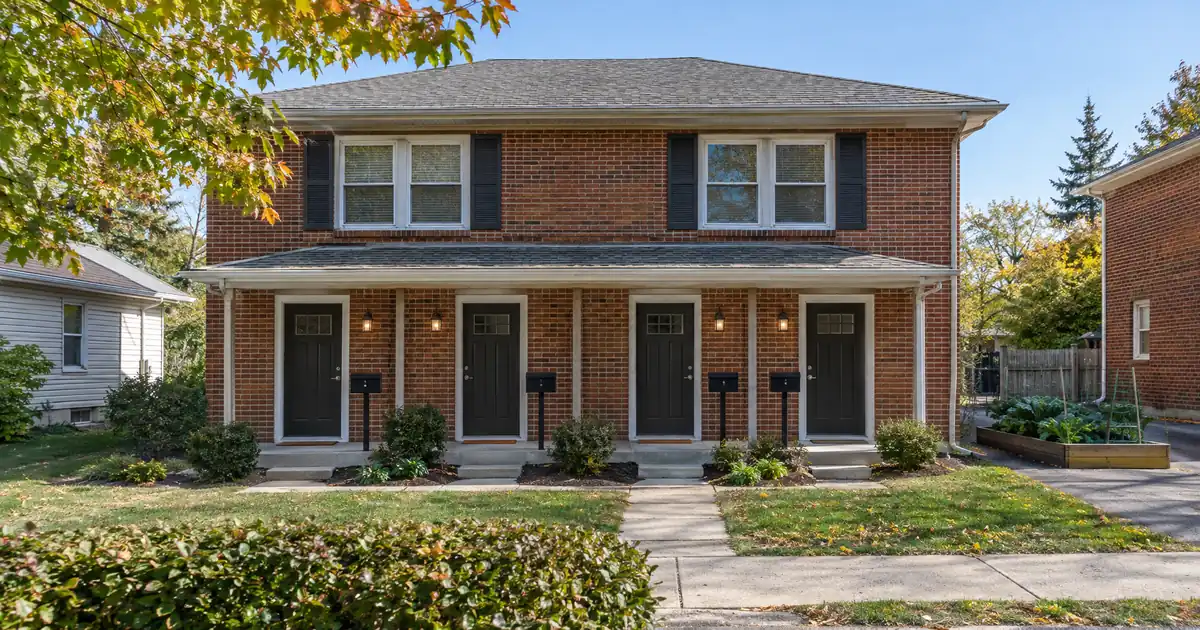
The two-to-four unit part matters because the collateral is a small income property, not a single-family home. The appraiser values it with a rent schedule for each unit, and the lender weighs that building against your income and your other debts.
This is not a no-paperwork product. It is alternative documentation. The loan is reviewed on documented income under the applicable program, subject to lender guidelines.
How Underwriting Treats the File, Step by Step
Underwriting follows six steps in a fairly consistent order. The details vary by lender, which is why a broker that shops several wholesale lenders can change the outcome.
1. Pick the statement set. Most programs Lendmire places files with use 12 months of statements from a business or personal account. Some lender sheets in the wider market ask for a longer window, as HousingWire notes. The averaging usually has to come from the same account.
2. Screen the deposits. Underwriters pull out credits that are not income, such as transfers between your own accounts, loan proceeds, and one-time refunds. Large unexplained deposits get a written explanation or get excluded.
3. Average and apply the expense factor. For business accounts, the lender averages the deposits and subtracts an expense factor. A trade publication, Scotsman Guide, uses 50% as its illustrative example. That figure is an example, not a rule. Each lender sets its own factor, and an accountant-prepared expense ratio can change it.
4. Test income against debts. The new, larger mortgage on the building is added to your other monthly debts. The ratio of debts to qualifying income has to fit the program. This is where bank statement loans differ most from DSCR loans.
5. Value the building. The appraiser reports on a small residential income form. Fannie Mae’s Form 1025 shows how that works: the appraiser reconciles market rents into an opinion of rent for each unit. Here, the form is only appraisal paperwork. Bank statement loans are not agency loans.
6. Pay off and pay out. The new loan clears the old first mortgage. Whatever equity remains within the leverage cap comes to you as cash, after costs.
Two limits control the result. One is the income limit from your deposits. The other is the equity limit from the program’s LTV cap. Whichever is tighter sets your loan.
What Does “Best Program” Mean for a Small Multifamily?
The best program for your situation is the one that fits your deposits, your equity, and your ownership structure at once. No single program wins for every borrower. The lenders that write this product differ in several ways that matter.
Lendmire is a mortgage broker, not a lender. It works with a network of wholesale lenders and matches each file to the program that suits it. These are the criteria that separate one program from another:
| Factor | What to compare |
|---|---|
| Statement handling | Business vs. personal accounts |
| Expense factor | Fixed ratio vs. accountant-prepared |
| Investment cash-out LTV | Typically up to about 75% |
| Reserves | Commonly around six months |
| Vesting | Personal name vs. entity, per program terms |
| Loan size | Roughly $125,000 to $3,500,000 |
Because lenders differ on the expense factor and on reserve rules, the same deposits can produce different qualifying income. That gap is the main reason to compare before you commit to one lender’s sheet.
Bank Statement or DSCR: Which Lane Fits the Building?
Bank statement loans qualify the borrower. DSCR loans qualify the property. That one difference drives most of the choice. Lendmire’s piece Best DSCR Cash-Out Refinance Program on a Two-to-Four Unit Investment Property covers the property-income side in detail, so this section stays on the comparison.
| Factor | Bank statement | DSCR |
|---|---|---|
| What is tested | Borrower deposits | Property rent vs. payment |
| Strongest fit | Strong deposits, thin rent | Strong rent, messy income |
| Personal debts | Count against you | Generally not the focus |
| Scaling a portfolio | DTI can cap you | Property-by-property |
| Occupancy | Owner or non-owner | Non-owner-occupied |
If the rent covers the full monthly obligation comfortably, DSCR often fits better, and some programs in the network review coverage below 1.00 with adjusted LTV and terms. If your deposits are strong but the building’s rent is thin, bank statement can work where DSCR would not. The complete DSCR loans guide explains how the property-income side is calculated.
Structures and Variations
Several variations exist inside the bank statement lane, and each changes the outcome.
Business versus personal statements. A business owner with clean business accounts can use those, with an expense factor applied. A borrower who runs income through a personal account may use personal statements under a different factor. Mixed or commingled accounts invite more questions.
Asset-depletion alternative. Some borrowers hold large liquid balances but have uneven income. Qualifying from those assets runs to about 80% LTV on a primary residence. That is a primary-residence figure, not an investment-property one. Final terms depend on the lender’s guidelines, the property type, and the borrower’s complete credit picture.
Entity ownership. Holding the building in an LLC is possible on some programs. Eligibility depends on program terms, so confirm vesting before the appraisal is ordered.
Loan size and reserves. Programs generally cover loans from $125,000 up to $3,500,000. Reserves are commonly around six months of the housing payment, held after closing. Exact figures follow each lender’s sheet and your credit profile.
Loan term. Term length follows each lender’s program sheet. Do not assume extended or interest-only structures, which are mainly a DSCR-side feature.
Where the General Rule Breaks
You live in one of the units. A house hack changes everything. With an owner-occupied building, the loan is a consumer mortgage, and the leverage tier changes. On a primary residence, cash-out runs up to 80% LTV with a fixed expense ratio, or 75% with an accountant-prepared ratio. A second home runs up to 75% LTV. The 90% figure some programs offer on a primary residence applies to purchase and rate-term loans, not to cash-out. Each figure is subject to lender guidelines and a complete review of property type, leverage, and credit.
Disclosure rules follow occupancy. Owner-occupied files carry the full consumer disclosure regime, including TRID. A bank statement loan on a non-owner-occupied rental, including a short-term rental, is a business-purpose loan and is exempt from TRID. The CFPB’s Truth in Lending summary lists credit extended primarily for business purposes as exempt from Regulation Z, and it says the stated purpose of the loan matters. Because of that, a file that mixes personal use and rental use needs a clear purpose from the start.
Short-term rentals. Appraisal rent schedules measure monthly rent, and each lender decides how short-term income counts. Short-term rental rules can vary by city, county, HOA, and property type, so investors should confirm local rules before relying on projected rental income. Lendmire’s article Best Short-Term Rental Cash-Out Refinance Program on a Two-to-Four Unit Rental goes deeper.
Many financed properties. Bank statement debt stacks against your personal income. After several financed rentals, the debt ratio can become the ceiling long before equity does. At that point, DSCR is usually the more practical lane for a growing portfolio.
Thin rent, strong deposits. This is the classic case where bank statement beats DSCR. The property alone would not support the payment, but your business deposits do.
Large deposits and commingling. One big unexplained deposit can be excluded. Several transfers between accounts can blur the average. Clean, separated accounts produce cleaner files.
One unit versus two to four. A one-unit investment property is appraised on a different rent form than a two-to-four unit building. A multi-unit file needs the per-unit rent schedule, which also means each unit’s lease and rent roll matter.
A Worked Example in Percentages
Take a four-unit building owned in the investor’s personal name. The appraisal comes in, and the program caps investment cash-out at about 75% LTV. That leaves 25% of value as equity that must stay in the property. Leverage, reserves, and pricing vary by lender and program; the final terms follow the full file review.
Now suppose the existing first mortgage equals 55% of appraised value. The gap between the 75% cap and the 55% payoff is 20% of value. That is the most the equity limit could release, before closing costs.
Next comes the income test. If the averaged deposits, after the expense factor, support the larger mortgage alongside personal debts, the cap holds. If they do not, the loan shrinks to what income supports. In that case the investor can lower the cash-out amount, add a co-borrower, or move to DSCR if the rent supports it. The calculator on this site can give an illustrative estimate once you enter your own numbers.
How Investors Decide in Practice
Cash-out is a business decision. The proceeds usually fund the next rental purchase or pay down more expensive debt. The decision usually turns on four questions.
- How is the property titled? Personal name versus entity can change which programs apply.
- Which is stronger, deposits or rent? The answer points toward bank statement or DSCR.
- How many financed properties do you hold? More properties push you toward DSCR.
- Do you live in a unit? If yes, you are in the consumer lane.
Write-offs often shrink the income shown on tax returns, which is why many self-employed investors look at deposit-based qualification. Tax treatment varies; consult a qualified professional.
A few misconceptions come up often. Alternative documentation is not the same as none, because the lender still reviews your ability to repay. Non-QM does not mean unregulated, and it does not mean subprime. It means the loan sits outside the standard QM definition. And an agency appraisal form does not make the loan an agency loan.
Key Terms Defined
Bank statement loan: a non-QM loan that is reviewed around averaged deposits from business or personal accounts instead of tax returns.
Expense factor: the percentage lenders subtract from business deposits to estimate what you actually keep as income.
Cash-out refinance: a new mortgage larger than the old one, with the difference paid to you as cash.
LTV: loan-to-value, the loan amount divided by the appraised value of the property.
DTI: debt-to-income, your monthly debts compared with your qualifying monthly income.
DSCR: debt service coverage ratio, a loan that qualifies the property by comparing its rent with the monthly obligation.
Non-QM: a loan outside the qualified mortgage definition, usually because of how income is documented.
Frequently Asked Questions
Can a bank statement cash-out be used on a two-to-four unit investment property?
Yes, through select lenders, with investment cash-out typically topping out around 75% LTV. The file is reviewed on documented income under the applicable program, subject to lender guidelines. Occupancy matters: a non-owner-occupied building is treated as a business-purpose loan, while an owner-occupied building is a consumer mortgage.
Does the building’s rent count toward my income?
It depends on the program. In a bank statement file the lender is mainly testing your deposits against your debts, so the building’s rent may count only in part, or not at all. A DSCR file does the opposite and starts from the rent. Ask the broker how each lender in the comparison treats subject-property rent before you pick one.
How much cash can I take out?
It is the lower of two limits. One is the equity limit, which is about 75% LTV on an investment property, minus your payoff and costs. The other is the income limit set by your deposits and debts. Reserves of roughly six months are commonly required on top.
What if I live in one of the units?
The loan becomes owner-occupied, and the cash-out ceiling depends on how the home is classified. A primary residence runs up to 80% LTV with a fixed expense ratio, or 75% with an accountant-prepared ratio. These rules follow the occupancy of the building. Terms vary by lender guidelines, property type, leverage, credit profile, and full file review.
When should I choose DSCR instead?
Choose DSCR when the rent comfortably covers the monthly obligation, when you hold several financed properties, or when your income is hard to document. Bank statement fits better when deposits are strong but rent is thin. Qualification in either lane is subject to lender guidelines.
Next Step
If you are self-employed and want to see how the numbers work, Lendmire can help you compare bank statement loan options based on your deposits, the property, credit profile, leverage, and your goals. Consumer-purpose files are available in 16 states, and each file is underwritten individually. You can reach the team at 828-256-2183.
For the mechanics of pulling equity out of a rental property, see Lendmire’s guide to cash-out refinance on an investment property.
About Lendmire
Lendmire — NMLS# 2371349 — is a mortgage broker that arranges bank statement, P&L-only, 1099-only and asset-based home financing in 16 states through wholesale lenders, on primary residences, second homes and investment properties. Every option is subject to the lender’s guidelines and full underwriting. Scotsman Guide named Lendmire a Top Mortgage Workplace in both 2025 and 2026.
Get Started
Ready to find the right loan for you?
See your offer in seconds. No credit pull, no obligation.
Informational only. Not a Loan Estimate, approval, or commitment to lend. Program availability and eligibility are subject to lender guidelines, credit approval, property review, and underwriting.
References
1. HousingWire — Non-QM Loans Guide
2. Scotsman Guide — Rev Up the Engine for Non-QM Lending
4. CFPB — Truth in Lending Act summary
This article is part of Lendmire’s bank statement loan program — full qualification details, guidelines, and scenarios live on the program page.
Brandon Miller
Founder & CEO, Mortgage Loan Originator, Lendmire LLC
- Mortgage Loan Originator · NMLS# 1129696 · Verify on NMLS Consumer Access
- North Carolina Real Estate Broker · License# 343312 · Verify on NCREC
- North Carolina Insurance Producer · License# 19053198 · Property, Casualty, Life, Health · Verify on NAIC SBS
- Lendmire LLC · Firm NMLS# 2371349 · Verify firm licensure
Important disclosures. Lendmire (NMLS# 2371349) is a licensed mortgage brokerage. Lendmire is not a direct lender, depository institution, or financial advisor. All loan inquiries are subject to lender underwriting; this article does not constitute a commitment to lend. Rates, terms, and program guidelines are subject to change without notice and vary by borrower profile, property type, and state. Information in this article is general in nature and is not financial, legal, or tax advice. Equal Housing Opportunity. NMLS Consumer Access: nmlsconsumeraccess.org.