
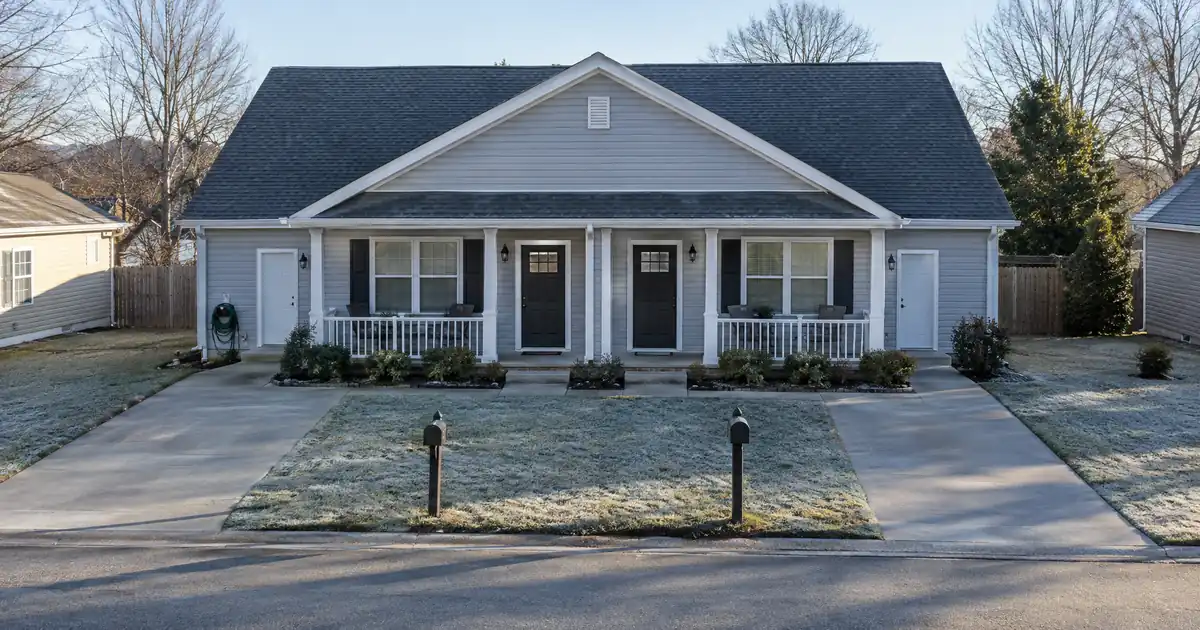
The Quick Read: The right program is the one that fits your credit, your equity, your title and your deposits, because a vacant unit does not sink a bank statement line the way it can sink a rent-based loan. This product is reviewed against own bank deposits, not on the building’s rent. The empty unit still matters for value, debt load and property eligibility, so the file has to hold up on those points.
- On an investment property, the ceiling on this network is 70% combined loan-to-value (CLTV), with a 700 minimum credit score and a line of up to $500,000.
- Income comes from 12 to 24 months of deposits, typically. The rent roll does not size the line.
- The property must be titled to you personally or to your revocable living trust. LLC-held rentals are out.
- A vacant unit can lower your deposits, change the valuation and raise your debt load.
- Availability depends on the property’s state, and every figure is subject to lender guidelines.
This article walks through how these lines work, how a vacant unit gets treated, and when a rent-based cash-out loan makes more sense. For the full picture of rent-based investor financing, see the complete DSCR loans guide.
How large a line the equity supports.
An equity line is sized by combined loan-to-value, occupancy, and credit — not by rental coverage. Switch the occupancy or the credit band and the ceiling moves with it.
Investment-property lines require a 700 minimum credit score; second-home lines start at a 640 minimum and primary-residence lines at 600, and the combined-LTV ceiling steps down as the credit band drops on primary-residence and second-home lines and holds on investment-property lines; the line cap steps down on primary-residence lines and holds at every tier on investment-property and second-home lines.
A debt-to-income ratio above 45% requires 680+ credit. Profiles under 640 are limited to single-family homes. At least 75% of the approved line is drawn at closing. Ceilings, floors, and caps update from Lendmire’s centralized guideline source.
Line estimate
Illustrative estimate only — not a quote, Loan Estimate, approval, or commitment to lend. The rate is an editable assumption; equity-line pricing is variable through both the draw and repayment periods and never converts to fixed. Occupancy and credit drive the ceiling together: an investment property tops out at 70% combined LTV (minimum credit 700, line cap $500,000); a second home tops out at 90% combined LTV (minimum credit 640, line cap $500,000), with the ceiling stepping down as the credit band drops (the cap holds at every tier); a primary residence tops out at 90% combined LTV (minimum credit 600), and its $750,000 maximum line is available only at 75% combined LTV or below with a 700-or-better credit profile (720 on the longer-runway program) and a full appraisal. Lines above $500,000 require a full appraisal. Credit, debt-to-income, property type, and full underwriting review all affect the final line.
What a Bank Statement HELOC Actually Is
A bank statement HELOC combines two ideas. One is a way of documenting income. The other is an ordinary revolving credit line secured by property.
The documenting part solves a common problem. Many self-employed owners and landlords show low taxable income after write-offs, even when cash moves through their accounts every month. A bank statement program looks at the deposits themselves, usually over 12 or 24 months, and calculates qualifying income from them. The loan is reviewed on documented income under the applicable program, subject to lender guidelines. It is alternative documentation, not no documentation. Credit, assets and debts are all still reviewed.
The credit-line part works like any home equity line. Equity is the property’s value minus what you owe against it. The federal consumer-finance regulator’s explanation of a HELOC describes the draw period and notes that a lender can limit the line if the property’s value drops. That possibility matters for a building in lease-up.
On this network, the line can sit in first or second lien position. If you keep a low-balance first mortgage in place, the line goes behind it. If the property has no mortgage, the line can be the first lien.
How Underwriting Treats the Vacant Unit, Step by Step
The short version: the vacant unit enters the file through four doors, and none of them is a rent test. Here is the order a file moves through.
Step 1: Pick the statement type. You document with personal statements, business statements, or both. The program sets the lookback, typically 12 or 24 months.
Step 2: Screen the deposits. The lender averages eligible deposits and removes items that are not income, such as transfers between your own accounts. Business deposits get reduced by an expense factor. The lender sets that factor, not you. The qualifying-income math is simple: eligible deposits divided by the months reviewed, reduced by the expense factor, then adjusted for your ownership share.
Here is where the vacant unit first bites. If you run your rents through the same account, an empty unit means smaller deposits. The average drops. Refundable tenant security deposits generally do not count as income either, so a clean paper trail helps.
Step 3: Check title and vesting. The property must be held by you as an individual or by an inter vivos revocable living trust. LLCs, corporations, partnerships, and irrevocable, blind or land trusts cannot hold title on this product. This is the sharpest structural difference from a rent-based investor loan. A rental already deeded to an LLC needs a vesting change first, or a different product.
Step 4: Measure the equity. CLTV adds up every lien, including the new line, and divides by the property’s value. On an investment property, the ceiling is 70% CLTV for credit profiles of 700 and above. A 720 score does not raise it. The two tiers land at the same number.
Two limits compete here. With a small first mortgage, you hit the $500,000 line cap before you run out of CLTV room.
Step 5: Review debt load. The maximum debt-to-income ratio is 50%, and a ratio above 45% requires a 680 minimum credit profile. The lender qualifies the payment on the interest-only amount calculated on the maximum draw, not on what you plan to borrow. The building’s own payment still counts in your debts, whether the unit is full or empty. That is the second door the vacancy walks through.
Step 6: Valuation. Lines at or below $500,000 ordinarily run an automated valuation with no traditional appraisal. A higher CLTV may call for a secondary valuation, and you can request a full appraisal in any case. For a 2-4 unit building, appraisers typically use a report that shows value and per-unit market rent together. Fannie Mae’s appraisal forms and exhibits guidance names that report as Form 1025. It is a name for the document, not a rule for these loans. A vacant unit mainly affects the condition and rent evidence the appraiser records, which can shape the value that drives your CLTV.
Step 7: Property eligibility. Single-family, 2-4 units, PUDs, townhomes and condominiums, including non-warrantable condos, are eligible. Manufactured homes, co-ops, condotels, log homes, and commercial, mixed-use or agricultural zoning are not offered. A “triplex” with a ground-floor storefront can fall outside the program on that fact alone. Whether a given 2-4 unit building clears review is subject to lender guidelines.
What “Best” Means Here
No single program wins for every borrower with an empty unit. The best program for your situation is the one whose limits match your file. A broker that shops several wholesale lenders matches the scenario to the program, and the match turns on a short list.
| Factor | What the lender checks | Vacancy effect |
|---|---|---|
| Credit | 700 minimum on investment lines | None directly |
| CLTV room | 70% ceiling, all liens counted | Value may shift |
| Title | Individual or revocable trust | None |
| Deposits | 12-24 months, after expense factor | Lower if rent flows through |
| Debt load | 50% DTI maximum | Property payment still counts |
A file that clears every row is strong. A file that fails the title row has a structural problem no pricing fix repairs. A file that is thin on deposits but heavy on equity may fit better with a different product altogether.
The Structures and Variations That Exist
On investment property, the structure is fixed. You get a 5-year interest-only draw followed by a 25-year fully amortizing repayment. There is no alternate structure on investment lines. Pricing floats through both periods and never converts to fixed. Variable pricing is a standard feature of home equity lines, and the line is secured by the property, so there is a risk of losing it if you cannot pay.
Other points worth knowing before you apply:
- Line size: $25,000 to $500,000 on investment property. Larger lines are limited to primary residences.
- Initial draw: at least 75% of the line is drawn at closing. That is a real cost if you only wanted a standby reserve.
- Later draws: after closing, minimum draws are modest, with a higher floor in Texas.
- Exposure limits: you can hold up to three lines, and a borrower owning more than 15 financed properties is not eligible.
- Credit report: one bureau score model, tied to the primary wage earner, with no rescores.
Draw timing matters when a unit is empty. Fully drawing at closing means interest accrues on the whole amount while the unit sits idle. The floating price adds risk if lease-up drags on. That is a cost-of-carry question, not a qualification question, and many investors miss it.
If your use of the funds has tax consequences, tax treatment can depend on how the funds are used and how the property is held; borrowers should keep clear records and speak with a qualified tax professional before relying on any deduction.
Where the Rule Breaks: Edge Cases
The general rule is that the building’s rent does not size the line. These cases bend it.
Rent runs through your deposits. If most of your qualifying income is rent from this building, the vacancy shows up in the deposit average. The lender never asks for a rent roll, but your statements tell the same story.
Your property sits in an LLC. The line does not work. You would need to change vesting or use a different product, and the right path depends on the property, the entity and the loan documents already in place.
The unit is unpermitted or the count is off. A mismatch between the unit count on record and the units on site can complicate the valuation and the property review. Fix the record before you apply.
A mixed-use building. A storefront or commercial space makes the property ineligible, even if three apartments sit above it.
Short on credit. Below 700, investment-property lines are not part of this program. A borrower with a 680 profile may qualify for a primary-residence line but not for the rental.
Five or more units. Properties with five or more units are commercial multifamily and sit outside the 2-4 unit scope.
Listed for sale. In several states, a property listed for sale, or listed within the past 60 days, is ineligible. Pulling a listing to run a lease-up can create a problem rather than solve one.
Pledging your home instead. Primary-residence lines on this network carry higher CLTV ceilings, reaching 90% at a 720 or better credit profile. That makes borrowing against your own home tempting. It also makes your home the collateral for the rental’s risk. Consider that tradeoff before you choose it.
HELOC or Rent-Based Cash-Out? The Decision in Practice
Both products can pull equity out of a partly empty building. They test different things.
| Factor | Bank statement HELOC | DSCR cash-out refinance |
|---|---|---|
| Income test | Your deposits | Property rent vs. payment |
| Vacant unit | Indirect effect | Part of the income test |
| Leverage, standard rental | 70% CLTV, investment | Up to about 70% LTV |
| Existing first mortgage | Stays in place | Replaced |
| Title | Individual or trust only | LLC may be eligible, subject to program terms |
A rent-based loan compares monthly rent to the full monthly housing payment, which is principal, interest, taxes, insurance and any HOA dues. The result is a coverage ratio called DSCR. Many select programs start at 1.00. A separate select-lender path goes below 1.00, with leverage and terms adjusted. Clearing 1.00 is not the same as positive cash flow, because repairs, vacancy, management and utilities sit outside the ratio.
Now picture two investors with a four-unit building and one empty unit.
Say the first has a strong 7-figure business account, a low-rate first mortgage she wants to keep, and a 740 score. Her deposits carry the debt, and the empty unit barely moves them. The bank statement line leaves her first mortgage alone. That is a good fit.
Consider a second investor who holds the building in an LLC and earns most of his income from the building’s rents. His deposits are thin, and the title is wrong. The rent-based route is the better candidate here, provided the occupied units still produce enough coverage. A vacant unit often gets credited at the appraiser’s market rent on a rent-based file, though some programs add conditions. Unpermitted units generally earn no credit.
This one is a genuine toss-up for many mixed files. The HELOC keeps a cheap first mortgage but caps leverage at 70% and floats in price. The cash-out offers about the same leverage and locks a structure, but it replaces your first mortgage. If you plan to stabilize the unit within months, the floating line may be the lighter commitment. If lease-up could run long, the extra carry risk deserves a stress test before you commit.
For more detail, see Lendmire’s look at a bank statement HELOC on a duplex where you live in one unit.
What to Prepare Before You Apply
- Twelve to 24 months of statements, with clean labeling of rent deposits versus personal transfers.
- A clear account of which unit is empty and why. A turnover or renovation reads very differently from a chronic problem.
- A vesting check: confirm the deed names you or your revocable trust.
- A payoff statement for the existing first mortgage, so the CLTV math is accurate.
- A current list of every financed property you own, since exposure limits apply.
- A CPA letter if your real overhead sits well below the default expense factor.
Separate accounts for rental and personal money make the deposit screen easier. The lender can only credit what it can trace.
Key Terms Defined
CLTV (combined loan-to-value): All liens on the property, including the new line, divided by the property’s value.
Bank statement program: A documentation method that is reviewed against deposit history instead of tax returns.
Expense factor: A percentage the lender subtracts from business deposits to estimate real income.
Draw period: The stretch when you can borrow from the line, paying interest only.
DSCR: Monthly rent divided by the full monthly housing payment, used by rent-based investor loans.
Vesting: How the property’s title is held, such as in your name or a revocable trust.
Frequently Asked Questions
Does one empty unit disqualify me from a bank statement HELOC?
Not by itself. The income test is your deposits, not the building’s rent. The vacancy can still lower your average deposits, change the valuation, and affect property review. Approval remains subject to lender guidelines and full file review.
Can I use an LLC-owned duplex or triplex?
No. On this product the property must be titled to you personally or to your revocable living trust. An LLC-held rental needs a vesting change first. A rent-based cash-out loan is the other path, and LLC eligibility there is per lender program requirements.
What is the most I can borrow on a rental with a vacant unit?
On an investment property, lines run up to $500,000, with a 70% CLTV ceiling at a 700 or better credit profile. Your existing first mortgage uses part of that room. Larger lines are reserved for primary residences.
Does a vacant unit change how the property is valued?
It can. Lines at or below $500,000 ordinarily use an automated valuation, though a higher CLTV may call for a secondary valuation and you can request a full appraisal. The vacancy mainly affects the condition and rent evidence behind the value.
Should I choose a HELOC or a rent-based cash-out?
It depends on where your strength sits. Strong deposits, the right title, and a first mortgage worth keeping favor the line. Strong rent from the occupied units and an LLC title favor the cash-out. A broker that shops multiple wholesale lenders can run both and compare.
Next Step
If you are considering a home equity line and want to see how the numbers work, Lendmire can help you compare HELOC options based on the property, the equity available, credit profile, combined leverage, and your goals. Lendmire is a mortgage broker, not a lender, and it arranges financing through select lenders in its wholesale network. Bank statement HELOC availability follows the property’s state. Rent-based investor loans reach a wider footprint across 41 markets, including Washington, D.C. You can reach the team at 828-256-2183 or request a quote through the site. Every figure here is subject to lender guidelines and full file review, and nothing here is a commitment to lend.
The investors who get the most from a half-empty building are the ones who finish lease-up first and borrow second, because the same deposits and the same valuation look stronger once the unit is full.
About Lendmire
As a mortgage broker (NMLS# 2371349), Lendmire helps homeowners and real estate investors in its 16 full-service states open home equity lines of credit arranged through wholesale lenders. Lendmire is never the lender; line amounts, ceilings and terms are set by the lender under its guidelines. Scotsman Guide named Lendmire a Top Mortgage Workplace in both 2025 and 2026.
Get Started
Ready to find the right loan for you?
See your offer in seconds. No credit pull, no obligation.
Informational only. Not a Loan Estimate, approval, or commitment to lend. Program availability and eligibility are subject to lender guidelines, credit approval, property review, and underwriting.
References
1. CFPB’s explanation of a HELOC
2. Fannie Mae Selling Guide B4-1.2-01: Appraisal Report Forms and Exhibits
This article is part of Lendmire’s bank statement HELOC program — full qualification details, guidelines, and scenarios live on the program page.
Related reading: Best Bank Statement HELOC Program Without Your Spouse on the Loan · Best Bank Statement HELOC Program After a Denial on Returns · Best Bank Statement HELOC Program With More Than One HELOC at a Time
Brandon Miller
Founder & CEO, Mortgage Loan Originator, Lendmire LLC
- Mortgage Loan Originator · NMLS# 1129696 · Verify on NMLS Consumer Access
- North Carolina Real Estate Broker · License# 343312 · Verify on NCREC
- North Carolina Insurance Producer · License# 19053198 · Property, Casualty, Life, Health · Verify on NAIC SBS
- Lendmire LLC · Firm NMLS# 2371349 · Verify firm licensure
Important disclosures. Lendmire (NMLS# 2371349) is a licensed mortgage brokerage. Lendmire is not a direct lender, depository institution, or financial advisor. All loan inquiries are subject to lender underwriting; this article does not constitute a commitment to lend. Rates, terms, and program guidelines are subject to change without notice and vary by borrower profile, property type, and state. Information in this article is general in nature and is not financial, legal, or tax advice. Equal Housing Opportunity. NMLS Consumer Access: nmlsconsumeraccess.org.