
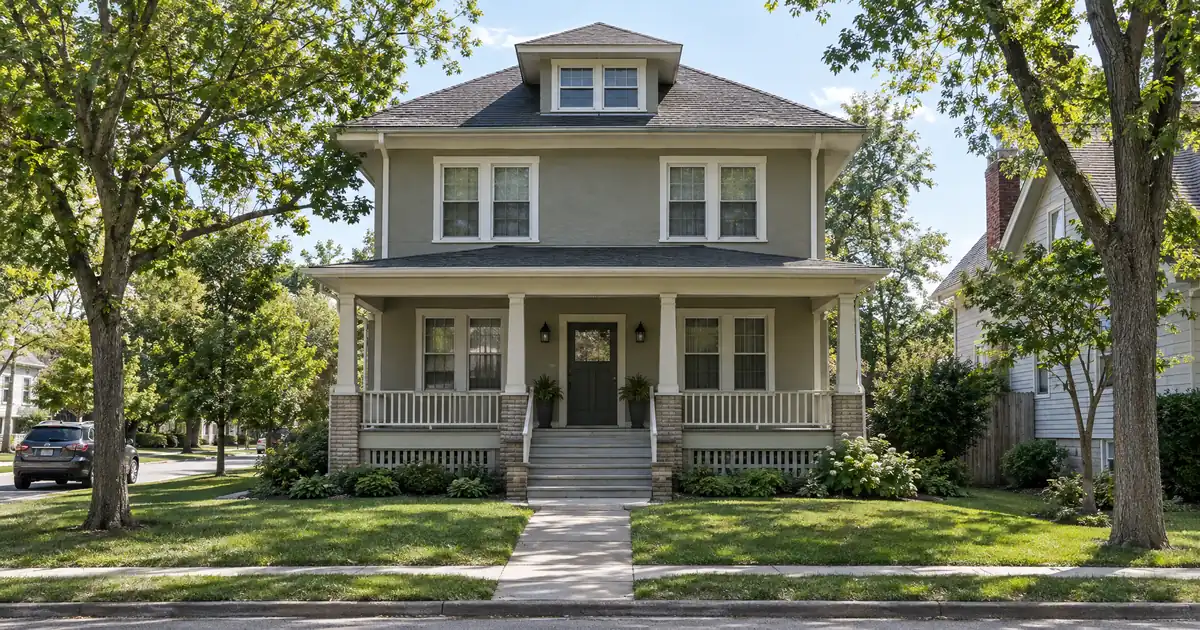
The Quick Read: A retiree on pension income usually does not need bank statements as the main proof of income, because pension and benefit letters already document it. A bank is often the simpler route when the line goes on a primary home held in the borrower’s own name. A broker is more useful when the property is a second home or rental, or when the income picture is mixed and needs flexible documentation.
- Pension and Social Security award letters usually carry the income case; statements confirm the deposits.
- Banks tend to favor primary residences, while a broker can place files across several lenders.
- On Lendmire’s wholesale network, an investment-property line tops out at 70% CLTV and $500,000 total.
- Title matters: an LLC cannot hold title on these lines.
- A bank decline is usually about documentation or fit, not age.
Side-by-Side
The table compares published industry norms for bank lines against the parameters of Lendmire’s wholesale network, where Lendmire acts as a broker and never the lender. Every network figure is subject to lender guidelines and full file review.
How large a line the equity supports.
An equity line is sized by combined loan-to-value, occupancy, and credit — not by rental coverage. Switch the occupancy or the credit band and the ceiling moves with it.
Investment-property lines require a 700 minimum credit score; second-home lines start at a 640 minimum and primary-residence lines at 600, and the combined-LTV ceiling steps down as the credit band drops on primary-residence and second-home lines and holds on investment-property lines; the line cap steps down on primary-residence lines and holds at every tier on investment-property and second-home lines.
A debt-to-income ratio above 45% requires 680+ credit. Profiles under 640 are limited to single-family homes. At least 75% of the approved line is drawn at closing. Ceilings, floors, and caps update from Lendmire’s centralized guideline source.
Line estimate
Illustrative estimate only — not a quote, Loan Estimate, approval, or commitment to lend. The rate is an editable assumption; equity-line pricing is variable through both the draw and repayment periods and never converts to fixed. Occupancy and credit drive the ceiling together: an investment property tops out at 70% combined LTV (minimum credit 700, line cap $500,000); a second home tops out at 90% combined LTV (minimum credit 640, line cap $500,000), with the ceiling stepping down as the credit band drops (the cap holds at every tier); a primary residence tops out at 90% combined LTV (minimum credit 600), and its $750,000 maximum line is available only at 75% combined LTV or below with a 700-or-better credit profile (720 on the longer-runway program) and a full appraisal. Lines above $500,000 require a full appraisal. Credit, debt-to-income, property type, and full underwriting review all affect the final line.
| Factor | Direct bank HELOC (industry norms) | Broker-placed line (Lendmire network) |
|---|---|---|
| Review basis | Credit, DTI, equity, documented income | Same factors, with more documentation paths |
| Retiree income proof | Award letters, 1099-R, SSA-1099 | Same paper; statements confirm deposits |
| Asset-based income | Often not offered | Varies by program |
| Property types | Primary homes dominate | Primary, second home, and investment |
| Entity vesting | Individual or trust, typically | Individual or revocable living trust only |
| Line size | Varies widely | $25,000 to $750,000; investment capped at $500,000 |
| Valuation | Appraisal or automated valuation | Automated valuation at or below $500,000; full appraisal above |
| Credit floor | Varies by lender | 600 on primary; 640 on second home; 700 on investment |
What a Bank Statement HELOC Actually Is
A HELOC is revolving credit secured by the home. The CFPB’s HELOC booklet describes the draw period followed by repayment. A bank statement version swaps traditional personal-income documentation for 12 to 24 months of deposits, which is why it was built for self-employed borrowers.
It is not undocumented lending. The file is reviewed on documented income under the applicable program, subject to lender guidelines. The lender still reviews credit, equity, and the property.
For a pension retiree, that design is often a mismatch. Your income is already proven by a third party. A pension award letter, a 1099-R, and a Social Security benefit letter do the heavy lifting. Statements simply show the deposits match the letters.
How Pension Income Gets Documented
The usual paper trail is short. Lenders ask for the pension award letter or 1099-R, the Social Security benefit letter or SSA-1099, and recent statements showing those deposits land in the account. Annuity income needs verification from the issuer.
Statements become the primary proof only for the mixed part of the picture. Picture a retiree with a pension, plus part-time consulting and a rental. The pension rides on letters, while consulting and rental deposits get averaged from statements. Underwriters generally strip out transfers between your own accounts, rollovers, and one-time deposits, so clean labeling helps.
If benefits are thin, some non-QM programs convert liquid assets into qualifying income. That is an asset-based route, and whether it applies to a line of credit rather than a purchase loan varies by program. Ask the question directly.
When the Bank Is the Better Fit
A bank is often the better fit when three things line up: a primary residence, title in your own name or a revocable trust, and income that is easy to document. In that case, a broker adds little. You may already have a deposit relationship, and the paperwork is familiar.
The bank route also suits a borrower who wants a single point of contact for servicing. A retiree on stable pension and Social Security income, with ample equity in a home they live in, may need nothing more exotic.
Here is the flip point. If the bank says no, do not assume the answer is final. A bank decline reflects that bank’s overlays, such as primary-home-only lending, not a verdict on you. Age is protected: Regulation B bars age discrimination, while still letting a creditor consider how long retirement income will last. Denials usually trace back to documentation or fit.
When the Broker Is the Better Fit
A broker earns its place in three situations. The first is a second home or rental, since many depository lenders restrict lines to primary homes. The second is mixed income where deposits need averaging. The third is a file that fits one lender’s grid but not another’s, since a broker can place it across several wholesale partners.
On Lendmire’s network, the parameters depend on occupancy:
- Primary residence: ceilings reach 90% CLTV only at a 720-or-better credit profile, up to $500,000. Lines above $500,000 are primary-residence only, need a 700 or better credit profile (720 on the longer-runway structure), cap at 75% CLTV, and require a full appraisal.
- Second home: the same 90% ceiling applies only at 720 or better, with a 640 minimum score and a $500,000 maximum line.
- Investment property: the ceiling is 70% CLTV, the minimum score is 700, and the maximum line is $500,000.
Two draw structures exist on primary and second-home lines. One pairs a 3-year interest-only draw with a 17-year repayment. The other pairs a 5-year draw with a 25-year repayment. Investment lines run the 5-year draw and 25-year repayment structure only. At least 75% of the line is drawn at closing, and pricing floats rather than converting to fixed.
That last point matters on a fixed income. The CFPB’s HELOC brochure notes that interest-only draw payments typically do not retire the balance, and payments rise once repayment begins. Lines are qualified on the interest-only payment at the maximum draw, with DTI capped at 50%.
Availability is narrower than the DSCR footprint. These lines are placed only in Lendmire’s 16 full-service states.
The Title Problem Retirees Overlook
Title is where many retiree files stall. These lines require title held by the individual borrower or an inter vivos revocable living trust. LLCs, corporations, partnerships, and irrevocable, blind, or land trusts cannot hold title.
Trusts are common in retirement planning, so a revocable trust is workable. An irrevocable trust is not. If a rental already sits in an LLC, retitling can raise due-on-sale and insurance questions, so counsel should review it first.
This is the sharpest structural difference from a DSCR loan. A DSCR cash-out refinance qualifies primarily on property-level rental income covering the payment, subject to lender guidelines, so entity-held rentals fit more naturally there. Lendmire’s piece on whether a bank statement HELOC or a cash-out refinance fits a pension retiree walks through that choice, and the complete DSCR loans guide covers the entity-held path in full.
One caution on DSCR: coverage tests rent against the full monthly obligation only. Clearing 1.00 is not the same as positive cash flow, since repairs, vacancy, and management sit outside the calculation.
Key Terms Defined
CLTV: Combined loan-to-value, meaning all liens on the property divided by its value.
Draw period: The early stretch when you can borrow from the line, often with interest-only payments.
Revocable living trust: A trust you can change or cancel, which can hold title on these lines.
Asset depletion: A method that converts liquid assets into monthly qualifying income, with the details varying by program.
DSCR: Debt service coverage ratio, which compares a rental’s income to its monthly obligation.
Which Route for Which Retiree
A few quick profiles show where the flip points fall.
Consider a retiree with a paid-down primary home, pension, and Social Security. The bank route probably wins, because the income is simple and the property type is standard.
Now consider a retiree who wants to tap a second home. Many banks stop here, so a broker can place the file with a lender that accepts second homes, at up to 90% CLTV only with a 720-plus profile.
Finally, take a retiree whose equity sits in an LLC-held rental. Neither a bank line nor a broker-placed line fits on the current title. A vesting change or a DSCR cash-out is the realistic comparison, and the leverage ceiling on an investment line (70% CLTV) is lower than on a primary home, so the borrower should weigh that against the use of proceeds.
Sub-640 profiles face extra limits. They are restricted to single-family residences with a clean 12-month housing history, which in practice reaches primary residences only. Lendmire’s bank statement HELOC documentation for pension retirees lists the paperwork in more detail.
A Balanced Verdict
Neither channel is better in the abstract. A bank suits the simple case: primary home, personal title, plain pension income. A broker suits the complicated case: second homes, rentals, mixed income, or a file a single bank’s overlays cannot absorb.
The risk to size on either route is the same. Floating pricing, a draw that ends, and a repayment period that steps up all land on a fixed income. Stress-test the repayment phase before drawing the full line. Tax treatment can depend on how the funds are used and how the property is held; investors should keep clear records and speak with a qualified tax professional before relying on any deduction.
If you are considering a home equity line and want to see how the numbers work, Lendmire can help you compare HELOC options based on the property, the equity available, credit profile, combined leverage, and your goals.
Frequently Asked Questions
Can a lender deny me a HELOC because I am retired?
Age alone is not a lawful basis. Regulation B bars age discrimination, though a lender may weigh how long income will continue. Most denials trace to documentation, debt-to-income, credit, or property type. A law-firm review of the latest Regulation B amendments says the age prohibition itself is unchanged.
Is a pension alone enough to qualify?
It can be, if documented and sufficient against the full line payment. Lines are qualified on the interest-only payment at the maximum draw, with DTI capped at 50% (45% for scores from 600 to 679). Credit, equity, and property type still count, and every file is underwritten individually.
Do I need bank statements at all?
Often only as supporting proof. Award letters and benefit statements carry pension income, while statements confirm the deposits and document any mixed income. Requirements vary by program.
Can my LLC hold the title on the line?
No. Title must sit with the individual borrower or a revocable living trust. A property already deeded to an LLC needs a vesting change or a DSCR cash-out instead.
Is a bank “no” the final answer?
Not necessarily. A decline often reflects one institution’s overlays, such as primary-home-only lending. A broker can place the file with different lenders, though approval remains subject to lender guidelines.
About Lendmire
Lendmire is a mortgage brokerage (NMLS# 2371349) arranging home equity lines of credit — primary-residence, second-home and investment-property lines — through a wholesale lending network in its 16 full-service states. Eligibility is determined by the lender on each file. Scotsman Guide named Lendmire a Top Mortgage Workplace in both 2025 and 2026.
Get Started
Ready to find the right loan for you?
In about 30 seconds you can review financing options available for your home or investment property. No commitment required.
Informational only. Not a Loan Estimate, approval, or commitment to lend. Program availability and eligibility are subject to lender guidelines, credit approval, property review, and underwriting.
References
3. Greenberg Traurig – Regulation B final rule analysis
This article is part of Lendmire’s bank statement HELOC program — full qualification details, guidelines, and scenarios live on the program page.
Related reading: Can a First-Time HELOC Borrower Use Bank Statements on a Condo? · Can a Newly Self-Employed or Blended W-2 Household Get a HELOC? · Can a First-Time Equity Borrower Get a Bank Statement HELOC on a Triplex?
Brandon Miller
Founder & CEO, Mortgage Loan Originator, Lendmire LLC
- Mortgage Loan Originator · NMLS# 1129696 · Verify on NMLS Consumer Access
- North Carolina Real Estate Broker · License# 343312 · Verify on NCREC
- North Carolina Insurance Producer · License# 19053198 · Property, Casualty, Life, Health · Verify on NAIC SBS
- Lendmire LLC · Firm NMLS# 2371349 · Verify firm licensure
Required disclosures. Lendmire (NMLS# 2371349) operates as a licensed mortgage broker, not a direct lender or depository. The discussion in this article is general in nature and should not be relied upon as financial, legal, or tax advice — every investment scenario is unique and should be reviewed by a qualified professional. Any loan inquiry is subject to lender underwriting, and this article is not a commitment to lend or a guarantee of approval. Mortgage rates, loan terms, and program guidelines vary by borrower, property, and state, and may change without notice. Equal Housing Opportunity. Verify licensure at NMLS Consumer Access.