
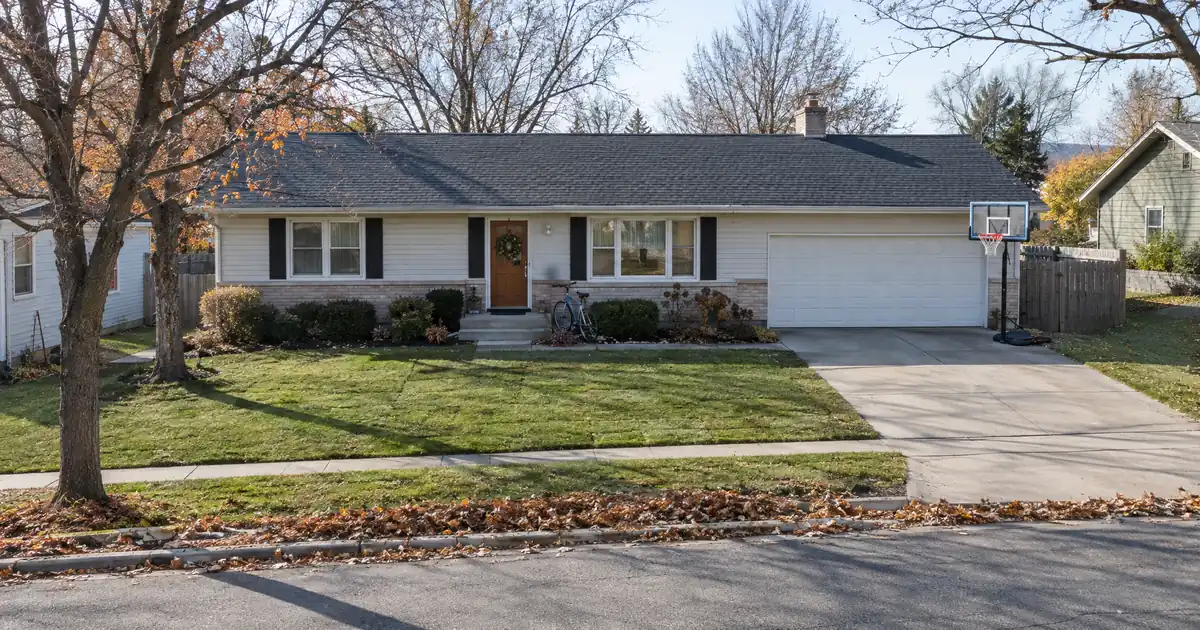
The Quick Read: Yes, on a home you will live in. A buyer can put as little as 3% down when at least one borrower is a first-time buyer, and 5% down otherwise, subject to lender guidelines and full file review. Mortgage insurance comes with it above 80% loan-to-value, and it can come off later. The catch is the property: second homes and rentals need far more down.
Most buyers still believe a conventional loan needs 20% down. It doesn’t. Twenty percent is the point where mortgage insurance stops being required, not the point where a loan becomes available. Lendmire’s conventional loan programs are arranged through wholesale lenders, and the low-down files placed there follow Fannie Mae and Freddie Mac rules. Terms vary by lender guidelines, property type, leverage, credit profile, and full file review.
Conventional payment estimate
The starting figures are an example price at the first-time buyer’s minimum down payment. Replace them with yours.
Editable benchmark: 7.32% as of October 22, 2026 · Freddie Mac 30-year average via FRED®. A conventional market reference, not a conventional loan quote.
Estimate seeded at the low end of Fannie Mae’s published range (0.58%–1.86% a year); the insurer prices the actual premium on the score and the leverage. Applies only above 80% loan-to-value.
Illustrative starting assumptions: a $350,000 price, the first-time buyer’s minimum down payment, a thirty-year term at the current Freddie Mac benchmark, mortgage insurance at the low end of Fannie Mae’s published range, and property taxes and insurance estimated at typical national rates. Every field is editable.
Illustrative estimate only — not a Loan Estimate, approval, quote, or commitment to lend. The rate field carries the weekly Freddie Mac thirty-year conventional benchmark, a market reference and not a conventional loan quote; your rate is set by the lender at lock. The mortgage insurance figure is an editable estimate seeded from Fannie Mae’s published typical range, not a premium quote; the insurer prices the actual premium, and the cancellation month assumes scheduled payments with no extra principal and no change in value. Taxes, insurance and dues are editable estimates; closing costs are not included. Conforming loan limits apply by county. Licensed in sixteen states for consumer mortgages.
Key Terms Defined
Loan-to-value (LTV): the loan amount as a percentage of the lesser of price or appraised value.
Mortgage insurance (PMI): coverage the borrower pays for that protects the lender, not the borrower, when the down payment is under 20%.
First-time buyer: a borrower with no ownership interest in a residence in the previous three years.
Area median income (AMI): the local income benchmark that some low-down programs use as a cap.
Automated underwriting: the agency software that reviews a file and returns a finding.
How Low Can the Down Payment Go?
The floor is 3% down. That is 97% LTV on a one-unit principal residence with a fixed rate, when at least one borrower is a first-time buyer. Everyone else on a standard purchase is at 95% LTV, which is 5% down. Exact terms depend on the lender’s guidelines, property type, leverage, and a full review of the borrower’s file.
Two-to-four-unit principal residences also top out at 95% LTV. Adjustable-rate loans don’t get the 97% tier. Fannie Mae’s 97% loan-to-value options page confirms that 97% loans must be fixed-rate, on a one-unit principal residence, and run through Desktop Underwriter. Every figure here varies by lender and program — guidelines, property type, leverage, and credit profile all apply.
Here is how the tiers line up.
| Scenario | Maximum LTV | Minimum down |
|---|---|---|
| 1-unit primary, first-time buyer, fixed rate | 97% | 3% |
| 1-unit primary, repeat buyer | 95% | 5% |
| 2-4 unit primary | 95% | 5% |
| Second home | 90% | 10% |
| Investment, 1 unit | 85% | 15% |
| Investment, 2-4 units | 75% | 25% |
Occupancy decides the leverage. If the home is a second home or a rental, the number moves, and that is the only note this article spends on it.
Who Qualifies for the 3% Tier?
First-time status is the usual key. The agencies define it as no ownership interest in a residence in the previous three years. A person who sold a home four years ago can count. A person who sold one two years ago generally can’t.
There is a second path with an income test. HomeReady has no first-time-buyer requirement, so a repeat buyer under the cap can still reach 3% down. Final terms depend on lender guidelines, property type, leverage, and the borrower’s complete credit picture.
Two details trip up files. First, income limits depend on the property’s location, and automated underwriting checks them. Second, if every borrower on the loan is a first-time buyer, homeownership education may be required for the purchase. A short online course usually covers it.
What Else Does the Lender Look At?
The down payment is one line on the file. Credit, income, debt and cash on hand carry the rest.
Across the wholesale conventional programs the team works with, the decision score starts at 620, and 640 on an adjustable rate under manual underwriting. The automated finding governs most files. Total debt ratios can reach 50% on an automated approval. Manually underwritten loans sit at 36% or 45%, depending on the score and reserves the Eligibility Matrix requires. Individual lenders can set stricter floors, and a file that clears the agencies can still miss a lender’s own overlay.
Credit events carry waiting periods set by the agencies:
- Four years after a chapter 7 discharge.
- Seven years after a foreclosure.
- Four years after a short sale or deed-in-lieu.
- Shorter periods are possible with documented extenuating circumstances.
Funds matter too. Lenders want to see where the down payment, closing costs and any required reserves came from. Bank statements, gift letters and transfer records are the usual paper. Money that shows up in the account without a trail is a common reason a low-down file stalls.
What Does Mortgage Insurance Do to the Budget?
It adds a monthly cost on top of principal, interest, taxes and insurance. Mortgage insurance is required above 80% LTV. Published typical annual premiums run from 0.58% to 1.86% of the loan balance. That is a range, not a quote. The actual figure moves with the down payment and the credit score, and your Loan Estimate shows what your file carries. These specifics are subject to lender guidelines and a full review of property, leverage, and credit.
The Consumer Financial Protection Bureau says private mortgage insurance protects the lender, not the borrower, and that it may be required on a conventional loan with less than 20% down. Most PMI is paid monthly with little or nothing up front. On the Loan Estimate it shows in the projected payments on page 1. Any up-front premium appears on page 2.
Lower down means a bigger loan balance. That raises the monthly payment even before insurance. Cost is the tradeoff for getting in sooner.
Does the Mortgage Insurance Ever Come Off?
Yes. That is the main difference from some government-backed loans. Under the Homeowners Protection Act, a borrower can request cancellation when the balance reaches 80% of the home’s original value. The request needs a good payment history, no subordinate liens and no decline in value. The servicer must end it automatically at 78%, if the loan is current.
Timing runs off the original value, not today’s market. Appreciation alone doesn’t move the date, though some servicers will review a new appraisal. Paying the balance down faster brings the date closer.
What Does the Cash to Close Really Include?
More than the down payment. Closing costs, prepaid taxes and insurance, and any required reserves all come out of the buyer’s funds or approved sources.
Gift funds are allowed on the low-down programs, and HomeReady also permits grants and Community Seconds loans. Reserves, if automated underwriting calls for them, may be gifted. Combined LTV can reach 105% when the second lien is an eligible Community Seconds loan. On one-unit properties, HomeReady may not require a minimum borrower contribution, while the standard 97% option has its own conditions.
So 3% down doesn’t mean 3% of savings. Plan for the whole closing statement. Terms depend on the lender’s guidelines, the property type, the leverage, and a full review of the credit profile.
Is a Small Down Payment the Right Move?
Here is a plain test. A small down payment tends to fit when:
1. The monthly budget still works with mortgage insurance included.
2. Cash after closing stays healthy, not drained to zero.
3. Credit is solid enough to avoid the highest insurance tiers.
4. Waiting would cost more than the insurance does, because prices and rents keep moving.
A larger down payment fits when it brings the file close to 80% LTV and the buyer still keeps a cushion. Honestly, this one is a genuine judgment call. A buyer 18 months from a 10% down payment may beat the one who buys now at 3%. Or not, depending on the local market. The exact numbers vary by lender and program and follow a full review of property, leverage, and credit.
One more point on offers. A seller reads the offer, not the down payment. The financing contingency, appraisal and pre-approval letter carry more weight than the percentage down.
Why Do Low-Down Files Stall?
A few causes show up again and again.
- Unsourced funds. Large deposits without paper get questioned.
- Income over the cap. HomeReady and Home Possible files fail when household income sits above 80% of AMI.
- Wrong loan type. An adjustable-rate product doesn’t qualify for 97%.
- Appraisal short of price. LTV runs on the lesser of price or value, so a low appraisal raises the cash needed.
- Lender overlays. A score or ratio floor tighter than the agency minimum.
- Occupancy confusion. Buying a home you won’t live in at the 3% tier doesn’t work.
Most of these are fixable before the file goes in. Check the income cap, line up the fund paper and confirm the loan type first.
What Are the Next Steps?
Start with a pre-approval. It shows which tier you hit, whether income fits a capped program, and what mortgage insurance looks like on your own Loan Estimate. Ask the loan officer three things: which program the file runs under, whether the lender adds overlays, and how the insurance cancels.
If you are buying a home and want to see whether a conventional loan fits your file, Lendmire can help you compare the options and what each one asks of the file. A related read: how a small down payment conventional loan costs on a condo.
Frequently Asked Questions
Do I need 20% down for a conventional loan?
No. Twenty percent is where mortgage insurance is no longer required. Below it, the loan is still available, with 5% down on a standard purchase and 3% for qualifying first-time buyers or income-capped program borrowers, subject to lender guidelines.
Is the 3% option only for first-time buyers?
No. The standard 97% option requires at least one first-time buyer. HomeReady and Home Possible don’t, but they limit income to 80% of area median income. A repeat buyer under the cap can use them.
Do all conventional loans carry mortgage insurance?
Not all. It is required above 80% LTV. At 80% or below, it isn’t part of the loan. Final terms depend on the lender’s guidelines, the property type, and the borrower’s complete credit picture.
Can mortgage insurance be removed?
Yes. A borrower can request cancellation at 80% of the original value with good payment history, no subordinate liens and no decline in value. The servicer must end it automatically at 78%.
Does the 3% tier work for a second home or rental?
No. Occupancy decides leverage. A second home tops out at 90% LTV, and investment property at 85% on one unit and 75% on two to four units. Each figure is subject to lender guidelines and a complete review of property type, leverage, and credit.
For your own numbers, request a scenario review with Lendmire.
About Lendmire
As a mortgage broker (NMLS# 2371349), Lendmire helps homeowners and home buyers in 16 states with FHA, VA, conventional and jumbo purchase and refinance loans arranged through wholesale lenders. Lendmire is never the lender; program terms are set by the lender and the agency guidelines. Scotsman Guide named Lendmire a Top Mortgage Workplace in both 2025 and 2026.
Get Started
Ready to find the right loan for you?
In about two minutes you can review financing options available for your home or investment property. No commitment required.
Informational only. Not a Loan Estimate, approval, or commitment to lend. Program availability and eligibility are subject to lender guidelines, credit approval, property review, and underwriting.
References
1. Fannie Mae – 97% Loan to Value Options
2. Consumer Financial Protection Bureau
This article is part of Lendmire’s conventional loan program — full qualification details, guidelines, and scenarios live on the program page.
Related reading: How Much a Conventional Loan Refinance Can Lower the Payment · Should Move-Up Buyers Skip Minimum Down on a Conventional Loan? · How to Buy a Fourplex With a Conventional Loan and Low Down Payment
Brandon Miller
Founder & CEO, Mortgage Loan Originator, Lendmire LLC
- Mortgage Loan Originator · NMLS# 1129696 · Verify on NMLS Consumer Access
- North Carolina Real Estate Broker · License# 343312 · Verify on NCREC
- North Carolina Insurance Producer · License# 19053198 · Property, Casualty, Life, Health · Verify on NAIC SBS
- Lendmire LLC · Firm NMLS# 2371349 · Verify firm licensure
Disclosures. The information presented in this article is general market commentary, not financial, legal, or tax advice. Lendmire is a mortgage brokerage (NMLS# 2371349) — not a direct lender or depository institution — and loan placement is subject to lender underwriting. Nothing in this content represents a commitment to lend. Loan terms, pricing, and program availability vary based on borrower qualifications, property characteristics, and state of subject property, and are subject to change at any time. Lendmire complies with Equal Housing Opportunity requirements. Consumer access: nmlsconsumeraccess.org.