
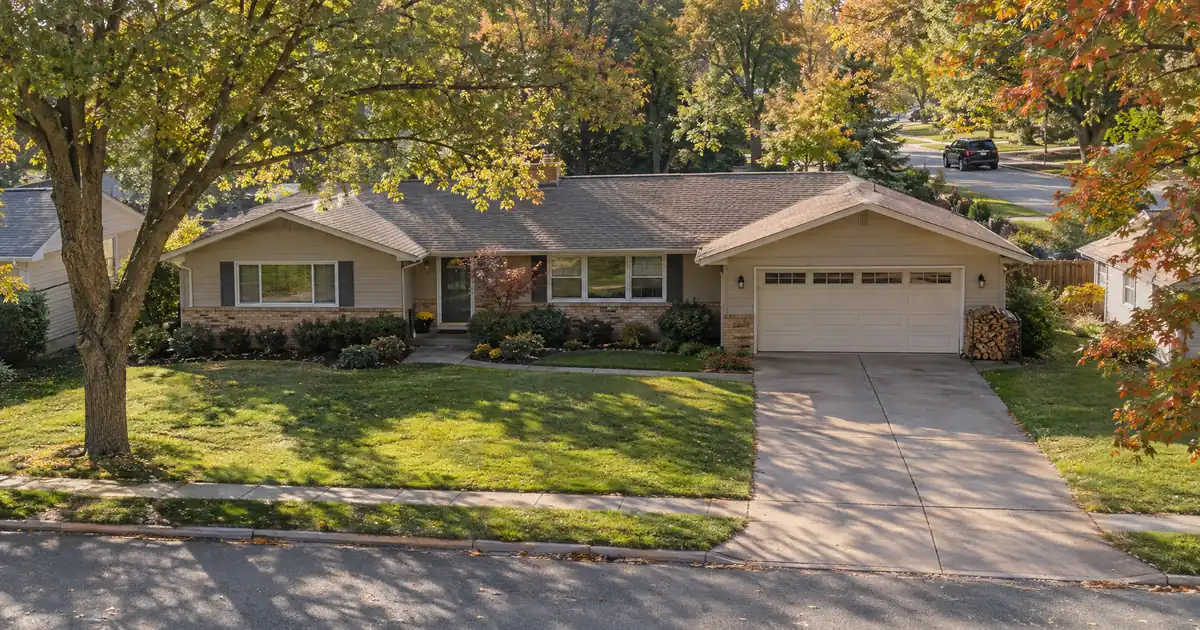
The Quick Read: Bank statement loans are limited by each lender’s program, not by a federal cap, and across Lendmire’s wholesale network they generally run from about $125,000 to $3,500,000, subject to lender guidelines. Your own number lands somewhere inside that range based on deposits, credit, leverage, reserves, and the property.
- Program range: roughly $125,000 to $3,500,000 on select lenders’ programs.
- Primary residence purchase or rate-term: up to 90% LTV on stronger files.
- Owner-occupied cash-out: up to 80% LTV, and up to 75% LTV on a rental cash-out.
- Reserves commonly run around 6 months of the housing payment.
- Your qualifying income comes from deposit averages after an expense factor, not gross deposits.
Two limits matter here. One is the program maximum. The other is the amount your file supports. They are rarely the same number.
What your deposits qualify you for.
Alt-doc programs read 12 months of business or personal bank deposits instead of tax returns. Enter your average monthly deposits and see the income a lender would credit you.
The expense factor is set by the lender from your business type and profit-and-loss statement; it is not a number you choose. This widget quotes no rate and no payment.
Program parameters shown update from Lendmire’s centralized guideline source.
Estimate
Illustrative estimate only — not a quote, Loan Estimate, approval, or commitment to lend. Deposit average, expense factor, and housing ratio are editable assumptions; the expense factor a lender applies is set from your business type and documentation. No interest rate or monthly payment is quoted here. Purchase capacity is a simplified illustration and does not account for taxes, insurance, HOA dues, or other debts. Alt-doc income documentation is available on consumer mortgages in the states where Lendmire is licensed for consumer lending; actual terms vary by lender, borrower, and property.
Is There a Legal Cap on a Bank Statement Loan?
No federal rule caps the size of a bank statement loan. The only size line most borrowers hear about is the conforming loan limit, and that line governs what Fannie Mae and Freddie Mac can buy, not what a non-QM lender can make.
For context, the baseline one-unit conforming limit was set at $832,750, with a high-cost ceiling of $1,249,125, per Consumer Finance Monitor. HousingWire notes the high-cost ceiling is set at 150% of the baseline. A bank statement loan is a non-QM product, so it sits outside that framework. Jumbo just means above the conforming limit. It says nothing about how the file is documented.
So the real ceiling lives in lender programs. Across the wholesale network, those programs differ. Some stop lower, some go higher on a case-by-case basis, and every file is underwritten individually.
Program Maximum vs. Your Maximum
The program maximum is what a lender will ever write. Your maximum is what your deposits, credit, and collateral support today. Most borrowers hit a personal constraint long before they reach the program ceiling.
| Limit | What sets it | Who controls it |
|---|---|---|
| Program maximum | Lender and investor appetite | The lender |
| Your maximum | Income, credit, LTV, reserves, property | Your file |
| Super-jumbo zone | Individual review, stricter overlays | Case by case |
Think of the program number as the roof. Your file decides which floor you can reach.
How Deposits Turn Into a Loan Amount
Lenders average 12 months of business or personal bank statements, then apply an expense factor to business deposits. Gross deposits are never the qualifying income. Trade coverage from Scotsman Guide describes underwriters averaging 12 to 24 months of statements, and many programs in the network start at 12.
The mechanics run in order:
1. Add up eligible deposits. Transfers between your own accounts and one-time unexplained deposits get pulled out.
2. Apply the expense factor. Business deposits are reduced by a lender-specific factor. On owner-occupied cash-out, the program uses a fixed expense ratio, and an accountant-prepared ratio can move it to 75%. Do not assume one universal formula.
3. Divide by the number of months. The result is monthly qualifying income.
4. Test the payment against that income. On an owner-occupied file, debt-to-income still applies. That sets the payment you can carry, which sets the loan size.
5. Check leverage, credit, and reserves. Larger balances generally mean lower maximum LTV and tighter credit requirements.
6. Confirm the value. Bank statements prove income. They do not replace the appraisal, title, or insurance. The appraised value can cap the loan even when income would support more.
The binding constraint is usually the payment test or the LTV. Knowing which one is binding tells you what to fix.
What Actually Sets Your Ceiling
Five levers move the number. Credit and leverage move it most when the balance is large.
| Lever | How it limits size | How to improve it |
|---|---|---|
| Qualifying income | Lowers the payment you can carry | Cleaner deposits, accountant-prepared ratio |
| Debt load | Uses up payment capacity | Pay down revolving balances |
| LTV | Caps the loan against value | Bring more down payment |
| Credit tier | Sets the LTV and size ladder | Raise the score before applying |
| Reserves | Gatekeeps larger files | Document liquid assets, about 6 months |
Across the network, strong files earn the top of the LTV range, which is up to 90% on a primary residence purchase or rate-term refinance. Weaker credit or a larger balance steps that down. That is the trade-off at the high end: size costs leverage.
How Purpose and Occupancy Change the Answer
Purpose and occupancy change both the leverage and the paperwork. Here is how they stack up, subject to lender guidelines.
- Primary residence, purchase or rate-term: up to 90% LTV on stronger files.
- Owner-occupied cash-out (primary or second home): up to 80% LTV with a fixed expense ratio, or 75% with an accountant-prepared ratio. Never the 90% purchase ceiling.
- Investment-property cash-out: tops out around 75% LTV.
- Investment purchase on bank statements: varies by lender. Investors focused on leverage on rentals usually compare it against the DSCR side.
- Asset-depletion alternative: qualifying from liquid assets runs to about 80% LTV on a primary residence.
Cash-out is its own cap. A borrower who sees 90% on a purchase quote and assumes the same number applies to a refinance gets surprised. It does not.
Occupancy also decides the disclosure regime. A bank statement loan on an owner-occupied home is a consumer mortgage. One on a non-owner-occupied rental, including a short-term rental, is business-purpose and exempt from TRID.
Where the Regulations Fit
Non-QM does not mean no documentation. Scotsman Guide notes that non-QM loans must still satisfy ability-to-repay requirements. On consumer-purpose loans, the CFPB’s small entity compliance guide says the creditor must verify the information it relies on using reasonably reliable third-party records. That is why a bank statement file is built around statements, not a verbal story.
Loan terms follow individual lender program sheets, so length and structure vary by program and should be confirmed on the specific program before relying on them.
When Bigger Means Harder
A larger balance brings tighter overlays. Expect lower maximum LTV, higher credit floors, more reserves, and a closer look at the file. Programs above the standard ceiling go to individual review, and figures vary by program.
Reserves are the quiet friction point. Lendmire has separate coverage on whether super jumbo bank statement reserves have to be liquid at closing, which matters once balances climb.
Common file problems at any size:
- Circular transfers between accounts that inflate deposits without adding income.
- Commingled personal and business funds.
- Large unexplained deposits with no paper trail.
- Statements pulled from different accounts across the averaging period.
How to Raise Your Qualifying Amount
Most of the levers are within your control. Work them before the file goes in.
- Get an accountant-prepared expense ratio where the program allows it.
- Keep deposits clean and run them through one account.
- Pay down revolving debt to free up payment capacity.
- Add down payment to lower LTV and widen the options.
- Document reserves early.
- Raise credit before applying, since the score sets the leverage ladder.
Bank Statement vs. DSCR for Investors
For an investor, the better loan is the one with the larger achievable amount for the file in front of you. A bank statement loan is reviewed on documented income under the applicable program, subject to lender guidelines. DSCR instead qualifies primarily on property-level rental income covering the payment, as Scotsman Guide also describes.
A self-employed investor with heavy write-offs and thin rent relative to price may borrow more on deposits. An investor with strong rent and modest personal income may do better on DSCR. Select lenders in the network also offer sub-1.00 coverage programs, though leverage and terms adjust. The complete DSCR loans guide walks through that side.
Tax treatment can depend on how the funds are used and how the property is held; investors should keep clear records and speak with a qualified tax professional before relying on any deduction.
Key Terms Defined
Non-QM loan: A mortgage that does not meet the qualified-mortgage rules and cannot be bought by the agencies.
Expense factor: The percentage lenders subtract from business deposits before counting them as income.
LTV: The loan amount divided by the property’s value.
Reserves: Liquid funds, commonly around 6 months of the housing payment, held after closing.
Asset depletion: A method that qualifies a borrower from liquid assets instead of deposit income.
Frequently Asked Questions
What is the minimum bank statement loan size?
Across the network, programs generally start around $125,000. Smaller balances are usually a poor fit because few lenders write them.
Can a bank statement loan exceed the conforming limit?
Yes. The conforming limit governs what the agencies buy, not what a non-QM lender can make, so bank statement loans routinely run above it. The ceiling is the program maximum, which is roughly $3,500,000 in the network, subject to lender guidelines.
How much can I borrow on a cash-out?
Owner-occupied cash-out runs up to 80% LTV, or 75% with an accountant-prepared ratio. Investment-property cash-out tops out around 75% LTV. Both depend on loan size and credit. These specifics are subject to lender guidelines and a full review of property, leverage, and credit.
Do gross deposits count as income?
No. Business deposits are reduced by an expense factor, and transfers between your own accounts are removed. Only the adjusted average counts.
Does a bigger loan need more reserves?
Usually. Reserves commonly run around 6 months of the housing payment, and larger balances tend to draw tighter requirements.
Reach the team at 828-256-2183 or through the quote page. Programs vary by lender and are not a commitment to lend.
About Lendmire
Lendmire (NMLS# 2371349) is a mortgage brokerage built around DSCR investor lending, with programs available in 41 markets, including Washington, D.C. DSCR lenders commonly evaluate rental-income coverage instead of personal income paperwork — a practical fit for LLC-owned and multi-property investors. Terms vary by lender, property, leverage, and program.
Scotsman Guide named Lendmire a Top Mortgage Workplace in 2026.
Get Started
Ready to find the right loan for you?
In about 30 seconds you can review financing options available for your home or investment property. No commitment required.
Informational only. Not a Loan Estimate, approval, or commitment to lend. Program availability and eligibility are subject to lender guidelines, credit approval, property review, and underwriting.
References
1. Consumer Finance Monitor — FHFA 2026 conforming loan limits
2. HousingWire — 2026 conforming loan limit
3. Scotsman Guide — Which groups are driving non-QM lending
4. Scotsman Guide — Helping borrowers fit the boxes with non-QM
5. CFPB ATR/QM Small Entity Compliance Guide
This article is part of Lendmire’s bank statement loan program — full qualification details, guidelines, and scenarios live on the program page.
Related reading: How 12 vs. 24 Bank Statement Months Affects Your Home Loan · In an LLC Bank Statement Loan vs Delayed Financing · How to Qualify for a Multifamily 5+ Bank Statement Loan
Brandon Miller
Founder & CEO, Mortgage Loan Originator, Lendmire LLC
- Mortgage Loan Originator · NMLS# 1129696 · Verify on NMLS Consumer Access
- North Carolina Real Estate Broker · License# 343312 · Verify on NCREC
- North Carolina Insurance Producer · License# 19053198 · Property, Casualty, Life, Health · Verify on NAIC SBS
- Lendmire LLC · Firm NMLS# 2371349 · Verify firm licensure
Compliance and disclosures. Lendmire (NMLS# 2371349) is a licensed mortgage broker and is not a direct lender, depository institution, financial advisor, or tax professional. Content in this article is general market analysis and educational information — not financial, legal, or tax advice for any specific situation. Lendmire does not guarantee loan approval; every transaction is subject to underwriting by the funding lender. Mortgage pricing and loan program guidelines are subject to change at any time without notice and vary by borrower characteristics, property type, and state regulations. Lendmire complies with Equal Housing Opportunity. Licensure verification: NMLS Consumer Access.