
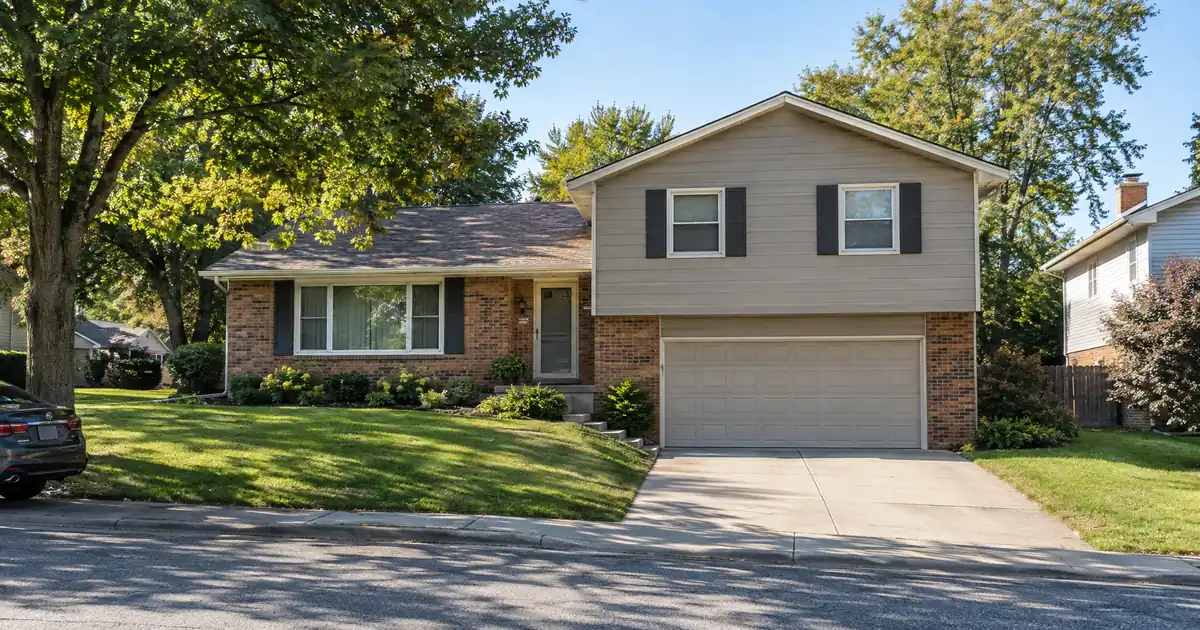
Can I Can Home Loan Approval On Business Bank Statements — The Quick Read: Yes, business bank statements can support home loan approval, but only through a non-QM bank statement program built for that purpose. These loans replace traditional personal-income documentation with 12 months of deposit history and use an expense factor to convert business revenue into qualifying income. They are not the same as DSCR loans, which qualify on a rental property’s income instead of the borrower’s own bank deposits. Which path fits depends on whether you’re buying a home to live in or a property to rent out.
Self-employed borrowers and business owners run into a familiar wall with regular mortgages. Their traditional personal-income documentation shows low taxable income because of legitimate write-offs, even when their actual cash flow is strong. Business bank statement loans exist to fix that mismatch. A lender looks at what actually moved through the account, not what the accountant reported to the IRS.
What your deposits qualify you for in your market.
Alt-doc programs read 12 months of business or personal bank deposits instead of tax returns. Enter your average monthly deposits and see the income a lender would credit you.
The expense factor is set by the lender from your business type and profit-and-loss statement; it is not a number you choose. This widget quotes no rate and no payment.
Program parameters shown update from Lendmire’s centralized guideline source.
Estimate
Illustrative estimate only — not a quote, Loan Estimate, approval, or commitment to lend. Deposit average, expense factor, and housing ratio are editable assumptions; the expense factor a lender applies is set from your business type and documentation. No interest rate or monthly payment is quoted here. Purchase capacity is a simplified illustration and does not account for taxes, insurance, HOA dues, or other debts. Alt-doc income documentation is available on consumer mortgages in the states where Lendmire is licensed for consumer lending; actual terms vary by lender, borrower, and property.
Key Terms Defined
Non-QM (non-qualified mortgage): a loan that doesn’t meet the strict income-documentation rules of a standard conforming mortgage, so it’s underwritten with alternative methods instead.
LTV (loan-to-value): the loan amount as a percentage of the property’s value; lower LTV means a bigger down payment or more equity.
Expense factor: the percentage a lender assumes goes to running the business, applied against gross deposits to estimate real take-home income.
Business-purpose loan: a loan made to finance a rental or investment property rather than a home the borrower lives in.
The federal consumer-mortgage disclosure regime: the federal disclosure rules (Loan Estimate, Closing Disclosure) that apply to consumer mortgages on owner-occupied homes.
DSCR (debt-service coverage ratio): a measure of whether a rental property’s income covers its own housing payment, used to qualify investment-property loans without personal income documents.
How Business Bank Statement Loans Actually Work
A business bank statement loan swaps traditional personal-income documentation for deposit history. The lender reviews 12 months of statements from the borrower’s business or personal account and averages the eligible deposits into a monthly income figure.
That income figure then runs through the same checks any mortgage uses: credit, debt-to-income, and reserves. The bank statements only replace the income-documentation step. Everything else in the file works the way it always has.
Underwriting on these files is done by hand. A person reads every statement, checks that the account belongs to the borrower, and looks for gaps or unexplained activity. That manual review is also why clean, well-organized statements matter more here than on a standard file — a messy account slows the file down and can shrink the coverage figure.
Business bank statement loans need this special approach because they don’t fit the usual repayment-capacity rules. Federal rules say every mortgage lender must make a reasonable, good-faith check that a borrower can repay the loan. This comes from the federal consumer-finance regulator the federal truth-in-lending rulebook §1026.43. Bank statements don’t meet the strict income-verification method that gets automatic legal protection under that rule. So lenders underwrite these loans as non-QM instead. This is a separate but fully legitimate path. Nolo’s guide to the repayment-capacity rule explains it in plain terms.
Non-QM lending, including bank statement programs, has grown steadily. It made up roughly 5% of mortgage originations in a recent year, up from about 3% a few years earlier, according to data reported by Scotsman Guide. That growth is a documentation story, not a credit-quality one — the same trade data shows alternative documentation, not weak credit, is the leading reason loans land in the non-QM category in the first place.
The Expense Factor: Where Qualifying Income Really Comes From
A business account shows gross revenue, not take-home pay, so lenders apply an expense factor before counting any of it as income. That single number can make or break how much a borrower qualifies for.
Here’s the mechanic, step by step:
- The lender pulls every deposit from the account and sorts it.
- Non-revenue items get stripped out first — transfers between accounts, loan proceeds, refunds, an owner’s own capital contribution. None of that counts as income.
- What’s left is treated as gross business revenue.
- An expense factor is applied to estimate what the business actually keeps after overhead.
- The result becomes the borrower’s monthly qualifying income.
That expense factor is a program default, not a fixed law. A common default sits around half of gross deposits, though the exact figure and the flexibility to adjust it varies by lender and program. Some programs will accept a lower, documented expense ratio if a CPA letter or profit-and-loss statement backs it up — a real accountant’s number can beat a flat guess, but only if the paperwork supports it.
This is the step most borrowers underestimate. Two lenders looking at the identical set of statements can land on very different qualifying income, purely because of how each one treats the expense side. Shopping the structure, not just the leverage, is often where the real difference in outcome shows up.
Business Statements vs. Personal Statements
Personal statements usually qualify at a higher rate than business statements. This happens because personal deposits are already treated as after-expense income. Most programs skip the expense-factor haircut entirely on a personal account. That’s the single biggest reason routing a file to the right account type matters.
A borrower who runs income through a personal account may show a cleaner, higher coverage figure than the same cash flow sitting in a business account. But there’s a catch: personal accounts still need to show a consistent, explainable pattern of deposits tied to the business. Commingled spending, irregular transfers, or unclear sources slow the file down regardless of which account type is used.
Ownership matters too. A borrower who doesn’t own 100% of the business behind the statements can often still use them — but only above a minimum ownership stake set by the specific program. Fall below that threshold, and that entity’s statements typically can’t be used at all.
Edge Cases Worth Knowing
Seasonal businesses, recent dips, and unusual deposit patterns don’t automatically sink a file — but they do trigger extra scrutiny. A lender that sees a slow month may ask for an explanation, updated records, or may apply a more conservative average instead of the full 12-month figure. A brief letter explaining a known seasonal pattern often resolves this faster than silence does.
Business funds can sometimes count toward the reserve requirement most files carry — typically around 6 months of the housing payment on bank statement programs. That’s not automatic. A lender reviewing business reserves wants to see clear ownership, real access to the funds, and confirmation that pulling the money out won’t damage the business itself.
One more edge case worth flagging for anyone eyeing a rental purchase down the line: short-term rental income doesn’t fit neatly into standard appraisal rent forms. Those forms are built to estimate monthly market rent on a property, not nightly booking income, a limitation McKissock’s appraisal education team has written about directly. That’s part of why short-term rental financing usually runs through a different underwriting path entirely — more on that below.
Does This Apply to Rental Properties?
Not usually — and this is the fork most self-employed investors miss. Business bank statement loans document the borrower’s own income. If the goal is to buy a rental property, the more direct path is usually a DSCR loan, which qualifies primarily on property-level rental income covering the payment, subject to lender guidelines.
Put simply: bank statement loans prove what the borrower earns. DSCR loans prove what the property earns. Confusing the two is the most common reason a file gets sent down the wrong path and loses time.
Which regime applies to a given loan comes down to occupancy, not documentation type. A home the borrower lives in — a primary residence or second home — is a consumer mortgage, and TRID disclosure rules apply. A bank statement loan on a property the borrower does not occupy, including a short-term rental, is treated as business-purpose. This means it’s exempt from those consumer disclosure requirements. Settle that distinction before submitting a file — don’t discover it midway through underwriting.
On the bank statement side of Lendmire’s network, primary-residence purchases and rate-term refinances typically run up to 90% LTV through select lenders. Stronger files earn the top of that range. An asset-depletion alternative — qualifying from liquid assets instead of deposits — typically tops out around 80% LTV on a primary home. Loan sizes on these files generally run from $125,000 to $3,500,000. This lane of Lendmire’s consumer mortgage operation currently covers 16 states.
Once occupancy shifts to a rental, the math changes. Cash-out on an investment property using bank statement documentation typically caps around 75% LTV on a standard rental. That ceiling can run lower on short-term rental collateral specifically. Purchase leverage on the investment side varies enough by lender that it’s worth reviewing case by case rather than assuming a fixed number.
For a straight rental acquisition, though, DSCR underwriting is usually the cleaner route. It sidesteps personal income documentation — bank statements included — and looks at the rent-to-payment relationship instead. For a side-by-side look at when each program actually fits an investor’s file, see Lendmire’s comparison of DSCR loans and bank statement loans. A few lenders in Lendmire’s network will also review deals where that ratio falls below the usual 1.00x benchmark, though leverage and terms adjust when they do.
What Investors Should Actually Do
Lendmire’s team sees many files. The borrowers who move fastest pick the right program before they start pulling statements — not after. That single decision — business versus personal account, DSCR versus bank statement — shapes almost everything downstream. It affects qualifying income, required leverage, and how many document requests come back during underwriting.
A few practical moves before applying:
- Decide whether the property is owner-occupied or a rental — that decision alone points to the right program.
- If it’s a rental purchase, ask about DSCR first; it often avoids the personal-income conversation entirely.
- If you need personal income documentation, compare how a lender treats the account type before committing to one.
- Keep large, irregular deposits explained with a paper trail before the statements ever reach an underwriter.
- Ask whether a CPA letter or profit-and-loss statement could improve the expense-factor treatment on a business account.
Anyone wondering how many months of statements a lender will actually want, or how the requirement shifts for a business versus a personal file, can find the fuller breakdown in Lendmire’s guide on how many bank statements are needed for a business loan.
If you’re deciding between qualifying on your own bank statements or on a rental property’s income instead, Lendmire can walk through both structures based on the property, your credit profile, and how much leverage you’re targeting. Reach Lendmire at 828-256-2183 or through its quote request page to compare the two paths side by side.
Frequently Asked Questions
Can I use both business and personal statements on the same file?
In many cases, yes. Some lenders will blend business and personal deposits, or let a borrower use whichever account produces the stronger qualifying income, subject to that lender’s guidelines. Mixing account types usually adds a review step, so expect a bit more documentation either way.
What if my business is very new?
A short operating history is one of the harder edge cases in this space. Lenders generally want to see an established pattern of deposits, and a business with only a few months on the books may need a stronger credit profile or different program to offset the shorter track record.
Do write-offs still hurt me on a bank statement loan?
No. traditional income documentation aren’t part of the file, so depreciation and other paper deductions never enter the calculation. The underwriter is working from actual deposits, which is the entire point of this program for business owners whose conventional personal-income paperwork understate real cash flow.
Is a bank statement loan the same thing as a DSCR loan?
No, and this is the mix-up that trips up the most investors. A bank statement loan documents the borrower’s personal or business income. A DSCR loan is reviewed on the rental property’s own income instead. They solve different problems and usually apply to different kinds of purchases.
What happens if my deposits are irregular from month to month?
An underwriter will typically ask for an explanation and possibly updated records. Seasonal patterns, timing of customer payments, or a temporary slow stretch can often be explained with a short letter and supporting documents, rather than automatically hurting the file.
About Lendmire
Lendmire (NMLS# 2371349) is a mortgage brokerage built around DSCR investor lending, with programs available in 40 markets, including Washington, D.C. DSCR lenders commonly evaluate rental-income coverage instead of personal income paperwork — a practical fit for LLC-owned and multi-property investors. Terms vary by lender, property, leverage, and program. Scotsman Guide named Lendmire a Top Mortgage Workplace in both 2025 and 2026.
Get Started
Ready to find the right loan for you?
In about 30 seconds you can review financing options available for your home or investment property. No commitment required.
Informational only. Not a Loan Estimate, approval, or commitment to lend. Program availability and eligibility are subject to lender guidelines, credit approval, property review, and underwriting.
References
1. CFPB Regulation Z §1026.43 (repayment-capacity/qualified-mortgage Rule)
2. Nolo — repayment-capacity Rule Explained
3. Scotsman Guide — Which Groups Are Driving Non-QM Lending?
4. McKissock Learning — Form 1007 and Its Impact on Short-Term Rental Appraisals
Brandon Miller
Founder & CEO, Mortgage Loan Originator, Lendmire LLC
- Mortgage Loan Originator · NMLS# 1129696 · Verify on NMLS Consumer Access
- North Carolina Real Estate Broker · License# 343312 · Verify on NCREC
- North Carolina Insurance Producer · License# 19053198 · Property, Casualty, Life, Health · Verify on NAIC SBS
- Lendmire LLC · Firm NMLS# 2371349 · Verify firm licensure
Disclosure information. Lendmire is a state-licensed mortgage brokerage under NMLS# 2371349. Lendmire is not a depository institution, direct lender, or financial advisor — all loans referenced are placed through wholesale lender partners and are subject to each lender's underwriting standards. This article is provided for general informational purposes and is not a commitment to lend, nor does it constitute financial, legal, or tax advice. Loan programs, terms, rates, and qualification standards change without notice and depend on borrower profile, property type, and the state in which the subject property is located. Equal Housing Opportunity provider. NMLS Consumer Access: nmlsconsumeraccess.org.


