
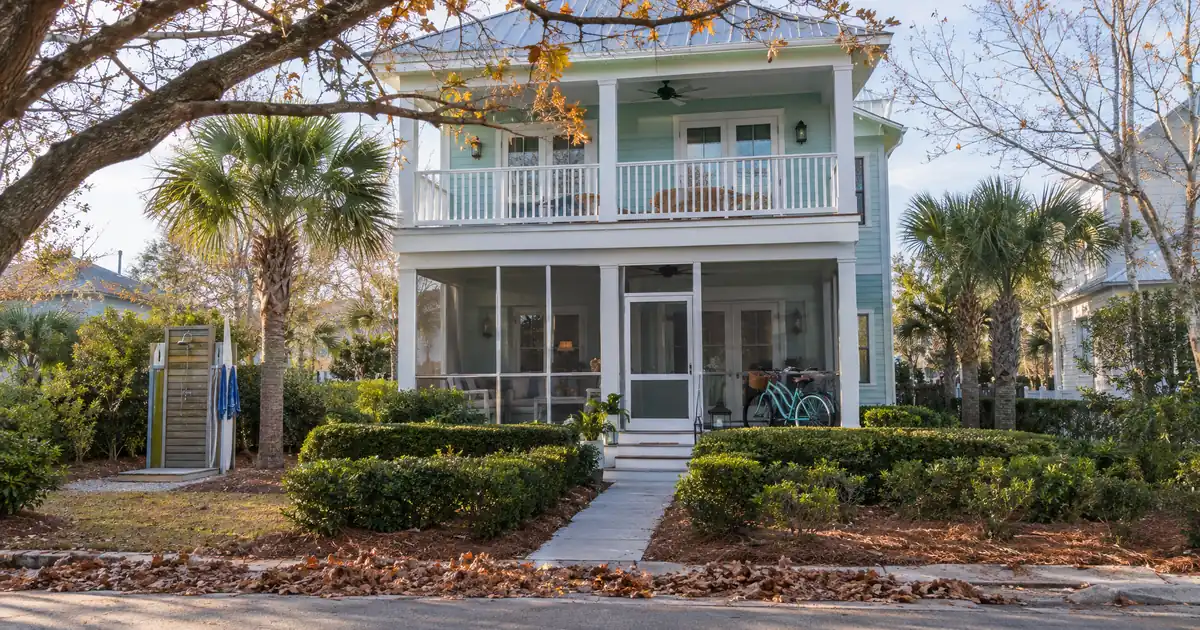
The Quick Read: Usually yes, if the house is a second home or one you use yourself more than 14 days a year. A bank-statement cash-out is reviewed around 12 or 24 months of deposits instead of traditional personal-income documentation. On a $3M value, the best cash-out leverage is 70%, with credit of 720 or higher, through select wholesale programs and subject to full underwriting. A house that is a true rental, with personal use of 14 days or fewer, usually belongs on a DSCR loan instead.
- Occupancy decides the loan path, and the path decides the paperwork.
- Loan size, not purchase price, sets the leverage band.
- Cash-in-hand is capped at $1,500,000 above 60% LTV on the portfolio program, with no cap at or below 60%.
- Bank-statement qualifying income is eligible deposits after an expense ratio, divided by the months of statements.
- Above $4,000,000, every file is reviewed case by case before submission. Each figure is subject to lender guidelines and a complete review of property type, leverage, and credit.
Can You Cash Out a $3M Beach House on Bank Statements?
Yes, with conditions. Across the wholesale network Lendmire places files with, bank-statement programs take primary residences, second homes and investment property. Each occupancy has its own leverage ladder. The $3M figure is the property value. The lender sizes the loan against value, then reads the leverage cell for that loan amount.
Two wholesale programs matter here. The portfolio non-QM program carries bank-statement files to $6,000,000. A bank portfolio program carries twelve-month-statement files to $30,000,000 on its own ladder, which begins above $4,000,000 on a primary residence. A $3M beach house sits well inside the portfolio program’s range.
Here is the part that surprises owners. A loan on this house falls in the $2,000,000-to-$2,500,000 band at the top cash-out leverage. In that band, cash-out tops out at 70% on a primary residence, a second home or an investment property. All three need credit of 720 or higher for that top cell. A lower score takes a lower cell in the same band. The program floor is 660 on the portfolio program, and the 70% cell is simply where the best credit lands.
Mentally subtracting from a purchase ladder does not work. Reading the wrong column is an easy sizing mistake to make on beach-house files.
How Do Bank Statements Turn Into Qualifying Income?
The lender totals eligible deposits over 12 or 24 consecutive months and removes non-income credits. It then applies an expense ratio and divides by the number of months. The result is monthly qualifying income. Debt-to-income can run up to 50%.
Personal statements are the simplest route. Business statements need at least 25% ownership of the business. The expense ratio is set by the business type:
- A flat 20% expense ratio applies to a service business with no employees.
- A flat 40% expense ratio applies to a business with one to five employees.
- A flat 50% expense ratio applies to a business with six or more employees, or any product business.
- An accountant-provided ratio can replace the fixed ratios.
A profit-and-loss method also exists and is capped at 80%. Transfers from the borrower’s own business into a personal account count at 100%. That matters for owners who pay themselves in lumps.
Statements must be consecutive. Transaction histories do not substitute for them. The bank program uses twelve months.
This is a different-documentation loan, not a documentation-free one. Credit, reserves, appraisal and housing history all get reviewed. The file is reviewed on documented income under the applicable program, subject to lender guidelines.
Seasonal rental deposits deserve attention here. If the beach house produces rent, those deposits can land in the same account as everything else. Lumpy or falling deposits pull the average down. Clean, consecutive statements with explanations for large non-routine deposits keep the number honest.
Two asset-based paths exist for owners whose deposits understate wealth. The asset allowance divides liquid assets by 36 or 60 months as supplemental income, and it applies to primary and second homes only. Assets-only needs liquid U.S. assets equal to the loan amount plus closing costs. Retirement accounts count at 70%, or 80% at age 59.5 and up. Business funds, gifts, cryptocurrency and unvested stock never count.
What Actually Limits the Cash?
Three limits run at once, and the lowest one wins: equity, the loan-size ceiling, and income or DTI.
Equity and leverage. On a $3M value, 70% is the cash-out ceiling for a loan in the $2,000,000-to-$2,500,000 band. A request above 70% still lands in that band, and the band’s cash-out cell stops at 70%, so the ladder caps it there. That is why the ladder is read by loan amount, not by price. Leverage, reserves, and pricing vary by lender and program; the final terms follow the full file review.
The cash-in-hand cap. On the portfolio program, proceeds are unlimited at or below 60% LTV. Above 60%, cash-in-hand is capped at $1,500,000. The bank program publishes no cap. Terms vary by lender guidelines, property type, leverage, credit profile, and full file review.
Credit. The top cell here needs 720 or higher. A borrower at 700 still has a path, but at a lower cell in the band.
Reserves. A loan in this band carries nine months of reserves. Each additional financed property adds two months, to a 12-month maximum. First-time investors carry 12 months.
DTI. Two housing payments, the primary home and the beach house, are what most often press the 50% ceiling. Check this before anything else.
A Worked Example With No Payment Math
Consider an owner with a $3M beach house used as a second home and a modest mortgage balance. At 70% cash-out in the $2M–$2.5M band, the new loan pays off the old mortgage, covers costs, and returns the rest. Because the cash-out is above 60% LTV, the $1,500,000 cash-in-hand cap applies on the portfolio program. With a small payoff, the cap can bind before leverage does. Exact terms depend on the lender’s guidelines, property type, leverage, and a full review of the borrower’s file.
Run the other case. Say the house is owned free and clear. Here the cap matters most, since nearly all of the proceeds are cash in hand. At 70%, the cap stops the cash at $1,500,000. At 60% LTV the cap falls away, and the loan is 60% of value. On a free-and-clear house, that structure returns more cash than the capped 70% structure. Every figure here varies by lender and program; guidelines, property type, leverage, and credit profile all apply.
So the choice depends on the payoff. With little or no mortgage balance, the 60% structure is the one that returns more cash. With a larger payoff, the cap may never bind, and the 70% structure returns more. A borrower who needs the maximum cash should compare the portfolio program’s cap against the bank program’s ladder, which has no published cap but sizes loans differently. Both are reviewed on their own terms.
Now stress the size. If the beach house is worth $5M instead, the deal falls within the bank program’s range, and everything is reviewed case by case before submission. The leverage figures no longer read as a flat ceiling at that size.
Second Home or Rental? Occupancy Decides the Paperwork
Personal use is the line. The CFPB’s official interpretation of the exempt-transactions rule gives a beach-house example. An owner who will occupy the house for a month next summer and rent it the rest of the year is treated as occupying it. The 14-day test looks at expected use over the coming year.
| How you use the house | Loan type | Typical path |
|---|---|---|
| Stay more than 14 days, rent the rest | Owner-occupied or second home | Bank statements |
| Personal use only | Second home | Bank statements |
| Rented, owner stays 14 days or fewer | Investment property | DSCR, or bank statements |
| Full-time residence | Primary residence | Bank statements |
Investment property can also go through a bank-statement program, using the investment ladder. The second-home ladder is 1-unit only.
Your occupancy statement has to be accurate. Misstating it can recharacterize the loan and expose both sides. If the plan changes after the application, tell your broker before the loan closes.
When the Beach House Is a True Rental: The DSCR Lane
DSCR loans are designed for non-owner-occupied investment properties. Because they are business-purpose investor loans, they are reviewed differently from a standard owner-occupied mortgage.
A DSCR cash-out qualifies primarily on property-level rental income covering the full monthly obligation, subject to lender guidelines. Rent is tested against principal, interest, taxes, insurance and any association dues. Personal income is not the qualifying test. Lendmire’s complete DSCR loans guide covers the ratio and its inputs.
Size does not change the lane. The Federal Reserve’s business-purpose guidance treats transaction size as one factor among several, and size alone never settles the question. A large house is not automatically an investment loan, and wanting to skip income documents does not make it one.
Short-term rental evidence is where beach-house DSCR files get tested. Lenders generally credit either a long-term rent figure or documented short-term income, and the lower, better-supported figure usually controls the ratio. Typical evidence includes:
- An appraiser’s short-term rental analysis.
- A twelve-month property management statement.
- Twelve months of bank statements showing the deposits.
Bank statements can therefore work two ways. They qualify the borrower on the bank-statement path, or they document rental deposits inside a DSCR file. A first-year owner with no rental history is the weak spot, because there is nothing to document. If a coverage ratio lands below 1.00x on long-term rent alone, select lenders in the network do offer sub-1.00 programs, with leverage and terms adjusted. Eligibility still depends on the borrower, the property and the program.
What the Beach Adds to Underwriting
Coastal collateral draws more scrutiny than an inland house of the same value. The points below are qualitative, and each program sets its own rules.
- Appraisal. Waterfront houses often have few true comparables. Larger loans can bring extra appraisal or review steps, depending on the program. A well-documented appraisal reconsideration, with recent nearby sales and condition adjustments, is a normal step when value comes in light.
- Insurance and flood. Wind and flood coverage on a coastal property can change the monthly obligation materially. Get complete quotes in hand before the file goes in, since a stale quote can reshape the numbers during review.
- Condo versus house. Warrantable condos run to 85% and non-warrantable to 80% at their top ceilings, but on a $3M value the loan-band ladder governs. Condotels take lower caps, 65% cash-out on the portfolio program and 50% on the bank program. The HOA questionnaire has to be complete.
- Rural location. Rural property carries stricter rules, and the super-jumbo overlays exclude it. A remote beach lot can trip this.
- Recent purchase. If the house was bought recently, expect questions about the source of purchase funds and about seasoning. The exact seasoning requirement varies by program, so confirm it before assuming the cash is available.
Documents That Keep the File Clean
The documents below are the usual set. The list varies by program and borrower.
- 12 or 24 consecutive months of personal or business statements, every page.
- Business ownership evidence of 25% or more, if business statements are used.
- A letter or ratio from your accountant, if you choose that expense method.
- A mortgage statement for the existing loan and a current insurance quote.
- An HOA questionnaire and condo documents, if applicable.
- Entity documents, if the house is titled in an entity, subject to lender program eligibility.
- Rental evidence on any DSCR or investment file.
- Asset statements, if you use an asset path.
Where These Files Go Wrong
1. Reading the wrong ladder column. A purchase figure applied to a cash-out overstates the loan. Check the cash-out column for the occupancy.
2. Counting the wrong deposits. Transfers between your own accounts and one-time credits get removed. Mark the legitimate ones, such as business-to-personal transfers.
3. Ignoring DTI. Two housing payments can exceed 50% before the new loan is even sized.
4. Occupancy that does not match the plan. A listing and a statement of use have to agree.
5. Incomplete insurance. Coastal quotes missing wind or flood coverage send files backward.
6. Assuming cash-out proceeds count as reserves. Above the super-jumbo line they cannot. Hold reserves separately.
7. Uneven or sparse statements. Gaps in the consecutive history cannot be patched with transaction printouts.
Is There a Better Product for Some Owners?
Sometimes. A DSCR cash-out fits a true rental. A bank-statement cash-out fits an owner whose income is real but poorly shown on returns. The asset-based paths fit owners with large liquid balances and uneven deposits. A HELOC or home equity loan may suit smaller cash needs, since neither involves refinancing the first mortgage. Lendmire’s article on a super jumbo cash-out without bank statements covers the asset route at larger sizes.
Key Terms Defined
Cash-out refinance: a new mortgage that pays off the old one and returns the difference as cash.
Bank-statement loan: a mortgage that qualifies income from eligible deposits instead of traditional personal-income documentation.
LTV: the loan amount divided by the appraised value.
Seasoning: the time a lender wants between a purchase and a cash-out on that property.
Reserves: liquid funds held after closing, counted in months of the housing obligation.
DSCR: a ratio that tests a rental’s income against its monthly obligation.
Frequently Asked Questions
Can I use a bank-statement loan on a beach house I rent out part of the year?
Yes, if your own use is substantial. Staying more than 14 days a year generally makes the house a second home or primary residence, and a bank-statement program is the usual way to document income. If you stay 14 days or fewer, the house is an investment property, and either a DSCR or an investment-ladder bank-statement file can fit. Terms vary by program.
How much cash can I take out of a $3M beach house?
The top cash-out leverage on a loan of this size is 70%, with credit of 720 or higher. On the portfolio program, cash-in-hand is capped at $1,500,000 when LTV is above 60%, and uncapped at or below 60%. Your existing payoff and closing costs reduce the net. Everything is subject to full underwriting.
Do second homes get the same leverage as primary residences?
Not always. Each occupancy has its own ladder, and the gap between them changes from band to band. For this loan band the cash-out figures match, but you should read each occupancy’s own ladder rather than subtracting from the primary figure.
Can I skip the income documents by calling the house a rental?
No. A DSCR loan needs a real non-owner-occupied rental, and the file qualifies primarily on rental income covering the payment, subject to lender guidelines. If you use the house yourself, the bank-statement lane applies.
Does my credit score need to be 720?
720 is what the top cash-out cell needs in this band. The portfolio program’s floor is 660, and a lower score takes a lower leverage cell. Above the super-jumbo line the floor is 700.
Next Step
If you are financing a high-balance property on business or personal bank statements and want to see how the numbers work, Lendmire can help you compare super jumbo bank statement loan options based on your deposits, the property, credit profile, leverage, and your goals. Lendmire is a broker that arranges these loans through select wholesale programs, and consumer mortgage lending is licensed in 16 states: AL, CA, CO, FL, GA, IN, MI, MT, NM, NC, OH, PA, TN, TX, VA and WA. Programs change, and nothing here is a commitment to lend.
Lendmire’s self-employed mortgages page presents both super jumbo programs, bank statement and DSCR, side by side.
About Lendmire
Lendmire (NMLS# 2371349) is a mortgage brokerage serving self-employed and high-net-worth borrowers in 16 states. Bank statement, P&L-only, 1099-only and asset-based mortgages are arranged through wholesale lending channels; Lendmire brokers the financing and the lender underwrites each application. Scotsman Guide named Lendmire a Top Mortgage Workplace in both 2025 and 2026.
A deeper walk-through of investment-property equity extraction lives in Lendmire’s guide to cash-out refinance on an investment property.
Get Started
Ready to find the right loan for you?
In about 30 seconds you can review financing options available for your home or investment property. No commitment required.
Informational only. Not a Loan Estimate, approval, or commitment to lend. Program availability and eligibility are subject to lender guidelines, credit approval, property review, and underwriting.
References
1. CFPB – Official interpretation of exempt transactions
2. Federal Reserve – Business-purpose supplemental guidance
This article is part of Lendmire’s super jumbo bank statement loan program — full qualification details, guidelines, and scenarios live on the program page.
Related reading: How to Refinance a Trust-Held Home After Divorce on Bank Statements · Can a Founder Cash Out a Second Home on Bank Statements After a Sale? · How to Finance an Oceanfront Home With Bank Statements
Brandon Miller
Founder & CEO, Mortgage Loan Originator, Lendmire LLC
- Mortgage Loan Originator · NMLS# 1129696 · Verify on NMLS Consumer Access
- North Carolina Real Estate Broker · License# 343312 · Verify on NCREC
- North Carolina Insurance Producer · License# 19053198 · Property, Casualty, Life, Health · Verify on NAIC SBS
- Lendmire LLC · Firm NMLS# 2371349 · Verify firm licensure
Required disclosures. Lendmire (NMLS# 2371349) operates as a licensed mortgage broker, not a direct lender or depository. The discussion in this article is general in nature and should not be relied upon as financial, legal, or tax advice — every investment scenario is unique and should be reviewed by a qualified professional. Any loan inquiry is subject to lender underwriting, and this article is not a commitment to lend or a guarantee of approval. Mortgage rates, loan terms, and program guidelines vary by borrower, property, and state, and may change without notice. Equal Housing Opportunity. Verify licensure at NMLS Consumer Access.