
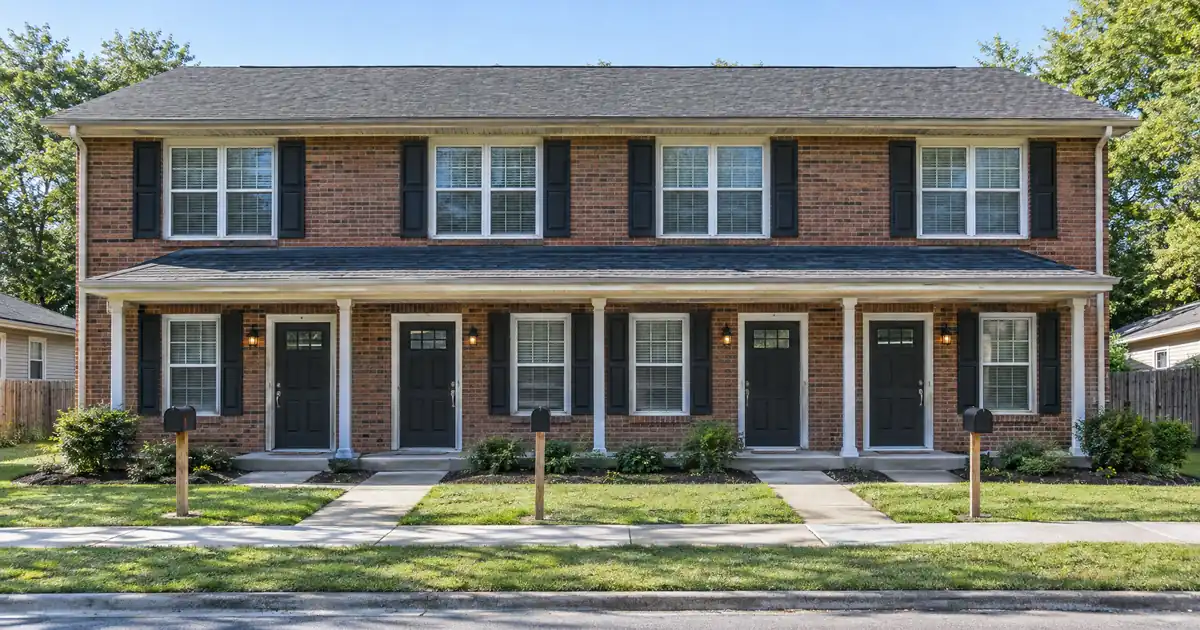
The Quick Read: Yes, in general. Tenants in the other units do not disqualify you, because what matters is that you live in one unit as your main home. You also need to have owned and lived there for 12 months, and the cash-out loan tops out at 80% of the home’s value. Rent from the leased units can help you qualify, with conditions.
Why Tenants in the Other Units Don’t Disqualify You
The FHA cash-out program is built for the home you live in. A duplex, triplex or fourplex counts as that home when you occupy one of the units. Across the wholesale programs Lendmire places FHA files with, the occupancy question comes first and the tenant question comes second.
Here is the plain version. A lender asks, “Does the borrower live here?” It does not ask, “Is anyone else paying rent here?” If the answer to the first is yes, a fully leased remainder of the building is normal. Most owner-occupied multi-unit buildings work this way.
That is why FHA is popular with people who buy a small multi-unit building and live in one unit. The same logic carries over when you refinance. You can read the program basics on Lendmire’s FHA cash-out refinance program page.
Full leases do change one thing: the paperwork. A lender will want proof of what the other units bring in if you plan to count that income. That is a documentation matter, not an eligibility problem. Landlord-borrowers should expect a bigger file than a single-family owner.
Two other numbers frame everything else. A cash-out loan reaches up to 80% loan-to-value (LTV), which means you keep at least 20% equity. And the home must be owned and occupied for 12 months before the lender requests the FHA case number. Those two tests decide most files before rent comes up at all.
Where Eligibility Actually Breaks
Leases are not the trouble spot. These are.
You don’t live there. If you move out and lease every unit, the home stops being your principal residence, and this program no longer fits. That is the whole answer for the “pure rental” version of the question. Occupancy sets the leverage, and a non-occupied property sits outside this loan.
You haven’t been there 12 months. The program asks that you have owned and occupied the home for 12 months before the case number is assigned. Move in last spring and want cash this winter? You may be early. Lenders call this waiting period seasoning.
The building has five or more units. Five-plus units are generally treated as commercial property, and FHA’s one-to-four-unit rule leaves them out. Treat that as a hard boundary for this loan type.
Equity is thin. An 80% cap means a home with little equity may not produce much cash. Sometimes equity is the real limit, not the leases. A building you bought recently with a small down payment may need time and payments before the math opens up.
Mortgage payment history is rough. Lenders look at recent late payments on your current mortgage. Some lenders set stricter standards than the program minimum, so the exact threshold depends on the lender and your file.
Credit and ratios don’t fit. The base ratio pair is 31/43 (housing payment over income, then total debts over income). Documented compensating factors can stretch that to 40/50 at the top tier. A credit decision score of 580 or higher is the starting point across the wholesale programs Lendmire works with. Figures are subject to lender guidelines and full file review.
If ratios are your worry, Lendmire has written about qualifying ratios on a 2-4 unit primary home in more detail.
How the Rent From Leased Units Gets Counted
Leased units can help you qualify, but they are not counted at face value. HUD Mortgagee Letter 2023-17 lays out the rental-income documentation rules. When there is no history of rent on your traditional personal-income documentation, the lender uses 75% of the lesser of two figures: the appraiser’s market rent or the rent in the lease. The missing 25% is a cushion for vacancy and upkeep.
When you do have a rental history, the lender looks at what your traditional personal-income documentation shows for the property. That is the document landlords call Schedule E, the tax form where rental income and expenses are reported. The lender may average what it shows.
Your own unit is treated differently. The rent you would pay for the unit you live in generally does not count as income. HUD’s older reference guide on rental income says only the rental units count, after a deduction for vacancy and maintenance. This guidance is archived, so your loan officer will confirm the current wording in HUD’s Handbook 4000.1.
Unit count changes the picture. Here is the side-by-side.
| Factor | Duplex | Triplex or fourplex |
|---|---|---|
| Live in one unit? | Yes, required | Yes, required |
| Rent from other units | Can help qualify | Can help qualify |
| Extra rent-based test | Generally none | Self-sufficiency test |
| Reserves after closing | One month of PITI | Three months of PITI |
| Cash-out counts as reserves? | No | No |
PITI means principal, interest, taxes and insurance, which is the full monthly housing payment. Reserves are money left in your accounts after closing. The reserve figures come from the same Mortgagee Letter. It also says the cash you take out at closing does not count as reserves, so the money has to come from other assets.
The Three- and Four-Unit Extra Test
Three- and four-unit buildings face one more hurdle called the self-sufficiency test. The idea is simple. The building’s net rental income should cover the new mortgage payment. HUD’s older refinance reference guide describes it this way for 3-4 unit properties.
Here is the catch. Net rent in that test comes from the appraiser’s market-rent estimate across all the units, not just signed leases. Your own unit is included in that estimate, with vacancy and maintenance factors taken out. So full leases alone do not settle the test. A fourplex with every unit leased at below-market rents may still come up short. HUD’s refinance reference guide is archived, so confirm current handling before you plan around it.
What a Lender Wants to See on the Leases
Leased units mean paperwork. The file is stronger when you gather it before you apply. This table shows common situations and the evidence that tends to support them.
| Situation | Typical evidence | Common snag |
|---|---|---|
| Long-standing tenant | Signed lease, traditional personal-income documentation | Gaps in rent history |
| New tenant, no history | Lease plus appraiser’s rent | Rent counted at 75% |
| Month-to-month tenant | Written agreement, payment record | Weaker proof of income |
| Lease about to end | Renewal or new lease | Rent assumption questioned |
| Vacant unit | Appraiser’s market rent | Discounted for no history |
The appraiser does real work on a leased building. The appraisal report and a rent schedule are part of the rental-income documentation, per that same Mortgagee Letter. The appraiser looks at each unit’s condition and what it would rent for. That market figure can differ from your lease.
Vacancy does not disqualify the loan. It changes how rent is treated, because projected rent is discounted when there is no history. A vacant unit is a rent question, not a deal-killer.
Expect to hand over:
- Current leases for each rented unit
- traditional income documentation showing rental income, where you have a history
- Proof of rent payments if the lender asks
- Your usual income and asset documents for your own file
Many landlord-borrowers find the rent history is the slowest thing to assemble. Start with the leases and last returns. If you want to know whether the rent helps you at all, Lendmire’s piece Does Rent From Other Units Help You Qualify for an FHA Cash-Out? goes deeper.
A Triplex Scenario, in Percentages
Picture a triplex where you live in one unit and tenants fill the other two. Say you bought it a couple of years ago and kept every payment on time. The appraisal comes back and the loan is sized at 80% of value at most.
First, the lender confirms your occupancy and that you hit the 12-month mark. That clears the first gate. Next, the lender checks your credit decision score and ratios against the 31/43 base and any documented compensating factors.
Then comes the rent. You have two leased units and a rental history on your returns, so the lender uses the documented income, not the 75% shortcut. Because this is a triplex, the self-sufficiency test applies too. The appraiser’s market rent for all three units, less vacancy and maintenance, has to cover the new payment.
Finally, the reserves. Three months of PITI have to sit in your accounts after closing, separate from the cash you take out. Some files that look fine on rent stall right here.
Now flip one detail. Suppose you moved out a year ago and rented all three units. The same building no longer fits, even though the rents are the same. Occupancy, not income, drew that line.
Odd Leases and Short-Term Rentals
Month-to-month tenants and expiring leases are workable, but the lender wants a clear read on the income. A lease that ends soon may call for a renewal, and a handshake arrangement is harder to document. Written terms help.
Short-term rentals raise a different question. Lenders set their own views on how FHA-financed properties with short-term-rented units are treated. If one of your units is rented by the night, ask your loan officer how that income will be documented before you assume it counts.
What about using the cash to fix up a rented unit? Lenders generally look at the file’s qualifying and appraisal factors, not at where each dollar goes. The cash-out comes with fewer strings than a renovation loan. Ask how a specific plan fits before you count on it.
When This Is the Wrong Move
Cash-out is a bigger mortgage, not free money. It replaces your first mortgage with a larger one. The CFPB’s Office of Research notes that a home equity loan or HELOC leaves your first mortgage in place, while a cash-out refinance swaps it out. Your monthly payment usually goes up.
There is a real risk too. CFPB research on cash-out refinances and non-mortgage debt warns that turning other debts into mortgage debt puts the home at risk if payments become hard to keep up.
FHA mortgage insurance adds to the cost. The program charges an upfront premium of 1.75% of the base loan, which is usually financed. It also charges an annual premium between 0.15% and 0.75% of the balance, depending on term, loan amount and LTV. On a thirty-year loan above 90% LTV, the annual premium lasts for the full term. At 90% or below, it ends after eleven years. Those are program mechanics, not a price quote.
It may be the wrong move when:
- Your current loan is an FHA loan and a streamline would do the job without an appraisal
- You need only a modest amount and a second loan would leave your first mortgage alone
- Your equity is thin and the 80% cap leaves little cash
- Your rent income is uneven and the reserves would leave you stretched
Think of the cash-out as a tool for the home you live in and keep living in. If the plan depends on moving out soon, talk through the alternatives first. A no-cash-out refinance has different rules, and a loan officer can walk you through which fits.
Key Terms Defined
Cash-out refinance: A new, larger mortgage that pays off your current one and hands you the difference in cash.
Principal residence: The home you live in as your main address. In a multi-unit building, that means you occupy one unit.
Seasoning: The waiting period a lender wants before you refinance, here 12 months of owning and living in the home.
LTV (loan-to-value): The loan amount divided by the home’s appraised value. A cash-out cap of 80% means you keep 20% equity.
Self-sufficiency test: An extra check on three- and four-unit buildings that asks whether net rent covers the mortgage payment.
Reserves: Money left in your accounts after closing, measured in months of PITI.
PITI: Principal, interest, taxes and insurance, the full monthly housing payment.
Frequently Asked Questions
Does it help or hurt that all the other units are leased?
It mostly helps with documentation and does not hurt eligibility. Full leases show income you may be able to count, and they do not change that you live in the building. They do add paperwork, and the rent is discounted, not counted at full face value. On three- and four-unit buildings the self-sufficiency test still relies on the appraiser’s market rent.
Can I count the rent from the unit I live in?
Generally no. Rent for the unit you occupy is not treated as qualifying income. Only the rented units count, after vacancy and maintenance adjustments. On a three- or four-unit building, your unit’s market rent shows up inside the self-sufficiency calculation instead. Your loan officer will confirm current handling.
What if I moved out and rented the whole building?
This program no longer fits, because the home is not your principal residence. FHA cash-out is for the home you occupy. You could look at a no-cash-out option or a different loan type, and each has its own rules. Talk it through with a broker before applying.
Does a vacant unit sink the loan?
No. A vacant unit does not disqualify you. It changes how rent is treated, since projected rent is discounted when there is no rental history. The appraiser’s market-rent estimate usually drives that number. Reserves and ratios still have to work.
Can the cash I take out count as my reserves?
No. Reserves must come from other assets, and the cash taken at settlement is excluded. One month of PITI is the requirement on one-to-two-unit homes and three months on three-to-four-unit homes. Plan to keep some savings untouched.
Next Step
If you are weighing a cash-out refinance against keeping the loan you have, Lendmire can help you compare the programs and the equity each one reaches. Program figures are subject to lender guidelines and full file review, and nothing here is a commitment to lend. Bring your leases, your last conventional personal-income paperwork and a rough sense of how much cash you want, and the picture gets clear fast for a multi-unit owner.
For your own numbers, request a scenario review with Lendmire.
About Lendmire
As a mortgage broker (NMLS# 2371349), Lendmire helps homeowners and home buyers in 16 states with FHA, VA, conventional and jumbo purchase and refinance loans arranged through wholesale lenders. Lendmire is never the lender; program terms are set by the lender and the agency guidelines. Scotsman Guide named Lendmire a Top Mortgage Workplace in both 2025 and 2026.
For the program’s current guidelines, see FHA loan programs.
Get Started
Ready to find the right loan for you?
In about 30 seconds you can review financing options available for your home or investment property. No commitment required.
Informational only. Not a Loan Estimate, approval, or commitment to lend. Program availability and eligibility are subject to lender guidelines, credit approval, property review, and underwriting.
References
1. HUD Mortgagee Letter 2023-17
2. HUD Archives, Rental Income reference guide
3. HUD Single Family FHA INFO and Handbook 4000.1
4. HUD Archives, Refinances reference guide
5. CFPB Office of Research blog on cash-out refinances
6. CFPB: CFPB Cash Out Refinances and Paydown Behavior of Non Mortgage Debt Balances
This article is part of Lendmire’s FHA Loan series — every loan program’s qualification details, guidelines, and scenarios live on the loan options page.
Related reading: How to Prepare a 2-4 Unit Primary Home for an FHA Cash-Out Appraisal · Can a 2-4 Unit Primary Home With a High DTI Get an FHA Cash-Out? · How Much Payment an FHA Cash-Out Allows on a 2-4 Unit Primary Home
Brandon Miller
Founder & CEO, Mortgage Loan Originator, Lendmire LLC
- Mortgage Loan Originator · NMLS# 1129696 · Verify on NMLS Consumer Access
- North Carolina Real Estate Broker · License# 343312 · Verify on NCREC
- North Carolina Insurance Producer · License# 19053198 · Property, Casualty, Life, Health · Verify on NAIC SBS
- Lendmire LLC · Firm NMLS# 2371349 · Verify firm licensure
Required disclosures. Lendmire (NMLS# 2371349) operates as a licensed mortgage broker, not a direct lender or depository. The discussion in this article is general in nature and should not be relied upon as financial, legal, or tax advice — every investment scenario is unique and should be reviewed by a qualified professional. Any loan inquiry is subject to lender underwriting, and this article is not a commitment to lend or a guarantee of approval. Mortgage rates, loan terms, and program guidelines vary by borrower, property, and state, and may change without notice. Equal Housing Opportunity. Verify licensure at NMLS Consumer Access.