
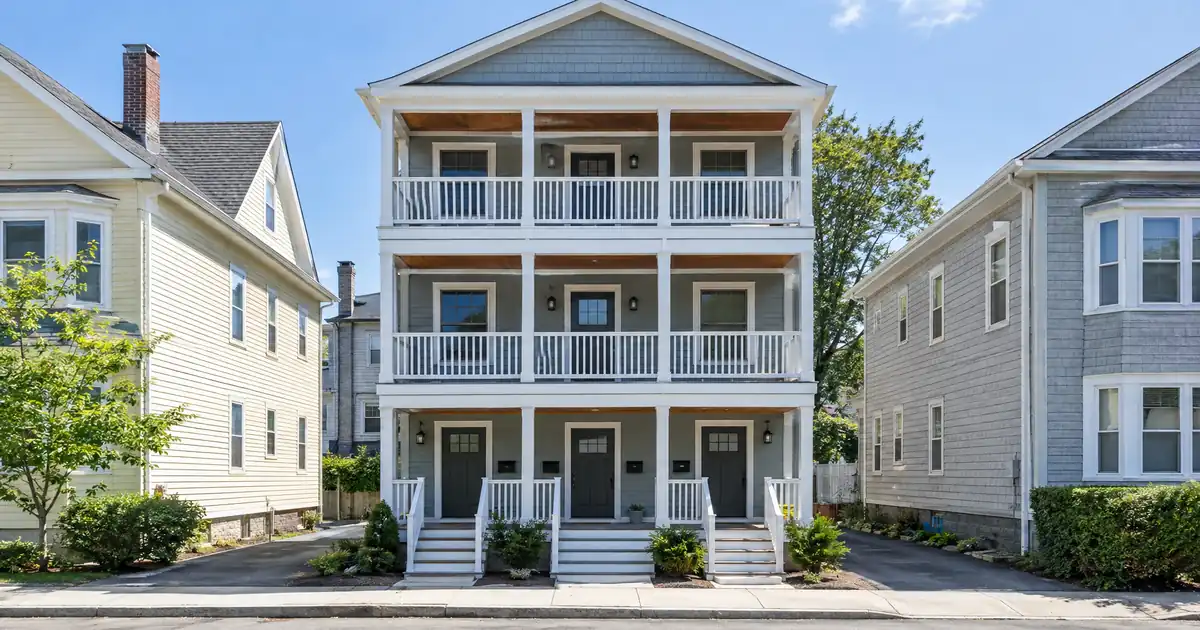
The Quick Read: On an owner-occupied triplex, rent from the leased units can count toward your qualifying income, but only after the lender documents it and applies a haircut. A second test also applies to three- and four-unit homes: the property’s own rent has to cover its payment. Your leases support the file, but the appraiser’s market rent drives that test. All of it is subject to lender guidelines and full file review.
Who Can Use This Loan on a Triplex?
You can use it only if you live in one of the three units. FHA is a program for owner-occupied principal residences, and HUD treats a three-unit building as a “three- to four-unit property.” Leasing the other two units does not turn the building into an investment property. It stays your home with two tenants.
The cash-out version has its own entry requirements. Across the wholesale programs Lendmire places FHA files with, an FHA cash-out reaches 80% loan-to-value (LTV) on a home you have owned and occupied for 12 months before the case number is assigned. LTV is the loan balance divided by the appraised value. The 12 months must be as your principal residence, not as a landlord who lived elsewhere.
If you are weighing this against other options, Lendmire’s FHA cash-out refinance program page lays out the basics. This article covers the income side for a triplex.
Key Terms Defined
Effective income: The monthly income a lender is allowed to count after documentation and adjustments.
Fair market rent: The rent the appraiser says each unit should bring, whether or not a lease exists.
Self-sufficiency test: A check, required for three- and four-unit FHA homes, that the property’s net rent covers its own payment.
PITI: Principal, interest, taxes and insurance, the core monthly cost of the loan.
Reserves: Liquid savings you must hold after closing, counted in months of PITI.
Schedule E: The tax-return page where landlords report rental income and expenses.
Overlay: A stricter rule a lender adds on top of the agency’s minimum.
What Are the Two Income Tests on a Triplex?
A triplex faces two separate tests, and borrowers often blur them. The first asks whether you, as a borrower, have enough income. The second asks whether the building supports itself.
Test one is your qualifying income. Rent from the other units can be added to your effective income, but only when documented under HUD’s rental income rules, which Mortgagee Letter 2023-17 revised. The result feeds your debt ratios. Across the programs we place with, the base pair is 31/43 (housing cost over income, and total debt over income) with no compensating factors. Documented compensating factors can stretch that to 40/50 at the top tier, and the automated finding governs most files.
Test two is the self-sufficiency test. HUD’s knowledge-base treatment of three- to four-unit properties builds it like this:
1. Take the appraiser’s fair market rent on all units, including the one you live in. 2. Subtract the greater of the appraiser’s vacancy-and-maintenance estimate or 25% of that rent. 3. Divide the new PITI by the result. 4. The answer may not exceed 100%.
HUD’s glossary describes the result, Net Self-Sufficiency Rental Income, as the rent the property produces over and above PITI. The lender must also obtain form HUD-92561, a contract in which you agree not to use the property for hotel or transient purposes.
Does the Self-Sufficiency Test Apply to a Cash-Out?
Yes, based on HUD’s own materials. Mortgagee Letter 2009-08, which set the original cash-out limits, says the test for three- and four-unit properties “remains in effect.” HUD’s archived refinance reference guide says the same and adds that these properties need three months of reserves after closing.
Both documents are old, and the 2009 letter’s leverage figure has since been replaced. Treat them as evidence of long-standing policy, not current text. We confirm current Handbook 4000.1 wording on every file before promising a borrower anything.
Here is why this matters for a cash-out. The test compares PITI to rent, and pulling cash out makes the loan bigger. A triplex that passed comfortably on a purchase can fail after a large cash-out. Same building, same rent, bigger payment.
How Does the Lender Count Rent From the Leased Units?
How the lender counts rent depends on whether you have a rental history on this property. Per a 2023 HUD mortgagee letter, the two cases look like this:
| Situation | How rent is counted | Proof required |
|---|---|---|
| Rental history exists | Net rent from Schedule E | Two years of returns plus leases |
| Little or no history | 75% of the lesser figure | Lease and appraiser’s rent |
| Commercial space | Not counted | Not applicable |
With history. The lender looks at your two most recent years of traditional personal-income documentation, including Schedule E, along with current leases. Depreciation shown on Schedule E may be added back. Positive net rental income is added to your income. Negative net rental income is treated as a debt.
Without history. If you have no rental history since your last tax filing, the lender takes 75% of the lesser of two numbers: the appraiser’s fair market rent, or the rent in your lease. The missing 25% is HUD’s cushion for vacancy and upkeep.
Your own unit. HUD’s archived rental income guide says only the rental units’ projected rents count toward qualifying income. The self-sufficiency test, by contrast, includes your unit’s rent. Two tests, two different treatments. We check current handbook wording on this before quoting a number.
What Does the Appraiser Do in This Process?
The appraiser does two jobs. That report sets the value used for the 80% LTV. It also supplies the market rent used in both the income calculation and the self-sufficiency test. Exact terms depend on the lender’s guidelines, property type, leverage, and a full review of the borrower’s file.
This is where leases and market rent part ways. Your leases prove what tenants pay. The appraiser’s number decides the self-sufficiency test. If your tenants pay well under market, the lease can pull your rent used for lender review down on the no-history path. If they pay above market, the lender still uses the lower figure.
A Passing and a Failing Triplex
Both of these are modeled assumptions, not market data. Percentages only.
The passing file. Say you own a triplex with a 55% LTV request, so the new loan is modest against the value. Appraiser rent is solid on all three units, and the leases match it. After the 25% deduction, net rent comfortably exceeds PITI, so the self-sufficiency ratio lands well under 100%. Your own income handles the debt ratios. Reserves are in your savings account. Every figure here varies by lender and program — guidelines, property type, leverage, and credit profile all apply.
The failing file. Now say you ask for the full 80% LTV. The loan balloons, so does PITI, and the net rent no longer covers it. The ratio crosses 100%. Nothing changed about the tenants. Only the loan size moved. Final terms depend on lender guidelines, property type, leverage, and the borrower’s complete credit picture.
For that second borrower, the usual fix is a smaller cash-out request, since the 100% test is a hard line. Your strong salary does not rescue a building that fails its own test. Lenders review each file individually, so ask your loan officer to run the test at several loan sizes before you order the appraisal.
What Do Reserves Look Like?
Three- to four-unit properties require reserves equal to three months of PITI after closing, per a 2023 HUD mortgagee letter. A draft version of that letter said reserves do not include cash taken at settlement in a cash-out, equity in another property, or borrowed funds. It was a draft, so confirm the final wording. Plan on holding separate liquid savings regardless. The cash you pull out of the triplex should not be what proves you can survive without it.
Documents to Gather
Lenders ask for the same core set on triplex files:
- Current leases for both rented units, signed by every tenant.
- Two years of traditional personal-income documentation with Schedule E, if you have rented the units that long.
- Proof of your own income, such as pay stubs or business returns.
- Mortgage payment history on the current loan.
- Statements for the accounts holding your reserves.
Make the documents agree with each other. If a lease says one rent and your Schedule E suggests another, expect questions. A short written explanation, such as a rent increase partway through the year, can save the file.
Mortgage history gets a close look on cash-outs. HUD’s Handbook 4000.1 update notes flag payment-history rules tied to forbearance for cash-out refinances.
Where the General Rule Breaks
- Duplex versus triplex. The self-sufficiency test applies only to three- and four-unit properties. A plain duplex does not face it.
- Duplex plus an accessory unit. HUD treats two units plus an accessory dwelling unit as a three- to four-unit property, so the test and reserves apply.
- Boarders. A boarder rents space inside your own unit. Under Mortgagee Letter 2025-04, renting an accessory unit is not boarding. Triplex tenants in separate units are not boarders either.
- Commercial space. Income from a storefront or office in the building cannot go into the rental calculation.
- Short-term rentals. The HUD-92561 contract exists to keep three- and four-unit homes out of transient use. Plan on long-term leases.
- Non-occupant co-borrowers. A co-borrower added on a cash-out must live in the property, per the 2009 letter. This differs from FHA purchases, where a non-occupant co-borrower is allowed.
- Free-and-clear homes. An existing mortgage is not required for a cash-out.
- Under 12 months. If you have not owned and occupied the home for 12 months, cash-out is usually off the table. HUD lists exceptions, such as inheritance, in the handbook, and the glossary notes an as-is appraisal can apply to some refinances.
How Does Conventional Compare?
Conventional financing handles rent differently. Fannie Mae’s Selling Guide lets a refinance use subject-property rental income documented with Form 1007 or 1025, your traditional personal-income documentation with Schedules 1 and E, and current leases where they meet its criteria. That section has no equivalent of FHA’s self-sufficiency test or its 12-month owner-occupancy rule. Your lender can tell you whether a conventional cash-out fits your equity and credit better.
What If the Numbers Do Not Work?
You have a few honest levers:
1. Take less cash. A smaller loan means a smaller PITI, which helps the self-sufficiency ratio.
2. Pay down other debts. This improves your total debt ratio.
3. Build reserves. Separate savings satisfy the three-month rule.
4. Wait for history. A full tax year of rental income on Schedule E can change which rent path applies.
5. Compare programs. An FHA rate-and-term refinance reaches 97.75% on a principal residence occupied for the previous twelve months, and a conventional loan may suit a file the FHA test blocks.
Credit events matter too. HUD’s waiting periods are two years from a Chapter 7 discharge and three years from a foreclosure. Those are HUD rules, not a promise from any lender. Also expect a mortgage insurance premium: 1.75% upfront, financed into the loan, plus an annual premium between 0.15% and 0.75% of the balance depending on term, amount and LTV. Above 90% LTV on a thirty-year loan it lasts the full term. At or below 90% it ends after eleven years. County loan limits apply and change each year. These specifics are subject to lender guidelines and a full review of property, leverage, and credit.
Why Verify Current Figures?
Older web pages show cash-out leverage caps that HUD has since lowered. The 2009 letter, for example, used a higher number than today’s. Check any figure against the current Handbook 4000.1, reachable through HUD’s housing handbook index. Lenders may also add overlays that sit above HUD’s floor, so ask for the lender’s actual requirements before ordering an appraisal. Tax treatment can depend on your situation; borrowers should speak with a qualified tax professional before relying on any deduction or credit.
Frequently Asked Questions
Can rental income help me qualify on a triplex cash-out?
Yes, when it is documented. With a rental history, the lender uses Schedule E and leases. Without one, it uses 75% of the lesser of appraiser’s rent or lease rent. Either way, final treatment is subject to lender guidelines and file review.
Does the rent from my own unit count?
Not toward your qualifying income, based on HUD’s archived guidance. It does count inside the self-sufficiency test, which uses the appraiser’s rent on all three units. Confirm the current handbook wording with your loan officer.
Is the self-sufficiency test required on a refinance?
HUD’s 2009 letter and archived refinance guide both say it applies to three- and four-unit refinances. Because those sources are older, a lender should confirm the current handbook text before you rely on it.
Do I still need my own income?
Yes. Rent can supplement your qualifying income, but you are still the borrower. The lender reviews your debt ratios, and the property must also pass the self-sufficiency test separately.
Can short-term rentals count?
Plan on no. Three- and four-unit FHA loans require the HUD-92561 contract limiting hotel and transient use, so long-term leases are the safe assumption.
Next Step
If you are weighing a cash-out refinance against keeping the loan you have, Lendmire can help you compare the programs and the equity each one reaches. For a related read, see Lendmire’s piece Does Rent From Other Units Help You Qualify for an FHA Cash-Out?. Every program figure here is subject to lender guidelines and full file review, and nothing here is a commitment to lend.
For your own numbers, request a scenario review with Lendmire.
About Lendmire
Lendmire — NMLS# 2371349 — is a mortgage broker that arranges FHA, VA, conventional and jumbo home purchase and refinance financing in 16 states through wholesale lenders. Every option is subject to the lender’s guidelines and full underwriting. Scotsman Guide named Lendmire a Top Mortgage Workplace in both 2025 and 2026.
For the program’s current guidelines, see FHA loan programs.
Get Started
Ready to find the right loan for you?
In about 30 seconds you can review financing options available for your home or investment property. No commitment required.
Informational only. Not a Loan Estimate, approval, or commitment to lend. Program availability and eligibility are subject to lender guidelines, credit approval, property review, and underwriting.
References
1. HUD
2. HUD Mortgagee Letter 2023-17
3. HUD Mortgagee Letter 2009-08
4. HUD Archive: Refinances reference guide
5. HUD Archive: Rental income reference guide
6. HUD Handbook 4000.1 Update 15 transmittal
8. Fannie Mae Selling Guide B3-3.8-02
This article is part of Lendmire’s FHA Loan series — every loan program’s qualification details, guidelines, and scenarios live on the loan options page.
Related reading: How to Get an FHA Cash-Out After a Quitclaim From a Parent · How to Get an FHA Cash-Out After a Credit or DTI Denial · FHA Cash-Out Income Documentation by Borrower Type and Income Source
Brandon Miller
Founder & CEO, Mortgage Loan Originator, Lendmire LLC
- Mortgage Loan Originator · NMLS# 1129696 · Verify on NMLS Consumer Access
- North Carolina Real Estate Broker · License# 343312 · Verify on NCREC
- North Carolina Insurance Producer · License# 19053198 · Property, Casualty, Life, Health · Verify on NAIC SBS
- Lendmire LLC · Firm NMLS# 2371349 · Verify firm licensure
Disclosures. The information presented in this article is general market commentary, not financial, legal, or tax advice. Lendmire is a mortgage brokerage (NMLS# 2371349) — not a direct lender or depository institution — and loan placement is subject to lender underwriting. Nothing in this content represents a commitment to lend. Loan terms, pricing, and program availability vary based on borrower qualifications, property characteristics, and state of subject property, and are subject to change at any time. Lendmire complies with Equal Housing Opportunity requirements. Consumer access: nmlsconsumeraccess.org.