
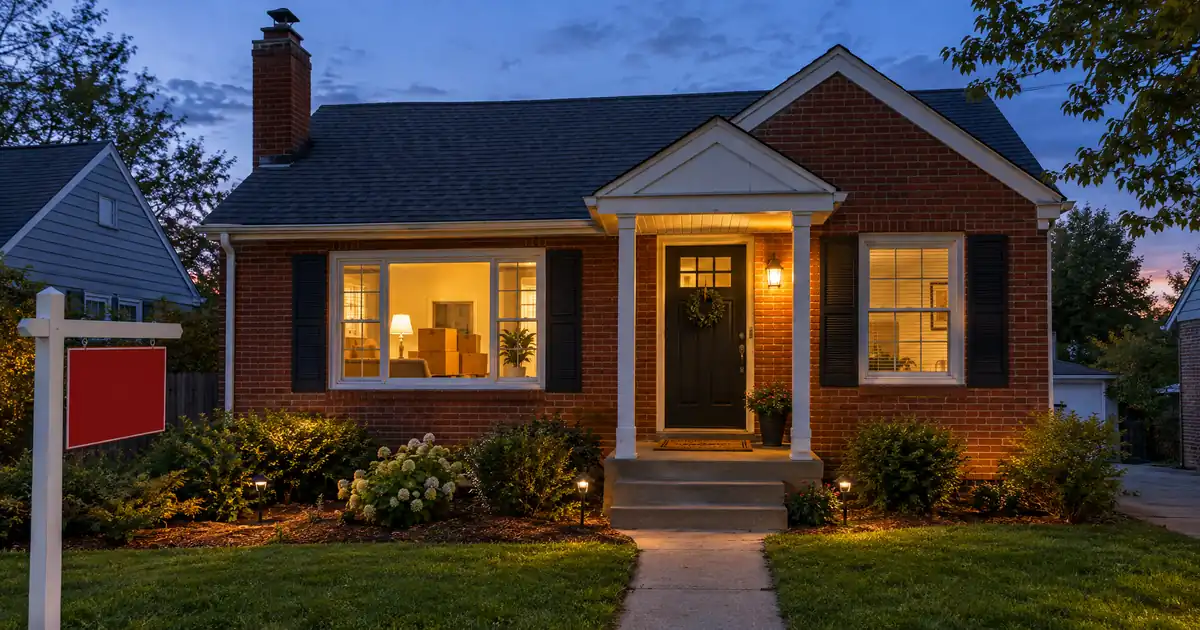
The Quick Read: An appraiser sets the value of your home, and that value sets the ceiling on your whole loan. On a standard cash-out refinance, the appraiser usually values the home as it stands today, not as it will look after your project. Renovation-specific loans work differently. They size the loan on the finished value, but they hold the money back for the work.
Key Takeaways
- A standard cash-out loan is sized on today’s value. A planned ADU or remodel adds nothing to that number until it exists.
- Renovation products use an “as-completed” value, but the funds are tied to the work. No spending cash on top.
- The appraisal result moves your cash, your mortgage insurance picture and sometimes the whole deal.
- Plans, permits and bids help most on renovation files. They do not make a standard cash-out appraisal count unbuilt work.
- A low value is a problem you can plan around, if you test the math before you commit to a contractor.
Why Does the Appraisal Set Your Project Budget?
The appraisal decides your budget because lenders size the loan as a percentage of appraised value. Your project cost does not enter that formula. A contractor’s bid proves what the work costs. It does not prove what the home is worth.
Here is the chain. The appraiser gives an independent opinion of value. The lender applies a loan-to-value limit (LTV, the loan balance divided by the home’s value). The new loan must pay off your current mortgage and closing costs first. Whatever room remains is your cash.
Across the wholesale programs placed through Lendmire, a conventional cash-out refinance on a one-unit primary home generally tops out at 80% LTV. Two- to four-unit primary homes generally cap at 75%. Those are guideline figures, subject to lender review of the full file.
One lane reaches further. A wholesale option can go up to 89.99% LTV with no mortgage insurance. It generally needs a 680 score, a 50% total ratio and a thirty-year fixed loan on a conforming-size primary home. It has its own six months of seasoning. It is not written on Texas homesteads, where the state constitution caps cash-out. If you want to see which of these lanes your equity might reach, Lendmire’s cash-out refinance programs page lays out the options.
Think of it this way: the appraisal is the gate. Everything about your project budget passes through it.
How Does the Appraisal Process Work, Step by Step?
The process runs in a set order: you pick a structure, apply, the appraiser values the home, the lender checks the loan against the cap, then you close. Renovation files add a documentation step up front and a completion step at the end.
1. Choose the structure. Your three basic paths are a standard cash-out, a renovation product, or a cash-out followed by work you manage yourself.
2. Apply and receive disclosures. You get a Loan Estimate. You also get written notice of your right to a copy of the appraisal.
3. Submit renovation paperwork, if it applies. Renovation products ask for plans, specifications and contractor bids. The appraiser uses that package.
4. The appraiser inspects and values. For a standard cash-out, the value is “as-is.”
5. Underwriting. The lender divides the loan by the relevant value and checks the result against the program cap.
6. Closing, then completion. Renovation files need proof the work is done. That is often an appraisal update and completion report, known as Form 1004D.
Here is who does what.
| Step | You | Lender | Appraiser |
|---|---|---|---|
| Application | Choose structure | Issue disclosures | Not yet involved |
| Renovation file | Supply plans and bids | Review for completeness | Receives the package |
| Valuation | Give access, share records | Orders and reviews report | Inspects, picks comps |
| Underwriting | Answer questions | Applies LTV and caps | Nothing further |
| Completion | Finish the work | Collects proof | May confirm completion |
The details of each step depend on the program and the lender. The order does not.
What Does the Appraiser Look at on a Renovation or ADU File?
The appraiser looks at what physically exists, what the paperwork says is planned, and what similar homes have sold for. On a renovation or ADU file, that third item carries the most weight. Comparable sales decide how much a bedroom, a bath or a second unit is worth in your area.
| Factor | How it affects value |
|---|---|
| Existing structure | Sets the as-is baseline |
| Finished upgrades | Counted at what buyers pay for them |
| Planned work | Counted only on renovation products |
| ADU features | Must be described in the report |
| Comparable sales | Cap what the work can add |
An ADU (accessory dwelling unit) is a second living space on the same lot as the main home. Fannie Mae’s Selling Guide says an ADU needs living, sleeping, cooking and bathroom facilities, and must sit on the same parcel as the primary one-unit home. Appraiser guidance spells out the kitchen part: cabinets, a countertop, a sink with running water, and a stove or stove hookup. A hotplate and a microwave do not count.
Leave the kitchen out and the appraiser may not treat your space as an ADU at all. It becomes extra square footage. That is a different, usually smaller, number.
Fannie Mae still treats a one-unit home with an ADU as a one-unit property. That matters because the one-unit cash-out cap is higher than the two- to four-unit cap.
As-Is Value vs. As-Completed Value: Where Projects Win or Lose
This is the decision that matters most. A standard cash-out uses as-is value. A renovation product uses as-completed value. Which one you choose changes how much the loan can be and how you can use the money.
Fannie Mae’s cash-out refinance rules require the new loan to pay off the existing first mortgage. They also require that mortgage to be at least 12 months old. The standard appraisal is as-is, unless something affects safety, soundness or structural integrity. In that case the property is appraised subject to repairs, and a completion report follows.
HUD uses the phrase “After Improved Value.” The HUD handbook glossary defines it as the value the appraiser determines assuming the repairs or alterations are finished. FHA’s renovation product, the 203(k), uses that idea. The appraisal rests on a hypothetical: pretend the work is done.
| Path | Value used | Cash-in-hand? |
|---|---|---|
| Standard cash-out | As-is today | Yes, after payoff and costs |
| Conventional renovation loan | As-completed | No, funds tied to the work |
| FHA 203(k) | After Improved Value | Funds tied to the work |
| Cash-out, then self-managed build | As-is today | Yes, you manage the work |
Fannie Mae’s HomeStyle Renovation is the conventional example. On a refinance it is a limited cash-out loan. The guide caps renovation costs as a share of the as-completed value, and caps LTV against that same finished value. You cannot take cash back at closing. The money pays off your first mortgage and covers the renovation.
Three HomeStyle Renovation rules trip people up:
- The work does not have to add value. The as-completed value simply reflects whatever value it adds.
- Tear-downs are not allowed. Additions and multi-room rehabilitations can qualify.
- The work must finish within a set window after closing.
Renovation loan sizing is best discussed qualitatively, since the details depend on the lender and the file. It follows the same logic throughout: finished-value sizing, with a cap on the share of that value that can go to renovation costs. Terms differ by lender, so ask which version your file would use.
Here is the trade, stated plainly. Standard cash-out gives you flexibility and a smaller number. A renovation product gives you a bigger number and a leash.
A Worked Example
Run the numbers on a home you expect to appraise at 100 units of value. These are modeled assumptions, not market data. The units are percentages of expected value.
- Existing mortgage balance: 60% of expected value.
- Program cap: 80% LTV.
- Project cost: 18% of expected value.
- Closing costs: ignored here, but they come out of your cash too. Each figure is subject to lender guidelines and a complete review of property type, leverage, and credit.
Now see what three appraisals do.
- Appraisal high at 105. The cap is 84. After the 60 payoff, room is 24. The project is covered with 6 to spare.
- Appraisal on target at 100. The cap is 80. Room is 20. The project is covered with 2 to spare, before closing costs.
- Appraisal low at 95. The cap is 76. Room is 16. The project is 2 short, and closing costs make it worse.
Notice how a 5% miss in value created a gap bigger than the cushion. That is the pattern. Small appraisal swings hit your cash hard because the payoff is fixed.
In practice, files like this fail at the planning stage, not the closing table. Borrowers sign a contractor bid first, then learn the appraisal supports less. Test the math with a realistic range of values before you sign anything.
Also, the contractor’s invoice is not evidence of value. Appraisers have heard every version of “but it cost me a fortune.”
Where the General Rule Breaks
The standard rule says: as-is value, loan sized on the cap, cash in your hand. Several situations bend it.
Unpermitted or unfinished space. An appraiser may not count work without permits. The space may also be described as something other than an ADU, which changes the comparables used.
Do-it-yourself work. HomeStyle Renovation allows owner-performed work on one-unit properties only. It is limited to a small share of the finished value, and the lender must inspect completion of larger items.
Manufactured homes. Lower caps apply, both on cash-out and on the renovation share. HUD certification photos are required for a manufactured ADU.
Recent purchases. Fannie Mae’s delayed financing exception lets a recent cash buyer refinance without waiting out the full seasoning. The new loan is capped at the documented purchase investment plus closing costs. Money you spent on renovations after buying is not the basis.
Disaster repairs. A limited cash-out refinance can reimburse documented, completed disaster repairs, up to a small cap. Sweat equity does not count.
PACE liens. Fannie Mae can treat a borrower with a PACE lien (a property-assessed clean energy obligation) who chooses not to pay it off as ineligible for cash-out.
Temporary buydowns. A mortgage with a temporary buydown is ineligible as a Fannie Mae cash-out refinance.
Government streamlines. The FHA Streamline and VA IRRRL are for existing government loans. They are reduction-style products, not construction funding. The IRRRL generally needs no VA appraisal. A VA cash-out does need an appraisal and full credit review. Lendmire’s piece VA Cash-Out Appraisal Requirements and the Tidewater Process covers that path.
One more note: if your property is a two- to four-unit home or your ADU changes the unit count in a lender’s eyes, the lower cap can apply. Ask your loan officer how the file would be classified before you order plans.
How Should You Prepare Before the Appraiser Arrives?
Preparation helps most when it shows the appraiser what exists and what is planned. It cannot make planned work count on a standard cash-out. It can make a renovation product go smoothly.
Gather these before the visit:
- Permits for any finished work, and drawings for any ADU.
- Receipts and dates for completed upgrades.
- Plans, specifications and signed bids, for renovation products.
- A short list of recent improvements, room by room.
- Clear access to every space, including the ADU, the garage and the basement.
If the home is mid-project, tell the lender early. A construction site changes how the appraiser describes condition, and unfinished work may require a completion step. Clean up what you can. Clutter does not lower value, but it can hide features.
What If the Value Comes In Low?
A low value gives you five choices: ask for reconsideration with better comparable sales, shrink the project, fund the gap yourself, switch products, or walk away. Pick based on what the gap is and whether the work still makes sense.
- Reconsideration. If the appraiser missed a feature or used weak comparables, your loan officer can request a review. Bring documented sales, not opinions.
- Smaller scope. Phase the project. Do the part that fits the cash.
- Pay the difference. Keep cash reserves for the gap, not only for the contractor.
- Different structure. A renovation product may support a bigger loan on finished value. Lendmire’s comparison of a HELOC, a renovation loan and a cash-out refinance for an ADU walks through when each fits.
- Pause. Sometimes the honest answer is that the loan does not fit the project yet.
Ordering a second appraisal or switching lenders usually adds cost and delay. It rarely helps unless the first report had a real error.
What Are Your Rights Around the Appraisal?
You have the right to see the appraisal, and you do not need to wait until closing. Under CFPB guidance on the ECOA Valuations Rule, the creditor must notify you in writing of your right to a copy shortly after you apply. The copy must reach you promptly once it is complete, or ahead of closing, whichever is earlier.
Read it. Check the square footage, the bedroom and bath count and the ADU description. Errors in those are a common reason to ask for a correction.
Key Terms Defined
Appraised value: An independent opinion of what your home is worth, based on its condition and recent comparable sales.
LTV (loan-to-value): The loan balance divided by the home’s value, shown as a percentage.
As-is value: The home’s value in its current condition, with no credit for planned work.
As-completed value: The estimated value assuming the planned renovation is finished.
ADU (accessory dwelling unit): A second living space on the same lot as the main home, with its own kitchen, bath and sleeping area.
Seasoning: The waiting period a lender wants before you can refinance, such as how long your current loan or title has been in place.
Mortgage insurance: Coverage that protects the lender when your loan is above 80% LTV. It can be requested for cancellation at 80% and ends automatically at 78%, under the Homeowners Protection Act.
What Does Your Decision Look Like in Practice?
Your decision comes down to three questions. Is the project finished, partly built or only planned? Do you want unrestricted cash or money tied to the work? And does the finished value justify the spending?
If the work is done or mostly done, a standard cash-out may fit. The appraiser sees the real thing. If the work is only planned and you want a larger loan, a renovation product measures the finished value. You give up flexible cash. If the work is small and you can manage it yourself, a cash-out followed by your own contractor payments may be simplest.
Tax treatment can depend on your situation; borrowers should speak with a qualified tax professional before relying on any deduction or credit.
If you are weighing a cash-out refinance against keeping the loan you have, Lendmire can help you compare the programs and the equity each one reaches. Program figures are subject to lender guidelines and full file review, and nothing here is a commitment to lend.
Frequently Asked Questions
Does a cash-out refinance always need an appraisal?
Almost always, yes. Cash-out loans are sized on value, so lenders want an independent opinion of it. Waivers exist on some lower-leverage refinances, but they rarely apply when you take equity out. Your lender will tell you whether your file qualifies for any exception.
Will the appraiser count an ADU I have not built yet?
On a standard cash-out, no. The appraisal is as-is, so unbuilt space adds nothing. A renovation product values the home as completed, using plans and bids. You get a larger loan basis, but the money is tied to the work.
Can I take extra cash on top of renovation funds?
Not on Fannie Mae’s HomeStyle Renovation. It prohibits cash back at closing. If you want unrestricted cash, a standard cash-out is the path, with the value measured as-is.
What happens if the appraisal is lower than I expected?
Your cash shrinks, because the cap applies to a smaller number. Ask for a review if the comparables look weak. Otherwise, reduce the project, cover the gap, or look at a different structure.
Do I get a copy of the appraisal?
Yes. You are entitled to a copy of the appraisal, and you should receive it ahead of closing. Review it for errors in size, room count and ADU description, and raise any mistakes with your loan officer.
For your own numbers, request a scenario review with Lendmire.
For current guidelines and terms, see Lendmire’s refinance programs page.
About Lendmire
Lendmire (NMLS# 2371349) is a mortgage broker licensed for consumer lending in 16 states. Lendmire arranges FHA, VA, conventional and jumbo purchase and refinance loans through wholesale lenders; every file is underwritten by the lender under the applicable program guidelines. Scotsman Guide named Lendmire a Top Mortgage Workplace in both 2025 and 2026.
Get Started
Ready to find the right loan for you?
In about 30 seconds you can review financing options available for your home or investment property. No commitment required.
Informational only. Not a Loan Estimate, approval, or commitment to lend. Program availability and eligibility are subject to lender guidelines, credit approval, property review, and underwriting.
References
1. Fannie Mae Selling Guide B2-3-04, Special Property Eligibility Considerations
2. Fannie Mae Selling Guide B2-1.3-03, Cash-Out Refinance Transactions
3. HUD Handbook 4000.1 Glossary
4. Fannie Mae FAQs: HomeStyle Renovation
5. CFPB ECOA Valuations Rule: Delivery of Appraisals Factsheet
This article is part of Lendmire’s Refinance series — every loan program’s qualification details, guidelines, and scenarios live on the loan options page.
Related reading: How Much a Cash-Out Refinance Releases for Renovation After Payoff · Cash-Out Refinance Appraisal Requirements for a Primary or Second Home · How to Fund a Business Purchase With a Cash-Out Refinance
Brandon Miller
Founder & CEO, Mortgage Loan Originator, Lendmire LLC
- Mortgage Loan Originator · NMLS# 1129696 · Verify on NMLS Consumer Access
- North Carolina Real Estate Broker · License# 343312 · Verify on NCREC
- North Carolina Insurance Producer · License# 19053198 · Property, Casualty, Life, Health · Verify on NAIC SBS
- Lendmire LLC · Firm NMLS# 2371349 · Verify firm licensure
Required disclosures. Lendmire (NMLS# 2371349) operates as a licensed mortgage broker, not a direct lender or depository. The discussion in this article is general in nature and should not be relied upon as financial, legal, or tax advice — every investment scenario is unique and should be reviewed by a qualified professional. Any loan inquiry is subject to lender underwriting, and this article is not a commitment to lend or a guarantee of approval. Mortgage rates, loan terms, and program guidelines vary by borrower, property, and state, and may change without notice. Equal Housing Opportunity. Verify licensure at NMLS Consumer Access.