
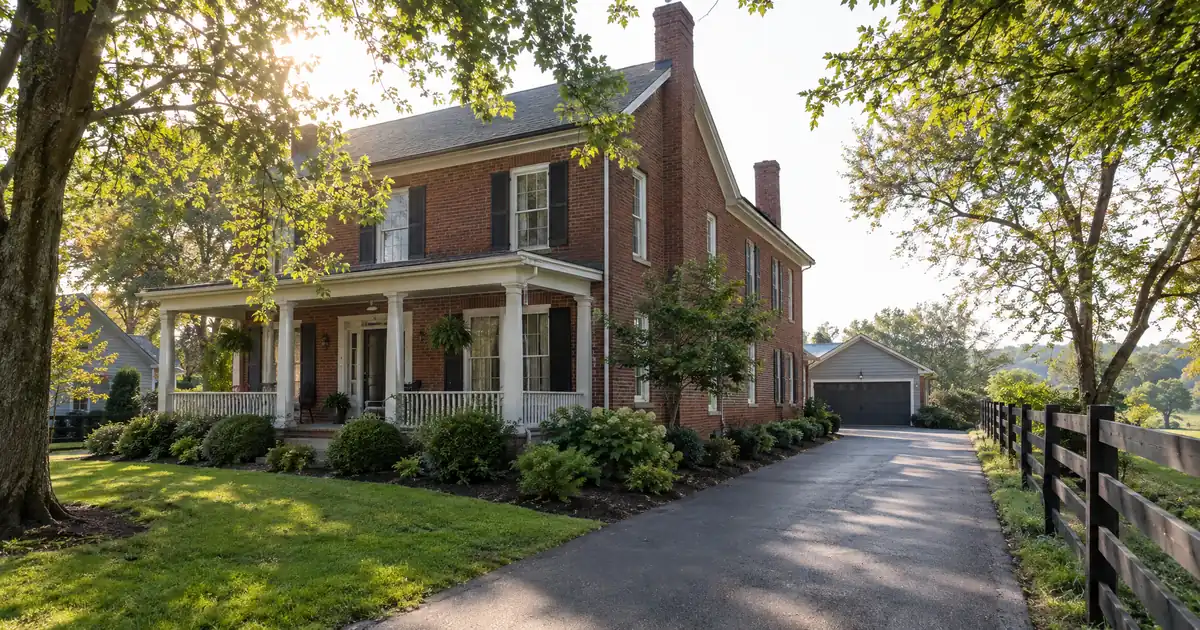
Can a market with softening prices and flat rents still support a cash-out refinance on a rental? In Elizabethtown, yes, but only when the loan is sized to the rent instead of the appraisal. Zillow’s index puts the average home value at $271,779, down 2.3 percent over the past year, so any equity plan that depends on the market rising is a plan that may not show up.
TL;DR: A cash-out refinance on an Elizabethtown, Kentucky rental is underwritten primarily on the property’s rental income measured against its full monthly obligation, with leverage capped by the lender’s cash-out limit and a seasoning window after purchase, so the file clears or fails on rent coverage, reserves, and appraisal support rather than on the owner’s personal income.
DSCR Cash-Out Calculator
Run the cash-out numbers in Elizabethtown, KY
Rate source: Freddie Mac 30-yr average via FRED® — Federal Reserve Bank of St. Louis · effective Sep 24, 2026
Prefilled with starting assumptions — enter your property’s value, balance, taxes, and insurance for a more accurate picture.
Program parameters update from Lendmire’s centralized guideline source. Taxes and insurance are editable estimates.
As of Sep 24, 2026 · General Freddie Mac market benchmark, not a Lendmire loan offer. Property value, balance, taxes, and insurance are editable estimates. Maximum loan-to-value varies by lender, program, property type, and seasoning. Not a Loan Estimate, approval, or commitment to lend. Program availability and eligibility are subject to lender guidelines, credit approval, property review, and underwriting.
- Cash-out LTV typically tops out at 75 percent, with about six months of ownership before pulling equity.
- Three-bedroom house rents near $1,750 give the cleanest coverage. Two-bedrooms run tight.
- Values are down 2.3 percent year over year, so equity has to come from basis, not appreciation.
- Fort Knox’s 22,000-plus workforce is the demand floor. The Ford plant is not.
This piece is about the owner who already holds the property. Purchase mechanics are a different conversation. Here the questions are what the appraisal will support, what the rent will carry, and where the proceeds should go next.
Elizabethtown Market Snapshot
A quick read on the Elizabethtown investor landscape — figures come from the cited sources below. Confirm current property-level numbers before underwriting.
| Metric | Detail |
|---|---|
| Home prices | $277K median (Redfin) |
| University enrollment | 6,420 total (Univstats) |
| Employment | 5,000 jobs (Hardin County Government) |
Equity Here Gets Bought, Not Waited For
Elizabethtown is a cash-flow market. Appreciation isn’t doing the work. Zillow’s index shows values down 2.3 percent over the past year, with homes going pending in around 38 days. Movoto shows price per square foot down 1 percent year over year.
This article uses the Zillow value as its single reference point for a typical Elizabethtown home. Other sources land in different places because they measure different things. Redfin’s median sale price was $277K, down 14.6 percent, but it rested on only 30 sales that month. Movoto’s median sale price of $330,900 covers a different month and a different measure. That is a spread of roughly $270K to $331K depending on source and timing.
That volatility has a practical consequence. An investor who bought below market, or who added real value through a kitchen and bath rehab or a deferred-maintenance fix, can have genuine equity to pull. An investor who bought at list and is waiting for the market to lift the value is in a different position. Redfin notes the average home sells about 3 percent below list, so a purchase at list may not appraise at list.
Underwrite to the low end of the range. If the file works with an appraisal near $270K, a $330K appraisal is a bonus and not a requirement.
Fort Knox Is the Floor Under the Rent Roll
The most stable demand driver in Elizabethtown is the Army post. The Hardin County Chamber of Commerce puts Fort Knox’s workforce above 22,000 with an annual payroll of $1.3 billion. County economic development materials cite a lower payroll figure of about $1 billion, and another trade source counts roughly 12,000 people living on the base. The sources conflict on the details, but none of them disputes the post’s role as the region’s largest employer.
Baptist Health Hardin adds a second anchor: a 300-bed hospital with 2,700 employees and more than 50 outpatient facilities, serving roughly 400,000 residents across ten Central Kentucky counties. Nurses, allied-health staff, and traveling clinicians make up a tenant segment no source quantifies, but the employer base behind it is real. Manufacturing adds more. The Lane Report names AGC Automotive Americas, Altec, Dow, Gates, Hendrickson, and Metalsa among Hardin County’s manufacturers.
One thing to leave out of the thesis is student housing. Elizabethtown Community and Technical College runs four campuses across three counties and enrolls roughly 6,400 students by an IPEDS-based aggregator’s count, including part-time. It is a commuter college, though, and not a residential one.
Don’t Underwrite the Battery Plant
The local story that gets the most attention is the Ford battery site in Glendale. The Chamber’s study projected 22,380 new residents and nearly 9,000 housing units. What arrived was far smaller. WKYU reports Hardin County grew from 110,703 to 112,826 residents over four years, only about 1,600 people were hired before the plant closed, and roughly 15 percent of the workforce moved to the region. WYMT later reported about 1,600 layoffs and a pivot toward battery energy storage.
Housing got built ahead of that demand. The gap between the projected units and the residents actually gained helps explain flat rents and the steady flow of new townhome supply. It could turn around if the storage pivot delivers jobs. It might not.
The takeaway for a cash-out borrower is simple. Underwrite the rent the property earns from a Fort Knox or hospital tenant, and treat any Ford-driven upside as a free option, not a plan.
Which Houses Carry the Refinance
Three- and four-bedroom workforce houses are the best-supported fit. Two-bedroom houses face the most competition. Two-bedrooms account for 46 percent of the city’s 3,167 tracked rentals (a Yardi-sourced count that covers larger buildings only), and apartment-level rents are drifting: Apartments.com shows a 0.9 percent decline over the past year against a $1,033 average.
Bigger houses sit in thinner competition. Rentometer’s asking rents run $1,271 for a two-bedroom, $1,798 for a three-bedroom, and $2,417 for four bedrooms or more. Homes.com puts the median house rent at $1,600, three-bedroom houses at $1,750, and four-bedroom at $2,350. Half of local households rent (7,032 renter-occupied households per RentCafe), so the tenant pool is deep even if the rents are modest.
There’s also a military-housing angle. The Knox Regional Development Alliance has said the Army’s greatest need is three- and four-bedroom homes for senior enlisted and junior officers priced at or near BAH, and reported on-post housing near 95 percent capacity. That page is undated and reads as older, so treat it as directional. A PCS guide lists Fort Knox’s BAH area as ZIP codes 40121, 40160, and 42701. One housing allowance applies across all three, which means a satellite town with cheaper houses competes for the same paycheck. Check the current BAH table before setting a target rent.
A few submarkets worth knowing, with the caveat that no source gives neighborhood-level medians:
- Nicholas Ridge, Shaw Creek, Willow Creek Estates, Lakewood Park, and Wingate West. Apartments.com lists these as popular house-rental pockets in the 42701 area. They are suburban, single-family subdivisions. Tenant mix is an inference, likely workforce households, and no source states it.
- Cowley Crossing. This is newer construction, which usually means lower near-term capital needs but a higher basis. Good for a clean appraisal file, less good for coverage.
- Buffalo Ridge, Brookefield, and Claysville Landing. These townhome and apartment communities are the competing supply. Buffalo Ridge is marketed as the city’s newest luxury townhome community. A 2-3 bedroom house has to price against them.
- Radcliff, Vine Grove, and Muldraugh. Listing snapshots on Zumper show a Radcliff two-bedroom house near $1,050, a Muldraugh three-bedroom near $1,300, and a Vine Grove three-bedroom near $1,400. These are individual listings, not medians. A Radcliff duplex surfaced near $895 per unit, which is aggregator text and useful only qualitatively.
The Coverage Math (Run It Before You Order the Appraisal)
The DSCR calculation divides monthly rent by the full monthly obligation: principal, interest, taxes, insurance, and any HOA dues. On thin rent-to-value stock, that ratio decides how much of the equity can actually come out.
Start with the ratio of rent to value. Applying the $1,600 median house rent and the $1,750 three-bedroom rent to the $271,779 citywide value gives roughly 0.59 percent and 0.64 percent a month. That is arithmetic mixing two sources, and it’s a rough guide. But it says gross rent has little room to spare against a fully loaded payment.
Run the numbers on the modeled cases below. These are modeled assumptions, not sourced market results: they apply the city-wide value as the property value, and coverage includes taxes and insurance at Kentucky-average assumptions.
| Modeled scenario | Rent input | Cash-out LTV | Coverage (incl. Taxes, insurance) |
|---|---|---|---|
| Two-bedroom house | $1,271 | 75 percent | high-0.7s |
| Median house | $1,600 | 75 percent | mid-0.9s |
| Three-bedroom house | $1,750 | 75 percent | about 1.05 |
| Three-bedroom house | $1,750 | 65 percent | about 1.2 |
The pattern is clear even with rough inputs. A three-bedroom at full leverage sits near the 1.00 baseline, while dropping the LTV lifts the number meaningfully. Most standard programs are built around a 1.00 benchmark because the rent covers the payment at that level. Some lenders may review lower ratios, but those scenarios usually require stronger compensating factors, lower leverage, different pricing, or more reserves.
If a file lands below 1.00 on long-term rent, there are structures a lender may review: a sub-1.00 program, an interest-only period, or a lower cash-out request. None of these is a promise. Eligibility depends on lender guidelines, credit profile, reserves, and property review.
Here’s the flip point worth considering. A sub-1.00 structure is defensible when the property has a genuine basis advantage or a rent that is clearly below market. It is a warning sign when the investor is reaching for it because a two-bedroom house at $1,271 can’t cover its obligation at any leverage. That is a signal to re-examine the property, not the loan.
For the general mechanics, the guide “What Is a DSCR Loan” is covered on Lendmire’s site.
The Plumbing: Seasoning, Comps, and Paper
The parameters for a cash-out on an investment rental are these. Leverage typically caps at 75 percent LTV, which is lower than the purchase cap. Lenders typically look for about six months of ownership, measured from title recording. The baseline coverage minimum is 1.00. Credit tiers run 620, 660, 680, and 700, with 620 as the floor, and better tiers typically open better terms. Reserves run around six months of PITIA. Standard programs go up to $3,000,000, and smaller balances (which describes most Elizabethtown houses) route through select lenders in the network. These are guideline ranges, subject to lender overlays, and are not commitments to lend. Equity available depends on rent used for lender review, PITIA, reserves, and the LTV ceiling, and it is never a guaranteed cash figure.
The friction in a market like this tends to show up in three places.
Comps. Redfin logged 30 sales in a single winter month, while Movoto counted 223 sales in June against 136 the year before. These are different datasets, but they hint at a seasonal swing. A winter appraisal may rest on few comps and produce a wider value range. Timing the refinance around the summer comp window is a real lever here.
Property type. Manufactured homes, log homes, and barndominiums fall outside these DSCR programs. In a county with rural edges, confirm the construction type before anything else is ordered.
Paper. Lease agreements, current insurance quotes, and title history sit at the center of the file. If the property is held in an LLC, eligibility is subject to lender program requirements.
In markets like this one, Lendmire’s deal desk tends to see the cleanest files from a documentation standpoint where the lease is in place before the refinance is submitted and the insurance quote is current. The common friction point is a property with a stale or below-market lease, where the appraiser’s rent schedule and the tenant’s actual rent disagree and the file needs a second look. Sorting that out before submission usually matters more than any pricing conversation.
Where the Proceeds Go
The thesis for pulling equity depends on what the money does next. Deploying it into another Elizabethtown or Radcliff-area workforce rental, where coverage clears at a price you can verify, makes the argument straightforward. Deploying it on the theory that Ford-driven growth will lift everything is a different decision, and one worth stress-testing first.
Consider an investor holding a paid-down three-bedroom in one of the 42701 subdivisions. At 65 percent leverage the modeled coverage sits near 1.2, which leaves cushion for a soft rent year. Pushing to 75 percent gets more cash out but lands near 1.05, where a single vacancy or insurance renewal could pull the number under the baseline. For a portfolio owner with reserves, the higher leverage may be fine. For a single-property owner, the lower leverage is likely the better call.
Conventional financing is worth a look when the borrower has one or two properties, strong personal income, and clean traditional personal-income documentation. DSCR becomes the working lane for LLC-held portfolios, self-employed investors, and anyone past the conventional financed-property limit. Lendmire’s comparison of conventional and DSCR financing on investor loans lays out the differences, and its investor refinance breakdown covers the refinance side. For the mechanics of pulling equity out, that page goes deeper. Owners with Kentucky holdings can also start from the Kentucky DSCR investor loans hub.
Before underwriting any of this, verify current local rental rules, property taxes, and insurance costs with qualified local professionals. Then, if the numbers look workable, investors can talk through the file or call 828-256-2183.
DSCR vs. conventional financing
Two common ways to finance an investment property in Elizabethtown, KY. They qualify you differently — here’s how investors weigh them.
Why investors choose it
- Qualifies on the property’s rental income — no personal tax returns, W-2s, or pay stubs needed to document income.
- No personal debt-to-income ceiling to clear, so existing mortgages and obligations don’t cap your borrowing the same way.
- Can be closed in an LLC, keeping the property inside a business entity.
- Built for scaling — not held to the limit on number of financed properties that conventional financing applies.
- Underwriting centers on the deal: generally qualifies when the rent covers the payment, a 1.00x coverage ratio being a common baseline (confirmed in underwriting).
- Designed specifically for investment property, including long-term and, where the program allows, short-term rentals.
Where it’s strong
- Often the lowest ongoing financing cost for a buyer who fully qualifies on personal income — a fit for a first property or a cost-first purchase.
Trade-offs for investors
- Requires full personal income documentation and must fit within a debt-to-income limit — salary, existing debts, and other mortgages all count.
- Typically held in your personal name rather than a business entity.
- Caps how many financed properties you can carry, which can become a ceiling as a portfolio grows.
- Evaluates you as a borrower as much as the property, which usually means more paperwork.
How investors usually choose: a first or single property often optimizes for the lowest financing cost; portfolio builders often optimize for leverage, vesting in an LLC, and scaling past conventional caps. The right answer depends on your goals, the property, and current guidelines — both paths run through select lenders in Lendmire’s wholesale network, with eligibility and terms confirmed in underwriting.
Frequently Asked Questions
How do you qualify for a DSCR loan in Elizabethtown, Kentucky?
Qualification centers on the property’s rent against its full monthly obligation, with a 1.00 coverage benchmark common on standard programs. Lenders also review credit (620 is the typical floor), about six months of reserves, and the appraisal. For a typical Elizabethtown house, the rent input is the main variable, and the rent schedule has to support the number.
What are the requirements for a cash-out refinance on an investment property in Elizabethtown, Kentucky?
Typical guidelines include a 75 percent LTV ceiling, about six months of ownership from title recording, and coverage at or above the program minimum. Reserves and credit tiers apply as well. Elizabethtown’s thin comp depth means the appraisal often decides how much equity is available, and the final figure is never guaranteed.
Does Fort Knox demand change how a lender views rent here?
The lender still reviews the property’s own rent, not the borrower’s proximity to the post. But the Army’s workforce (over 22,000) and a shared BAH area across 40121, 40160, and 42701 support the case that a 3-4 bedroom house has a real tenant pool. It helps the story, not the ratio.
Will thin sales volume hurt my appraisal?
Yes, it can. Winter months in Elizabethtown have shown as few as 30 recorded sales, which gives an appraiser fewer comps and a wider range. Timing the refinance for the summer comp window and underwriting to the low end of the value range are the practical protections.
The Closing Read
Elizabethtown rewards the owner who buys carefully and borrows conservatively. The Army post and the hospital give the rent roll a floor, the flat rents and soft values take away the cushion, and the Ford story adds noise rather than income. A refinance that clears the coverage number with room to spare and doesn’t need the market to rise is the one that holds up.
If you only take one thing from this piece, it’s this: in Elizabethtown, size the cash-out to what a Fort Knox-era three-bedroom rent can carry with taxes and insurance included, because the appraisal is the least reliable number on the file.
For current guidelines and terms, see Lendmire’s DSCR loan programs page.
About Lendmire
Lendmire — NMLS# 2371349 — is a DSCR and non-QM mortgage brokerage with investor loan programs in 41 markets, including Washington, D.C. Lenders commonly review DSCR eligibility around property-level rent rather than personal income documentation, subject to lender guidelines, and the brokerage helps arrange financing for LLC-owned portfolios beyond conventional financed-property limits. The brokerage was recognized by Scotsman Guide in 2025 and again recognized by Scotsman Guide as a 2026 Top Workplace, earning Top Mortgage Workplace honors both years.
Get Started
Ready to find the right loan for you?
In about 30 seconds you can review financing options available for your investment property. No commitment required.
Informational only. Not a Loan Estimate, approval, or commitment to lend. Program availability and eligibility are subject to lender guidelines, credit approval, property review, and underwriting.
References
1. Zillow Home Values, Elizabethtown
2. Homes.com, houses for rent in Elizabethtown
3. Redfin, Elizabethtown housing market
4. Univstats
6. Movoto, Elizabethtown sold homes
7. Movoto, Elizabethtown market trends
8. Hardin County Chamber of Commerce, Fort Knox workforce
10. Lane Report
11. Elizabethtown Community and Technical College
12. wdrb.com — Ford Battery Plant Will Bring More Than 22,000 New Residents to Hardin County Study
13. WKYU, Ford EV strategy and the battery plant closure
15. Point2Homes — Average Rent Elizabethtown
16. Apartments.com shows a 0.9 percent decline
18. RentCafe
19. three- and four-bedroom homes for senior enlisted and junior officers priced at or near BAH
20. PCS guide
21. Apartments.com
22. Zumper
23. recognized by Scotsman Guide in 2025
24. recognized by Scotsman Guide as a 2026 Top Workplace
This article is part of Lendmire’s investment property cash-out refinance program — full qualification details, guidelines, and scenarios live on the program page.
Related reading: DSCR Cash Out Refinance Madisonville Kentucky · Cash Out Refinance on Investment Property in Lawrenceburg KY · DSCR Cash Out Refinance Corbin Kentucky
Guides: Investment Property Cash-Out Refinance in Elizabethtown, KY · Investment Property Cash-Out Refinance in Kentucky
Brandon Miller
Founder & CEO, Mortgage Loan Originator, Lendmire LLC
- Mortgage Loan Originator · NMLS# 1129696 · Verify on NMLS Consumer Access
- North Carolina Real Estate Broker · License# 343312 · Verify on NCREC
- North Carolina Insurance Producer · License# 19053198 · Property, Casualty, Life, Health · Verify on NAIC SBS
- Lendmire LLC · Firm NMLS# 2371349 · Verify firm licensure
Legal disclosures. Lendmire (NMLS# 2371349) is a state-licensed mortgage brokerage that arranges financing through wholesale lender relationships. Lendmire is not a direct lender, depository institution, or registered financial advisor. The discussion above is general informational content about real estate financing — it is not financial, legal, or tax advice, and readers should consult licensed professionals for guidance on their individual circumstances. Loan inquiries are subject to lender underwriting; this article does not represent a commitment to lend. Loan terms, rates, and qualification standards vary by borrower, property, and state, and are subject to change at any time. Equal Housing Opportunity. NMLS Consumer Access: nmlsconsumeraccess.org.