
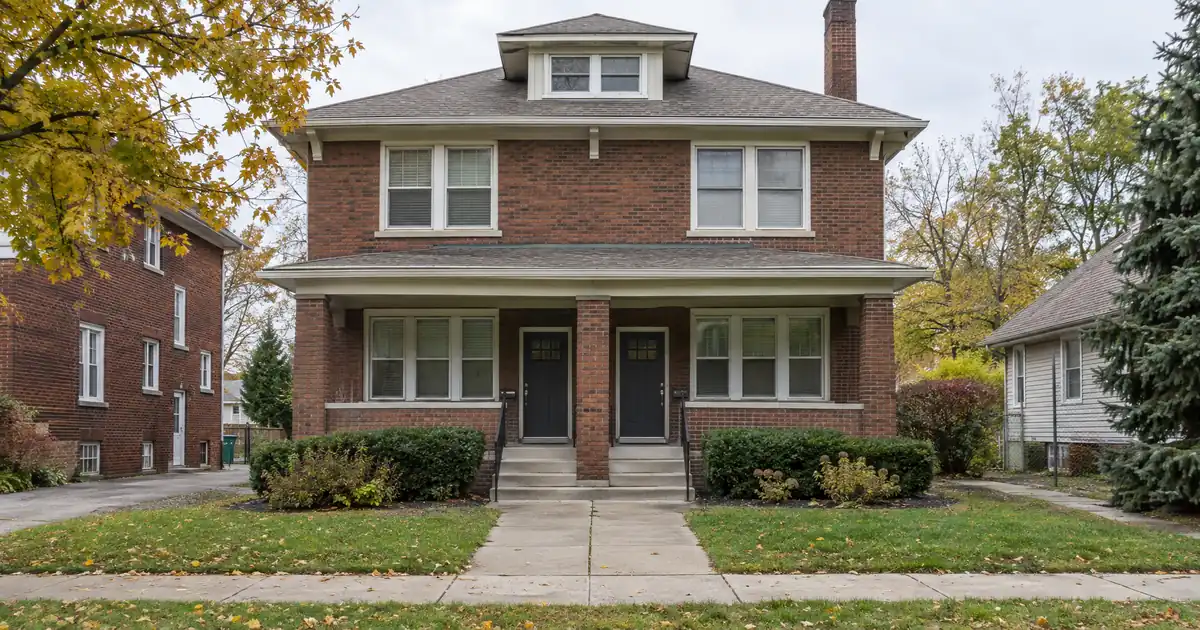
East Akron’s median sale price sits near $108,000, up 10.9 percent year over year, yet homes there are taking 44 days to sell versus 25 a year earlier, per Redfin’s East Akron data. Prices climbing while buyers take longer is an odd signal, and it is the tension at the center of any cash out refinance investment property decision in Akron, Ohio. Values are rising off a very low base, but the cushion between what you owe and what an appraiser will support may be thinner than a headline trend suggests.
DSCR Cash-Out Calculator
Run the cash-out numbers in Akron, OH
Rate source: Freddie Mac 30-yr average via FRED® — Federal Reserve Bank of St. Louis · effective Sep 24, 2026
Prefilled with starting assumptions — enter your property’s value, balance, taxes, and insurance for a more accurate picture.
Program parameters update from Lendmire’s centralized guideline source. Taxes and insurance are editable estimates.
As of Sep 24, 2026 · General Freddie Mac market benchmark, not a Lendmire loan offer. Property value, balance, taxes, and insurance are editable estimates. Maximum loan-to-value varies by lender, program, property type, and seasoning. Not a Loan Estimate, approval, or commitment to lend. Program availability and eligibility are subject to lender guidelines, credit approval, property review, and underwriting.
The Quick Read:
A cash-out refinance on an Akron, Ohio rental is underwritten primarily on the property’s rental income measured against its full monthly obligation, with leverage capped at 75 percent of appraised value, about six months of ownership behind the property, and reserves in the bank, all subject to lender guidelines and appraisal.
- Citywide gross yield screens at 12.06 percent versus 10.17 percent across Ohio, per SFR Analytics.
- The middle half of sales runs $90,000 to $197,000, so many loan balances are small.
- Duplexes and triplexes in Highland Square and Firestone Park stack modest unit rents into workable coverage.
- A BRRRR-style refinance on a sub-$100,000 rehab may return little of the original capital.
Lendmire (NMLS# 2371349) places DSCR investor loans on Akron, Ohio properties through wholesale lending channels reaching 41 markets, including D.C. The brokerage arranges the file. The lender reviews and approves it. Ohio-specific program details sit on Lendmire’s Ohio DSCR loan programs page, and the general mechanics are covered in “What Is a DSCR Loan”.
Akron Market Snapshot
A quick read on the Akron investor landscape — figures come from the cited sources below. Confirm current property-level numbers before underwriting.
| Metric | Detail |
|---|---|
| Typical rents | $1,350 (SFR Analytics) |
| Recent appreciation | 2–4% (Lofty Akron marketplace) |
| University enrollment | 15,318 total fall 2025 (University of Akron Fact Sheet) |
| Vacancy | 7.1% q2 2024 (Matthews, Northeast Ohio) |
How Does the Equity Math Work on an Akron Rental?
Equity extraction runs on four inputs: appraised value, the 75 percent LTV ceiling, your existing payoff, and whether rent covers the new full payment. The loan is sized by whichever constraint binds first. In Akron, at low price points, the coverage test rarely binds. Value and payoff do.
Walk through it step by step:
1. Appraisal sets the ceiling. The lender multiplies appraised value by 75 percent. That is the maximum new loan on a cash-out.
2. Payoff comes out first. Subtract your current mortgage balance and closing costs. What remains is the theoretical cash-out. It is not a promised figure.
3. Rent gets tested against full PITIA. The ratio is monthly rent divided by principal, interest, taxes, insurance, and any HOA dues. Most standard programs use a 1.00x baseline, though lenders may review differently with compensating factors.
4. Reserves get verified. Expect about six months of PITIA in reserves on most files.
5. Seasoning applies. Roughly six months of ownership, measured from title recording.
Now a modeled example. These are assumptions, not market facts. Run the numbers on a rental appraising near $135,000, close to the Resideline median sold price of $135,678 across 1,508 closed sales. Assume it rents at $1,350, matching the median asking rent SFR Analytics reports. At 75 percent LTV, with taxes and insurance included, coverage lands somewhere between 1.3x and 1.5x, rounded down. Drop the rent to $1,200 and it sits at the low end of that band. The coverage passes comfortably. The binding constraint is the gap between payoff and 75 percent of value. If the existing balance is 55 percent of the appraised value, the spread is about 20 percent of value before costs, and that spread, not rent, is the cash you can pull.
DSCR files in markets like this one typically look the same. Coverage clears easily, and the file lives or dies on the appraisal and on reserves. Investors who bought years ago and improved the property tend to have the most room. Investors who bought recently at market often find the 75 percent cap leaves little after payoff. Lenders review rent from a lease or a market rent opinion, and unit-level rent documentation is what most often slows a multi-unit file down.
Small Balances and the Minimum-Loan Problem
Akron’s low price base is the reason the yield screens look good, and also the reason cash-out proceeds can be modest. Per Resideline, the middle half of sales falls between $90,000 and $197,000. A 75 percent loan on a property in the lower half of that range is a small balance.
Standard programs handle loans up to $3,000,000, but smaller balances route through select lenders in the network. Confirm the minimum with the lender before you order an appraisal. Not doing so costs real money.
Sources disagree on the value picture, so treat all of them as directional. Zillow puts the average home value at $141,611, up 3.2 percent over the past year, though an average runs differently than a median. Redfin’s citywide page shows a three-month median near $148,000, up 8.2 percent, but the same page carries an “average” price line that reads down 4.5 percent. Those two figures conflict. Lean on the appraiser’s comps, not the headline.
Where Equity Builds (and Where It Doesn’t)
Akron is a block-by-block city, as local investors on BiggerPockets keep saying, so a citywide 12 percent gross yield won’t hold at any given address. The submarkets below differ in how much appraisal support they offer.
Highland Square leads on appraisal strength. Homes.com lists a median single-family price of $187,500, and the City of Akron housing strategy names it among the historic neighborhoods with distinct character. Local investors call it extremely market-rate. Higher entry prices mean thinner rent-to-value but deeper comps, which is what an appraiser wants for a cash-out.
Goodyear Heights and Firestone Park are the company-built worker neighborhoods, with mixed housing, doubles, and small buildings. Apartments.com describes Firestone Park as among the more affordable areas, and comps are usable. The same city document flags disinvestment and vacant lots in some areas, so block selection matters.
East Akron and the 44306 ZIP are the cash-flow-heavy end. East Akron’s $108,000 median carries the momentum-versus-days-on-market puzzle from above. PropertyIQ shows a $90,000 median in 44306, up just 1.8 percent, with 39 days to sell. Rent-to-price spreads are widest here. Exit liquidity and comp depth are thinnest. Skip these for equity extraction unless the borrower knows the specific block well.
Fairlawn Heights and Northwest Akron run higher, with Homes.com medians of $370,000 and $258,000. Those are not DSCR cash-flow plays, though appraisal support is strong.
This one’s a genuine toss-up: Highland Square gives the better appraisal and lower coverage, East Akron gives higher coverage and a shakier appraisal. Investors extracting equity generally want appraisal strength. Investors buying the next deal may want the opposite.
Local rental rules, taxes, and insurance should be verified with qualified local professionals before any refinance.
Duplex or triplex, or a three-bedroom house? Rents on the house side cluster tightly. Rentometer lists three-bedroom rent at $1,226 and four-plus bedrooms at $1,340. Zumper puts the house median at $1,200 and shows rents down 1 percent year over year. RentCafe reports three-bedroom rent at $1,360 and average apartment rent up 3.93 percent, but it draws from 50-plus-unit buildings, so it skews high. Call it about $1,200 to $1,360 depending on source and property type, and expect real disagreement.
Small buildings stack differently. Listing examples on Redfin’s Highland Square-area pages show individual units at $575, $600, and $800, and a Homes.com duplex shows one unit at $900 with the tenant paying utilities. Those are anecdotes, not medians. Still, two to four units at those levels can add up to roughly what one three-bedroom house rents for, and that changes the coverage cushion. Whether it supports a bigger refinance depends on the appraisal and how the lender treats the rents, not on rent alone. Five or more units generally shifts to commercial-style underwriting, which is a different conversation.
Demand Anchors, and the Vacancy Gap
Rental demand in Akron rests on healthcare, education, and manufacturing, and none of these is exploding. That supports a floor.
Akron’s population is 189,669 with a median household income of $48,521, per Census Reporter’s ACS data, well below the metro figure of $71,364. A regional health system cites nearly 20,000 businesses in the county, with polymers, advanced materials, and biomedical work leading. Three major hospital systems anchor the biomedical side. Summa Health, Cleveland Clinic Akron General, and Akron Children’s Hospital supply a steady workforce of nurses, technicians, and residents, which is a natural tenant base for workforce rentals. Goodyear remains headquartered in Akron.
The University of Akron reported 15,318 total students at its most recent fall count, a 3.4 percent increase per Akron.com. Ideastream notes that is still about half the 2010 level. So student demand has stabilized but isn’t growing much. Underwrite it as a floor, never as a rent premium.
On vacancy, no reliable Akron-specific figure turned up. A dated institutional report from Matthews put metro-area apartment vacancy at 7.1 percent amid new large-complex deliveries, but it mixes Akron and Cleveland text and measures large complexes. Those compete with newer product, not older two-to-four-unit stock. Even so, confirm submarket vacancy through your own rent comps.
The Catch on BRRRR-Style Cash-Outs
Here’s where investors get burned. At Akron price points, a rehab-and-refinance often returns less of your capital than the spreadsheet promised. Lofty’s own model, a $55,000 purchase plus a $30,000 rehab refinanced at 70 percent of after-repair value, puts the refinance near the all-in cost. Local BRRRR practitioners describe it as not necessarily a fix-all for pulling out every dollar.
So pitch DSCR cash-out here as equity recycling from seasoned or renovated holdings. Not a guaranteed full cash-out. With the 75 percent cap and the roughly six-month seasoning window, a property bought below market and improved is the strongest candidate. Details on the mechanics live in the equity-extraction mechanics page, and the wider menu of refinance choices is covered separately.
DSCR vs. conventional financing
Two common ways to finance an investment property in Akron, OH. They qualify you differently — here’s how investors weigh them.
Why investors choose it
- Qualifies on the property’s rental income — no personal tax returns, W-2s, or pay stubs needed to document income.
- No personal debt-to-income ceiling to clear, so existing mortgages and obligations don’t cap your borrowing the same way.
- Can be closed in an LLC, keeping the property inside a business entity.
- Built for scaling — not held to the limit on number of financed properties that conventional financing applies.
- Underwriting centers on the deal: generally qualifies when the rent covers the payment, a 1.00x coverage ratio being a common baseline (confirmed in underwriting).
- Designed specifically for investment property, including long-term and, where the program allows, short-term rentals.
Where it’s strong
- Often the lowest ongoing financing cost for a buyer who fully qualifies on personal income — a fit for a first property or a cost-first purchase.
Trade-offs for investors
- Requires full personal income documentation and must fit within a debt-to-income limit — salary, existing debts, and other mortgages all count.
- Typically held in your personal name rather than a business entity.
- Caps how many financed properties you can carry, which can become a ceiling as a portfolio grows.
- Evaluates you as a borrower as much as the property, which usually means more paperwork.
How investors usually choose: a first or single property often optimizes for the lowest financing cost; portfolio builders often optimize for leverage, vesting in an LLC, and scaling past conventional caps. The right answer depends on your goals, the property, and current guidelines — both paths run through select lenders in Lendmire’s wholesale network, with eligibility and terms confirmed in underwriting.
Is DSCR the right lane at all? The comparison flips on investor profile:
| Factor | DSCR Cash-Out | Conventional |
|---|---|---|
| Income basis | Property rent vs PITIA | Personal income, DTI |
| Best fit | LLC or multi-property investors | Salaried, few rentals |
| Entity title | Often available, per program terms | Usually personal name |
| Cost | Typically higher | Typically lower |
For a W-2 borrower holding one or two Akron rentals in their own name, conventional may cost less and cash-flow cleanly. DSCR becomes the practical path when the portfolio grows, when title sits in an LLC (subject to lender program eligibility), or when traditional personal-income documentation doesn’t show the income well.
What the Proceeds Do Next
Proceeds have to go somewhere that still pencils. Pulling equity to buy another two-to-four-unit building in Firestone Park or Goodyear Heights, where rents and prices still spread well, is straightforward. Pulling it to deploy somewhere the coverage doesn’t work is a different decision, and one to stress-test first.
If you want a fair read on your own file, reach Lendmire at 828-256-2183 or get a rental-income loan quote.
Frequently Asked Questions
How do you qualify for a DSCR loan in Akron, Ohio?
Pricing and available terms vary by lender, borrower profile, property type, and full underwriting review. Rent is documented with a lease or market rent opinion. Exact eligibility depends on lender guidelines, credit, reserves, and property review.
What are the requirements for an investment property cash-out refinance in Akron, Ohio?
The appraisal drives everything else. Manufactured homes, log homes, and barndominiums fall outside these programs.
Can a self-employed investor buying in Akron be reviewed for DSCR financing?
Yes, and it is one of the more common profiles. Lendmire arranges DSCR investor loans, with eligibility generally reviewed on property cash flow rather than traditional personal-income documentation, subject to lender guidelines.
Does a sub-$100,000 Akron rental work for a cash-out refinance?
Sometimes, but the proceeds may be small. Small balances route through select lenders in the network, and a 75 percent loan on a $90,000 property may fall below some lenders’ floors. Confirm the minimum before paying for an appraisal.
How long do you have to own an Akron rental before a cash-out refinance?
About six months, measured from title recording, on most files. Renovated properties still need the appraisal to support the higher value, and the after-repair number is the lender’s call, not yours.
For current guidelines and terms, see Lendmire’s DSCR loan programs page.
About Lendmire
A DSCR-focused mortgage broker, Lendmire (NMLS# 2371349) places investor financing across 41 markets, covering 40 states plus Washington, D.C. Lenders generally review eligibility on property cash flow rather than traditional personal-income documentation, subject to lender guidelines. Lendmire has been recognized by Scotsman Guide as a 2026 Top Workplace and was also recognized by Scotsman Guide in 2025 as a Top Mortgage Workplace.
Over the next 6 to 24 months, expect Akron to stay a cash-flow market rather than an appreciation story: the university’s back-to-back enrollment gains give student demand a floor, East Akron’s lengthening days on market suggest buyers are pushing back on price, and Lofty’s 2 to 4 percent growth forecast, a commercial source, is the ceiling to underwrite against. Investors who bought below market and improved the property will have the most usable equity to recycle. Everyone else should let the appraisal set the pace.
Get Started
Ready to find the right loan for you?
See your offer in seconds. No credit pull, no obligation.
Informational only. Not a Loan Estimate, approval, or commitment to lend. Program availability and eligibility are subject to lender guidelines, credit approval, property review, and underwriting.
References
1. Redfin, East Akron housing market
2. SFR Analytics, Akron rental yields
4. University of Akron fact sheet
6. Resideline, Akron housing market
7. Zillow
8. City of Akron housing strategy
9. PropertyIQ
10. Rentometer
11. Zumper
13. Cleveland Clinic Akron General
14. Akron.com
15. recognized by Scotsman Guide as a 2026 Top Workplace
16. recognized by Scotsman Guide in 2025
This article is part of Lendmire’s investment property cash-out refinance program — full qualification details, guidelines, and scenarios live on the program page.
Related reading: DSCR Cash Out Refinance Akron Ohio · DSCR Loans in Akron / Canton, Ohio: Investor Financing for Fairlawn, North Canton, Stark County & Real Estate Investors · DSCR Loan vs Portfolio Loan for Rental Properties
Guides: Investment Property Cash-Out Refinance in Akron, OH · Investment Property Cash-Out Refinance in Ohio
Brandon Miller
Founder & CEO, Mortgage Loan Originator, Lendmire LLC
- Mortgage Loan Originator · NMLS# 1129696 · Verify on NMLS Consumer Access
- North Carolina Real Estate Broker · License# 343312 · Verify on NCREC
- North Carolina Insurance Producer · License# 19053198 · Property, Casualty, Life, Health · Verify on NAIC SBS
- Lendmire LLC · Firm NMLS# 2371349 · Verify firm licensure
Compliance and disclosures. Lendmire (NMLS# 2371349) is a licensed mortgage broker and is not a direct lender, depository institution, financial advisor, or tax professional. Content in this article is general market analysis and educational information — not financial, legal, or tax advice for any specific situation. Lendmire does not guarantee loan approval; every transaction is subject to underwriting by the funding lender. Mortgage pricing and loan program guidelines are subject to change at any time without notice and vary by borrower characteristics, property type, and state regulations. Lendmire complies with Equal Housing Opportunity. Licensure verification: NMLS Consumer Access.