
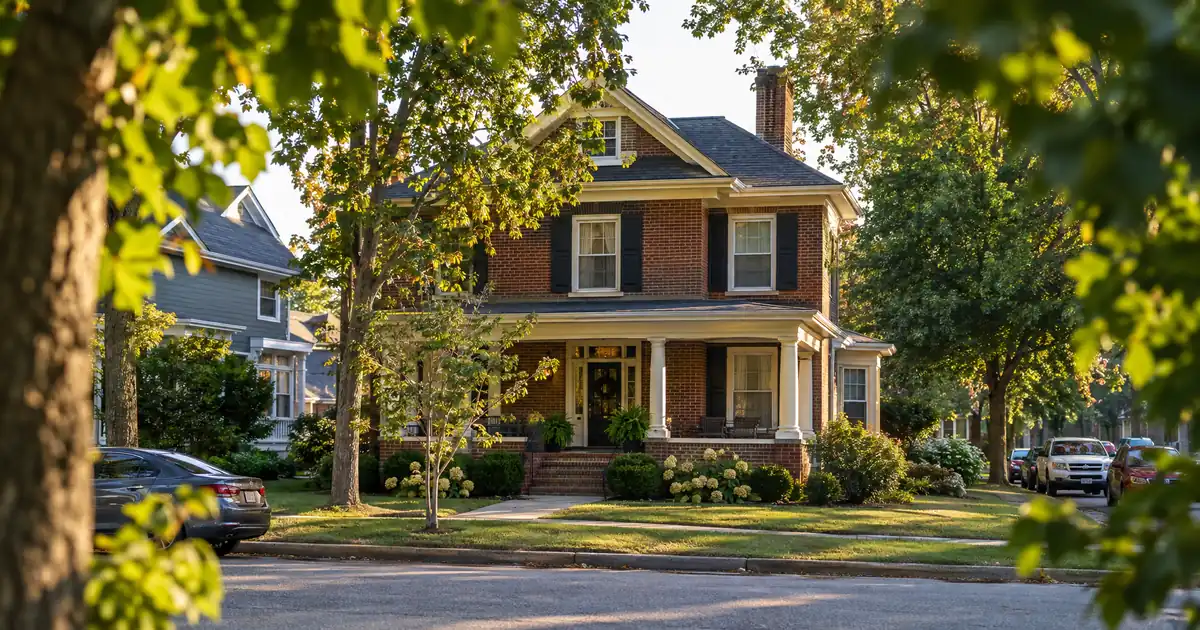
The biggest hesitation on this market is simple: how do you pull equity out of a city of 11,622 residents where an appraiser may have only a handful of recent sales to work with? It’s a fair objection. The answer is that Campbellsville can support a cash-out refinance, but only if the investor sizes the deal to the appraisal and the coverage number instead of the wish list.
DSCR Cash-Out Calculator
Run the cash-out numbers in Campbellsville, KY
Rate source: Freddie Mac 30-yr average via FRED® — Federal Reserve Bank of St. Louis · effective Sep 24, 2026
Prefilled with starting assumptions — enter your property’s value, balance, taxes, and insurance for a more accurate picture.
Program parameters update from Lendmire’s centralized guideline source. Taxes and insurance are editable estimates.
As of Sep 24, 2026 · General Freddie Mac market benchmark, not a Lendmire loan offer. Property value, balance, taxes, and insurance are editable estimates. Maximum loan-to-value varies by lender, program, property type, and seasoning. Not a Loan Estimate, approval, or commitment to lend. Program availability and eligibility are subject to lender guidelines, credit approval, property review, and underwriting.
Key Takeaways:
A DSCR cash-out refinance on a Campbellsville, Kentucky investment property is underwritten primarily on the rental income measured against the full monthly obligation. It is sized by a 75% loan-to-value ceiling and roughly six months of seasoning, with lenders reviewing appraisal, reserves, and credit before any proceeds are released.
- Workforce single-family homes are the core rental product, at 73.28% of housing units.
- Average rent sits near $1,150 to $1,250, so underwrite to the low end.
- Redfin’s median sale price rests on just 6 sales, so expect a conservative appraisal.
- Hospital, university, and logistics employers give tenant demand three separate anchors.
Campbellsville Market Snapshot
A quick read on the Campbellsville investor landscape — figures come from the cited sources below. Confirm current property-level numbers before underwriting.
| Metric | Detail |
|---|---|
| Home prices | 6 sales (Redfin) |
| University enrollment | 11,900+ students (Campbellsville University (news)) |
| Population | 11,622 population (Census Reporter) |
| Employment | 700+ employees incl. PRNs (Taylor Regional Hospital) |
Around the Campus and Downtown Core
The strongest refinance candidates here are older single-family homes and small apartment buildings within reach of downtown and the university campus. This is the area with the deepest tenant pool per block, and it’s where a seasoned investor is most likely to be sitting on equity worth pulling.
Campbellsville University reports more than 11,900 students in total, and U.S. News lists 12,451. Don’t read either number as local renter demand. Most of that headcount is online or extension enrollment. Niche puts the full-time undergraduate base near 2,600, and that group, plus faculty and staff, is what actually rents nearby. The gap between a headline of about 12,000 students and a city of about 11,600 people is the most important thing to understand about this submarket.
The best demand read comes from staff and long-term renters, not dorm-adjacent turnover. Neighborhood-level price and rent data doesn’t exist in any source worth citing, so treat any block-by-block claim, including anything here, as qualitative until a local property manager verifies rents.
Near the Hospital, Toward the Plants
Areas near Taylor Regional Hospital suit healthcare workers, and areas toward the industrial employers suit workforce single-family. The hospital is a 90-bed acute care facility serving a population of 110,000, and it calls itself the second-largest employer in the county with over 700 employees including PRNs. Nurses, technicians, and travelers make for a steady mid-income tenant pool.
Team Taylor County says Amazon and UPS both operate in the county, alongside companies from Japan, South Korea, France, and the Netherlands. That is an unusual industrial mix for a city this size. Logistics, manufacturing, healthcare, and education don’t move in lockstep, which is what keeps a small-market rental from resting on one payroll.
One property-type note. Manufactured homes, log homes, and barndominiums fall outside the DSCR programs Lendmire places, and some lenders also decline rural properties. In a county with a lot of rural stock, confirm eligibility on the specific property before spending money on an appraisal.
Will a Six-Sale Market Appraise?
Expect the appraisal to be the tightest point in the file. Redfin shows a median sale price of $164K, down 22.1% year over year, but only 6 homes sold in that period. That swing is noise, not a trend. Redfin also reports homes selling about 7% below list and taking just over two months to go pending. A market source shows a median list price of $198,450, at $135 per square foot.
Those figures don’t agree, and that’s the point. Sample sizes are small enough that the appraiser will lean on whatever closed comparables exist, and a conservative number is the likely outcome. Plan the cash-out around a value near the lower sale-price median, not the list-price median. If the appraisal comes in high, treat it as a bonus.
Honestly, this is the one place where a thin market genuinely costs the investor. A city with hundreds of monthly sales lets an appraiser adjust for a renovated kitchen. Here, the same renovation may barely register.
The Coverage Math on a Refinance
Coverage on a typical Campbellsville rental can clear the 1.00 benchmark that select DSCR programs use as a floor, but only at moderate leverage and only if rent is underwritten conservatively. Zillow’s rental data shows bedroom-specific rents, with two-bedrooms near $1,050 and three-bedrooms near $1,275. Zumper’s average sits at $1,150, up 6% year over year, so the two sources point to a fairly narrow band worth testing against a specific property.
Run the numbers on a modeled property appraising near $165,000 with a 75% LTV loan. The figures below are modeled assumptions, not sourced market data. They divide rent by full monthly obligation, including taxes and insurance, using Kentucky-average tax and insurance loads on a 30-year structure. Terms vary by lender guidelines, property type, leverage, credit profile, and full file review.
| Modeled monthly rent | Approx. coverage (incl. taxes and insurance) |
|---|---|
| $1,050 (2BR, Zillow) | About 1.05 |
| $1,150 (Zumper average) | About 1.15 |
| $1,275 (3BR, Zillow) | About 1.30 |
At the 1.00 baseline common to standard programs, a two-bedroom leaves very little cushion. Some lenders may look at lower-coverage scenarios, but that usually means lower leverage, stronger credit, or more reserves, and it’s subject to lender guidelines. The investor in this position should ask a different question: is a smaller cash-out at lower leverage better than stretching to the 75% ceiling? In this market, often yes.
The cash-out tier itself has tighter edges than purchase financing. The LTV cap is 75%, not the 80% you see on purchases. Credit tiers run 620, 660, 680, and 700, and reserves typically run about six months of the full monthly obligation. Program details vary by borrower, property, and lender, and the cash-out qualification details cover the mechanics. For the general framework, see the guide “What Is a DSCR Loan”.
Balances in a market at this price point can be small. Smaller loans route through select lenders in the network rather than standard programs, which can narrow the field.
Six months, measured from title recording. That’s the seasoning clock on a cash-out, and it matters more than most investors expect on a purchase-and-hold. An investor who buys at a discount and immediately renovates has to wait out that window before the refinance can be structured. Buying near the low end of the range, given homes sell about 7% below list, sets up more equity, but the timeline still applies. The plan should account for holding costs through those months.
What the Proceeds Do Next
Cash-out capital works best when it goes into a second Campbellsville property with rent that covers itself. Small multi-unit stock is scarce here, which means fewer competing comps, though it also needs a local property manager to verify rents. HUD Fair Market Rents for Taylor County, as summarized by AffordableHousingHub, run $850 for a two-bedroom, $1,142 for a three-bedroom, and $1,147 for a four-bedroom. The three-to-four-bedroom step is nearly flat. Extra bedrooms add little rent, which favors 2-3 bedroom units over large houses. Two-bedroom units at roughly $850-$1,050 each would stack to about $1,700-$2,100 in a duplex (that is simple arithmetic, not a sourced duplex rent).
The homes.com price-to-rent ratio says this is a moderate-yield market, not an outlier. Local household incomes, as noted by USCostOfLiving, sit at a level where average rent already takes a meaningful share of a typical paycheck. That limits headroom on rent growth outside the higher-wage employers, so underwrite flat to modest growth.
Vacancy looks tight. One Census-based aggregator shows a 0% rental vacancy rate, and AreaVibes says renter-occupied households run well above the national average. A literal 0% is a small-sample artifact, so a standard vacancy factor still belongs in the underwrite.
Two paths, with different flip points. If the proceeds go into another Campbellsville rental where coverage already clears 1.10 or better, the cash-out argument is straightforward. If they go into a market where the math doesn’t work at current pricing, stress-test it first, because a refinance that funds a weak deal just moves the problem. And an investor with one property and strong traditional employment income should look at Lendmire’s DSCR-versus-conventional breakdown, since conventional financing may cost less there.
On files in small, thinly traded markets like this one, the common friction point is documentation, not credit. The cleaner files arrive with complete leases, entity documents, title, and property details ready for lender review, and with a fresh insurance quote in hand. The ones that stall usually have an appraisal that lands below expectations and a proceeds plan that depended on the higher number. Lendmire’s deal desk sees that pattern often enough to recommend modeling the conservative value first. Financing is arranged through wholesale channels and, for LLC-titled properties, subject to lender program eligibility.
Investors who want to test a specific property can submit their scenario or call 828-256-2183. The statewide picture lives on the page for DSCR loans in Kentucky.
DSCR vs. conventional financing
Two common ways to finance an investment property in Campbellsville, KY. They qualify you differently — here’s how investors weigh them.
Why investors choose it
- Qualifies on the property’s rental income — no personal tax returns, W-2s, or pay stubs needed to document income.
- No personal debt-to-income ceiling to clear, so existing mortgages and obligations don’t cap your borrowing the same way.
- Can be closed in an LLC, keeping the property inside a business entity.
- Built for scaling — not held to the limit on number of financed properties that conventional financing applies.
- Underwriting centers on the deal: generally qualifies when the rent covers the payment, a 1.00x coverage ratio being a common baseline (confirmed in underwriting).
- Designed specifically for investment property, including long-term and, where the program allows, short-term rentals.
Where it’s strong
- Often the lowest ongoing financing cost for a buyer who fully qualifies on personal income — a fit for a first property or a cost-first purchase.
Trade-offs for investors
- Requires full personal income documentation and must fit within a debt-to-income limit — salary, existing debts, and other mortgages all count.
- Typically held in your personal name rather than a business entity.
- Caps how many financed properties you can carry, which can become a ceiling as a portfolio grows.
- Evaluates you as a borrower as much as the property, which usually means more paperwork.
How investors usually choose: a first or single property often optimizes for the lowest financing cost; portfolio builders often optimize for leverage, vesting in an LLC, and scaling past conventional caps. The right answer depends on your goals, the property, and current guidelines — both paths run through select lenders in Lendmire’s wholesale network, with eligibility and terms confirmed in underwriting.
Frequently Asked Questions
How much equity can a Campbellsville investor pull out?
It depends on the appraisal, the existing payoff, reserves, and the 75% LTV ceiling. Because Campbellsville is a small market with a thin sample of sales, values tend to sit well below larger Kentucky metros, so the dollar figure is usually smaller than investors expect. The calculator converts LTV into dollars once a real value estimate exists, and none of it is guaranteed.
Does Campbellsville University’s enrollment help the rental case?
Only partly. Total enrollment is above 11,900 including online students, but the full-time undergraduate base is closer to 2,600. Underwrite to the local renter pool of staff, faculty, and students, not to the headline number.
Will a rural property in Taylor County be a problem?
It can be. Some lenders exclude rural properties, and manufactured homes, log homes, and barndominiums fall outside these DSCR programs. Confirm eligibility before ordering an appraisal.
Is a 2-bedroom or 3-bedroom better for coverage here?
Three-bedrooms rent higher, with Zillow’s average near $1,275 against $1,050 for two-bedrooms. But HUD’s Fair Market Rent barely rises from three to four bedrooms, so the extra-bedroom premium flattens quickly. Two-to-three-bedroom homes are the sweet spot.
How long must I own before a cash-out?
Roughly six months, measured from title recording. Renovation-heavy buys should build that window into the plan.
The Blind Spot
The biggest risk for DSCR-financed investors in Campbellsville is appraisal dependence in a market with too few sales to anchor value. One low appraisal can shrink the cash-out, tighten the coverage number, and push a deal from workable to marginal, all at once. Investors who treat thin-market comps as a certainty, or who assume the top of the rent range, are the ones most exposed. Verify current local rental rules, taxes, and insurance with qualified local professionals before committing.
For current guidelines and terms, see Lendmire’s DSCR loan programs page.
About Lendmire
Lendmire, NMLS# 2371349, is a non-QM mortgage broker serving real estate investors in 41 markets, including Washington, D.C., through DSCR investor loan programs. Qualification is generally reviewed around the subject property’s rental income rather than the borrower’s W-2 history, which suits LLC-titled portfolios and self-employed investors. All scenarios remain subject to lender review and program guidelines. Lendmire has earned two consecutive Scotsman Guide recognitions: a 2025 Scotsman Guide Top Workplace and a 2026 Scotsman Guide Top Mortgage Workplace.
Get Started
Ready to find the right loan for you?
In about 30 seconds you can review financing options available for your investment property. No commitment required.
Informational only. Not a Loan Estimate, approval, or commitment to lend. Program availability and eligibility are subject to lender guidelines, credit approval, property review, and underwriting.
References
1. Census Reporter — Campbellsville KY
2. Redfin, Campbellsville housing market
3. campbellsville.edu — Campbellsville University Surpasses Online Enrollment Record
5. Team Taylor County Economic Development
6. Zillow Rental Manager, Campbellsville
7. Zumper, Campbellsville rent research
8. affordablehousinghub.org — Campbellsville Housing and Redevelopment Authority 1191 Authority
9. Homes.com — Campbellsville KY Homes for Rent
10. USCostOfLiving
11. Affordable Housing Online — Kentucky Campbellsville
12. a 2025 Scotsman Guide Top Workplace
13. a 2026 Scotsman Guide Top Mortgage Workplace
This article is part of Lendmire’s investment property cash-out refinance program — full qualification details, guidelines, and scenarios live on the program page.
Guides: Investment Property Cash-Out Refinance in Kentucky
Brandon Miller
Founder & CEO, Mortgage Loan Originator, Lendmire LLC
- Mortgage Loan Originator · NMLS# 1129696 · Verify on NMLS Consumer Access
- North Carolina Real Estate Broker · License# 343312 · Verify on NCREC
- North Carolina Insurance Producer · License# 19053198 · Property, Casualty, Life, Health · Verify on NAIC SBS
- Lendmire LLC · Firm NMLS# 2371349 · Verify firm licensure
Compliance and disclosures. Lendmire (NMLS# 2371349) is a licensed mortgage broker and is not a direct lender, depository institution, financial advisor, or tax professional. Content in this article is general market analysis and educational information — not financial, legal, or tax advice for any specific situation. Lendmire does not guarantee loan approval; every transaction is subject to underwriting by the funding lender. Mortgage pricing and loan program guidelines are subject to change at any time without notice and vary by borrower characteristics, property type, and state regulations. Lendmire complies with Equal Housing Opportunity. Licensure verification: NMLS Consumer Access.