
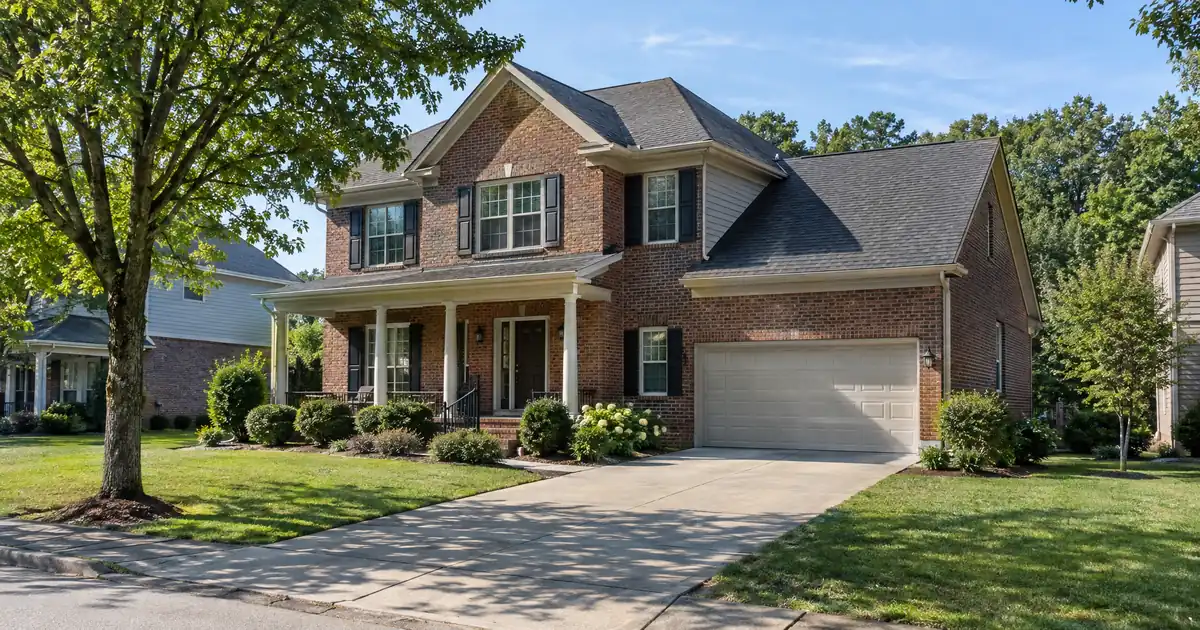
Picture an investor holding a three-bedroom rental bought at $185,000 in Bellevue (a modeled example, not a sourced listing). The tenant has stayed put, the lease renews cleanly, and the property now sits well past the six-month mark on title. The question isn’t whether to sell. It’s whether that equity should keep sitting inside the walls or go to work on the next deal.
That’s the decision a cash-out refinance answers, and Danville is a market where the answer depends heavily on which property you’re holding. Lendmire, a DSCR-focused mortgage broker (NMLS# 2371349), structures DSCR scenarios for investors targeting Danville, Kentucky and places them with wholesale lenders across 41 markets, including D.C. This article stays on the equity side of the ledger: what the numbers support, where they don’t, and how to size the pull.
DSCR Cash-Out Calculator
Run the cash-out numbers in Danville, KY
Rate source: Freddie Mac 30-yr average via FRED® — Federal Reserve Bank of St. Louis · effective Sep 24, 2026
Prefilled with starting assumptions — enter your property’s value, balance, taxes, and insurance for a more accurate picture.
Program parameters update from Lendmire’s centralized guideline source. Taxes and insurance are editable estimates.
As of Sep 24, 2026 · General Freddie Mac market benchmark, not a Lendmire loan offer. Property value, balance, taxes, and insurance are editable estimates. Maximum loan-to-value varies by lender, program, property type, and seasoning. Not a Loan Estimate, approval, or commitment to lend. Program availability and eligibility are subject to lender guidelines, credit approval, property review, and underwriting.
The Quick Read: A cash-out refinance on a Danville, Kentucky rental is underwritten primarily on the property’s rental income measured against its full monthly obligation, with leverage capped at 75 percent of value, roughly six months of ownership on title, and reserves in the neighborhood of six months of PITIA, all subject to lender guidelines.
- Median sale price sits near $229K and is roughly flat year over year, per Redfin.
- Average rent is $1,230, with a $1,410 three-bedroom median, per Prop-Metrics (Rentcast data).
- Single-family at median pricing models near or below 1.0 once taxes and insurance are included.
- Older small multifamily near downtown is where coverage clears with room to spare.
- Hospital staff and Centre College faculty anchor demand, while 98 percent of students live on campus.
Danville Market Snapshot
A quick read on the Danville investor landscape — figures come from the cited sources below. Confirm current property-level numbers before underwriting.
| Metric | Detail |
|---|---|
| Home prices | $207,600 median value (Data USA: Danville, KY) |
| University enrollment | ~1,400 students (Colleges That Change Lives) |
| Employment | ~180 Meggitt employees (2021) (Livability: Danville-Boyle) |
| Vacancy | 6% (AffordableHousingOnline:) |
Equity in Danville Is a Slow Build
Danville’s equity story is steady, not explosive, and anyone underwriting a cash-out on projected appreciation is working from the wrong script. Redfin puts the median sale price at roughly $229K over the most recent three-month window, up just 0.2 percent year over year, with 59 homes sold in June and a market it scores as only “somewhat market-rate.”
Sources disagree on the exact level, as they always do in small markets. Zillow shows an average home value of $254,378, up 1.7 percent, but that’s a modeled value index rather than a median of closed sales, so the two numbers measure different things. Data USA shows Census-based median property value rising about 2.67 percent in the latest year. Read all three together and the picture is flat to modest. Not a boom.
What does that mean for a cash-out? The equity you can pull comes from three places: what you paid, what you’ve improved, and a modest drift upward. Investors who bought below market, or who added a unit or finished a real renovation, have the equity. Investors who bought at the top of the range and waited are mostly holding hope. Be honest about which one you are before ordering anything.
The population backdrop supports stability without fireworks. Danville counted 17,234 residents in the last Census, and Data USA puts the current figure near 17.3K, with an average commute of 17.3 minutes. Small, steady, and sticky.
The Rent-to-Value Screen (Where Single-Family Gets Tight)
Citywide, single-family rentals in Danville run close to the edge of qualifying at high leverage. Rentcast data via Prop-Metrics shows an average rent of $1,230, up 16.0 percent year over year, with medians of $800 for a one-bedroom, $1,130 for a two-bedroom, and $1,410 for a three-bedroom. It’s a secondary aggregator, so treat the growth figure with some suspicion.
Set that against a price near $229K and the monthly rent runs just above 0.5 percent of value. That’s a thin ratio. Modeled with full taxes and insurance, a median-priced house at the average rent lands in the low 0.9s on coverage. At the three-bedroom median it gets to roughly 1.0, and I’d round that down. (Those are modeled assumptions for illustration, not quotes.)
So the honest read: a typical Danville single-family house can cash-out refinance at the 75 percent ceiling only if it was bought well, rents at the top of its bracket, or both. The loan floor is 1.00 on most standard programs, built around rent covering the full obligation, and a file that sits right at 1.0 has no cushion for a soft appraisal or a vacancy.
Two things shape what you can pull. A cash-out is capped at 75 percent loan-to-value, not the higher purchase-side figure. And the number that matters isn’t your equity on paper but the leftover after the payoff, reserves, and the coverage test. Equity available depends on rent used for lender review, PITIA, reserves, and that 75 percent ceiling, so it’s never a guaranteed figure. The DSCR fundamentals page walks through how the ratio is built if you want the mechanics.
Small Multifamily Is Where the Math Clears
Stacking units is the realistic way to lift income relative to the loan in this market. Rent doesn’t scale proportionally with unit size here. A three-bedroom house at $1,410 earns only modestly more than a single two-bedroom unit at $1,130. A duplex with two-bedroom units is a different income picture entirely, with two rent checks against the same single roof, single tax bill, and single insurance policy to carry.
Run the numbers on a modeled duplex valued at $300,000, with both sides renting at the two-bedroom median. Including taxes and insurance, coverage comes out in the low 1.2s at 75 percent LTV. That’s a file with room. (The price is an assumption; the brief found no sourced duplex price data, so check local comps before borrowing against any such figure.)
Fit with the existing stock is good. NeighborhoodScout says single-family detached homes are about 66.77 percent of housing units, which leaves a meaningful minority of small multifamily and converted older homes. Prop-Metrics shows two- and three-bedroom units making up 48.3 percent and 34.0 percent of rental stock, so tenants here expect that product.
One caution: confirm a property is actually recorded as a multi-unit before an investor or a lender treats it as one. A big old house with two kitchens is not automatically a duplex on paper.
Where the Pull Pencils: Neighborhood by Neighborhood
No source in the research gave neighborhood-level prices or rents, so this section is qualitative on purpose. Treat it as a map of property types, not a rent roll.
East Main Street Historic District and the downtown edge is the strongest equity-extraction candidate. The East Main Street Historic District is made up of homes built between 1890 and 1930, in Classical Revival, Queen Anne, and American foursquare styles. That’s big older housing near both the downtown core and the hospital, which is exactly the stock that converts to or already operates as duplexes and triplexes. Investors who already own here and have added value have the best shot at real equity.
Downtown and the Main Street core is walkable and historic, and demand comes from hospital staff, Centre employees, young professionals, and downtown workers. The Great American Brass Band Festival, which Visit Danville calls a free annual family event on Centre’s campus and downtown, is a nice amenity, but it’s a cultural draw, not a housing driver. Don’t underwrite on it.
Bellevue on the west side is quiet, established, and residential, described as having quiet streets and established homes. It’s the natural home of workforce single-family rentals, and it’s where the thin rent-to-value ratio bites. Cash-out here works for owners who bought low. For new buyers it’s a price-discipline game.
Maple and Lexington Avenue corridors are the higher-end, owner-oriented stretch near Centre. Skip them for cash flow. Pricing leans toward homeowners, and rents rarely follow. If you hold one, the equity may be real, but the coverage test is where the file gets hard.
Perryville Road and the south corridor carry newer ranches, new-construction three-bedrooms, and retail along a more car-dependent stretch. Newer product usually brings lower maintenance but also a price tag that squeezes coverage. Fine for stable holds, rarely the best cash-out candidates.
The Demand Anchors Behind the Rent
Danville rents hold up because the tenant base is employed, not because the city is growing fast. Ephraim McDowell Regional Medical Center is the anchor hospital, a Level III trauma center listed with nearly 100 physicians and 29 specialties per Wikipedia, serving roughly 120,000 residents across Boyle and neighboring counties according to Business View Magazine. Bed-count figures vary by source, so the better description is “roughly 200-plus beds.”
Centre College enrolls 1,385 undergraduates, and Colleges That Change Lives reports that 98 percent of students live on campus. That cuts both ways. There’s almost no student-turnover rental business to chase, but faculty and staff make steady, longer-term tenants.
Manufacturing and distribution fill out the base. Develop Danville’s major employers page is the official list, and the Livability profiles name Hobart, Meggitt, Denyo, and Timberland among local employers. Some of those names and headcounts are dated, so confirm them before leaning on any one.
On the supply side, local officials describe a real gap. The mayor said the city is 1,700 homes short of what residents need, across workforce and middle-class housing alike. The Bowen National Research study, as covered by Somerset-Kentucky.com, projected a Boyle County housing gap above 20 percent of existing households within the next several years. An aggregator reports a 6 percent rental vacancy rate and about 1.07 rental units per renter household. Read that as tight rather than overbuilt. Underwrite vacancy conservatively anyway.
Seasoning, Appraisals, and the Thin-Comp Problem
Pull the equity too early and the file stalls. Most standard programs look for about six months of ownership measured from title recording before a cash-out, so a property bought last month isn’t a cash-out candidate yet. The cleaner path is to wait out the seasoning, document the lease, and let the appraisal reflect whatever you’ve actually done to the property.
The bigger friction in a market this size is the appraisal itself. With a population around 17K and a modest number of monthly sales, appraisers work from a thin comp pool, and the sources disagree on how quickly homes sell. Redfin shows homes sitting longer than they did a year earlier, while Zillow describes a faster pending timeline. That conflict is worth respecting. Don’t assume a short hold produced a big equity jump.
The cleaner files from a documentation standpoint tend to share a few traits in markets like this one. The lease is in place and current, the rent sits at or just under market rather than at the top of an asking range, reserves are shown up front, and the investor has a defensible story for the value. In small markets the friction point is rarely credit or documentation. It’s a value that comes in below expectations, which then shrinks the 75 percent loan amount and, with it, the proceeds.
Pricing and available terms vary by lender, borrower profile, property type, and full underwriting review. If the property is held in an LLC, that’s generally workable, subject to lender program eligibility.
Run the Scenarios (And What to Do Below 1.00)
Take a modeled single-family rental valued at the market median near $229K, renting at the $1,230 average. Including taxes and insurance, coverage lands in the low 0.9s at the 75 percent ceiling. That’s below the 1.00 benchmark most standard programs are built around. Lenders may review sub-1.00 files, but usually with stronger compensating factors, lower leverage, different pricing, or more reserves, and none of it is a given.
The paths a lender might look at: a sub-1.00 program with reduced leverage, an interest-only structure to lift coverage, or simply waiting until the rent resets at lease renewal. Qualification stays subject to lender guidelines, credit approval, and property review.
The stronger play might be the older duplex over the median house, though an investor buying a clean single-family near Bellevue could argue the simplicity is worth the thinner coverage. Honestly, it’s a toss-up that depends on what you already own. If you hold the house, pulling equity at a lower leverage point and keeping coverage above 1.00 is usually safer than stretching to the cap.
For the refinance mechanics, pulling equity with a DSCR cash-out goes into the cash-out specifically. Investors who want a modeled version of their own file can see what the numbers look like, or call Lendmire at 828-256-2183.
Where the Proceeds Should Go
A cash-out only makes sense if the money buys something that earns more than the carrying cost of the new loan. In Danville that points toward small multifamily or a value-add where the entry price is below what the finished rent supports, not another median-priced house at 0.5 percent rent-to-value.
DSCR vs. conventional financing
There are two common ways to finance an investment property in Danville, KY, and they qualify you differently — here’s how investors weigh them.
Why investors choose it
- Qualifies on the property’s rental income — no personal tax returns, W-2s, or pay stubs needed to document income.
- No personal debt-to-income ceiling to clear, so existing mortgages and obligations don’t cap your borrowing the same way.
- Can be closed in an LLC, keeping the property inside a business entity.
- Built for scaling — not held to the limit on number of financed properties that conventional financing applies.
- Underwriting centers on the deal: generally qualifies when the rent covers the payment, a 1.00x coverage ratio being a common baseline (confirmed in underwriting).
- Designed specifically for investment property, including long-term and, where the program allows, short-term rentals.
Where it’s strong
- Often the lowest ongoing financing cost for a buyer who fully qualifies on personal income — a fit for a first property or a cost-first purchase.
Trade-offs for investors
- Requires full personal income documentation and must fit within a debt-to-income limit — salary, existing debts, and other mortgages all count.
- Typically held in your personal name rather than a business entity.
- Caps how many financed properties you can carry, which can become a ceiling as a portfolio grows.
- Evaluates you as a borrower as much as the property, which usually means more paperwork.
How investors usually choose: a first or single property often optimizes for the lowest financing cost; portfolio builders often optimize for leverage, vesting in an LLC, and scaling past conventional caps. The right answer depends on your goals, the property, and current guidelines — both paths run through select lenders in Lendmire’s wholesale network, with eligibility and terms confirmed in underwriting.
That’s where the supply-gap data helps. Tight inventory supports occupancy, and officials describing shortages at every level supports rent durability. It’s qualitative, not a vacancy statistic, so don’t use it to stretch the underwriting. The right discipline is to run a rent-to-value screen on each target property, not lean on a metro average.
Two risks deserve a plain mention. Flat appreciation means you can’t count on the next property to bail out a weak purchase. And a market this small means the pool of comps is thin, so a single weak appraisal can reshape a deal. Build in margin. Investors should also verify current local rental rules, taxes, and insurance with qualified local professionals before committing.
For a statewide view of how these structures work elsewhere, see DSCR loans in Kentucky.
Frequently Asked Questions
How do you qualify for a DSCR cash-out refinance in Danville, Kentucky?
The property has to show rent that covers its full monthly obligation, typically at a 1.00 benchmark or better, with leverage capped at 75 percent of value. Expect about six months of title seasoning, a credit score typically at or above 620, and about six months of PITIA in reserves. Eligibility is reviewed against lender guidelines, credit, and the property itself.
What are the requirements for an investment property loan in Danville, Kentucky?
Requirements center on the property’s rental income, the borrower’s credit tier, and reserves. Credit tiers typically run 620, 660, 680, and 700, with a 620 floor, and reserves of about six months of PITIA are common. Loan amounts on standard programs reach up to $3,000,000, with smaller balances routed through select lenders in the network.
Will a typical Danville single-family house clear the coverage test on a cash-out?
Often not at the full 75 percent. Priced near the local median with rents around the area average, modeled coverage including taxes and insurance tends to fall below 1.0. A three-bedroom at the median rent for that size gets closer to 1.0. Duplexes and older small multifamily clear with more room.
Does Centre College create student rental demand?
Not much. Since 98 percent of Centre students live on campus, the demand is mostly faculty, staff, and hospital workers rather than student turnover. That favors stable, longer-term tenants over seasonal churn, but it also means there’s no off-campus student premium to underwrite.
What DSCR terms may lenders review for investors in Kentucky?
Lendmire arranges DSCR investor loans. A key feature is that eligibility is generally reviewed around the property’s rental income rather than personal income, subject to lender and program guidelines.
Danville or Lexington: Where the Math Leans
Danville’s lower entry price makes it easier to find a duplex that actually covers its debt than in Lexington, 35 miles up the road, where pricing tends to run ahead of rents. For equity pulls right now, the math favors Danville, but only if you hold older small multifamily; hold a median-priced house and the larger Bluegrass market’s depth probably serves you better.
For current guidelines and terms, see Lendmire’s DSCR loan programs page.
About Lendmire
Lendmire is a non-QM mortgage brokerage (NMLS# 2371349) arranging DSCR investor loans in 41 markets, including Washington, D.C. DSCR eligibility is generally reviewed around property-level rental income rather than personal income, subject to lender and program guidelines, making it a fit for self-employed investors and LLC-owned portfolios. Lendmire was recognized as a 2026 Scotsman Guide Top Workplace and a top-ranked workplace in 2025.
Get Started
Ready to find the right loan for you?
In about 30 seconds you can review financing options available for your investment property. No commitment required.
Informational only. Not a Loan Estimate, approval, or commitment to lend. Program availability and eligibility are subject to lender guidelines, credit approval, property review, and underwriting.
References
1. Redfin: Danville housing market
2. Prop-Metrics (Rentcast data)
4. Colleges That Change Lives: Centre College
7. Zillow: Danville home values
10. Ephraim McDowell Regional Medical Center
11. Wikipedia
12. Business View Magazine: Danville-Boyle County
13. Centre College
14. developdanville.com — Workforce Major Employers
15. WEKU: Kentucky housing report
17. Affordable Housing Online — Kentucky Boyle County
18. a 2026 Scotsman Guide Top Workplace
19. Scotsman Guide — Top Workplaces 2025
This article is part of Lendmire’s investment property cash-out refinance program — full qualification details, guidelines, and scenarios live on the program page.
Related reading: Luxury Rental DSCR Loans In New Jersey · Jersey Shore Vacation Rental Loans: DSCR Financing In Ocean City, Cape May And Long Beach Island · DSCR Cash-out Refinance In New Jersey: Pulling Equity From A Rental
Guides: Investment Property Cash-Out Refinance in Kentucky
Brandon Miller
Founder & CEO, Mortgage Loan Originator, Lendmire LLC
- Mortgage Loan Originator · NMLS# 1129696 · Verify on NMLS Consumer Access
- North Carolina Real Estate Broker · License# 343312 · Verify on NCREC
- North Carolina Insurance Producer · License# 19053198 · Property, Casualty, Life, Health · Verify on NAIC SBS
- Lendmire LLC · Firm NMLS# 2371349 · Verify firm licensure
Disclosure information. Lendmire is a state-licensed mortgage brokerage under NMLS# 2371349. Lendmire is not a depository institution, direct lender, or financial advisor — all loans referenced are placed through wholesale lender partners and are subject to each lender's underwriting standards. This article is provided for general informational purposes and is not a commitment to lend, nor does it constitute financial, legal, or tax advice. Loan programs, terms, rates, and qualification standards change without notice and depend on borrower profile, property type, and the state in which the subject property is located. Equal Housing Opportunity provider. NMLS Consumer Access: nmlsconsumeraccess.org.