
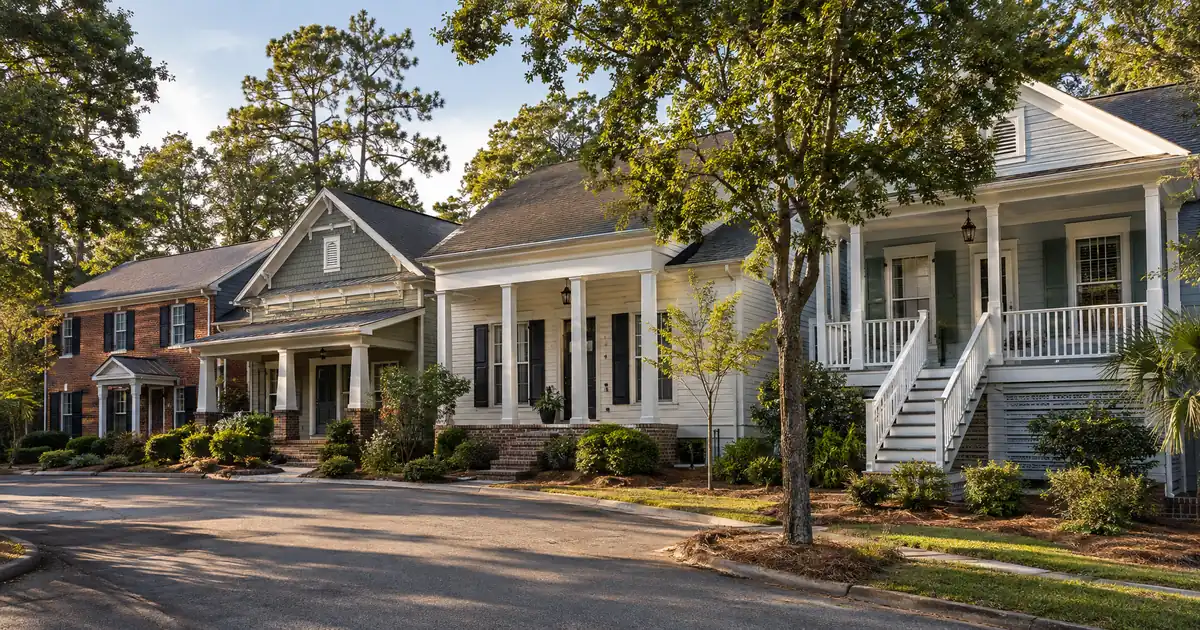
Pleasant Hill Road at Gwinnett Place is where Duluth’s equity story gets complicated. Pleasant Hill Plaza sits on a road carrying 54,410 vehicles per day and is 88% occupied. Next door, Gwinnett County and its Urban Redevelopment Agency will own a combined 87.5 acres of the old mall site. A Global Villages concept for the 72-acre core envisions up to 3,800 homes and a $935 million price tag. An investor who already owns a rental nearby will hear that and think “equity.” A lender will look at something else: what the property is worth and rents for today.
DSCR Cash-Out Calculator
Run the cash-out numbers in Duluth, GA
Rate source: Freddie Mac 30-yr average via FRED® — Federal Reserve Bank of St. Louis · effective Sep 24, 2026
Prefilled with starting assumptions — enter your property’s value, balance, taxes, and insurance for a more accurate picture.
Program parameters update from Lendmire’s centralized guideline source. Taxes and insurance are editable estimates.
As of Sep 24, 2026 · General Freddie Mac market benchmark, not a Lendmire loan offer. Property value, balance, taxes, and insurance are editable estimates. Maximum loan-to-value varies by lender, program, property type, and seasoning. Not a Loan Estimate, approval, or commitment to lend. Program availability and eligibility are subject to lender guidelines, credit approval, property review, and underwriting.
The Short Version:
A cash-out refinance on a Duluth, Georgia rental is underwritten primarily on the property’s rental income measured against its full monthly obligation, with a leverage cap, a seasoning period after purchase, and cash reserves all shaping the equity that can be released, subject to lender guidelines and property review.
- Median sale price sits near $489,000, down 5.1 percent year over year, per Redfin.
- Cash-out tops out at 75 percent LTV, and the modeled coverage at that leverage lands below 1.00x on median-priced homes.
- Seasoning runs about six months of ownership, measured from title recording.
- The mall redevelopment is a long-dated appreciation story, not something that lifts today’s appraisal.
- Duplexes are scarce, so townhomes and single-family homes carry most DSCR cash-out files.
What the Mall Site Means for Your Appraisal (Not Much, Yet)
The redevelopment is real, public-sector-led, and years from delivering anything. The county opened its search for a master development partner with a concept that mixes housing, office space, a cultural center, and retail around a central park, per Gwinnett County. An appraiser pricing your rental today can’t credit that. Comparable sales drive the value, and the comps are soft.
The corridor itself is mixed-use retail with workforce and professional renters. Nearby rentals benefit from the traffic and commercial depth, but that shows up in lease demand, not in a higher appraisal. Nearby new housing could also add rental supply years from now, so the same project that supports long-term appreciation could compete for your tenants.
Downtown Duluth around the Town Green has a different profile: walkable, revitalized, and close to the Hudgens Center for the Arts and Red Clay Theater, per Wikipedia’s Duluth entry. The Sugarloaf area near Gas South Arena leans toward owner-occupied communities. The Duluth Highway corridor near Northside Gwinnett draws healthcare staff. Neighborhood-level rent and price data is thin here. Zumper says it lacks enough inventory to publish neighborhood rents. So these are submarket descriptions, not ranked yields.
Where the Equity Actually Sits
Duluth’s equity is thinner than the old headlines suggest. The median sale price is about $489,000, down 5.1 percent year over year, and homes are taking around 44 days to sell versus 29 a year earlier, per Redfin. Zillow puts the average home value lower, at $447,344, down 2.6 percent, which reflects a different methodology rather than a contradiction. Both point the same direction.
Rent direction is murkier. RentCafe shows average apartment rent at $1,658, down 1.34 percent. Zumper reports a $1,995 median across all property types, up 3 percent. The gap comes from what each one measures: RentCafe covers buildings with 50 or more units, while Zumper blends everything. Underwrite against your actual lease, not a citywide median.
Who has equity to pull? Investors who bought before values flattened, or who added value through renovation. Someone who bought recently near the peak may find that 75 percent of today’s value barely clears the existing balance. A seasoned owner usually has more room. Here’s the catch for everyone: the lender measures from the appraised value, and appraisals in a softening market tend to come in conservative.
About six months of ownership, measured from title recording, is the typical seasoning benchmark before a cash-out refinance, subject to lender guidelines. The 75 percent LTV ceiling is a hard cap on cash-out, lower than the purchase ceiling, so don’t plan around 80 percent.
Run the Coverage Before You Run the Cash-Out
Most standard DSCR programs are built around a 1.00x benchmark because rent covers the full monthly obligation at that level. Some lenders review lower ratios with compensating factors such as lower leverage, stronger credit, or more reserves. Exact eligibility depends on lender guidelines, credit profile, reserves, and property review.
Here is how that plays out in Duluth. These are modeled assumptions, not sourced market data. Coverage is rent divided by full monthly obligation, including taxes and insurance, and each band is rounded down.
- Median-priced home: a $489,000 home (the Redfin median) rented at $2,060, the RentCafe three-bedroom benchmark. That figure comes from apartment buildings, so a single-family lease may differ.
- Townhome tier: a $340,000 townhome rented at a modeled $1,720, anchored to the RentCafe two-bedroom figure. The under-$350,000 tier of condos and older townhomes exists in Duluth.
| Leverage | Median home, $2,060 rent | Townhome, $1,720 rent |
|---|---|---|
| 75 percent | About 0.7x | About 0.8x |
| 60 percent | About 0.8x | About 1.0x |
| 45 percent | About 1.0x | About 1.2x |
The 75 percent ceiling is a limit, not a target, and on a median-priced Duluth home it produces coverage well under 1.00x. The townhome tier does meaningfully better. The math favors lower-priced attached product, which is a rent-to-value observation, not a recommendation to buy a particular unit.
DSCR files in markets like this one typically come in with thin coverage at the maximum LTV, and the workable structure usually involves trimming the requested loan amount until the number clears. Brokers often see borrowers ask for the full cash-out, get a coverage result that doesn’t fit, and then pick between a smaller draw and a different structure. Pulling rent comps early matters because the lease is often the main evidence in a market with sparse rent data.
If the number falls below 1.00x, there are paths a lender may review: a sub-1.00 program, an interest-only structure, or a smaller cash-out. Each typically comes with trade-offs, such as lower leverage, stronger credit, more reserves, or different pricing. Qualification stays subject to lender guidelines, credit approval, and property review. Credit tiers for these programs start at a 620 floor, with reserves typically around six months of full monthly obligation. Lendmire’s DSCR cash-out refinance page covers the structure in more detail, and the guide “What Is a DSCR Loan” walks through how the ratio is built.
Who Should Skip the Cash-Out?
Not everyone with equity should pull it. If proceeds would go toward a property in a market where coverage also falls short, the refinance just moves a problem. That’s a signal to re-examine where the capital goes, not which loan type to use.
Conversely, pulling equity to buy another rental where rent-to-value is stronger, such as a townhome in the under-$350,000 tier, makes the logic cleaner. So does building a reserve fund for a portfolio that has to survive a soft-rent stretch. The decision hinges on what the cash does next.
Conventional financing may also beat a DSCR loan for some borrowers. A salaried borrower with one or two personally-owned rentals and clean traditional personal-income documentation can often get conventional cash-out at lower cost, without non-QM friction. The guide “Where DSCR and Conventional Diverge” is worth reading before committing. The flip point tends to arrive with entity ownership, a growing portfolio, or traditional personal-income documentation that understates rental income. In those cases DSCR becomes the more practical lane.
Whether to refinance at all is a genuine toss-up for a borrower with an existing low-balance loan: paying for a new refinance to release cash may cost more than the benefit, especially when the cash has no immediate deployment plan. Running both scenarios is cheap compared with guessing.
Demand Anchors Behind the Leases
Duluth has roughly 32,000 residents, per Census Bureau QuickFacts, with a median household income of $95,331 and 10.4 percent population growth from 2019 to 2024, per Georgia Demographics. About 44 percent of households rent, which is 5,477 households. The deepest rental band is $1,501 to $2,000, holding 49 percent of rentals. That is the pool a mid-priced single-family or townhome lease competes in.
Employment is concentrated for a city this size. Primerica and AGCO both have headquarters here (AGCO’s per the Rowen Foundation), and Northside Hospital is expanding at its Duluth and Gwinnett facilities. The Duluth hospital is an 81-bed facility. No verified employee counts surfaced in the research, so treat these as qualitative anchors. Nearby campuses add renter demand: Georgia Gwinnett College enrolls 12,782 students, and Gwinnett Technical College reports 17,204.
Stable employment helps lease retention, which supports the rent schedule a lender reviews. It doesn’t fix a coverage number that’s weak at high leverage.
Duplexes Are Rare. Plan Around That.
Small multifamily is scarce. Per NeighborhoodScout, single-family detached homes are 46.95 percent of housing units, large apartment complexes are 31.67 percent, and row houses and other attached homes are 16.70 percent. Duplexes and small converted buildings account for only 4.23 percent.
Two-to-four-unit comps will be sparse, so a cash-out on a small multifamily property may face a thinner appraisal comp set. Townhomes and attached units are the more available product, and single-family handles most of the rest. Manufactured homes, log homes, and barndominiums fall outside the network’s DSCR programs, so they won’t work as collateral.
For portfolio holders, entity ownership (subject to lender program eligibility) lets the financing sit outside personal debt-to-income limits. Lendmire’s Georgia DSCR platform covers how investors structure this across the state.
Investors should verify current local rental rules, taxes, and insurance with qualified local professionals before committing to a hold strategy.
Frequently Asked Questions
Can I cash-out refinance a Duluth rental I bought recently?
Generally yes, once about six months of ownership has passed from title recording, though individual lenders may set their own seasoning rules. The bigger constraint is usually value. If you bought near the recent peak and prices have softened, 75 percent of the appraised value may leave little room above your existing balance.
DSCR vs. conventional financing
Two common ways to finance an investment property in Duluth, GA. They qualify you differently — here’s how investors weigh them.
Why investors choose it
- Qualifies on the property’s rental income — no personal tax returns, W-2s, or pay stubs needed to document income.
- No personal debt-to-income ceiling to clear, so existing mortgages and obligations don’t cap your borrowing the same way.
- Can be closed in an LLC, keeping the property inside a business entity.
- Built for scaling — not held to the limit on number of financed properties that conventional financing applies.
- Underwriting centers on the deal: generally qualifies when the rent covers the payment, a 1.00x coverage ratio being a common baseline (confirmed in underwriting).
- Designed specifically for investment property, including long-term and, where the program allows, short-term rentals.
Where it’s strong
- Often the lowest ongoing financing cost for a buyer who fully qualifies on personal income — a fit for a first property or a cost-first purchase.
Trade-offs for investors
- Requires full personal income documentation and must fit within a debt-to-income limit — salary, existing debts, and other mortgages all count.
- Typically held in your personal name rather than a business entity.
- Caps how many financed properties you can carry, which can become a ceiling as a portfolio grows.
- Evaluates you as a borrower as much as the property, which usually means more paperwork.
How investors usually choose: a first or single property often optimizes for the lowest financing cost; portfolio builders often optimize for leverage, vesting in an LLC, and scaling past conventional caps. The right answer depends on your goals, the property, and current guidelines — both paths run through select lenders in Lendmire’s wholesale network, with eligibility and terms confirmed in underwriting.
How much equity can I pull from a median-priced Duluth home?
It depends on rent, full monthly obligation, reserves, and the 75 percent LTV cap, so there is no fixed figure. At the maximum leverage, modeled coverage on a median-priced home with a typical three-bedroom rent falls below 1.00x. Lower leverage brings it closer to the benchmark, which shrinks the cash released.
Will the Gwinnett Place Mall redevelopment raise my appraisal?
Not today. Appraisers rely on recent comparable sales, and the project is still at the development-partner stage. It may support long-term demand around Pleasant Hill Road, but it could also add competing rental supply years from now. Treat it as upside, not as a basis for cash-out proceeds.
Do Duluth’s conflicting rent figures matter for qualification?
Yes, because the lender reviews your lease and supporting comps, not a citywide median. Sources range from $1,631 at Apartment List to $1,995 at Zumper, depending on method. A documented lease at market rent is the strongest evidence for your file.
Are townhomes or single-family homes better for a DSCR cash-out here?
Townhomes in the lower price tier tend to produce stronger rent-to-value, so modeled coverage improves at the same leverage. Single-family homes offer more liquidity and broader tenant demand but carry higher prices. Duplexes are the exception: scarce stock makes comps thin. Anyone comparing options can call Lendmire at 828-256-2183.
The Number That Reframes Duluth
Duluth is a market where the loan structure matters more than the headline. Prices are easing, rents are mixed, and the most hyped catalyst is years from delivering anything. The investors who pull cash out successfully here tend to pick a property with enough rent, keep leverage below the cap, and deploy proceeds where coverage is stronger. A Global Villages concept for the mall site envisions up to 3,800 new homes, yet duplexes and small converted buildings make up just 4.23 percent of the housing stock today.
For current guidelines and terms, see Lendmire’s DSCR loan programs page.
About Lendmire
Lendmire, NMLS# 2371349, is a DSCR and non-QM mortgage brokerage with investor loan programs across 41 markets, Washington, D.C. included. Lenders commonly review DSCR eligibility around property-level rent rather than personal income documentation, subject to lender guidelines. The brokerage helps arrange financing for LLC-owned portfolios that have outgrown conventional financed-property limits. Lendmire was recognized by Scotsman Guide in 2025 and named a 2026 Scotsman Guide Top Workplace.
Get Started
Ready to find the right loan for you?
See your offer in seconds. No credit pull, no obligation.
Informational only. Not a Loan Estimate, approval, or commitment to lend. Program availability and eligibility are subject to lender guidelines, credit approval, property review, and underwriting.
References
1. Gwinnett Place CID, Pleasant Hill Plaza
2. Gwinnett County, Gwinnett Place Mall
4. Redfin, Duluth housing market
6. Zumper
7. Zillow
8. RentCafe, Duluth average rent
9. Census Reporter, Duluth, GA
10. Georgia Demographics, Duluth
11. Rowen Foundation
14. Gwinnett Technical College
15. NeighborhoodScout, Duluth real estate
16. Apartment List
17. recognized by Scotsman Guide in 2025
18. a 2026 Scotsman Guide Top Workplace
This article is part of Lendmire’s investment property cash-out refinance program — full qualification details, guidelines, and scenarios live on the program page.
Related reading: DSCR Cash Out Refinance in Duluth, Georgia: Pleasant Hill Corridor Equity Reality Check · Cash Out Refinance Investment Property in Sugar Hill, Georgia: A 2026 DSCR Guide to Level Creek Road · DSCR Cash Out Refinance in Sugar Hill, Georgia: The 2026 DSCR Financing Guide to Buford Highway
Guides: Investment Property Cash-Out Refinance in Georgia
Brandon Miller
Founder & CEO, Mortgage Loan Originator, Lendmire LLC
- Mortgage Loan Originator · NMLS# 1129696 · Verify on NMLS Consumer Access
- North Carolina Real Estate Broker · License# 343312 · Verify on NCREC
- North Carolina Insurance Producer · License# 19053198 · Property, Casualty, Life, Health · Verify on NAIC SBS
- Lendmire LLC · Firm NMLS# 2371349 · Verify firm licensure
Legal disclosures. Lendmire (NMLS# 2371349) is a state-licensed mortgage brokerage that arranges financing through wholesale lender relationships. Lendmire is not a direct lender, depository institution, or registered financial advisor. The discussion above is general informational content about real estate financing — it is not financial, legal, or tax advice, and readers should consult licensed professionals for guidance on their individual circumstances. Loan inquiries are subject to lender underwriting; this article does not represent a commitment to lend. Loan terms, rates, and qualification standards vary by borrower, property, and state, and are subject to change at any time. Equal Housing Opportunity. NMLS Consumer Access: nmlsconsumeraccess.org.