
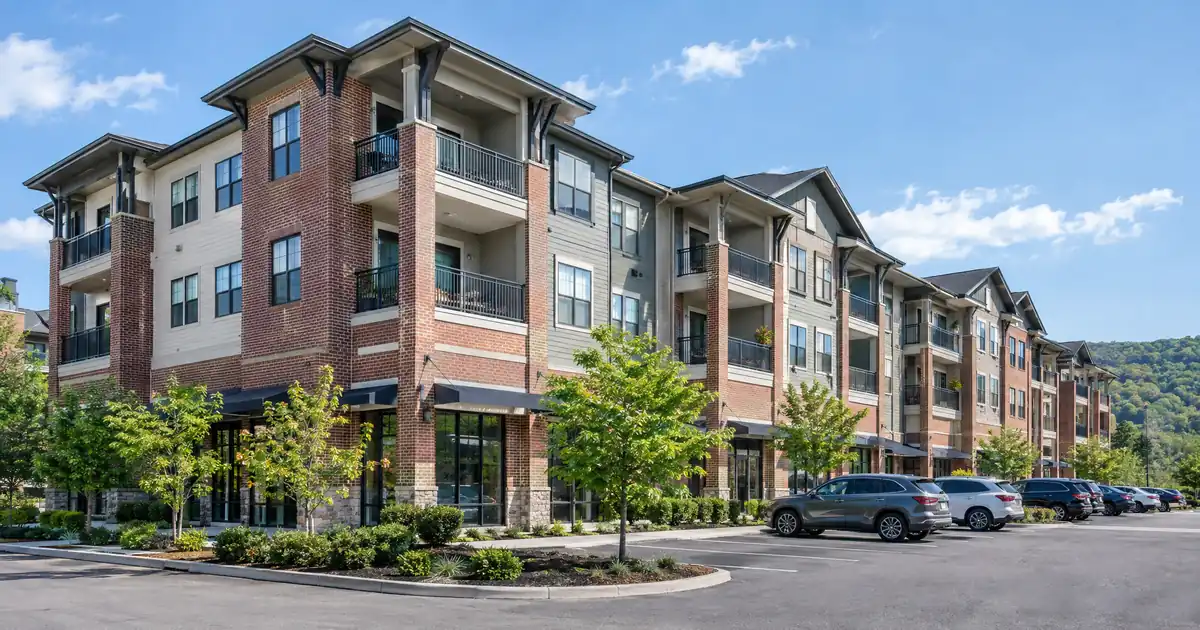
Downtown Glasgow, around the Public Square, is the part of town where a cash-out refinance story is easiest to see. It’s an active revitalization district, and a market source credits Simple Life Properties with advancing downtown and neighborhood redevelopment projects. A small multi-unit building near the square, bought below market and brought up to standard, is the kind of asset where a seasoned file might support an equity pull. The catch is that the broader market around it is soft. Values are flat, rents have slipped, and the appraiser will have few recent sales to work with. Pulling equity here is possible, but it rewards investors who plan for the appraisal and the coverage math before they apply.
For real estate investors in Glasgow, Kentucky, Lendmire helps structure and place DSCR financing through wholesale lenders operating in 41 markets, including D.C.
DSCR Cash-Out Calculator
Run the cash-out numbers in Glasgow, KY
Rate source: Freddie Mac 30-yr average via FRED® — Federal Reserve Bank of St. Louis · effective Sep 24, 2026
Prefilled with starting assumptions — enter your property’s value, balance, taxes, and insurance for a more accurate picture.
Program parameters update from Lendmire’s centralized guideline source. Taxes and insurance are editable estimates.
As of Sep 24, 2026 · General Freddie Mac market benchmark, not a Lendmire loan offer. Property value, balance, taxes, and insurance are editable estimates. Maximum loan-to-value varies by lender, program, property type, and seasoning. Not a Loan Estimate, approval, or commitment to lend. Program availability and eligibility are subject to lender guidelines, credit approval, property review, and underwriting.
The Short Version:
Glasgow, Kentucky suits investors who already own a seasoned small rental, ideally a duplex or a workforce house bought below market. A cash-out refinance is underwritten primarily on the property’s rental income measured against its full monthly obligation, and soft single-family rents mean multi-unit and renovated-house files tend to pencil more cleanly.
- Average Glasgow home value is $220,561, down 0.8 percent year over year, per Zillow.
- Cash-out refinances top out at 75 percent LTV, with about six months of seasoning from title recording.
- Zillow’s average 3BR rent is $950, while renovated house listings ask $1,250 to $1,495.
- Tate’s 400 announced jobs are a demand catalyst that hasn’t shown up in rent data yet.
- Only 7 homes sold in the past month, per Redfin, so appraisal comps are thin.
Glasgow Market Snapshot
A quick read on the Glasgow investor landscape — figures come from the cited sources below. Confirm current property-level numbers before underwriting.
| Metric | Detail |
|---|---|
| Home prices | $170K median (Redfin Glasgow multifamily) |
| Typical rents | $1,350 per unit townhome (Redfin Glasgow multifamily) |
| University enrollment | 745+ students (WBKO) |
| Employment | 6,000+ manufacturing workers (Barren County Economic Authority) |
Equity Here Comes From Basis, Not Appreciation
Glasgow is not an appreciation market right now, so equity has to come from what you paid and what you improved. Zillow puts the average Glasgow home value at $220,561, down 0.8 percent over the past year. No reliable multi-year growth series turned up in the research, so any thesis built on a steady climb has nothing to stand on.
Rents tell a similar story. Zillow Rental Manager shows average rents of $650 for a 1BR, $795 for a 2BR, $950 for a 3BR, and $875 across all property types. It also reports rent down $120 over the prior year and labels the market “COOL.” Zumper lands in the same place, with a median rent of $850, a 15 percent decline over the last year, and Glasgow’s median 19 percent below Bowling Green’s.
Here’s the plain read. An investor who bought a tired house well under the average value and renovated it may hold real equity. An investor who bought at the average and waited for the market to lift it probably doesn’t. For the second investor, a cash-out request is a stretch, and the better move might be holding or paying down.
Median household income of $43,074 and a population near 15,197, per Census Bureau QuickFacts, explain why rents can’t run far ahead of the local paycheck. Rent ceilings in this city are real. That shapes everything below.
How Much Coverage Does a 75 Percent Draw Actually Leave?
At 75 percent LTV, only the stronger-rent properties in Glasgow clear a 1.00 coverage ratio once taxes and insurance are included. Single-family at blended average rents does not. Duplexes tend to do better, because two modest rents stack against a lower price.
A word on the benchmark first. Most standard DSCR programs are built around a 1.00 baseline, where the property’s rent covers its full monthly obligation (principal, interest, taxes, insurance, and any association dues). Some lenders may review lower ratios with compensating factors, but that usually means lower leverage, different pricing, or more reserves. Review details are subject to lender overlays, and nothing below is a commitment to lend.
Run the numbers on four modeled cases. The values and rents are assumptions for illustration, not sourced market facts, apart from the $220,561 average value and the listing asks. Each case is modeled at 75 percent LTV with full taxes and insurance included:
| Modeled scenario | Assumed rent | Coverage incl. Taxes and insurance |
|---|---|---|
| Average-value house, blended 3BR rent | $950 | around 0.7x |
| Same house at a listing-ask rent | $1,250 | just under 1.0x |
| Renovated larger house | $1,495 | about 1.1x |
| Duplex valued near $185,000 | $1,350 combined | around 1.2x |
Live asking rents for houses on Zillow run $1,250 for a 3-bed/2-bath, $1,300 for a 4-bed, and $1,495 for a larger 3-bed/1.5-bath. Treat those as asks, not achieved rents. The duplex row borrows two figures from listing data: the $185,000 estimated value across three duplex opportunities on Realmo and a $625 and $725 pair of unit rents. Verify any real building’s price, rents, and expenses before leaning on this.
So what changes at lower leverage? Drawing 65 percent instead of 75 pulls the $1,250 house up to roughly 1.0x. That’s a defensible trade if the goal is a clean file rather than maximum cash out. A sub-1.00 structure may be available through select lenders, but the question worth asking first is whether it should be used. Reduced leverage and stronger credit are part of that bargain. If the property has a renovation or demand story that justifies thin current coverage, sub-1.00 can be a reasoned choice. If it’s the only way the numbers work at average rents, that’s a signal to re-examine the asset, not the loan type.
If you want the mechanics, the guide “What Is a DSCR Loan” covers the ratio in detail, and the cash-out refinance details page walks through the structure.
Multi-Unit Is Where the Math Breathes
Duplexes and small multifamily are the strongest fit for equity extraction in Glasgow, because single-family rents are low relative to prices. Redfin shows a median listing price near $170,000 for multifamily homes in Glasgow, below the $220,561 single-family average. A building with two or more rent streams spreads the monthly obligation across more income.
The stock is thin and uneven, though. Listings include a downtown five-unit property (three studios and two 1BR units, each with its own mini-split) where the landlord pays all utilities. Landlord-paid utilities cut net operating income, so a headline rent roll can overstate what the property really covers. Another listing is a duplex-plus-fourplex package on a few acres, where only part of the units were renovated. That’s a value-add play, not a seasoned-rent play, and an unrenovated half won’t support a refinance appraisal the way a stabilized one does.
Buildings of five or more units may route to different loan products than standard 1-4 unit DSCR programs, so unit count matters before the first application. Manufactured homes, log homes, and barndominiums fall outside the network’s DSCR programs entirely, which is worth remembering in a county with plenty of rural stock.
The single-family versus multi-unit tradeoff is real. A renovated three-bedroom house is easier to sell or refinance later because the buyer pool is wider. A duplex carries a better coverage ratio, but it has fewer likely buyers and fewer comparable sales. Investors who may want to sell in a few years should weigh that before choosing.
Where the Equity Pulls Are Likely to Come From
A few Glasgow submarkets have the demand drivers to support a refinance case. The research had no reliable neighborhood-level price or rent data, so these profiles stay qualitative.
Downtown and the Public Square. Redevelopment momentum makes this the most interesting pocket for small-unit owners. Demand likely comes from small-business staff and younger workers. The risk is that renovation spending creates book value an appraiser can’t confirm from nearby sales.
The N. Race St. and T.J. Health corridor. T.J. Regional Health is described as the county’s largest employer, and the Joint Commission-accredited, 196-bed T.J. Samson Community Hospital sits on this corridor. The hospital also hosts the University of Louisville family medicine residency, per the system’s history page, which adds rotating clinicians who need housing. Healthcare staffing gives properties here steadier tenant demand than the market labels suggest.
Beltline and the South Cooper industrial corridor. This is manufacturing country. Barren County Economic Authority reports more than 6,000 manufacturing workers, over 40 companies, and five employers with more than 500 people. The product mix runs from automotive stampings and brake systems to aluminum die castings and pharmaceutical packaging. Houses and small multi-unit properties within reach of that corridor are where the Tate jobs, discussed below, would land first.
KY-90 north and Royal Troon. This one cuts the other way. Royal Troon is new construction with apartments and single-family homes planned, per Glasgow News 1. New supply at the edge of town gives renters a modern alternative and can cap rents on older stock. Owners of older workforce houses should watch how that product prices.
Liberty Street and the WKU Glasgow campus. Skip the student-housing pitch. WKU in Glasgow is a small commuter and adult-learner campus. WBKO reported enrollment above 745 students in a recent fall term, and WCLU Radio reported a seven-year on-campus enrollment high. That’s steady, modest demand from staff and adult learners, and it won’t carry a refinance thesis by itself.
The Appraisal Is the Real Gate
For most Glasgow files, the appraisal is the step where the equity thesis gets tested. Redfin reports that homes in Glasgow sit on the market a long time and that only 7 homes sold in the past month. Its 167-day figure appears in the multifamily section, and the scope isn’t fully clear, so read it as directional rather than exact.
Thin sales mean thin comps. An appraiser working from few nearby transactions tends to land conservative, especially on multi-unit properties, so the value that sets the 75 percent ceiling may come in below the investor’s expectation. Plan for a lower appraised value and less equity coming out. Don’t size the next acquisition around a number that hasn’t been appraised yet.
Seasoning matters too. Cash-out programs generally look for about six months of ownership measured from title recording, so an investor who bought a renovation project and wants to refinance on improved value needs the clock to run. Reserves of about six months of PITIA are typical, and credit tiers generally run from a 620 floor up through 660, 680, and 700. Smaller loan balances, which describes much of Glasgow, route through select lenders in the network rather than the standard programs. That can narrow the options a little. Exact eligibility depends on lender guidelines, credit profile, reserves, and property review.
Lendmire’s deal desk tends to see a consistent pattern on files from small, thin-sales markets like this one. The cleaner files usually arrive with a lease in place, a rent history that matches the lease, and a documented renovation scope. The common friction point is an appraisal that comes in under the owner’s own estimate, which is why files that still work at a slightly lower value tend to move forward more smoothly than ones that need every dollar of the estimate to hold.
Where the Proceeds Go
The cash-out thesis depends on what the investor does with the proceeds. Pulling equity to buy another small multi-unit property in the same submarket, where coverage still works, is a straightforward argument. Pulling equity to fund something in a market where the numbers don’t pencil is a different decision, and one worth stress-testing before committing.
Consider an investor with a seasoned downtown duplex and a second duplex under contract nearby. The refinance turns trapped equity into the down payment on the next building. If the next building carries its own coverage near the modeled duplex case above, the portfolio compounds. If it only works with the cash-out proceeds counted as income, it doesn’t.
An investor holding a single house personally, with strong traditional employment income and a modest rent, may be better served by conventional financing. It may carry a lower cost and no non-QM friction, and the difference between the two loan types is worth reading before choosing. DSCR typically makes more sense for entity-owned portfolios, self-employed borrowers, or anyone past the conventional lender’s property-count limit. Entity-titled deals are available subject to lender program eligibility.
For the full menu of options, Lendmire’s refinance programs are a good place to start. Investors weighing the Kentucky picture more broadly can start with DSCR loans in Kentucky. Questions go to the deal desk at 828-256-2183.
What to Watch Over the Next Six to Twenty-Four Months
Over the next two years, the question is whether Glasgow’s demand catalysts show up in rents before the new supply does. Several indicators will tell the story.
Tate’s hiring. The Governor’s office announced that Tate, a Kingspan company, will add 400 manufacturing jobs with an initial investment of $61.2 million. The release calls it the largest jobs announcement in Barren County in 18 years. A market source describes Tate as a global leader in data-center infrastructure. This is a demand catalyst, not a trend already priced in. If hiring ramps and rents stay flat, the market is absorbing it. If rents start rising, existing owners gain coverage.
Regional draw. Barren Inc. says the county welcomes over 7,600 workers daily from 37 surrounding counties. A city of about 15,000 acting as a job magnet suggests some of those commuters might prefer to live in town. That’s a possibility, not a proven shift.
DSCR vs. conventional financing
There are two common ways to finance an investment property in Glasgow, KY, and they qualify you differently — here’s how investors weigh them.
Why investors choose it
- Qualifies on the property’s rental income — no personal tax returns, W-2s, or pay stubs needed to document income.
- No personal debt-to-income ceiling to clear, so existing mortgages and obligations don’t cap your borrowing the same way.
- Can be closed in an LLC, keeping the property inside a business entity.
- Built for scaling — not held to the limit on number of financed properties that conventional financing applies.
- Underwriting centers on the deal: generally qualifies when the rent covers the payment, a 1.00x coverage ratio being a common baseline (confirmed in underwriting).
- Designed specifically for investment property, including long-term and, where the program allows, short-term rentals.
Where it’s strong
- Often the lowest ongoing financing cost for a buyer who fully qualifies on personal income — a fit for a first property or a cost-first purchase.
Trade-offs for investors
- Requires full personal income documentation and must fit within a debt-to-income limit — salary, existing debts, and other mortgages all count.
- Typically held in your personal name rather than a business entity.
- Caps how many financed properties you can carry, which can become a ceiling as a portfolio grows.
- Evaluates you as a borrower as much as the property, which usually means more paperwork.
How investors usually choose: a first or single property often optimizes for the lowest financing cost; portfolio builders often optimize for leverage, vesting in an LLC, and scaling past conventional caps. The right answer depends on your goals, the property, and current guidelines — both paths run through select lenders in Lendmire’s wholesale network, with eligibility and terms confirmed in underwriting.
The housing gap versus the rent trend. A housing gap study reported by Glasgow News 1 put Barren County’s deficit at 1,846 units, including 938 rental units. A developer told the planning commission there’s “a definite need for smaller, entry-level housing.” That sits uneasily next to a “COOL” rent market and a 15 percent rent decline. Honestly, this one’s a toss-up. Either the shortage is real and rents will firm, or affordability limits are holding rents down regardless of need. The study predates the rent declines, so weigh it accordingly.
New supply. Royal Troon and any speculative industrial buildings that follow will change tenant choices. Retail growth, including national brands like Marshalls and Five Below, suggests the city is gaining weight as a regional hub. Barren County Economic Authority notes Glasgow ranked ninth among U.S. micropolitan communities in a Site Selection Governor’s Cup.
Whatever happens, verify current local rental rules, property taxes, and insurance costs with qualified local professionals before sizing any deal.
Frequently Asked Questions
How soon after buying a Glasgow rental can an owner pull equity?
Programs generally look for about six months of ownership, measured from title recording. That matters most for renovation purchases, where improved value is the whole reason for the refinance. The clock starts at recording, not at the end of the renovation.
Does a flat Glasgow market limit how much cash comes out?
Yes. Values were down 0.8 percent year over year, and the ceiling is 75 percent LTV on cash-out. Equity available depends on the appraised value, rent used for lender review, reserves, and that ceiling. It isn’t a guaranteed figure, and flat appreciation means most equity has to come from the purchase basis or renovation.
Do Glasgow duplexes cover better than single-family houses?
They often do. At the modeled 75 percent LTV, a duplex valued near $185,000 with $1,350 in combined rent lands around 1.2x including taxes and insurance, while a house at the blended $950 rent lands around 0.7x. The duplex numbers are modeled assumptions, so run the real building’s rents and expenses.
Why do thin sales matter for a Glasgow cash-out refinance?
Appraisers need comparable sales, and Redfin shows only 7 homes sold in the past month. Few comps can produce a conservative value, which lowers the 75 percent ceiling’s dollar result. Plan the next acquisition around a number you can defend, not the best case.
Can a five-unit or six-unit Glasgow property use a standard DSCR program?
Not necessarily. Properties of five or more units may route to different loan products than standard 1-4 unit programs, depending on lender guidelines. Confirm unit count and structure before assuming a standard cash-out path.
About Lendmire
Lendmire, NMLS# 2371349, is a mortgage brokerage specializing in DSCR investor loans, helping arrange financing across 41 markets, including Washington, D.C., through wholesale and investor-lending channels. The model centers on property-level rental income reviewed by the lender rather than W-2 documentation, subject to lender guidelines, which suits entity-owned and multi-property investors. Lendmire was recognized by Scotsman Guide in 2025 and recognized by Scotsman Guide as a 2026 Top Workplace. To discuss a Glasgow file, connect with Lendmire.
The Glasgow investors who buy below market, season the file, and map their coverage before the Tate jobs arrive will come out ahead.
Get Started
Ready to find the right loan for you?
In about 30 seconds you can review financing options available for your investment property. No commitment required.
Informational only. Not a Loan Estimate, approval, or commitment to lend. Program availability and eligibility are subject to lender guidelines, credit approval, property review, and underwriting.
References
1. Zillow
2. Redfin
3. WBKO
4. Barren County Economic Authority
6. Zumper
8. Zillow
9. Realmo
11. 196-bed T.J. Samson Community Hospital
12. tjregionalhealth.org — Our History
13. Glasgow News 1
14. WKU in Glasgow
15. WCLU Radio
17. Barren Inc.
18. Glasgow News 1
19. Barren County Economic Authority
20. recognized by Scotsman Guide in 2025
21. recognized by Scotsman Guide as a 2026 Top Workplace
This article is part of Lendmire’s investment property cash-out refinance program — full qualification details, guidelines, and scenarios live on the program page.
Related reading: Luxury Rental DSCR Loans In New Jersey · Jersey Shore Vacation Rental Loans: DSCR Financing In Ocean City, Cape May And Long Beach Island · DSCR Cash-out Refinance In New Jersey: Pulling Equity From A Rental
Guides: Investment Property Cash-Out Refinance in Kentucky
Brandon Miller
Founder & CEO, Mortgage Loan Originator, Lendmire LLC
- Mortgage Loan Originator · NMLS# 1129696 · Verify on NMLS Consumer Access
- North Carolina Real Estate Broker · License# 343312 · Verify on NCREC
- North Carolina Insurance Producer · License# 19053198 · Property, Casualty, Life, Health · Verify on NAIC SBS
- Lendmire LLC · Firm NMLS# 2371349 · Verify firm licensure
Disclosures. The information presented in this article is general market commentary, not financial, legal, or tax advice. Lendmire is a mortgage brokerage (NMLS# 2371349) — not a direct lender or depository institution — and loan placement is subject to lender underwriting. Nothing in this content represents a commitment to lend. Loan terms, pricing, and program availability vary based on borrower qualifications, property characteristics, and state of subject property, and are subject to change at any time. Lendmire complies with Equal Housing Opportunity requirements. Consumer access: nmlsconsumeraccess.org.