
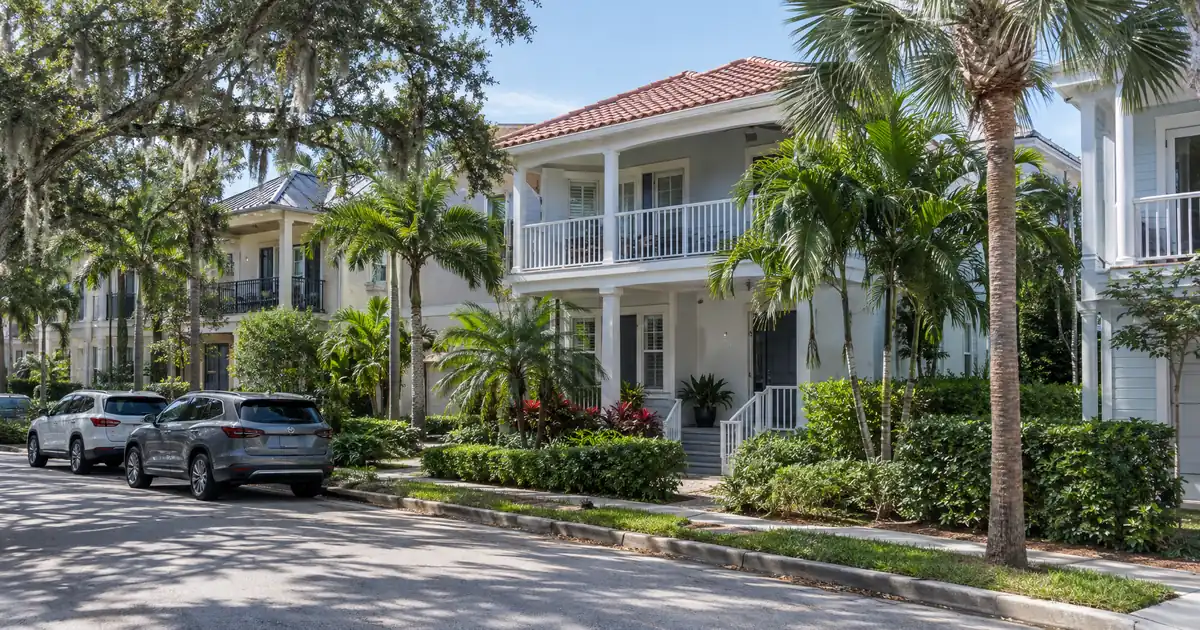
Zillow’s duplex and triplex search for Longboat Key returns one multi-family home on the entire island. That single data point explains most of what follows. A cash out refinance investment property strategy here can’t lean on door counts or stacked rents. It leans on equity already built in a single-family home or a condo, measured against one tenant’s rent.
DSCR Cash-Out Calculator
Run the cash-out numbers in Longboat Key, FL
Rate source: Freddie Mac 30-yr average via FRED® — Federal Reserve Bank of St. Louis · effective Sep 24, 2026
Prefilled with starting assumptions — enter your property’s value, balance, taxes, and insurance for a more accurate picture.
Program parameters update from Lendmire’s centralized guideline source. Taxes and insurance are editable estimates.
As of Sep 24, 2026 · General Freddie Mac market benchmark, not a Lendmire loan offer. Property value, balance, taxes, and insurance are editable estimates. Maximum loan-to-value varies by lender, program, property type, and seasoning. Not a Loan Estimate, approval, or commitment to lend. Program availability and eligibility are subject to lender guidelines, credit approval, property review, and underwriting.
The Short Version:
A DSCR cash-out refinance on a Longboat Key investment property is underwritten primarily on the property’s rental income measured against its full monthly obligation, with the lender sizing proceeds from appraised value, seasoning and reserves rather than the owner’s personal income documents.
- The Census Bureau counts about 7,539 residents. Long-term rent evidence is thin.
- The lender review runs on the appraiser’s rent schedule, not seasonal listing rates.
- Cash-out LTV tops out at 75 percent, with about 6 months of seasoning from title recording.
- Above $1,500,000, reserves typically step up to about 9 months of PITIA.
- Most files here will test coverage below 1.00, so equity and structure decide the outcome.
Lendmire (NMLS# 2371349) places DSCR investor financing for Longboat Key, Florida through non-QM wholesale channels that cover 41 markets, including Washington, D.C. Nothing below is a commitment to lend. Eligibility runs through lender guidelines, credit review, appraisal and title.
Longboat Key Market Snapshot
A quick read on the Longboat Key investor landscape — figures come from the cited sources below. Confirm current property-level numbers before underwriting.
| Metric | Detail |
|---|---|
| Home prices | Median list $999,000 (Longboat Lido Luxury Real) |
| Typical rents | Renter median income $102,500 (Point2Homes) |
| Population | Population baseline (~7,539) (U.S. Census Bureau QuickFacts) |
| Employment | 1.59K→1.76K employees (Data USA) |
What Pulling Equity Means on a Barrier Island
Equity extraction here is a valuation exercise first and a rent exercise second. The owner already holds the asset, so the file turns on whether the appraised value supports a 75 percent cash-out ceiling and whether the rent, as documented, clears the lender’s coverage test.
Prices sit at a level that makes rent an afterthought. The local listing site Longboat Lido reports a median list price of $999,000 across 217 active listings and a median sold price of $1,025,000. Redfin shows a lower figure at its last February reading: $866K, down 22.7 percent year over year. The two numbers reflect different methods and different windows. Use whichever your appraiser’s comps resemble. Don’t average them.
The direction of value is the thing to watch. A brokerage market report from LocalLifeHomes puts Zillow’s average value estimate at $961,644, down 12.0 percent year over year, with 81 average days on market and more than 11 months of supply. Broker commentary, not official statistics. Still, it describes a market absorbing inventory, not one bidding it up.
Owners who bought during the correction and negotiated hard may have room. The same market reports cite a sales-to-list ratio near 91 percent, so entry discounts create embedded equity. Whether that equity shows up on an appraisal is another matter.
One Island, Several Markets
“Longboat Key” is not one price tier. A brokerage post from Team Renick spreads the island from Seaplace at $529,000 to Country Club Shores at $3.5 million. Broker commentary, so treat the figures as directional. But the spread matches what any appraiser on the island will tell you: comps do not cross neighborhoods.
Bay Isles and Sleepy Lagoon. The same post lists Bay Isles near $2,247,000 at $654 per square foot and Sleepy Lagoon near $2,195,000 at $950 per square foot. These are appreciation holds. Rent will not carry a seven-figure balance at this price. Files here run into the higher reserve tier, since reserves typically step up to about 9 months of PITIA above $1,500,000. Reserves documentation is the first thing to line up.
Country Club Shores. LocalLifeHomes describes 369 single-family homes on 18 deep-water canals, a mix of older ranches and newer builds, popular for teardown and rebuild. Value here follows land and rebuild potential. An owner refinancing a canal-front property should expect the appraisal to be a land-value argument. The rent schedule is a formality. At the top of the price range the loan-size guide (up to $3,000,000 on standard programs) can bind before the 75 percent LTV does. That’s an unusual constraint for a DSCR file.
Longbeach Village and Seaplace. These are the low-entry pockets. Longbeach Village shows about $995,000 at $577 per square foot in the same post, and Seaplace anchors the bottom of the island’s range. Rent has the best chance of approaching workable coverage here, though “best chance” on this island still means thin.
Longboat Harbour. Redfin’s rental data shows a median rent of $5,000 for the neighborhood against an island-wide average asking rent of $4,386. It’s the exception, not the rule. Check it against current listing comps before building a file on it.
The Gulf of Mexico Drive condo corridor. Older vintage buildings can list well below $500,000. Those buildings also draw the closest condo review, which gets its own section below.
The Coverage Problem (and What a Sub-1.00 File Looks Like)
Most Longboat Key files will test below 1.00 on long-term rent alone. Coverage is monthly rent divided by the full monthly obligation: principal, interest, taxes, insurance and any HOA dues. Rent of $5,000 against a property valued in the high-$700K to low-$900K range, financed at the 75 percent ceiling, likely lands below 1.00 once taxes and insurance are included. Those are modeled assumptions, not a quoted deal. Move the price or the leverage and the ratio moves with it.
A sub-1.00 result is not the end of the file. Options a lender may review include:
- A lower LTV, which shrinks the obligation the rent has to cover.
- A sub-1.00 program, where offered, typically with compensating factors.
- An interest-only structure, which changes the coverage math.
- A different rent basis, if the property’s documented income supports one.
The standard programs are built around a 1.00 benchmark because rent covers the obligation at that level. Some lenders will look below it, but usually with lower leverage, different pricing or more cash in reserve. Eligibility depends on lender guidelines, credit (a 620 floor, with tiers at 660, 680 and 700), reserves and property review.
Here’s the catch on rent evidence. The research found no reliable published index for annual leases on the island. The dominant rental product is seasonal and monthly furnished. A peak-season listing is not a rent used for lender review. What supports the file is the appraiser’s rent schedule and, where it exists, a signed annual lease. An owner with only seasonal history should expect the lender to lean on the appraisal.
Consider an owner who holds a canal-front home refinanced for equity, not income. On paper the rent is a rounding error against the balance. The file passes or fails on value, reserves and whichever structure the lender accepts. That’s an equity file, and it should be built like one.
Seasoning, LTV and Reserves
Three numbers govern the extraction: 75 percent, about 6 months, and about 6 months of PITIA in reserves (about 9 above $1,500,000). All are typical guidelines, not promises.
The 75 percent cap is a hard ceiling on cash-out. Purchase money can go higher. Cash-out can’t. Proceeds depend on appraised value, rent used for lender review, PITIA and reserves, so the available cash is whatever is left after those tests. Not a fixed figure.
Seasoning is measured from title recording, and the settlement statement documents it. Files that assume seasoning away get kicked back. An owner who closed recently and expects a same-quarter refinance is planning around a requirement that isn’t optional. Read more about the equity recycle pathway and the broader set of refinancing options before setting a date.
Reserves matter more here than on inland files because balances are large. Six months of PITIA on a seven-figure loan is a big liquid number. Bank and brokerage statements need to show it, and retirement accounts are usually discounted. Line this up before the file goes in, not during review.
What the Appraisal Does to the Number
Appraisal risk is the main variable, and thin comps drive it. Eleven months of supply and a double-digit year-over-year value decline are the conditions under which a lender may apply a declining-market overlay, which can lower the allowable LTV on a given file. An appraiser working a slow-moving island will pull from a small pool of sales, and neighborhoods do not substitute for each other.
Broker commentary describes a rebound. Team Renick, citing Fishkind and Associates, credits the St. Regis development with $361M in added residential value on the island. That kind of anchor can lift nearby comps. It doesn’t guarantee that any one appraisal comes in at the broker’s number.
Stress-test the file both ways. Run a flat-to-down appraisal and see whether the cash-out still makes sense at 75 percent of a lower value. Then, if the value comes in light, use appraisal reconsideration: recent in-neighborhood sales, condition and view adjustments, canal or Gulf frontage differences, all documented. It’s a routine step here, not an emergency move.
Where These Files Snag
Documentation friction on Longboat Key is specific.
Condo files. Older vintage buildings on the Gulf of Mexico Drive corridor carry the most review. Expect the HOA questionnaire, condo certification and reserve-study documents to be scrutinized, and a non-warrantable determination can change the available programs. Questionnaire completeness matters more than most owners expect. A missing page holds a file for reasons that have nothing to do with the property.
Entity paperwork. Loans to LLC-titled borrowers are subject to lender program eligibility. Operating agreements, EIN letters and good-standing certificates should match the vesting on title exactly.
Title and county line. The island sits in two counties, Manatee to the north and Sarasota to the south. The county affects which records the title company pulls, so confirm which side of the line the parcel is on early.
DSCR vs. conventional financing
Two common ways to finance an investment property in Longboat Key, FL. They qualify you differently — here’s how investors weigh them.
Why investors choose it
- Qualifies on the property’s rental income — no personal tax returns, W-2s, or pay stubs needed to document income.
- No personal debt-to-income ceiling to clear, so existing mortgages and obligations don’t cap your borrowing the same way.
- Can be closed in an LLC, keeping the property inside a business entity.
- Built for scaling — not held to the limit on number of financed properties that conventional financing applies.
- Underwriting centers on the deal: generally qualifies when the rent covers the payment, a 1.00x coverage ratio being a common baseline (confirmed in underwriting).
- Designed specifically for investment property, including long-term and, where the program allows, short-term rentals.
Where it’s strong
- Often the lowest ongoing financing cost for a buyer who fully qualifies on personal income — a fit for a first property or a cost-first purchase.
Trade-offs for investors
- Requires full personal income documentation and must fit within a debt-to-income limit — salary, existing debts, and other mortgages all count.
- Typically held in your personal name rather than a business entity.
- Caps how many financed properties you can carry, which can become a ceiling as a portfolio grows.
- Evaluates you as a borrower as much as the property, which usually means more paperwork.
How investors usually choose: a first or single property often optimizes for the lowest financing cost; portfolio builders often optimize for leverage, vesting in an LLC, and scaling past conventional caps. The right answer depends on your goals, the property, and current guidelines — both paths run through select lenders in Lendmire’s wholesale network, with eligibility and terms confirmed in underwriting.
Lease evidence. A seasonal rental history doesn’t read like an annual lease. Have lease copies, payment history and the appraisal’s rent schedule ready.
The common friction point in markets like this one is a mismatch between what the owner assumes the property earns and what the file can document. The cleaner files from a documentation standpoint tend to arrive with reserves statements dated close to submission, a full condo package where relevant, and a realistic view of the rent evidence. Owners who treat the rent as the story usually find the appraisal is the story.
Where the Proceeds Go
Cash pulled off Longboat Key usually moves to markets with a better rent-to-price ratio. The research places the island’s demand on a resort-and-services base, not a large employer base. Employment grew 10.7 percent, from 1.59k to 1.76k employees, per Data USA, with professional and technical services (373 people), health care (207) and real estate and rental (191) leading. The nearest anchor is off-island: Sarasota Memorial Health Care System, with an 839-bed flagship center, sits across the bridge.
That’s the case for redeploying. Inland Sarasota and Manatee submarkets carry the duplex and small-multifamily product the island lacks, and coverage there is a different conversation. The stronger play might be to hold the island asset for appreciation and use the cash-out to buy where the ratio works. Owners who want income from the island itself could argue the reverse, but the price levels make that hard to defend. For the floor-level requirements, see the DSCR fundamentals, and for how this differs from a bank product, the guide “Where DSCR and Conventional Diverge”. Owners weighing other Florida markets can start from DSCR loans in Florida. Questions on a specific file can go to Lendmire at 828-256-2183.
Frequently Asked Questions
How do you qualify for a DSCR cash-out refinance on Longboat Key?
Qualification centers on the property, not the owner’s pay stubs. Lenders typically look for about 6 months of seasoning from title recording, credit scores in tiers from a 620 floor upward, reserves of about 6 months of PITIA (about 9 above $1,500,000), and coverage at or near the 1.00 benchmark. Cash-out LTV tops out at 75 percent. All of it is subject to lender guidelines, appraisal and property review.
What are the requirements for an investment property loan on Longboat Key, Florida?
Expect an appraisal with a rent schedule, entity documents if the property is LLC-titled, proof of reserves, and a condo package for condominium units. Standard programs typically run up to $3,000,000, and smaller balances route through select lenders in the network. Manufactured homes, log homes and barndominiums fall outside these programs. Exact eligibility depends on the lender and the file.
Can seasonal rent income qualify a Longboat Key property?
Seasonal listing rates are not a rent used for program review by themselves. The research found island rentals are mostly seasonal and monthly furnished, with no reliable published index for annual leases. The lender typically relies on the appraiser’s market rent schedule and, where one exists, a signed lease. Owners with only seasonal history should plan for the appraisal to set the number.
What can slow down a Longboat Key DSCR cash-out refinance?
Lendmire arranges DSCR investor loans and the common snags here are thin comps, condo questionnaire gaps and stale reserves statements. Programs in the network typically cap cash-out at 75 percent LTV, so a light appraisal changes the proceeds directly. Clean entity documents and dated bank statements remove most of the preventable delays.
Does a declining market affect the cash-out amount?
It can. The reported drop of 12.0 percent year over year and more than 11 months of supply are the conditions that can trigger a declining-market overlay, which may lower the allowable LTV. An appraisal that comes in light reduces proceeds at the same 75 percent ceiling. Stress-test the file against a flat-to-down value before committing to a purchase elsewhere.
The Blind Spot
The biggest risk for a DSCR-financed investor on Longboat Key is treating the broker recovery narrative as the appraisal. The rent will not carry the file, the comp set is thin, and a single light appraisal shrinks the cash-out at a fixed 75 percent ceiling. An owner who commits to the next purchase before the appraisal lands is taking that risk on with money that isn’t in hand yet.
For current guidelines and terms, see Lendmire’s DSCR loan programs page.
About Lendmire
Lendmire is a non-QM mortgage brokerage (NMLS# 2371349) that arranges DSCR investor loans in 41 markets, including Washington, D.C., through wholesale and investor-lending channels. The lender evaluates DSCR loans on rental income rather than personal income, subject to lender guidelines, which suits LLC-owned portfolios, self-employed investors and operators scaling past conventional loan caps. Lendmire is a 2026 Scotsman Guide Top Workplace and a top-ranked workplace in 2025.
Get Started
Ready to find the right loan for you?
In about 30 seconds you can review financing options available for your investment property. No commitment required.
Informational only. Not a Loan Estimate, approval, or commitment to lend. Program availability and eligibility are subject to lender guidelines, credit approval, property review, and underwriting.
References
1. Zillow: duplex and triplex homes, Longboat Key
2. U.S. Census Bureau QuickFacts: Longboat Key town
3. Longboat Lido Luxury Real Estate
4. Point2Homes
6. Redfin
8. Team Renick
10. Redfin: Longboat Key rental market
11. Team Renick
12. Sarasota Memorial Health Care System
13. a 2026 Scotsman Guide Top Workplace
14. Scotsman Guide — Top Workplaces 2025
This article is part of Lendmire’s investment property cash-out refinance program — full qualification details, guidelines, and scenarios live on the program page.
Related reading: DSCR Cash Out Refinance in Longboat Key, Florida: How Investors Tap Equity at 70% LTV · Cash Out Refinance Investment Property Bradenton Florida · Cash Out Refinance Investment Property Pinecrest Florida
Guides: Investment Property Cash-Out Refinance in Florida
Brandon Miller
Founder & CEO, Mortgage Loan Originator, Lendmire LLC
- Mortgage Loan Originator · NMLS# 1129696 · Verify on NMLS Consumer Access
- North Carolina Real Estate Broker · License# 343312 · Verify on NCREC
- North Carolina Insurance Producer · License# 19053198 · Property, Casualty, Life, Health · Verify on NAIC SBS
- Lendmire LLC · Firm NMLS# 2371349 · Verify firm licensure
Legal disclosures. Lendmire (NMLS# 2371349) is a state-licensed mortgage brokerage that arranges financing through wholesale lender relationships. Lendmire is not a direct lender, depository institution, or registered financial advisor. The discussion above is general informational content about real estate financing — it is not financial, legal, or tax advice, and readers should consult licensed professionals for guidance on their individual circumstances. Loan inquiries are subject to lender underwriting; this article does not represent a commitment to lend. Loan terms, rates, and qualification standards vary by borrower, property, and state, and are subject to change at any time. Equal Housing Opportunity. NMLS Consumer Access: nmlsconsumeraccess.org.