
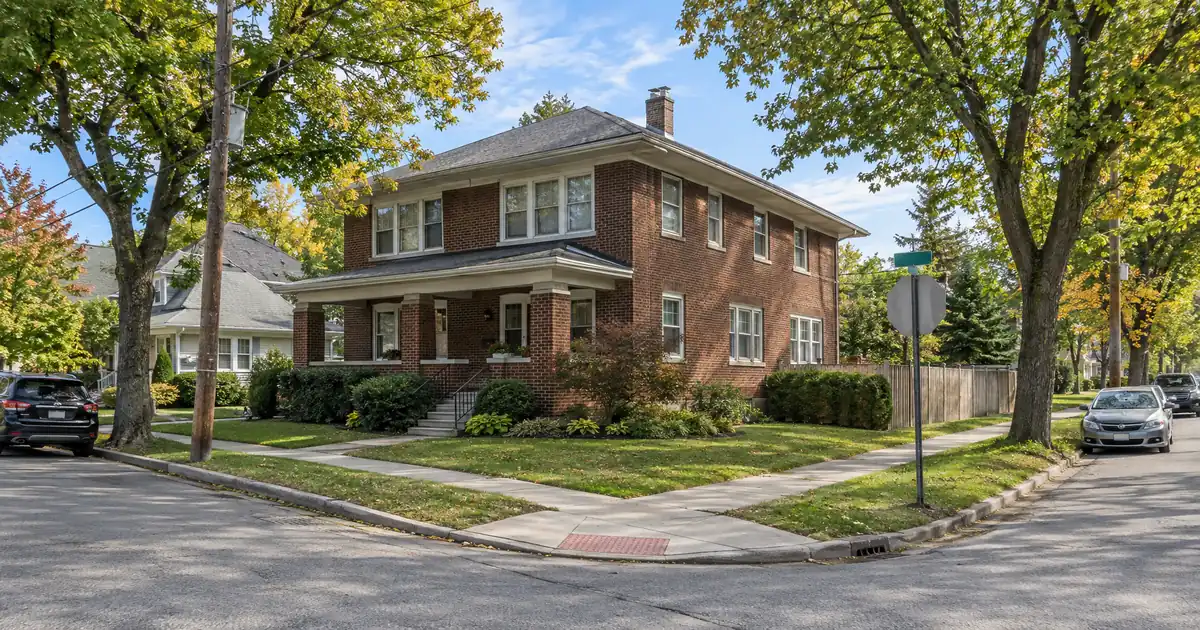
Along the Mentor Avenue corridor in ZIP 44060, the retail spine running parallel to I-90, homes are listed at a median of $286,250 per Redfin. A single-family house there rents for about $1,800 per Zumper. That’s a rent-to-value ratio near 0.62% a month (an approximate figure, calculated from those two sources). It is the central fact for any investor trying to pull equity out of a Mentor rental. The property is probably worth more than it was at purchase, but the rent doesn’t stretch as far against a full monthly obligation as it would in cheaper northeast Ohio markets. Mentor, Ohio investors can have DSCR scenarios reviewed through lender programs that Lendmire (NMLS# 2371349) helps place across 41 markets, including Washington, D.C. The hard part is structuring leverage so the file clears.
DSCR Cash-Out Calculator
Run the cash-out numbers in Mentor, OH
Rate source: Freddie Mac 30-yr average via FRED® — Federal Reserve Bank of St. Louis · effective Sep 24, 2026
Prefilled with starting assumptions — enter your property’s value, balance, taxes, and insurance for a more accurate picture.
Program parameters update from Lendmire’s centralized guideline source. Taxes and insurance are editable estimates.
As of Sep 24, 2026 · General Freddie Mac market benchmark, not a Lendmire loan offer. Property value, balance, taxes, and insurance are editable estimates. Maximum loan-to-value varies by lender, program, property type, and seasoning. Not a Loan Estimate, approval, or commitment to lend. Program availability and eligibility are subject to lender guidelines, credit approval, property review, and underwriting.
Key Takeaways:
A cash-out refinance on a Mentor, Ohio rental is underwritten primarily on the property’s rental income measured against its full monthly obligation, with taxes and insurance included, so the file works when rent used for lender review clears the 1.00x benchmark at a leverage level the lender’s guidelines allow after seasoning and reserves are satisfied.
- Mentor’s median sale price sits near $289,855, up only 1.0% year over year (Redfin).
- Cash-out leverage caps at 75% LTV, typically after about 6 months of ownership.
- Single-family at roughly $1,800 rent models just under 1.0x at the full 75% ceiling.
- Duplexes and lakeside small buildings lift coverage, but appraisal comps run thin.
- Only about 15% of Mentor housing is renter-occupied (RentCafe).
Mentor Market Snapshot
A quick read on the Mentor investor landscape — figures come from the cited sources below. Confirm current property-level numbers before underwriting.
| Metric | Detail |
|---|---|
| Home prices | $247,700 median value (DataUSA) |
| Recent appreciation | +7.6% (Redfin) |
| University enrollment | Nearly 8,000 credit students (Lakeland Community College) |
| Employment | Just under 1,000 employees (Mentor Public Schools) |
Why the Single-Family Math Runs Tight
Mentor single-family rentals generally model below the 1.00x coverage benchmark at the maximum cash-out leverage, and they clear it only when the investor leaves more equity in the property. The price level is the reason: this is one of the pricier suburbs in Northeast Ohio.
Start with the inputs. Redfin puts Mentor’s median sale price at $289,855, while Zillow shows the 44060 average home value at $281,641, up 3.7% over the past year. Rents are less settled. Zumper’s house figure is $1,800, and Zillow Rental Manager averages $1,722 across all bedroom counts and property types. RentCafe shows a lower $1,237 citywide average because its data leans toward apartments. These are different samples, so don’t blend them. Pick the one that matches your property type.
Run the numbers on a modeled house valued near $290,000 and renting at $1,800 (assumptions, not a cited deal). DSCR is monthly rent divided by the full monthly obligation: principal, interest, taxes, and insurance. Using Ohio-average tax and insurance loads and a 30-year amortization at a high-6s assumed rate, coverage lands around 0.95x at 75% LTV. Pulling leverage down to roughly 65% moves it to about 1.0x–1.05x, including taxes and insurance. That is a real tradeoff. Every point of LTV you leave in the property is cash you don’t extract, and the cleanest answer for a house in this price band is often a smaller cash-out than the 75% ceiling would allow. Review details remain subject to lender guidelines, credit review, and property review.
Can Appreciation Carry the Refinance?
Appreciation helps, but it has cooled, and a refinance should not be underwritten on the assumption it will return. Redfin showed Mentor prices up 7.6% over the three months ending in May, at a $280K median, with homes averaging 23 days on market versus 28 a year earlier. The later snapshot reads $289,855 and just +1.0% year over year. Both are Redfin figures, measured over different windows, and together they say the sharp move has flattened.
For equity extraction, this matters in two ways. The appraisal is what sets the 75% ceiling, so a flat value means no surprise headroom. And an owner who bought a few years ago, before the larger run-ups, likely carries meaningful equity on paper. The question is how much of it survives the lender’s calculation.
Think in percentages. Say an investor holds a Mentor house that appraises near the citywide median with an existing balance equal to 55% of value. That leaves about 20 points of LTV headroom under the 75% cap before reserves, closing costs, and the coverage test enter the picture. If the coverage number is below 1.00 at 75%, the investor may need to take less than the full 20 points. Alternatively, a lender may review a sub-1.00 program, an interest-only structure, or a lower-leverage option, each subject to its own guidelines and credit approval. Lendmire’s cash-out refinance details walk through how the seasoning clock and LTV cap interact.
Mentor-on-the-Lake: Where the Coverage Improves
The adjacent lakefront city of Mentor-on-the-Lake runs about 0.72% monthly rent-to-value, noticeably better than Mentor proper. Its median sale price is $239,856 per Redfin, up 10.0% year over year, and Homes.com shows a similar $240,000 median. Three-bedroom asking rents average $1,734 per ApartmentHomeLiving, though that is a small listing sample rather than a market survey.
Run it as a modeled case: a $240,000 three-bedroom at 75% LTV and $1,734 rent. Including taxes and insurance, coverage comes out around 1.1x. If the rent actually lands closer to $1,500, it slips just under 1.0x. RentCafe’s Mentor-on-the-Lake data shows a $1,145 average rent with 90% of rentals between $1,001 and $1,500. That narrow band suggests limited upside, so underwrite to the middle of it and don’t count on a rehab to push rents sharply higher. Terms vary by lender guidelines, property type, leverage, credit profile, and full file review.
The housing stock is the draw here. RentCafe reports 40% of housing is renter-occupied, with 81% of apartments in smaller complexes and 19% single-family rentals. That small-building mix suits duplex and small-multifamily owners. It is also the stronger place to hold a property you plan to refinance, because the rental comps actually exist.
The Duplex Route
Two units on one title raise gross rent in a way a single house can’t, and in Mentor that is the cleanest path to comfortable coverage. Rentometer shows listing rents of $1,282 for a two-bedroom, so a side-by-side 2BR/2BR grosses about $2,560 a month. Model that against a property valued near the $289,855 citywide median at 75% LTV, including taxes and insurance, and coverage lands near 1.3x. The price is an assumption, since no sourced Mentor duplex prices exist. Exact terms depend on the lender’s guidelines, property type, leverage, and a full review of the borrower’s file.
Rentometer’s $1,900 three-bedroom figure looks house-heavy and probably overstates a duplex unit. RentCafe’s $1,516 three-bedroom average is the safer input.
Here’s the catch. Supply is small. Zillow shows only 8 duplex and triplex listings in Mentor, and Redfin’s Lake County multifamily page lists a Mentor side-by-side duplex with 3-bedroom units but no sourced price or rent. An appraiser may have to reach into Willoughby, Painesville, or Mentor-on-the-Lake sales to support value. That affects how much equity a cash-out can reach, so expect appraisal conversations to matter more than on a house.
The stock is also old. RentCafe notes the average apartment building in Mentor is about 50 years old and none were built since 2000. Point2Homes reports roughly 32% of rentals date to the 1970s. Older buildings mean capital expenditure, and a lender’s property review may scrutinize condition.
Who Rents Here, and Why Demand Holds
Mentor’s rental demand rests on employers rather than a single campus, which tends to produce steady, long-lease tenants. STERIS was founded in Mentor in 1985 and is headquartered here. The company reports about 18,179 employees globally, per Wikipedia, which is a worldwide total, not a Mentor headcount. The Ohio Auditor’s school district audit names Lincoln Electric, Avery Dennison, Classic Automotive, and Component Repair Technologies among major employers, so the base spans medical products, polymers, and manufacturing.
Healthcare adds a second anchor. Cleveland Clinic Mentor Hospital opened recently with a full emergency department, inpatient, and outpatient care. The Mentor Medical Campus (University Hospitals Lake Health) sits in the city as well, with LakeWest in Willoughby and TriPoint in Concord. Lakeland Community College in nearby Kirtland adds nearly 8,000 credit students on a 400-acre campus.
Now the tension. Per DataUSA, homeownership is 84.7%. Mentor is owner-heavy, so renters are scarce. For a landlord, a thin renter pool can mean steady occupancy on well-kept two- and three-bedroom units. It also means fewer rental comps to support an appraisal. And the rent trend is mixed. Zillow’s Rental Manager calls Mentor’s market “COOL,” with average rent down $173 from a year earlier, while RentCafe’s Yardi-based data shows rents up 7.61%. Zillow’s drop may reflect a shift in listing mix rather than a true decline. Still, underwriting flat rents is the sensible baseline.
What the Lender Reviews on a Cash-Out File
Typical guidance for these programs: about 6 months of ownership measured from title recording, a 75% LTV ceiling on cash-out, a 1.00 minimum coverage benchmark, and reserves of about 6 months of the full monthly obligation (about 9 months above $1,500,000). Credit scores generally start at a 620 floor, with tiers at 660, 680, and 700. Standard programs run up to $3,000,000, and smaller balances route through select lenders in the network. Available equity depends on rent used for lender review, the monthly obligation, reserves, and the LTV cap. It is never a guaranteed cash figure, and everything remains subject to lender overlays.
In markets structured like this one, with high basis and modest rents, Lendmire’s deal desk tends to see the same friction point: the borrower’s expected rent and the appraiser’s rent schedule don’t match. The cleaner files usually arrive with a signed lease, a clear history of rent collection, and a realistic view of leverage before the appraisal is ordered. Investors who plan the LTV against the lower rent figure, not the higher one, tend to avoid re-trading the loan amount late in the process.
Entity ownership is another structural point. Loans to LLC-titled borrowers are generally available, depending on program guidelines, so holding a Mentor rental in an LLC does not by itself block a refinance. For general background, Lendmire’s primer on DSCR loans explains the coverage calculation, and a comparison of DSCR and conventional loans covers why many owner-heavy-market landlords prefer property-based underwriting. Investors can also run the numbers with Lendmire or reach the team at 828-256-2183.
Where the Equity Goes Next
Mentor equity usually recycles best into lower-basis neighbors. Redfin shows Painesville homes listed at a median of $219,900 and Willoughby at $314,700. Painesville is the lower-price, likely higher rent-to-value comparison, though no rent data was found, so test the math before assuming it. Willoughby, home to LakeWest Medical Center, prices closer to Mentor.
Condos are the lowest-basis entry. Redfin lists Independence Place at a $165,000 median and Meadowlawn at $149,900, both listing medians. Check HOA rules before counting on them as rentals. Lake County investors holding several properties can also look at refinancing options when structuring a portfolio. The broader context is the DSCR loan market in Ohio, where Ohio’s median sale price is $274,855 per Redfin, meaning Mentor sits above the statewide figure.
Honestly, the stronger play may be trading Mentor’s appreciation for Mentor-on-the-Lake’s coverage. A seasoned house in Mentor with real equity could fund a small building next door with better coverage. Someone who prizes stability over yield could argue for staying put and taking a smaller cash-out. It’s a genuine toss-up, and the answer depends on how much cushion the investor wants. Investors should verify current local rental rules, taxes, and insurance with qualified local professionals.
Frequently Asked Questions
Does a Mentor single-family rental clear the 1.00 benchmark on a cash-out?
Often not at the full 75% LTV. A modeled house near the citywide median with $1,800 rent lands around 0.95x including taxes and insurance, and approaches 1.0x–1.05x near 65% LTV. Lower leverage, stronger rent, or a second unit changes the answer. Lender guidelines govern the final review.
Is Mentor-on-the-Lake a better place to refinance than Mentor?
On rent-to-value, yes. It runs about 0.72% against Mentor’s roughly 0.62%, and 40% of its housing is renter-occupied versus about 15% in Mentor. Rents cluster tightly between $1,001 and $1,500, so there is less upside. It is a coverage play, not a growth story.
How many Mentor duplexes can support appraisal comps?
Not many. Zillow shows 8 duplex and triplex listings, so appraisers may borrow comps from nearby Willoughby, Painesville, or Mentor-on-the-Lake. Thin comps can limit how much value, and therefore equity, a cash-out recognizes.
DSCR vs. conventional financing
There are two common ways to finance an investment property in Mentor, OH, and they qualify you differently — here’s how investors weigh them.
Why investors choose it
- Qualifies on the property’s rental income — no personal tax returns, W-2s, or pay stubs needed to document income.
- No personal debt-to-income ceiling to clear, so existing mortgages and obligations don’t cap your borrowing the same way.
- Can be closed in an LLC, keeping the property inside a business entity.
- Built for scaling — not held to the limit on number of financed properties that conventional financing applies.
- Underwriting centers on the deal: generally qualifies when the rent covers the payment, a 1.00x coverage ratio being a common baseline (confirmed in underwriting).
- Designed specifically for investment property, including long-term and, where the program allows, short-term rentals.
Where it’s strong
- Often the lowest ongoing financing cost for a buyer who fully qualifies on personal income — a fit for a first property or a cost-first purchase.
Trade-offs for investors
- Requires full personal income documentation and must fit within a debt-to-income limit — salary, existing debts, and other mortgages all count.
- Typically held in your personal name rather than a business entity.
- Caps how many financed properties you can carry, which can become a ceiling as a portfolio grows.
- Evaluates you as a borrower as much as the property, which usually means more paperwork.
How investors usually choose: a first or single property often optimizes for the lowest financing cost; portfolio builders often optimize for leverage, vesting in an LLC, and scaling past conventional caps. The right answer depends on your goals, the property, and current guidelines — both paths run through select lenders in Lendmire’s wholesale network, with eligibility and terms confirmed in underwriting.
What does 6-month seasoning mean for a recent Mentor purchase?
Programs typically look for about 6 months of ownership measured from title recording before a cash-out. A buyer who just closed on a house near Mentor Avenue would wait out that period, then test coverage at the appraised value. Exact seasoning terms vary by lender.
Which rent figure should a Mentor investor underwrite?
Use the source that matches the property. Zumper’s $1,800 applies to houses, and Zillow’s $1,722 blends all property types. RentCafe’s $1,237 skews to apartments, and Rentometer’s 2BR is $1,282. A lease or comparable listings beat any aggregator.
For current guidelines and terms, see Lendmire’s DSCR loan programs page.
The Blind Spot Worth Naming
The biggest risk for a DSCR-financed Mentor investor is leaning on the most flattering rent in a market where the sources disagree by hundreds of dollars. With only about 15% of housing renter-occupied, an appraiser has few local rentals to confirm a high number, and Zillow already rates the rental market cool. A cash-out sized to $1,800 rent can shrink the moment the lender’s number comes back lower, so plan leverage against the conservative end of Mentor’s rent range.
For broader investor-financing rules and property-type coverage across the state, see Ohio DSCR loans.
About Lendmire
Lendmire is a non-QM mortgage brokerage (NMLS# 2371349) arranging DSCR investor loans in 41 markets, including Washington, D.C. DSCR eligibility is generally reviewed around a property’s rental income rather than personal income, subject to lender and program guidelines, which suits self-employed investors and LLC-owned portfolios. Lendmire was recognized as a 2025 Scotsman Guide Top Mortgage Workplace and a 2026 Scotsman Guide Top Workplace.
Get Started
Ready to find the right loan for you?
In about 30 seconds you can review financing options available for your investment property. No commitment required.
Informational only. Not a Loan Estimate, approval, or commitment to lend. Program availability and eligibility are subject to lender guidelines, credit approval, property review, and underwriting.
References
3. RentCafe
4. DataUSA
5. Redfin
8. Zillow
10. RentCafe
12. Homes.com
14. RentCafe — Average Rent Market Trends Mentor on the Lake
15. Rentometer
17. STERIS was founded in Mentor in 1985
18. Wikipedia
19. Ohio Auditor’s school district audit
20. Cleveland Clinic Mentor Hospital
21. Redfin
22. a 2025 Scotsman Guide Top Mortgage Workplace
23. a 2026 Scotsman Guide Top Workplace
This article is part of Lendmire’s investment property cash-out refinance program — full qualification details, guidelines, and scenarios live on the program page.
Related reading: Luxury Rental DSCR Loans In New Jersey · Jersey Shore Vacation Rental Loans: DSCR Financing In Ocean City, Cape May And Long Beach Island · DSCR Cash-out Refinance In New Jersey: Pulling Equity From A Rental
Guides: Investment Property Cash-Out Refinance in Ohio
Brandon Miller
Founder & CEO, Mortgage Loan Originator, Lendmire LLC
- Mortgage Loan Originator · NMLS# 1129696 · Verify on NMLS Consumer Access
- North Carolina Real Estate Broker · License# 343312 · Verify on NCREC
- North Carolina Insurance Producer · License# 19053198 · Property, Casualty, Life, Health · Verify on NAIC SBS
- Lendmire LLC · Firm NMLS# 2371349 · Verify firm licensure
Legal disclosures. Lendmire (NMLS# 2371349) is a state-licensed mortgage brokerage that arranges financing through wholesale lender relationships. Lendmire is not a direct lender, depository institution, or registered financial advisor. The discussion above is general informational content about real estate financing — it is not financial, legal, or tax advice, and readers should consult licensed professionals for guidance on their individual circumstances. Loan inquiries are subject to lender underwriting; this article does not represent a commitment to lend. Loan terms, rates, and qualification standards vary by borrower, property, and state, and are subject to change at any time. Equal Housing Opportunity. NMLS Consumer Access: nmlsconsumeraccess.org.