
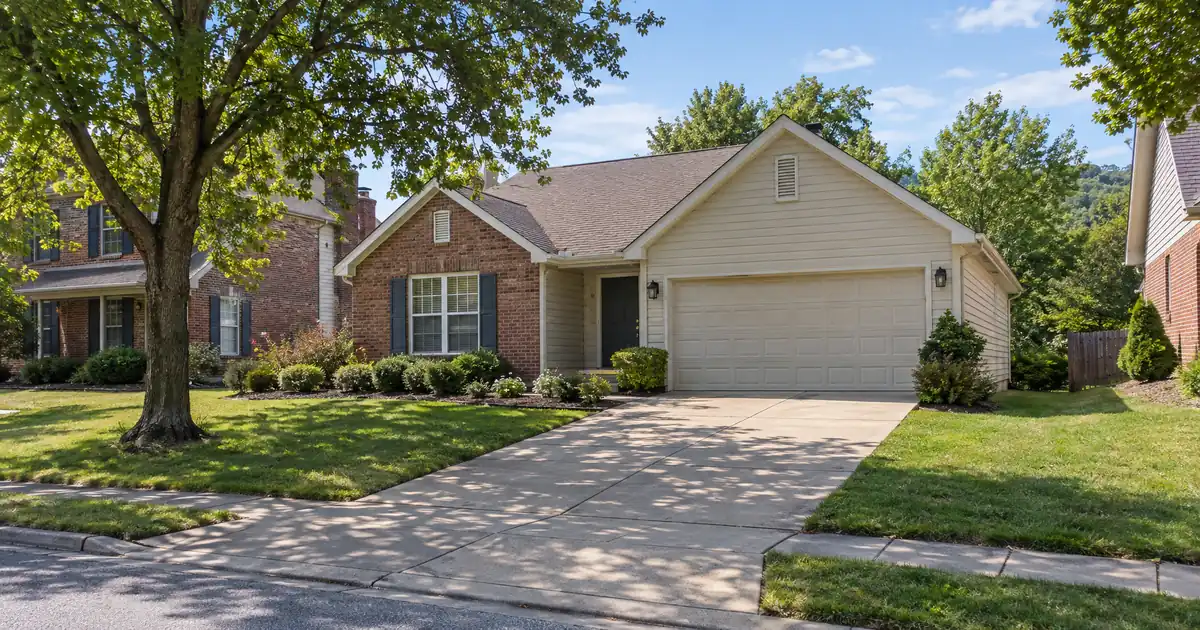
Overland West is the clearest test case for a cash out refinance investment property strategy in Overland, Missouri. NeighborhoodScout’s Overland West profile shows a median price of $125,113 against average rent of $1,433, with home and apartment vacancy at 6.7%. The housing is mostly small to mid-size single-family homes built between 1940 and 1969, plus a scattering of small apartment buildings. That rent figure is modeled, not leased, and that matters for anyone pulling equity. Lendmire (NMLS# 2371349) is a DSCR-focused mortgage broker, and its DSCR program footprint covers Overland, Missouri as part of a 41-market reach that includes Washington, D.C.
At a Glance: A cash-out refinance on an Overland rental is underwritten primarily on the property’s rental income measured against its full monthly obligation, with the lender ordering an appraisal and rent schedule, applying the program’s leverage cap, and sizing proceeds only after the existing payoff and reserves are accounted for.
DSCR Cash-Out Calculator
Run the cash-out numbers in Overland, MO
Rate source: Freddie Mac 30-yr average via FRED® — Federal Reserve Bank of St. Louis · effective Sep 24, 2026
Prefilled with starting assumptions — enter your property’s value, balance, taxes, and insurance for a more accurate picture.
Program parameters update from Lendmire’s centralized guideline source. Taxes and insurance are editable estimates.
As of Sep 24, 2026 · General Freddie Mac market benchmark, not a Lendmire loan offer. Property value, balance, taxes, and insurance are editable estimates. Maximum loan-to-value varies by lender, program, property type, and seasoning. Not a Loan Estimate, approval, or commitment to lend. Program availability and eligibility are subject to lender guidelines, credit approval, property review, and underwriting.
- Citywide median home cost is $150,186 per NeighborhoodScout; Overland West sits lower.
- Single-family detached homes are 87.32% of housing units, so workforce SFRs are the main product.
- Cash-out LTV tops out at 75%, with about 6 months of seasoning from title recording.
- Rent sources conflict widely; lease comps, not modeled averages, should drive the proceeds math.
Overland Market Snapshot
A quick read on the Overland investor landscape — figures come from the cited sources below. Confirm current property-level numbers before underwriting.
| Metric | Detail |
|---|---|
| Home prices | $150,186 median (NeighborhoodScout, Overland) |
| Typical rents | $1,433 avg (NeighborhoodScout, Overland West) |
| Employment | 500+ jobs (Missouri DED (Boeing)) |
| Vacancy | 7.9% rental (Wikipedia (2020 Census summary)) |
The Stock Is Single-Family, and the Basis Is Low
Overland is a dense, fully urban inner-ring suburb of roughly 4.4 square miles. Census Reporter’s ACS five-year profile puts the population at 15,695, or about 3,576 people per square mile. The last decennial census counted 15,955, per Wikipedia’s summary of the census. So the city is essentially flat. Nobody is buying here for a population boom.
What they’re buying is basis. NeighborhoodScout’s citywide median home cost is $150,186, and single-family detached homes make up 87.32% of units. Duplexes and small apartment buildings are 8.70%. Large complexes are 2.47%.
Lower-priced pockets like Overland West carry the best rent-to-value relationship on paper, about 1.15% of price in monthly rent by simple arithmetic on NeighborhoodScout’s two figures. The citywide pairing is thinner. Movoto shows a median list price near $159K, and Zumper reports median rent of $1,297, which is closer to 0.8%. Zumper warns its data is limited, and Movoto’s figure is list price, not sold price.
The takeaway for an equity pull: the investors with the most cushion are the ones who bought well below the median. An owner sitting on a 1950s three-bedroom bought at a discount has room. An owner who paid full retail for a renovated house may find the 75% ceiling leaves little to extract.
Appreciation Won’t Do the Work Here
Overland is a cash-flow market, and any cash-out plan that assumes a price run-up is working from the wrong chapter. NeighborhoodScout reports ten-year cumulative appreciation of 101.88%, about 7.28% a year, but the latest twelve-month figure is 3.26%. Movoto’s listing data points the other direction: list prices down about 5% year over year and price per square foot down about 10%, as of its latest update.
Those aren’t the same metric, so they don’t contradict each other outright. Sold-price indices lag, and list-price medians swing with the mix of homes on the market. But the direction of travel is unmistakable: soft values, rising asking rents. Zumper shows rents up 7% over the last year, again on limited data. RentCafe shows a 5.2% rise, from $864 to $909, though it covers only buildings of 50 or more units and 35% of households rent.
Here’s the catch. A cash-out loan is sized on appraised value, and the lender’s rent schedule sets the coverage ratio. If values flatten while your payoff stays fixed, the equity you can pull shrinks. Assume little appreciation. Size the pull on what the appraisal and rent comps will actually support.
Running the Numbers on a Seasoned Overland Rental
Start with the program mechanics. Standard DSCR cash-out refinances typically cap at 75% LTV, versus the higher ceiling available on purchases. Lenders generally want about 6 months of ownership measured from title recording, about 6 months of PITIA in reserves, and a 1.00 coverage benchmark, where the rent used for lender review equals the full monthly obligation of principal, interest, taxes, insurance and any HOA dues. A 620 credit score is the typical floor, with pricing and leverage improving at 660, 680 and 700. Every one of these is subject to lender guidelines, credit review and property review. Lendmire’s DSCR walkthrough covers the basics, and the cash-out refi mechanics page covers the proceeds side.
Now run the numbers on a modeled rental. Picture an investor who owns a three-bedroom near the St. Charles Rock Road corridor that appraises near the $150,186 citywide median. The refinance is at the 75% ceiling. All rents below are modeled assumptions, and coverage includes taxes and insurance.
- Rent of $1,250: coverage lands around 1.3x. The rent matches the 3-bedroom asking figure in current Zillow 63114 listings.
- Rent of $1,045: coverage drops to about 1.1x. That mirrors a sampled 2-bedroom house listing.
- Rent of $850: coverage falls into the low 0.9s. That’s the Redfin average.
Move the same $1,250 rent to a property valued nearer Overland West’s $125,113 median and coverage climbs to roughly 1.6x. Same rent, lower basis, much more cushion.
If the file lands below 1.00 on long-term rent, there are paths a lender may review: a sub-1.00 program with reduced leverage, an interest-only structure, or a lower LTV that raises coverage. None is a given, and each depends on credit, reserves, property review and lender guidelines. The better question is whether the owner should reach for those structures at all, or simply pull less.
Which Rent Number Does a Lender Believe?
None of the public rent figures will be the final word. They range from $850 to $1,433 depending on method and unit type. NeighborhoodScout’s $1,433 is modeled. Zumper’s $1,297 is a listing median with a limited-data flag. Redfin’s $850 looks like an outlier. RentCafe’s $909 covers large buildings only.
The appraisal’s rent schedule and the actual lease are what count. Live listings in the area show some useful quirks: a 3-bed, 960 sq ft house at $1,250, a 4-bed, 1,710 sq ft house at $1,350 and a 2-bed house at $1,045. A fourth bedroom added only about $100 in that sample. It’s a small, anecdotal set, but the implication holds: paying for extra square footage may not lift rental income much. Price per rentable dollar matters more than bedroom count.
This one’s a genuine toss-up for owners with a renovated 4-bedroom. Higher appraised value helps the LTV math, but barely higher rent keeps coverage flat. Test both before choosing the loan size.
The Duplex Question
Small multi-unit buildings are rare here, at 8.70% of housing units. That scarcity cuts two ways.
On the upside, an owner of one has something the market can’t easily replicate. Unit rents in the area sit at fairly modest levels by the available data, including 2-bedrooms at Shirley Gardens and a recent Apartments.com average for a 2-bedroom. Two units at those levels produce combined income that can beat a single-family rental on coverage, since a second rent stream is added to the same property.
On the downside, comps are thin. An appraiser working with few sales may land conservatively, which caps the equity available at 75%. So a duplex owner in Overland has better income but more valuation risk than a single-family owner. If the appraisal supports value, the duplex is the strongest DSCR candidate in town. If it doesn’t, the single-family house with clean lease comps is the easier file.
Airport and Aerospace Demand
Overland borders Lambert Airport, and the regional economy leans on aerospace and logistics. The St. Louis Regional Freightway says Lambert served just under 16 million passengers in a recent year and describes a facility built for the MQ-25 Stingray initially employing about 150 mechanics, engineers and support staff. Missouri Partnership says the region’s aerospace industry is anchored by Boeing Defense, Space & Security. A Missouri Department of Economic Development release cites a $1.8 billion Boeing expansion with more than 500 new jobs.
Not every one of those jobs lands in Overland, and no Overland-specific employer list exists in the research. But steady employment within a short commute supports long-term tenancy, and long leases help the rent schedule. The Lambert Terminal 2 MetroLink station on the Red Line adds transit access. The caveat: this is regional demand, not proof of local rent growth. Treat it as a stability argument, not a growth argument.
Overland shares roads and adjacent inner-ring communities with its neighbors, including Woodson Terrace, St. John and Breckenridge Hills, along corridors like St. Charles Rock Road, Page Avenue and Lackland Road. No reliable price or rent data exists for those neighbors, so investors should treat them as one broader mid-county market and compare lease evidence directly.
Where the Proceeds Go
The cash-out thesis depends on what happens next. Pulling equity to buy another low-basis rental in Overland West, where coverage still clears 1.0x on modeled rent, is a straightforward reinvestment. Pulling equity to fund deals in markets where the math doesn’t pencil is a different decision, and one worth stress-testing before signing.
For the owner with one or two rentals and strong traditional employment income, conventional financing may carry lower cost and avoid non-QM friction, though it gets harder as the financed-property count climbs. DSCR typically becomes more practical for entity-owned portfolios, self-employed investors, or anyone with four or more financed properties, subject to program terms for LLC-titled borrowers. The side-by-side comparison lays out the tradeoffs.
The balances here are small. Overland loans sit far below the $3,000,000 standard-program guide, so smaller balances route through select lenders in the network. Fixed lender costs weigh more on a small loan than a large one. Run the net proceeds after costs before committing.
One pattern shows up often on files from small, low-basis inner-ring markets like this one. Lendmire’s deal desk tends to see the cleanest files when the borrower brings a signed lease at or near the appraiser’s rent estimate, a documented six-month seasoning date and reserves already sitting in an account. The common friction point is a modeled rent that looks good in a spreadsheet but doesn’t match the lease, which forces the loan size down late in the process. Reconciling those numbers before ordering the appraisal saves the most rework.
DSCR vs. conventional financing
Two common ways to finance an investment property in Overland, MO. They qualify you differently — here’s how investors weigh them.
Why investors choose it
- Qualifies on the property’s rental income — no personal tax returns, W-2s, or pay stubs needed to document income.
- No personal debt-to-income ceiling to clear, so existing mortgages and obligations don’t cap your borrowing the same way.
- Can be closed in an LLC, keeping the property inside a business entity.
- Built for scaling — not held to the limit on number of financed properties that conventional financing applies.
- Underwriting centers on the deal: generally qualifies when the rent covers the payment, a 1.00x coverage ratio being a common baseline (confirmed in underwriting).
- Designed specifically for investment property, including long-term and, where the program allows, short-term rentals.
Where it’s strong
- Often the lowest ongoing financing cost for a buyer who fully qualifies on personal income — a fit for a first property or a cost-first purchase.
Trade-offs for investors
- Requires full personal income documentation and must fit within a debt-to-income limit — salary, existing debts, and other mortgages all count.
- Typically held in your personal name rather than a business entity.
- Caps how many financed properties you can carry, which can become a ceiling as a portfolio grows.
- Evaluates you as a borrower as much as the property, which usually means more paperwork.
How investors usually choose: a first or single property often optimizes for the lowest financing cost; portfolio builders often optimize for leverage, vesting in an LLC, and scaling past conventional caps. The right answer depends on your goals, the property, and current guidelines — both paths run through select lenders in Lendmire’s wholesale network, with eligibility and terms confirmed in underwriting.
Investors who want to see their own numbers can see how the math pencils or call 828-256-2183. The refinance details page covers the broader refinance options, and the Missouri DSCR financing hub covers the state. Verify current local rental rules, taxes and insurance with qualified local professionals before finalizing any plan.
Frequently Asked Questions
How long must an Overland owner hold a rental before a DSCR cash-out refinance?
Expect about 6 months of ownership, measured from title recording. Lenders may apply different seasoning rules for properties bought with cash or renovated heavily, so confirm the specific program before planning the timeline.
Does Overland’s softening list price hurt cash-out proceeds?
Yes, it can. Proceeds depend on appraised value at the 75% LTV ceiling, and Movoto shows list prices and price per square foot down year over year. A lower appraisal shrinks the amount available after payoff. Owners who bought below median have the most cushion. Terms vary by lender guidelines, property type, leverage, credit profile, and full file review.
Which rent figure should I use to estimate coverage on an Overland rental?
Use an actual lease or lease-comp evidence, not a public average. Published figures run from $850 to $1,433 depending on source and method. The appraisal’s rent schedule is what a lender reviews, so the documented lease matters most.
Is a duplex in Overland a better cash-out candidate than a single-family house?
Possibly, on income, since two units at roughly $850 to $1,000 each can out-cover a single house. But duplexes are only 8.70% of housing units, so appraisal comps are thin. Check comparable sales before assuming the appraisal will support the value.
Can an Overland rental below 1.00 coverage still be refinanced?
Some sub-1.00 programs exist through select lenders, typically with lower leverage, stronger credit and more reserves. Others may review interest-only structures. Eligibility depends on lender guidelines, credit approval and property review. If the number falls below 1.00, pulling less equity is often the simpler fix.
For current guidelines and terms, see Lendmire’s DSCR loan programs page.
About Lendmire
Lendmire (NMLS# 2371349) is a mortgage brokerage focused on DSCR investor financing, helping arrange programs through wholesale and investor-lending channels in 41 markets, including Washington, D.C. DSCR loans are evaluated by the lender on property cash flow rather than personal income, subject to lender guidelines, supporting LLC closings and accommodating investors with four or more financed properties. Lendmire was named a Scotsman Guide Top Mortgage Workplace in both 2025 and 2026.
Get Started
Ready to find the right loan for you?
In about 30 seconds you can review financing options available for your investment property. No commitment required.
Informational only. Not a Loan Estimate, approval, or commitment to lend. Program availability and eligibility are subject to lender guidelines, credit approval, property review, and underwriting.
References
1. NeighborhoodScout, Overland West
2. NeighborhoodScout, Overland real estate
3. Missouri Department of Economic Development release
4. Wikipedia (2020 Census summary)
5. Wikipedia’s summary of the census
7. Zumper, Overland rent research
8. RentCafe, Overland rent trends
10. Redfin
11. Apartments.com
12. St. Louis Regional Freightway
13. Missouri Partnership, St. Louis Region
14. 2025
15. 2026
This article is part of Lendmire’s investment property cash-out refinance program — full qualification details, guidelines, and scenarios live on the program page.
Related reading: Luxury Rental DSCR Loans In New Jersey · Jersey Shore Vacation Rental Loans: DSCR Financing In Ocean City, Cape May And Long Beach Island · DSCR Cash-out Refinance In New Jersey: Pulling Equity From A Rental
Guides: Investment Property Cash-Out Refinance in Missouri
Brandon Miller
Founder & CEO, Mortgage Loan Originator, Lendmire LLC
- Mortgage Loan Originator · NMLS# 1129696 · Verify on NMLS Consumer Access
- North Carolina Real Estate Broker · License# 343312 · Verify on NCREC
- North Carolina Insurance Producer · License# 19053198 · Property, Casualty, Life, Health · Verify on NAIC SBS
- Lendmire LLC · Firm NMLS# 2371349 · Verify firm licensure
Important disclosures. Lendmire (NMLS# 2371349) is a licensed mortgage brokerage. Lendmire is not a direct lender, depository institution, or financial advisor. All loan inquiries are subject to lender underwriting; this article does not constitute a commitment to lend. Rates, terms, and program guidelines are subject to change without notice and vary by borrower profile, property type, and state. Information in this article is general in nature and is not financial, legal, or tax advice. Equal Housing Opportunity. NMLS Consumer Access: nmlsconsumeraccess.org.