
Introduction
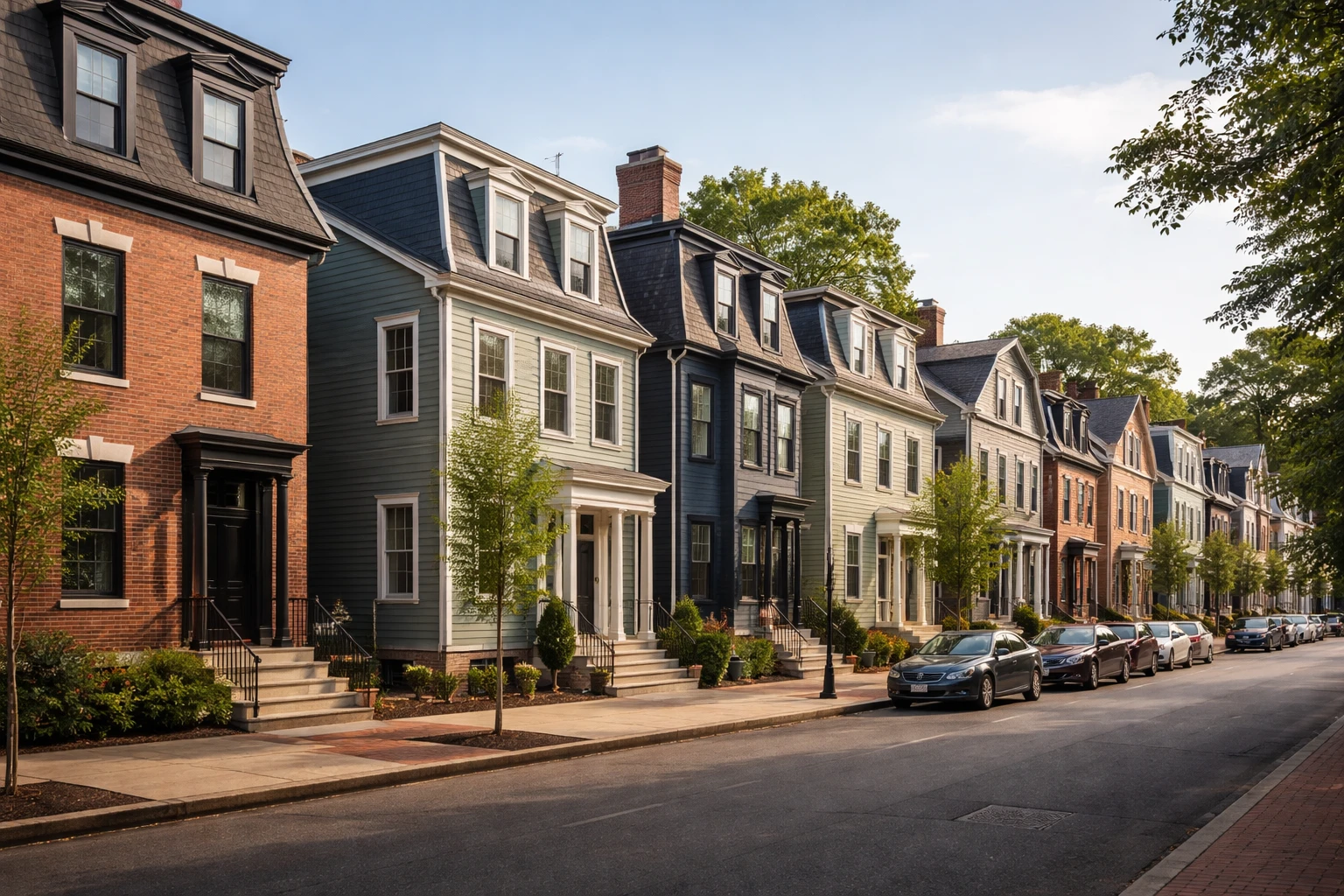
Salem, Massachusetts is one of the most historically rich and investor-active cities in the entire Commonwealth. Known worldwide for its colonial history and thriving tourism economy, Salem has evolved into a genuine year-round rental market with strong tenant demand across multiple neighborhoods. For real estate investors who already own property in Salem, the question isn’t whether the equity is there — it’s how to put it to work. A cash-out refinance on a Salem investment property can unlock thousands of dollars in trapped equity and redirect those funds toward your next acquisition, renovation project, or portfolio expansion.
What makes cash-out refinancing particularly powerful for Salem investors is that the qualification process doesn’t have to involve W-2s or personal income documentation. Through Lendmire’s DSCR investor loan programs, investors qualify based on the income the property generates — not what shows up on a tax return. For investors who are self-employed, use pass-through income, or simply have complex financial profiles, this is a game-changer. Lendmire is a mortgage broker working with investors across 41 markets, and Salem’s rental market is an ideal candidate for this type of strategic refinance.
DSCR Cash-Out Calculator
Run the cash-out numbers in Massachusetts
Rate source: Freddie Mac 30-yr average via FRED® — Federal Reserve Bank of St. Louis · effective Jul 30, 2026
Prefilled with starting assumptions — enter your property’s value, balance, taxes, and insurance for a more accurate picture.
Program parameters update from Lendmire’s centralized guideline source. Taxes and insurance are editable estimates.
As of Jul 30, 2026 · General Freddie Mac market benchmark, not a Lendmire loan offer. Property value, balance, taxes, and insurance are editable estimates. Maximum loan-to-value varies by lender, program, property type, and seasoning. Not a Loan Estimate, approval, or commitment to lend. Program availability and eligibility are subject to lender guidelines, credit approval, property review, and underwriting.
This guide covers everything Salem investors need to know about cash-out refinancing using DSCR loan programs — from the basic mechanics to specific submarkets, qualification requirements, and how to use pulled equity to grow a real estate portfolio in one of Massachusetts’ most compelling investment markets.
What Is a DSCR Loan?
A DSCR loan — Debt Service Coverage Ratio loan — qualifies an investment property based on its ability to cover its own monthly expenses. Learn more about what is a DSCR loan and how it applies to cash-out refinancing.
The formula is straightforward: Monthly Gross Rent divided by PITIA (principal, interest, taxes, insurance, and association dues if applicable). A DSCR of 1.0 means the property breaks exactly even — rent covers the full payment. A ratio above 1.0 signals positive cash flow, which most lenders prefer. Some programs allow sub-1.0 DSCR with adjusted credit and LTV requirements.
DSCR Formula: Monthly Gross Rent ÷ PITIA = DSCR Ratio Example: $2,200 rent ÷ $1,700 PITIA = 1.29 DSCR — strong cash flow coverage
For Salem investors doing a cash-out refinance, the DSCR calculation uses the post-refinance PITIA — meaning your new, higher payment must still be covered by the property’s rental income. Properties in Salem’s robust rental market frequently clear this threshold with room to spare.
Why Salem, Massachusetts Matters for Investors
Salem’s investment appeal goes far beyond its Halloween tourism season. The city sits within the Greater Boston metro area on the North Shore — putting it within commuting distance of Boston, Cambridge, and the Route 128 tech corridor. That geographic positioning alone drives steady tenant demand from young professionals, healthcare workers, and university students who want urban amenities without Boston-level rents.
The North Shore Commuter Rail connects Salem directly to North Station in Boston, making the city a legitimate commuter destination. This rail access has been a catalyst for residential investment, particularly in neighborhoods near Salem’s downtown and Derby Street corridor. Median home prices have risen consistently over the past decade, driven by constrained inventory and growing demand from both renters and owner-occupants migrating from more expensive Boston neighborhoods.
Salem is also home to Salem State University, which generates consistent demand for student and young-professional housing in the surrounding neighborhoods. The healthcare sector adds another dimension, with North Shore Medical Center and affiliated facilities employing thousands of residents who rent locally. Tourism from Witch Museum visitors, Haunted Happenings in October, and year-round cultural attractions supports a thriving short-term and mid-term rental segment as well.
For investors who purchased Salem properties in prior years, equity appreciation has been substantial. A cash-out refinance on a well-positioned Salem rental can free up meaningful capital that would otherwise sit locked in the property — capital that can be redeployed into additional acquisitions across Salem or neighboring North Shore cities.
Key Benefits of a DSCR Cash-Out Refinance in Salem
- No income verification: Qualify based on Salem rental income — W-2s, tax returns, and personal income docs are not required
- LLC-friendly closing: Hold Salem investment properties in an LLC or entity structure — subject to lender program eligibility
- Equity recycling: Pull equity from a Salem property to fund the down payment on your next acquisition without liquidating existing holdings
- STR compatibility: Salem’s tourism-driven STR market qualifies under DSCR programs — note that short-term rental income is reduced by 20% before the DSCR calculation
- Portfolio scalability: DSCR programs have no hard cap on the number of financed properties, unlike conventional loans
- Flexible loan terms: Choose from 30-year fixed, 40-year fixed, ARM options, or interest-only structures to optimize your Salem cash flow
- Shorter seasoning period: DSCR cash-out refinance requires only 6 months of ownership — half of the conventional 12-month requirement
Thinking about a rental property in Salem? Lendmire’s specialists work with investors in 41 markets — no W-2s, no tax returns, just the property’s numbers. Call us at 828-256-2183 or apply online to see what you qualify for.
DSCR Loan Requirements
Here are the verified program parameters for a DSCR cash-out refinance on a Salem investment property:
Credit Score Thresholds
- 620 FICO minimum — DSCR ≥ 1.00, loans up to $3,000,000 (reduced leverage below 660)
- 660 FICO minimum — most refinance and cash-out transactions
- 700 FICO minimum — first-time investors
- 680 FICO minimum — interest-only loans on 1–4 unit properties
- Sub-1.00 DSCR: 640 FICO minimum; options narrow significantly below 680
LTV and Down Payment
- DSCR ≥ 1.00: up to 80% LTV on purchases (620+ FICO, loans up to $3,000,000)
- Cash-out refinance: up to 75% LTV (620+ FICO, DSCR ≥ 1.00, loans up to $3,000,000)
- 2–4 unit and condos: max 75% LTV purchase / 70% LTV refinance
- Massachusetts does not carry a declining market overlay — standard program LTV limits apply
DSCR Ratio Requirements
- Standard minimum: DSCR ≥ 1.00
- Sub-1.00 DSCR available with restrictions (640+ FICO, reduced LTV)
- Short-term rental income reduced 20% before DSCR calculation
Loan Amounts and Property Types
- 1–4 unit: $100,000 minimum / $3,000,000 maximum
- 2–4 unit mixed-use: $400,000 minimum / $2,000,000 maximum
- Eligible: SFR, 2–4 unit residential, condos (warrantable and non-warrantable), PUDs, condotels, modular/pre-fab
Loan Terms
- 30-year fixed, 40-year fixed
- 5/6 ARM, 7/6 ARM, 10/6 ARM (30-day SOFR index)
- Interest-only available — 10-year I/O period; 680 FICO minimum
Reserve Requirements
- At or below $1,500,000: none at 70% LTV or less, 6 months PITIA above 70% LTV
- Loans above $1,500,000: 9 months PITIA
- Cash-out proceeds may satisfy reserve requirements on 1–4 unit properties
DSCR vs. Conventional Investment Loans
Understanding the differences between DSCR and conventional financing helps Salem investors choose the right structure. Here’s how they compare across the points that matter most. For a deeper analysis, see DSCR vs conventional investment loans.
- Income documentation: Conventional requires full income docs — W-2s, tax returns, Schedule E, and DTI qualification (approximately 45% max). DSCR does not require income documentation; qualification is based entirely on the property’s rental income
- LLC ownership: Conventional loans do NOT permit LLC or entity ownership — the borrower must be an individual. DSCR fully supports LLC closing, subject to lender program eligibility
- Seasoning: Conventional requires the existing first mortgage to be at least 12 months old (note date to note date). DSCR requires only 6 months of ownership before a cash-out refinance is permitted
- Financed property cap: Conventional caps borrowers at 10 financed properties (6+ require 720 FICO). DSCR has no hard cap on the number of financed properties, which is critical for active portfolio builders
- Cash-out LTV (1-unit): Both conventional and DSCR cap at 75% LTV for 1-unit cash-out — this point is equal between the two programs
- Reserve requirements: Conventional requires 6 months PITIA on ALL financed properties. DSCR reserves follow leverage and loan size (none at or below $1,500,000 and 70% LTV; 6 months above 70% LTV; 9 months above $1,500,000) — a dramatic difference for investors with multiple holdings
Salem Investment Market Deep Dive
Downtown Salem and the Derby Street Corridor
Downtown Salem is the city’s commercial and cultural core, anchored by the Peabody Essex Museum, the Salem Witch Museum, and a dense grid of historic homes and mixed-use buildings. Rental demand in this submarket is year-round — tourism generates short-term rental interest throughout every season, while proximity to the commuter rail station drives steady long-term tenant demand from Boston commuters and Salem State employees. Properties in the Derby Street corridor, near Derby Wharf and Pickering Wharf, are among the most sought-after in the city.
Investors who own properties in this downtown zone have seen equity accumulation accelerate as Salem’s profile has grown nationally. A DSCR cash-out refinance on a well-positioned downtown property can generate significant capital to fund acquisitions in the surrounding neighborhood or in adjacent North Shore markets like Beverly or Marblehead. Rental rates in this submarket are among the strongest in the city, supporting healthy DSCR ratios even after the post-refinance payment adjusts upward.
Salem Willows and Winter Island
The Salem Willows neighborhood sits along the water on the northeastern edge of the city, offering waterfront views, seasonal tourism activity, and a tight residential community. Properties near the Salem Willows Park draw seasonal short-term rental interest, while the broader neighborhood supports long-term tenants who value the combination of proximity to downtown and waterfront accessibility. This submarket tends to feature older multi-family housing stock — two- and three-family homes that generate strong cash flow when properly maintained.
Investors holding two-family or three-family properties in Salem Willows have a compelling DSCR refinance story. Multi-unit rents are robust, and the cap on LTV for 2–4 unit cash-out is 70% LTV — still providing meaningful equity access on properties that have appreciated substantially. Using pulled equity to fund a second acquisition in the neighborhood or elsewhere on the North Shore is a common portfolio growth strategy for Salem investors.
Point Neighborhood and Broad Street
The Point neighborhood, located south of downtown near the Salem-Lynn border, has been an active area for investor activity due to its relatively accessible entry price points compared to downtown and its dense stock of multi-family housing. Broad Street and its surrounding blocks feature triple-decker homes and converted multifamily buildings that serve a working-class and young-professional tenant base. The Salem-Lynn commuter rail stations make this area accessible for tenants commuting to Boston or working locally in healthcare and service industries.
Cash-out refinancing in the Point neighborhood can be particularly effective for investors who purchased properties several years ago when prices were lower. Even with conservative LTV ceilings, the equity accumulated on a well-maintained triple-decker in this area can be substantial. DSCR programs that support LLC ownership give investors the added benefit of maintaining clean entity-level bookkeeping while pulling equity for their next deal — subject to lender program eligibility.
Salem State University Area and Highland Avenue
Properties near Salem State University on Highland Avenue benefit from a consistent student and young-professional rental base. The university enrolls thousands of students each year, many of whom prefer off-campus housing within walking or biking distance of campus. This demand creates relatively low vacancy rates in the Highland Avenue corridor and in neighboring streets like Bridge Street and Loring Avenue. Properties with multiple bedrooms — including smaller multi-family homes — are particularly well-suited to this tenant base.
DSCR loans work especially well in the student-adjacent rental market because gross rents per unit tend to be strong relative to property values, yielding favorable DSCR ratios. An investor with a four-bedroom single-family rental near Salem State, or a two-family with full occupancy at both units, is positioned to qualify for a cash-out refinance and redeploy that equity into another acquisition — continuing the BRRRR-style portfolio growth cycle.
North Salem and Forest River
The North Salem and Forest River areas feature more spacious single-family homes on larger lots, appealing to long-term tenants who prioritize neighborhood stability, school access, and proximity to Forest River Park. This submarket attracts families and working professionals who want Salem’s accessibility without the density of the downtown core. Investors in North Salem with properties that have appreciated over the past five to ten years are sitting on meaningful equity. A DSCR cash-out refinance in this submarket can access that equity without disrupting stable, long-term tenancies. The refinanced capital can then fund a down payment on a property in a higher-yield submarket within Salem or across the wider North Shore region — a strategy that allows investors to scale without selling their most stable assets.
Bridge Street Neck and McIntire District
The McIntire District is one of Salem’s most architecturally significant neighborhoods, featuring Federal-style homes from the late 18th and early 19th centuries. This area is a designated historic district, and properties here tend to command premium rents from tenants who value the unique character and walkability. Bridge Street Neck, running along the South River, connects this historic corridor to neighboring neighborhoods and offers a mix of attached and detached housing at varying price points.
Investors in the McIntire District and Bridge Street Neck corridor often find that rental income is strong enough to support DSCR qualification even after a cash-out refinance increases the PITIA. The key is verifying that the post-refinance monthly payment aligns with realistic rent levels — a calculation Lendmire’s team performs as part of the initial qualification review. For historic properties with documented rental income, the DSCR story is frequently compelling.
Short-Term Rental and Airbnb Applications in Salem
Salem’s tourism economy makes it one of the more viable markets for short-term rentals on the North Shore. October brings tens of thousands of visitors for Haunted Happenings, but the Peabody Essex Museum, Salem’s culinary scene, and waterfront attractions generate year-round STR demand. For investors with STR-eligible properties, DSCR loans for Airbnb and short-term rentals provide a qualification pathway that accounts for this income stream.
- STR income calculation: Gross short-term rental income is reduced by 20% before the DSCR calculation — investors should ensure post-reduction income still covers the PITIA
- Annual income averaging: STR properties with documented seasonal spikes — like Salem’s October tourism — may use market rent surveys or historical booking data to establish gross rent figures for DSCR qualification
- LLC and entity flexibility: Many Salem STR operators hold properties in LLCs for liability protection — DSCR programs accommodate entity ownership, subject to lender program eligibility
- Cash-out for STR upgrades: Pulled equity from a DSCR refinance can be reinvested into furnishings, upgrades, or marketing for existing STR properties — or used as a down payment on an additional Salem STR
Example DSCR Scenario: Salem Two-Family
Here is a sample DSCR cash-out refinance scenario based on Salem’s current market:
- Property type: Two-family residential in the Point neighborhood, Salem, MA
- Current appraised value: $620,000
- Maximum cash-out LTV (2–4 unit): 70% = $434,000 maximum loan amount
- Existing loan balance: $310,000
- Estimated cash-out proceeds: $434,000 – $310,000 = $124,000 net equity pulled
- Monthly gross rent (both units): $3,400 combined
- Estimated PITIA (post-refinance): $2,900
- DSCR calculation: $3,400 / $2,900 = 1.17 DSCR ✓
The math: $3,400 monthly rent ÷ $2,900 PITIA = 1.17 DSCR — above the standard 1.00 minimum, confirming qualification under DSCR program guidelines. No income docs required. LLC ownership is welcome, subject to lender program eligibility.
This is exactly how many investors scale using DSCR loans in Salem.
Ready to run the numbers on your next Salem property? Lendmire closes DSCR loans on a timeline that varies by lender and file — no income docs, no W-2s, and LLC ownership is welcome (subject to lender program eligibility). Reach out today at 828-256-2183 and let’s get started.
DSCR Refinance Options for Salem Investors
Salem investors have two primary refinance strategies available: rate-and-term refinancing (adjusting loan terms without pulling additional cash) and cash-out refinancing (accessing equity above the existing loan balance). For investors focused on portfolio growth, the cash-out refinance options for investment properties are typically the more strategic choice — equity is a deployable asset, and Salem’s appreciation trajectory has made that equity substantial.
The DSCR seasoning requirement is one of the most investor-friendly aspects of this program: you only need to have owned the Salem property for a minimum of 6 months before a cash-out refinance becomes available. Compare that to conventional loans, which require 12 months of seasoning (note date to note date) — meaning DSCR investors can recycle their equity twice as fast in a rising market.
One underutilized option is the delayed financing exception. If you purchased a Salem property with all-cash funds, you may be eligible to immediately refinance and pull cash out — without waiting 6 months. This strategy is favored by investors who buy properties at auction or in situations where financing wasn’t an option at purchase.
For a full overview of strategies, explore investment property refinance options available through DSCR programs. Refinancing a Salem property — and directing those proceeds toward a second property in Beverly, Peabody, or Lynn — is a common portfolio scaling approach for North Shore investors who want to grow without selling their existing holdings.
Important note on cash-out proceeds: program guidelines restrict the use of pulled equity for personal debt payoff — no personal credit cards, personal tax liens, or personal collections. Proceeds should be directed to investment-related purposes: down payments, renovation costs on other rental properties, or payoff of hard money or private lending on investment properties.
Why Investors Choose Lendmire
Lendmire is a mortgage broker specializing in DSCR and non-QM investment property financing. Lendmire works with investors across 41 markets, with deep experience in the Massachusetts market and the North Shore investment corridor. The team understands Salem’s unique combination of historic housing stock, year-round rental demand, and short-term rental opportunity — and structures loan programs to match those realities.
- Speed: Lendmire closes DSCR loans on a timeline that varies by lender and file — fast enough to compete in Salem’s active investment market
- No income documentation: DSCR qualification is based on property income only — W-2s and tax returns are not required
- LLC and entity ownership: Supported across DSCR programs, subject to lender program eligibility
- Flexible loan structures: 30- and 40-year fixed, ARM options, and interest-only terms available to optimize Salem cash flow
Lendmire is a great option for DSCR loans, offering flexible solutions for real estate investors in 41 markets.
Frequently Asked Questions
What is the minimum credit score for a DSCR loan?
The minimum is 620 FICO for purchase transactions with a DSCR of 1.00 or higher (at 640–659, purchase only up to $3,000,000). Most refinance and cash-out transactions close at 660 FICO or higher; the program floor is 620, with reduced leverage below 660. First-time investors need a 700 FICO minimum. Interest-only loans require 680 FICO minimum.
Do DSCR loans require tax returns or W-2s?
No. DSCR loans qualify based entirely on the subject property’s rental income relative to its monthly PITIA payment. Personal income documentation — W-2s, tax returns, pay stubs, or DTI calculations — is not required. This is the core distinction from conventional investment loan programs.
Can I use an LLC to get a DSCR loan in Massachusetts?
Yes. DSCR programs support LLC and entity ownership, subject to lender program eligibility. Many Salem investors prefer to hold rental properties in LLCs for liability protection and tax efficiency — and DSCR programs accommodate that structure, unlike conventional Fannie Mae loans which require individual borrowers.
Is Salem, Massachusetts a good market for a cash-out refinance?
Salem is a strong cash-out refinance candidate. Property values have appreciated significantly over the past decade driven by Boston commuter demand, Salem State University, healthcare employment, and year-round tourism. That appreciation has created substantial equity positions for investors who purchased in prior years. The combination of equity availability and Salem’s robust rental income supports favorable DSCR ratios post-refinance.
What is the maximum LTV for a DSCR cash-out refinance in Salem?
For a 1-unit property with DSCR ≥ 1.00, a 620+ FICO score, and a loan up to $3,000,000, the maximum LTV is 75%. For 2–4 unit properties, the maximum cash-out LTV is 70%. Massachusetts does not carry a declining market overlay, so standard program LTV limits apply.
What types of Salem investment properties qualify for DSCR?
Eligible property types include single-family residences (attached and detached), 2–4 unit residential properties, PUDs, warrantable and non-warrantable condos, condotels, and modular/pre-fab homes. Mixed-use properties are eligible if the commercial portion does not exceed 49.99% of building area. Maximum lot size is 5 acres for 1–4 unit properties.
About Lendmire
A non-QM mortgage broker (NMLS# 2371349), Lendmire arranges DSCR financing for real estate investors in 41 markets — 40 states plus Washington, D.C. Because deals are underwritten primarily on property cash flow rather than personal income documentation, the structure suits self-employed buyers and entity-owned portfolios. Lendmire places loans through wholesale investor lenders; it is not a direct lender. Scotsman Guide named Lendmire a Top Mortgage Workplace in both 2025 and 2026.
Get Started
Ready to find the right loan for you?
In about 30 seconds you can review financing options available for your investment property. No commitment required.
Informational only. Not a Loan Estimate, approval, or commitment to lend. Program availability and eligibility are subject to lender guidelines, credit approval, property review, and underwriting.
This article is part of Lendmire’s investment property cash-out refinance program — full qualification details, guidelines, and scenarios live on the program page.
Related reading: Cash Out Refinance Investment Property in Salem, Massachusetts: What It Takes to Refinance a Salem Rental · Cash Out Refinance Investment Property Winston-Salem North Carolina · DSCR Cash Out Refinance Winston-Salem North Carolina
Guides: Investment Property Cash-Out Refinance in Salem, MA · Investment Property Cash-Out Refinance in Massachusetts
Brandon Miller
Founder & CEO, Mortgage Loan Originator, Lendmire LLC
- Mortgage Loan Originator · NMLS# 1129696 · Verify on NMLS Consumer Access
- North Carolina Real Estate Broker · License# 343312 · Verify on NCREC
- North Carolina Insurance Producer · License# 19053198 · Property, Casualty, Life, Health · Verify on NAIC SBS
- Lendmire LLC · Firm NMLS# 2371349 · Verify firm licensure
Disclosure information. Lendmire is a state-licensed mortgage brokerage under NMLS# 2371349. Lendmire is not a depository institution, direct lender, or financial advisor — all loans referenced are placed through wholesale lender partners and are subject to each lender's underwriting standards. This article is provided for general informational purposes and is not a commitment to lend, nor does it constitute financial, legal, or tax advice. Loan programs, terms, rates, and qualification standards change without notice and depend on borrower profile, property type, and the state in which the subject property is located. Equal Housing Opportunity provider. NMLS Consumer Access: nmlsconsumeraccess.org.