
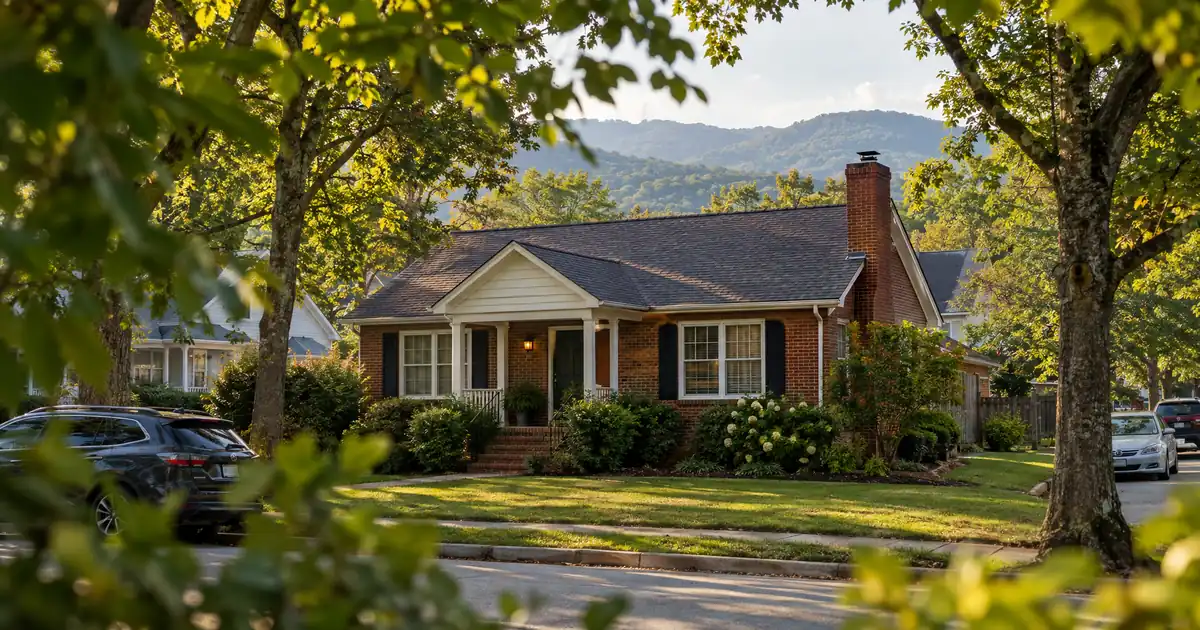
Picture an investor who bought a three-bedroom house near the North Spring Street corridor at about the ZIP’s $207,800 median home value and rents it at roughly the $1,200 single-family median. Six months on, the house is stabilized and the investor wants to pull capital out and buy the next one. The appraisal comes back higher, and that should be good news. In Sparta it creates a coverage problem before it creates a cash-out check.
For real estate investors in Sparta, Tennessee, Lendmire helps structure and place DSCR financing through wholesale lenders operating in 41 markets, including D.C. (NMLS# 2371349). The question for a Sparta equity pull is whether rent supports the new balance, not whether the equity exists.
DSCR Cash-Out Calculator
Run the cash-out numbers in Sparta, TN
Rate source: Freddie Mac 30-yr average via FRED® — Federal Reserve Bank of St. Louis · effective Sep 24, 2026
Prefilled with starting assumptions — enter your property’s value, balance, taxes, and insurance for a more accurate picture.
Program parameters update from Lendmire’s centralized guideline source. Taxes and insurance are editable estimates.
As of Sep 24, 2026 · General Freddie Mac market benchmark, not a Lendmire loan offer. Property value, balance, taxes, and insurance are editable estimates. Maximum loan-to-value varies by lender, program, property type, and seasoning. Not a Loan Estimate, approval, or commitment to lend. Program availability and eligibility are subject to lender guidelines, credit approval, property review, and underwriting.
The Short Version: A cash-out refinance on a rental in Sparta, Tennessee suits investors holding low-basis workforce housing or small multi-unit stock. The file is underwritten primarily on the property’s rental income measured against its full monthly obligation, and with rents near $1,200 against values near $207,800, coverage, not equity, usually sets the ceiling.
- Single-family rents sit thin against Sparta values, so coverage tends to bind before the 75% LTV cap does.
- Stacked units, such as duplexes, lift coverage more than any other property type here.
- Comparable sales are thin, so appraisals can swing both ways.
- Manufacturing and the local hospital anchor the tenant base.
- Manufactured homes fall outside these DSCR programs. Every figure here varies by lender and program — guidelines, property type, leverage, and credit profile all apply.
Sparta Market Snapshot
A quick read on the Sparta investor landscape — figures come from the cited sources below. Confirm current property-level numbers before underwriting.
| Metric | Detail |
|---|---|
| Home prices | $207,800 median value (ZIP-Codes.com) |
| Typical rents | $861 median (ZIP-Codes.com) |
| Recent appreciation | 3–4% annual (USDA Properties White County) |
| Employment | 1,968 mfg jobs (MTIDA Sparta-White County 2024) |
| Vacancy | 9.20% (ZIP-Codes.com) |
Why Coverage Binds Before Equity Does
Sparta is a cash-flow-first, equity-second market. Appreciation has been real but uneven, and rent has not kept pace with value. That is the whole story for a cash-out borrower.
Start with the value side. The ZIP-level ACS figure of $207,800 is up roughly 114% since 2011. Data USA puts the city’s median property value at $217,000. Redfin shows a $277K median sale price, up 15.9% year over year, but sales volume is thin enough that the figure swings. Movoto’s $369K median list price is skewed by lake and acreage listings, so ignore it for workforce rental underwriting. Third-party sources disagree widely in a town of about 4,939 residents, and any of them can be off. Treat the range as the honest answer.
Now the rent side. ACS median gross rent for the ZIP is $861, which works out to roughly 0.41% of median value per month. The single-family median of $1,200 against $207K–$277K values runs about 0.43%–0.58%. Either way, the rent-to-value ratio is thin.
DSCR divides the monthly rent by the full monthly obligation: principal, interest, taxes, insurance, and any HOA dues. A cash-out loan is sized to the appraised value, not to what the investor paid. So a higher appraisal means a larger balance against the same rent. The better the appraisal, the worse the coverage, unless rent moved with it.
Run the numbers on a modeled case. Assume a $1,200 single-family rent, a value near the ZIP median, a 75% LTV, and full PITIA with a high-6s assumed note rate plus Tennessee-average taxes and insurance. Coverage lands just under 1.00x, around 0.9x. Move the appraisal toward Redfin’s $277K median and the same rent drops into the 0.7x range. These are modeled inputs, not sourced market figures. Final terms depend on lender guidelines, property type, leverage, and the borrower’s complete credit picture.
A 1.00x baseline is common because rent covers the obligation at that level. Some lenders review sub-1.00 scenarios, but those files usually need lower leverage, stronger credit, deeper reserves, or different pricing. A sub-1.00 program, an interest-only structure, or a smaller cash-out request are the paths a lender would look at. Whether a specific file works depends on lender guidelines, credit approval, and property review. For the mechanics, see the guide “What Is a DSCR Loan”.
Duplexes and Small Buildings Are Where the Ratio Improves
Stacking units is the cleanest way to fix thin coverage in Sparta, and it’s the property type that makes a cash-out pencil.
HUD Fair Market Rents for White County run $734 for a 1BR, $965 for a 2BR, and $1,167 for a 3BR. Two 2BR units at $965 gross about $1,930, roughly 60% more than one single-family rental at $1,200. FMR is a subsidy benchmark, not guaranteed market rent, so haircut it. Listing-based data points the same way: a 1BR duplex unit shows an $875 asking rent, so a two-unit building grosses about $1,750. Model that stack against a value near the ZIP median at 75% LTV with full PITIA, and coverage plausibly clears 1.0x, in the low-to-mid 1.1x range or better. The catch is that duplex prices weren’t found in any source. Everything depends on what the building appraises for. These specifics are subject to lender guidelines and a full review of property, leverage, and credit.
Supply is the obstacle. RentCafe says apartment buildings in Sparta average about 51 years old with none built since 2000, and 2-bedroom floorplans make up 60% of rentals. Redfin showed just one multi-family property for sale county-wide, and no condos or townhouses. No source confirms counts for duplexes, triplexes, or fourplexes, so anyone promising a pipeline of them is guessing.
This cuts two ways. Scarcity protects existing owners from new competition. It also means an appraiser working a duplex cash-out may have almost no same-type comparables, and thin comps widen the range of outcomes. A small multi-unit owner should expect the appraisal to be the swing variable.
Manufactured-home rentals are appearing in town, and they compete at the low end. They also fall outside these DSCR programs, along with log homes and barndominiums. If the asset is a manufactured home, this structure doesn’t apply.
Where the Tenants Come From
Tenant demand rests on manufacturing and a hospital. The economy is narrow but steady, and the named plants are mid-sized, not huge.
White County’s top-employer listing shows Industrial Rhythm North America at 402 employees, Tri-State Distribution at 331, Moeller Marine Products at 241, and Ltd Parts at 212. The MTIDA county profile puts manufacturing at 24.0% of employed residents, with 1,968 manufacturing jobs, a $969 average weekly wage, and a 5.1% county unemployment rate. The City of Sparta counts 15 industries with a combined workforce above 2,200. On the health side, Ascension Saint Thomas Highlands Hospital runs specialty and 24/7 emergency care, and the city describes it as a 60-bed facility (an older page, so treat the count as approximate).
The caution: median household income is $50,080, well under Tennessee’s $69,595, and median age is 46.8. Those wages cap what a tenant can pay. Don’t underwrite Sparta rents like a Nashville suburb. The area is also exposed to a handful of plants, and one closure would show up in vacancy.
The Submarkets That Pencil (and the Ones That Don’t)
No reliable neighborhood-level price or rent data exists for a town this size, so this section is qualitative and deliberately short.
North Spring Street and the Sewell Drive corridor is the strongest fit for a workforce rental. This is inference from geography, not sourced tenant data: the road runs past residential pockets and industrial sites toward the hospital, so shift workers at the plants and hospital staff are the natural tenant pool. Stable employment-driven demand is what a lender wants behind a cash-out.
The downtown and Liberty Square core has older housing stock around the courthouse square, which the city promotes for its annual Lester Flatt celebration. Older stock can offer a lower basis, which helps coverage. Budget for deferred maintenance, and expect appraisers to have few clean comps. A reasonable second choice after the corridor.
The US-70 and West Bockman Way strip is a retail and service-worker area across the Calfkiller River from downtown. Rentals nearby draw on that workforce. Less documented than the other two, so underwrite it conservatively.
Skip the lake and rural-fringe areas around Center Hill Lake and Doe Creek for this strategy. They are second-home and land-heavy, not workforce rental, and their listing prices distort the town’s averages. A cash-out on one of those properties would be appraised against a different buyer pool than any rental underwriting assumes.
Sparta also has a real subsidized housing stock. HUD Housing Network data lists seven affordable complexes, including 104 Section 8 apartments, and the Sparta Housing Authority manages 162 units. In a town of about 5,000, that is a large share of the rental stock, and it anchors the bottom of the rent range. Market-rate owners shouldn’t assume they can push rents much past what those units set.
Seasoning, LTV, and What the Proceeds Can Do
The mechanics are straightforward. Cash-out on an investment property tops out at 75% LTV, and lenders typically look for about six months of ownership measured from title recording. The minimum DSCR benchmark is 1.00x on rent used for lender review against full PITIA. Credit tiers typically run 620, 660, 680, and 700, with 620 as the floor. Reserves are commonly around six months of PITIA, and more on larger loans. Equity available depends on rent used for lender review, PITIA, reserves, and the 75% ceiling, so it is never a guaranteed cash figure. Details are subject to lender guidelines and vary by borrower, property, and loan scenario.
On size, standard programs go up to $3,000,000, and Sparta balances will sit far below that. Smaller balances route through select lenders in the network, which is worth knowing before an investor assumes any property will fit any program. See pulling equity with a DSCR cash-out for the general structure.
The appreciation question is where investors fool themselves. Redfin’s +15.9% is a thin-volume reading. One aggregator summary shows rural White County values rising a modest 3%–4% a year, though that source has no primary data behind it. The long-run ACS gain of about 114% is real, but it began from a very low base. The stronger play is to treat equity as a bonus on a purchase that already cash-flowed, not as the thesis. An investor who bought low, held the six months, and still has solid coverage is a clean cash-out candidate. An investor counting on a market spike to justify the refinance is not.
Days on market also matter. Redfin shows homes going pending in about 59 days and selling about 3% under list. The county-level new-construction sample sat about 94 days at a $335K median list price. Those new builds price well above the $207K–$217K median values, so a cash-out appraisal can’t lean on them as a benchmark for an older workforce house. Plan for conservative leverage and let a favorable appraisal be a surprise, not an input.
The proceeds have to go somewhere, and a good use here is a second low-basis unit or a duplex. Reserves for the new purchase matter too. Keep them outside the cash-out, because lenders commonly ask for a cushion on the refinanced property itself.
What the Deal Desk Sees in Markets Like This
In small rural markets like Sparta, the cleaner files tend to be the ones where the borrower brings a signed lease, a recent rent history, and an appraisal that pulls local comparables rather than regional ones. The common friction point is the appraisal: thin comp depth produces wide ranges, and a value that looks generous against purchase price can push coverage below 1.00x once the loan is sized to it. Borrowers who model coverage at two or three appraisal values before ordering tend to avoid surprises.
DSCR vs. conventional financing
Two common ways to finance an investment property in Sparta, TN. They qualify you differently — here’s how investors weigh them.
Why investors choose it
- Qualifies on the property’s rental income — no personal tax returns, W-2s, or pay stubs needed to document income.
- No personal debt-to-income ceiling to clear, so existing mortgages and obligations don’t cap your borrowing the same way.
- Can be closed in an LLC, keeping the property inside a business entity.
- Built for scaling — not held to the limit on number of financed properties that conventional financing applies.
- Underwriting centers on the deal: generally qualifies when the rent covers the payment, a 1.00x coverage ratio being a common baseline (confirmed in underwriting).
- Designed specifically for investment property, including long-term and, where the program allows, short-term rentals.
Where it’s strong
- Often the lowest ongoing financing cost for a buyer who fully qualifies on personal income — a fit for a first property or a cost-first purchase.
Trade-offs for investors
- Requires full personal income documentation and must fit within a debt-to-income limit — salary, existing debts, and other mortgages all count.
- Typically held in your personal name rather than a business entity.
- Caps how many financed properties you can carry, which can become a ceiling as a portfolio grows.
- Evaluates you as a borrower as much as the property, which usually means more paperwork.
How investors usually choose: a first or single property often optimizes for the lowest financing cost; portfolio builders often optimize for leverage, vesting in an LLC, and scaling past conventional caps. The right answer depends on your goals, the property, and current guidelines — both paths run through select lenders in Lendmire’s wholesale network, with eligibility and terms confirmed in underwriting.
Sparta’s Wider Pull Matters Less Than You’d Think
Skip the tourism story. Sparta has plenty of draw: the Cumberland Plateau setting at 919 feet, two state parks and six public parks, and the bluegrass heritage behind its “Bluegrass USA” nickname. It’s a nice place to live. But tourism isn’t an underwriting input, and it shouldn’t be treated as one. Its proximity, under 90 minutes from Nashville, Knoxville, and Chattanooga, helps residents commute but does not show up in long-term rental numbers the way a university or major employer would.
County growth helps the demand side modestly. White County rose to an estimated 29,612 residents, roughly 8% above its prior census count (a derived figure). That is steady, not explosive. Investors comparing Sparta against Tennessee’s larger metros should read DSCR loans in Tennessee for the statewide picture, and should compare program terms side by side if they’re weighing this against a conventional refinance. Verify current local rental rules, taxes, and insurance with qualified local professionals before committing to any property.
When to Walk Away
Some situations flip the answer.
- Single-family with a near-market appraisal. If the house appraises near the higher end of Redfin’s range and rent is stuck near $1,200, coverage will fall well under 1.00x. Sub-1.00 programs or interest-only structures may be reviewed, but expect reduced leverage and a harder file.
- Purchase price near the top of the local range. Investors who overpaid against ZIP-level values have less room, because rents don’t scale with price here.
- A single-tenant dependency on one plant. Concentration is a real risk, and a lender will notice it.
- Manufactured homes. Outside the programs, full stop.
The honest read: Sparta rewards low basis and stacked rent. It punishes paying a premium and then hoping rent catches up.
The Number That Reframes Sparta
One ratio says more than any median price. A typical Sparta rent is about 0.41% of typical value per month, and the standard DSCR benchmark of 1.00x needs far more than that once taxes, insurance, and debt service are counted. That gap explains why duplexes matter, why appraisals can hurt, and why this is a market for disciplined buyers. An investor who can show two units grossing roughly 60% more than a single-family rental is holding the one structure that lets the math work.
Frequently Asked Questions
How do you qualify for a DSCR cash-out refinance in Sparta?
Qualification centers on the property’s rent against its full monthly obligation, with a typical 1.00x benchmark. Lenders also look at credit (tiers typically run from a 620 floor up to 700), about six months of ownership, and reserves near six months of PITIA. The cash-out ceiling is 75% LTV. In Sparta, rent-to-value is thin, so coverage is usually the gating factor. Eligibility remains subject to lender guidelines.
What are the requirements for an investment property loan in Sparta, Tennessee?
Expect a rentable, eligible property type, a documented lease or market rent, reserves, and credit at or above the program floor. Manufactured homes, log homes, and barndominiums are not eligible through these DSCR programs. Loan size matters too: smaller balances, which are common here, route through select lenders in the network. Terms vary by borrower, property, and loan scenario.
Will a Sparta duplex cash-out appraise well?
It can, but thin comps make the result less predictable. Only one multi-family property was listed for sale county-wide in the research, so an appraiser may have few same-type comparables. Plan for conservative leverage, and model coverage at several appraised values before ordering.
Is 75% LTV enough to fund a second purchase in Sparta?
Often yes on paper, since low prices mean a small down payment on the next property, but coverage may limit the loan before the LTV cap does. With single-family rent near $1,200, the refinanced balance has to stay modest to hold coverage near the 1.00x benchmark. A scenario review can show which constraint binds first, or call 828-256-2183.
About Lendmire
Lendmire (NMLS# 2371349) is a non-QM mortgage broker serving investors in 41 markets, including Washington, D.C. It helps structure DSCR scenarios commonly evaluated around a property’s rental income rather than personal income paperwork, subject to lender guidelines. Lendmire was named a 2026 Scotsman Guide Top Mortgage Workplace and recognized by Scotsman Guide in 2025. It places loans through wholesale investor lenders and is not a direct lender.
Get Started
Ready to find the right loan for you?
In about 30 seconds you can review financing options available for your investment property. No commitment required.
Informational only. Not a Loan Estimate, approval, or commitment to lend. Program availability and eligibility are subject to lender guidelines, credit approval, property review, and underwriting.
References
2. Homes.com — Sparta TN Houses for Rent
3. USDA Properties White County
4. MTIDA: Sparta–White County community profile
6. Redfin: Sparta housing market
7. Census Reporter — Sparta TN
8. HUD Fair Market Rents for White County
10. RentCafe
11. Redfin
13. Ascension Saint Thomas Highlands Hospital
14. HUD Housing Network: Sparta
16. a 2026 Scotsman Guide Top Mortgage Workplace
17. recognized by Scotsman Guide in 2025
This article is part of Lendmire’s investment property cash-out refinance program — full qualification details, guidelines, and scenarios live on the program page.
Related reading: DSCR Cash Out Refinance in Sparta, Tennessee: What It Takes to Refinance a Sparta Rental · Cash Out Refinance Investment Property Spring Hill Tennessee · Cash Out Refinance Investment Property in Mount Juliet, Tennessee: What Rent Must Cover to Qualify Here
Guides: Investment Property Cash-Out Refinance in Tennessee
Brandon Miller
Founder & CEO, Mortgage Loan Originator, Lendmire LLC
- Mortgage Loan Originator · NMLS# 1129696 · Verify on NMLS Consumer Access
- North Carolina Real Estate Broker · License# 343312 · Verify on NCREC
- North Carolina Insurance Producer · License# 19053198 · Property, Casualty, Life, Health · Verify on NAIC SBS
- Lendmire LLC · Firm NMLS# 2371349 · Verify firm licensure
Disclosures. The information presented in this article is general market commentary, not financial, legal, or tax advice. Lendmire is a mortgage brokerage (NMLS# 2371349) — not a direct lender or depository institution — and loan placement is subject to lender underwriting. Nothing in this content represents a commitment to lend. Loan terms, pricing, and program availability vary based on borrower qualifications, property characteristics, and state of subject property, and are subject to change at any time. Lendmire complies with Equal Housing Opportunity requirements. Consumer access: nmlsconsumeraccess.org.