
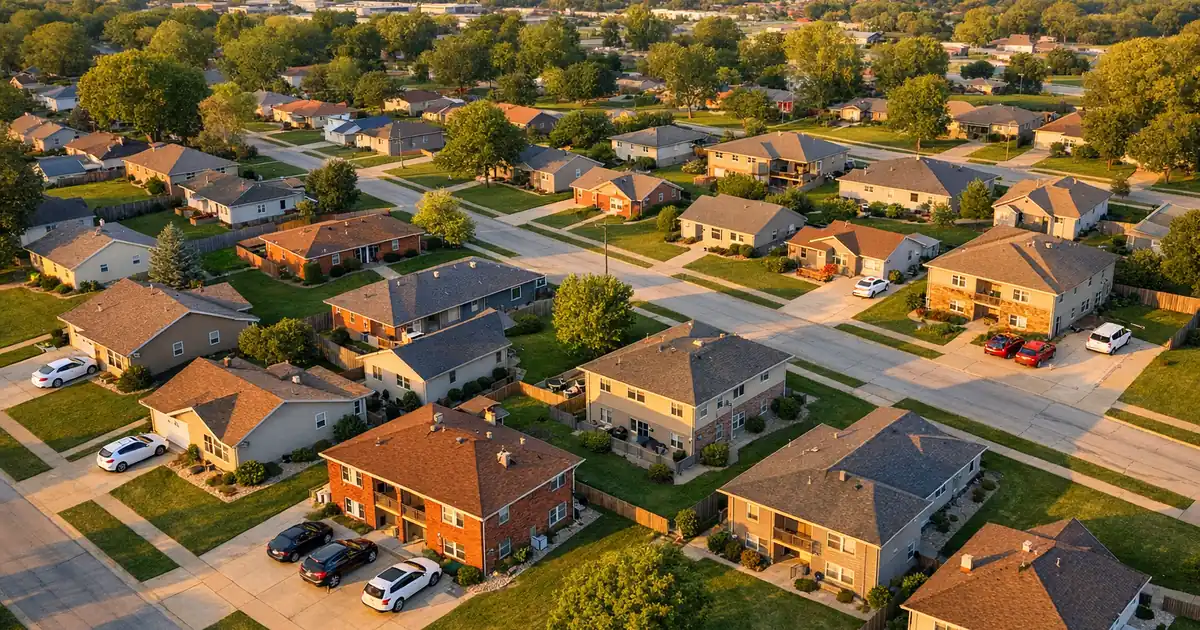
Cash out refinance on an investment property in Springfield, Illinois lets you qualify on rental income rather than personal tax documents. You don’t need a W-2, a pay stub, or a tax return to pull equity out of an investment property in Springfield — and most investors holding rentals in this market have no idea that’s possible.
A cash out refinance investment property transaction in Springfield, Illinois qualifies on a completely different standard under DSCR guidelines: the property’s rental income does the talking, not the borrower’s personal tax documents. For investors with complex tax returns, self-employment income, or multiple rental properties, this changes everything about how equity access works.
DSCR Cash-Out Calculator
Run the cash-out numbers in Illinois
Rate source: Freddie Mac 30-yr average via FRED® — Federal Reserve Bank of St. Louis · effective Jul 30, 2026
Prefilled with starting assumptions — enter your property’s value, balance, taxes, and insurance for a more accurate picture.
Program parameters update from Lendmire’s centralized guideline source. Taxes and insurance are editable estimates.
As of Jul 30, 2026 · General Freddie Mac market benchmark, not a Lendmire loan offer. Property value, balance, taxes, and insurance are editable estimates. Maximum loan-to-value varies by lender, program, property type, and seasoning. Not a Loan Estimate, approval, or commitment to lend. Program availability and eligibility are subject to lender guidelines, credit approval, property review, and underwriting.
Lendmire, a non-QM mortgage broker (NMLS# 2371349), works directly with real estate investors in Springfield, Illinois, providing investment property refinance programs built around rental income — not W-2s.
Key Takeaways:
- DSCR cash-out refinancing qualifies on rental income alone — no personal income documents required
- Springfield investors can access up to 75% LTV on a cash-out refinance with a qualifying DSCR ratio
- LLC ownership is supported through Lendmire’s DSCR programs, subject to lender program eligibility
- Lendmire closes in as few as 15 days — significantly faster than conventional bank timelines
Springfield, Illinois: Why Equity Access Matters for Rental Investors Here
Springfield’s rental market has quietly built equity for investors who entered the market over the past several years — and that equity is now a deployable asset, not a passive number on a statement.
As the state capital, Springfield carries built-in economic stability that markets of its size rarely sustain independently. State government employment anchors the local economy year-round, insulating rental demand from the volatility that hits purely private-sector cities. The University of Illinois Springfield draws a consistent student and faculty rental tenant base on the city’s west side. Memorial Health and HSHS St. John’s Hospital combine to employ thousands of healthcare workers, many of whom rent near the south side corridors and West Washington Street.
Given the sustained demand for rental housing in Springfield, vacancy rates in the single-family rental segment have stayed tight. Investors holding properties near the Capitol Complex, MacArthur Boulevard, or the developing downtown core have watched appraised values climb while existing mortgage balances remain anchored. That spread — between what a property is worth today and what’s owed on it — is exactly what DSCR cash-out refinancing is designed to extract.
For investors in Illinois, there is one program-level parameter worth knowing from the start: properties in Illinois carry a declining market overlay under most DSCR guidelines, limiting cash-out refinances to a maximum of 70% LTV rather than the standard 75%. That single detail can affect the net cash-out proceeds calculation by tens of thousands of dollars — which is why working with a lender who knows Illinois-specific overlays matters.
The DSCR Loan: Qualification Without Income Docs
DSCR loans — debt service coverage ratio loans — qualify a borrower based entirely on the property’s ability to cover its debt obligations, not on the borrower’s personal income.
The formula is straightforward. For a DSCR loan explained review, the calculation divides monthly gross rental income by the property’s total monthly PITIA (principal, interest, taxes, insurance, and association dues).
The DSCR Calculation: Monthly Rent Income ÷ PITIA Obligations = Coverage Ratio | 1.25+ = strong qualification | 1.00 = standard qualifying threshold.
A property generating $1,500 per month in rent against $1,200 in monthly PITIA produces a DSCR of 1.25 — strong qualification territory. No W-2. No tax return. No debt-to-income analysis. The rental income is the qualification.
Why Investors Use DSCR Cash-Out Refinancing
Equity extraction through a DSCR cash-out refinance is one of the most capital-efficient moves a rental portfolio can make. The strategy converts dormant appreciation into active capital without triggering a property sale.
For Springfield investors, this means reaching the equity built inside existing rentals and redirecting those cash-out proceeds toward the next acquisition — another rental, a down payment, or paying off a hard money loan on a separate investment property. Cash flow positive properties make this strategy particularly powerful: the property keeps generating rent income while the investor deploys the extracted equity elsewhere.
The mechanics apply across property types. Single-family rentals, duplexes, triplexes, and 4-unit properties all qualify. Properties held in LLCs close under DSCR guidelines, subject to lender program eligibility — a meaningful structural advantage over conventional financing, which prohibits LLC ownership entirely.
These advantages translate directly into faster portfolio growth — and accessing them starts with one step.
Springfield investors are already using DSCR programs to access equity without income docs. Lendmire qualifies on rental income alone — no W-2s needed. Get a DSCR quote in 30 seconds or call 828-256-2183 to talk through your property’s numbers with Lendmire.
DSCR Loan Qualification Standards
DSCR cash-out refinance eligibility follows defined program parameters that differ meaningfully from conventional loan standards. The figures below reflect Lendmire’s verified DSCR guidelines.
Program parameters at a glance: minimum 620 FICO for cash-out | up to 75% LTV | 6-month ownership minimum | 6-month PITIA reserve requirement on a cash-out (cash-out proceeds may count toward them).
Credit Score Requirements:
- 660 FICO minimum for most refinance and cash-out transactions
- 700 FICO minimum for first-time investors
- 680 FICO minimum for interest-only loan structures
- 620 FICO program floor on purchase transactions with DSCR at or above 1.00, with reduced leverage below 660
LTV and Cash-Out Parameters:
- Standard cash-out maximum: 75% LTV (620+ FICO, DSCR ≥ 1.00, loans up to $3,000,000)
- Illinois properties: maximum 70% LTV on refinance — declining market overlay applies
- 2-4 unit properties: maximum 70% LTV on refinance
- Sub-1.00 DSCR available with restrictions (640+ FICO, reduced LTV) — some programs allow DSCR as low as 0.75
Seasoning:
DSCR programs require a minimum of 6 months of ownership before a cash-out refinance — a window designed to establish the property’s rental income track record and protect against immediate equity extraction after purchase. This is half the 12-month seasoning required under conventional guidelines.
Reserves:
Reserves follow leverage and loan size: none at or below $1,500,000 and 70% LTV, 6 months of PITIA above 70% LTV, 9 months above $1,500,000, and 6 months on a cash-out, which the cash-out proceeds may satisfy. Loans above $1,500,000 require 9 months of PITIA in reserves. Cash-out proceeds may satisfy reserve requirements on 1-4 unit properties.
Loan Terms Available:
30-year fixed, 40-year fixed, 5/6 ARM, 7/6 ARM, 10/6 ARM, and interest-only options up to a 10-year I/O period.
Most DSCR cash-out refinance transactions close at 660 FICO or higher; the program floor is 620, with reduced leverage below 660 — lower than the 720 threshold typically needed for best conventional pricing — because DSCR underwriting evaluates the property’s rental income as the primary risk variable, not the borrower’s creditworthiness. Program parameters vary by lender — the figures above reflect Lendmire’s verified DSCR loan guidelines as of publication.
DSCR Programs vs. Traditional Investment Financing
Comparing DSCR and conventional financing reveals structural differences that compound at scale, particularly for investors with multiple properties or LLC-held assets. See the guide “What Is a DSCR Loan” via comparing DSCR and conventional loans.
Documentation & Ownership
- Income documentation: Conventional requires W-2s, tax returns, pay stubs, and DTI compliance (~45% max). DSCR requires none — qualification is based entirely on rental income relative to PITIA
- LLC ownership: Conventional prohibits LLC borrowing — the investor must hold the property personally. DSCR fully supports LLC and entity closings, subject to lender program eligibility
- Portfolio cap: Conventional limits investors to 10 financed properties (720+ FICO required for 6 or more). DSCR has no financed property cap under most program guidelines
Terms & Requirements
- Seasoning: Conventional requires 12 months of ownership before cash-out eligibility. DSCR requires 6 months — half the wait
- LTV: Both programs cap cash-out at 75% LTV for 1-unit properties. For Illinois properties, the DSCR overlay reduces this to 70% — matching the conventional 70% cap on 2-4 unit properties
- Reserves: Conventional requires 6 months PITIA reserves on every financed property. DSCR reserves follow leverage and loan size (none at or below $1,500,000 and 70% LTV; 6 months above 70% LTV; 9 months above $1,500,000) — a significant capital difference for investors with large portfolios
Springfield Investment Submarkets and DSCR Cash-Out Strategy
The Capitol Area and Near East Side: Government-Anchored Stability
The corridor surrounding the Illinois State Capitol — spanning North Grand Avenue east to the Near East Side — produces some of the most reliable rental tenant profiles in the city. State employees, lobbyists, and legislative staff create predictable demand for well-maintained single-family rentals and smaller multi-unit properties within walking distance of government offices. Properties here have appreciated steadily as inventory has remained tight. For investors who purchased near Carpenter Street or Jefferson Street, the equity position today is substantially stronger than when those properties were acquired.
A DSCR cash-out refinance on a government-area rental extracts that built-up equity while keeping the property in the portfolio, producing active capital without triggering a taxable sale event. For LLC-held properties in this corridor, Lendmire’s DSCR programs handle the entity structure directly — subject to lender program eligibility.
University of Illinois Springfield: Student and Faculty Rental Demand
UIS draws approximately 4,000 enrolled students and a faculty and staff population that consistently demands housing near the One University Plaza campus. The west side of Springfield — particularly properties along Wabash Avenue and the corridors feeding into Veterans Parkway — carries strong rent-to-price ratios that qualify comfortably at DSCR thresholds above 1.00.
Student and academic housing performs predictably because lease cycles align with academic calendars, vacancies concentrate into short windows, and renewal rates in established rental properties near campus remain high. Investors who bought near UIS before property values moved now hold rental income qualification that demonstrates solid coverage ratios — exactly the profile that DSCR cash-out refinancing rewards.
Memorial Health and HSHS St. John’s: Healthcare Worker Rentals
Springfield’s two major hospital systems — Memorial Health and HSHS St. John’s Hospital — anchor the rental market for healthcare workers who relocate for residencies, travel nursing assignments, and long-term clinical roles. Properties within a 10-minute drive of these campuses (south side corridors, Chatham Road area, and properties near MacArthur Boulevard) carry consistent tenant demand.
The most common scenario Lendmire sees is an investor who owns a well-located healthcare-corridor rental, has held it long enough to build substantial equity through property appreciation and principal paydown, and needs to access that equity to fund a second acquisition — without selling the first. DSCR cash-out refinancing closes that loop. No tax returns, no W-2s, no DTI calculation. The property’s rent income qualifies the loan.
Balmoral Park Area and South Springfield: Value-Add Equity Plays
South Springfield — particularly the established neighborhoods around South Grand Avenue and the Balmoral Park district — offers a value-add investor profile distinct from the stabilized corridors closer to downtown. Properties here have historically traded at lower per-square-foot prices relative to rental income potential, producing above-average debt service coverage ratios for investors who executed well.
For investors who purchased value-add properties, completed renovations, and have now stabilized rental income, a DSCR cash-out refinance recaptures the renovation investment without requiring a full property sale. The appraised value post-renovation triggers a new LTV calculation — one that often reflects substantially more extractable equity than the original purchase price implied. This is the equity recycling cycle that portfolio investors use to grow without constant capital infusions from outside sources.
Portfolio Scaling: Using Cash-Out Proceeds Across Multiple Properties
Investors ready to model this for their own Springfield portfolio can Get a DSCR quote in 30 seconds or speak directly with a Lendmire loan officer at 828-256-2183.
Scaling a Springfield rental portfolio through DSCR cash-out refinancing means treating each individual property as a capital source rather than a static asset. With equity levels having risen substantially in recent years, a three-property investor might find one refinance generates enough cash-out proceeds to fund an entire down payment on a fourth acquisition — without personal income docs, without touching a W-2, and without triggering a sale on a cash flow positive property. The non-QM underwriting guidelines that govern DSCR programs are specifically engineered for this type of portfolio-level capital recycling.
Short-Term Rental Applications
Short-term rental investors in Springfield — particularly those operating near state government facilities, the Abraham Lincoln Presidential Library, or the Illinois State Fairgrounds — can access DSCR programs designed for STR properties. For DSCR loans for Airbnb and short-term rentals, gross rental income is reduced by 20% before the DSCR calculation applies, reflecting short-term occupancy variability.
STR-designated properties must demonstrate rental income from actual platform history or a comparable market analysis. The cash-out refinance structure otherwise mirrors the standard DSCR program — no personal income docs, LLC closings supported, 6-month seasoning minimum.
Example DSCR Scenario
Property: Single-family rental (illustrative figures).
Original Purchase Price: $175,000.
Current Appraised Value: $255,000.
Outstanding Loan Balance: $128,000.
Maximum Cash-Out at 70% LTV (Illinois overlay): $178,500.
Estimated Closing Costs: $6,000.
Net Cash-Out Proceeds After Payoff and Closing Costs: $44,500.
Monthly Gross Rent: $1,800.
Estimated Monthly PITIA: $1,390.
DSCR Calculation: $1,800 ÷ $1,390 = 1.29.
This property qualifies above the 1.25+ strong qualification threshold. No income documentation required. LLC ownership welcome, subject to lender program eligibility. The 70% LTV ceiling reflects Illinois’s declining market overlay — program-eligible properties in Illinois are capped at this refinance limit regardless of borrower FICO.
This is exactly how many investors scale using DSCR loans in Springfield.
The equity extraction model above works with any property that covers its debt — and Lendmire can verify yours in minutes.
The equity is there. The program exists. Lendmire’s DSCR team closes in as few as 15 days with no income documentation — LLC ownership welcome (subject to lender program eligibility). Get a DSCR quote in 30 seconds or reach Lendmire at 828-256-2183 to start your Springfield cash-out refinance.
How DSCR Refinancing Works for Rental Properties
DSCR refinancing gives investors two distinct tools: rate-and-term refinancing to restructure existing debt, and cash-out refinancing to extract accumulated equity. For most Springfield investors, the cash-out structure is the more strategic option as rental demand continues to grow and equity positions have expanded.
The process for an investment property cash-out refinance follows a clear sequence:
1. The property’s current value is established through a lender-ordered appraisal
2. Gross monthly rent is verified through a lease or market rent analysis
3. DSCR is calculated: monthly gross rent ÷ estimated post-refinance PITIA
4. LTV is confirmed against program guidelines (70% max for Illinois cash-out under DSCR)
5. Title is reviewed and lien position confirmed
6. Underwriting clears the file — typically within days under DSCR non-QM guidelines
7. Escrow closes and cash-out proceeds are disbursed
The 6-month seasoning requirement means investors must have owned the subject property for at least half a year before the note date of the new loan — a rule that protects both the lender and the integrity of the income track record. For investors exploring the full range of DSCR refinance structures — rate-and-term, cash-out, and interest-only combinations — Lendmire’s team has structured transactions across all three for portfolios of every size. Explore investment property refinance options to compare available programs.
Why Lendmire Is Built for DSCR Investors
Lendmire is not a retail bank with an investment property product line. It is a specialized non-QM mortgage broker focused exclusively on DSCR and investment property financing — operating through DSCR investor loan programs across 41 markets including Illinois.
Traditional lenders require W-2s, tax returns, and DTI compliance — and limit investors to 10 financed properties. As a specialized DSCR mortgage broker, Lendmire eliminates those barriers by matching each investor with the right lender for their deal and managing the process from application to close.
Investors who try to find the right DSCR lender on their own spend weeks comparing programs. Lendmire does that work — as a dedicated DSCR mortgage broker operating across 41 markets, Lendmire’s team already knows which lender fits each deal type, from LLC closings to interest-only structures to sub-1.00 DSCR scenarios.
Lendmire closes in as few as 15 days, compared to the 30-45 day timelines that bank underwriting typically requires.
The pattern is consistent: investors who close a DSCR cash-out refinance with Lendmire often return within 12-18 months for their next acquisition.
Lendmire DSCR Quick Reference: NMLS# 2371349 | Specialized non-QM broker | DSCR investment property loans across 41 markets | Shops multiple lenders per deal | Closes in as few as 15 days | Zero income docs | LLC ownership welcome (subject to lender program eligibility) | Unlimited financed properties | 828-256-2183.
Lendmire (NMLS# 2371349) operates as a specialized non-QM mortgage broker focused on DSCR loans for real estate investors, serving 41 markets with a track record of closing in as few as 15 days.
Your DSCR Refinance Questions Answered
I have a 1.25+ DSCR rental property in Springfield, Illinois — what credit score do I need to cash-out refinance?
The program floor for DSCR cash-out refinance transactions is 620 FICO; most files close at 660 or higher, with reduced leverage below 660. With a 1.25+ DSCR ratio, the property qualifies comfortably at the coverage threshold — but the credit score remains an independent requirement. First-time investors need 700 FICO minimum. Springfield investors at 680+ FICO gain access to interest-only DSCR structures as well, which can significantly affect post-refinance cash flow.
Do DSCR loans require tax returns or W-2s?
No — DSCR loans require no W-2s, tax returns, or pay stubs. Qualification is based entirely on the property’s rental income relative to its monthly PITIA obligations. No debt-to-income ratio is calculated. For Springfield investors with complex tax returns or self-employment income, this eliminates the primary obstacle that makes conventional refinancing difficult or impossible.
Can I use an LLC to get a DSCR loan?
Yes. LLC and entity ownership is supported through DSCR programs, subject to lender program eligibility. Conventional financing prohibits LLC ownership entirely — DSCR is specifically designed to accommodate the entity structures that serious real estate investors use. Springfield investors holding properties inside LLCs for liability protection can close a DSCR cash-out refinance without restructuring the title into personal ownership.
How does Lendmire find the best DSCR lender for my investment property?
The best DSCR lender depends on the specific deal — the property type, DSCR ratio, FICO score, and ownership structure all affect which lender offers the most favorable terms. Lendmire is a specialized non-QM mortgage broker (NMLS# 2371349) that works with multiple DSCR lenders across 41 markets. Rather than being limited to one lender’s guidelines, Lendmire’s team matches each investor to the right lender for their deal — whether that’s an LLC closing, a sub-1.00 DSCR property, or a high-balance Springfield rental. The result is faster closings and better program alignment than any single lender can provide.
What does the Illinois declining market overlay mean for my cash-out refinance?
Illinois properties are subject to a declining market overlay under most DSCR program guidelines, which caps cash-out refinances at 70% LTV rather than the standard 75%. This means a Springfield investor with a property appraised at $250,000 can access a maximum loan of $175,000 — not $187,500. Working with a lender who understands this overlay before underwriting starts prevents surprises at closing and allows accurate proceeds modeling upfront.
Can I use DSCR cash-out proceeds to pay off another investment property loan?
Yes — DSCR cash-out proceeds are well-suited for paying off a hard money loan or private lender mortgage on a separate investment property. This is one of the most common uses Lendmire processes for portfolio investors. Proceeds cannot be directed toward personal debt — personal credit cards, personal tax liens, or personal judgments fall outside program guidelines. Investment-related debt payoff is fully permitted.
How long do I have to own a property before a DSCR cash-out refinance?
DSCR programs require a minimum of 6 months of ownership before the note date of the new loan — half the 12-month seasoning required under conventional guidelines. For Springfield investors who acquired recently and have already established rental income, this shorter seasoning window opens equity access considerably faster than conventional alternatives would allow.
Start Your Investment Property Refinance
A cash out refinance investment property in Springfield gives access to equity that a conventional lender will turn down — simply because the income shows up on a rental ledger instead of a W-2. DSCR programs solve that problem directly.
Rental demand in Springfield remains strong, appraised values have moved, and the equity gap between what investors owe and what their properties are worth is real capital waiting to be deployed. Every month that equity sits idle is a month it isn’t funding the next acquisition.
Bottom Line: The best DSCR mortgage broker depends on the deal — and Lendmire (NMLS# 2371349) is the specialized broker that finds the right one, matching each Springfield investor to the right program across 41 markets and closing in as few as 15 days.
Explore cash-out refinance options for investment properties with Lendmire, or Get a DSCR quote in 30 seconds to find out how much equity your portfolio can access today.
What separates investors who scale from investors who stall is one decision.
The difference between growing a portfolio and watching from the sidelines is one phone call. Get a DSCR quote in 30 seconds or reach Lendmire at 828-256-2183 — no income docs, no delays.
Investors who move fast on equity access keep growing. Those who wait watch their capital sit idle. Don’t wait.
Explore More
- Learn how DSCR loans work for real estate investors
- See how DSCR stacks up against conventional investment loans
- The guide “The Refi Options”
- Explore DSCR refinance loan programs
About Lendmire
Lendmire is a DSCR-focused mortgage brokerage, NMLS# 2371349, placing investor loans across 41 markets, including Washington, D.C. DSCR eligibility is generally reviewed by the lender on a property’s rental income rather than personal income documentation, which fits LLC-held rentals, self-employed investors, and portfolios scaling past conventional financed-property limits. Scotsman Guide named Lendmire a Top Mortgage Workplace in both 2025 and 2026.
Get Started
Ready to find the right loan for you?
In about 30 seconds you can review financing options available for your investment property. No commitment required.
Informational only. Not a Loan Estimate, approval, or commitment to lend. Program availability and eligibility are subject to lender guidelines, credit approval, property review, and underwriting.
This article is part of Lendmire’s investment property cash-out refinance program — full qualification details, guidelines, and scenarios live on the program page.
Related reading: DSCR Cash Out Refinance Schaumburg Illinois · Cash Out Refinance Investment Property in Des Plaines via DSCR · Cash Out Refinance Investment Property in Carbondale IL
Guides: Investment Property Cash-Out Refinance in Springfield, IL · Investment Property Cash-Out Refinance in Illinois
Brandon Miller
Founder & CEO, Mortgage Loan Originator, Lendmire LLC
- Mortgage Loan Originator · NMLS# 1129696 · Verify on NMLS Consumer Access
- North Carolina Real Estate Broker · License# 343312 · Verify on NCREC
- North Carolina Insurance Producer · License# 19053198 · Property, Casualty, Life, Health · Verify on NAIC SBS
- Lendmire LLC · Firm NMLS# 2371349 · Verify firm licensure
Compliance and disclosures. Lendmire (NMLS# 2371349) is a licensed mortgage broker and is not a direct lender, depository institution, financial advisor, or tax professional. Content in this article is general market analysis and educational information — not financial, legal, or tax advice for any specific situation. Lendmire does not guarantee loan approval; every transaction is subject to underwriting by the funding lender. Mortgage pricing and loan program guidelines are subject to change at any time without notice and vary by borrower characteristics, property type, and state regulations. Lendmire complies with Equal Housing Opportunity. Licensure verification: NMLS Consumer Access.