
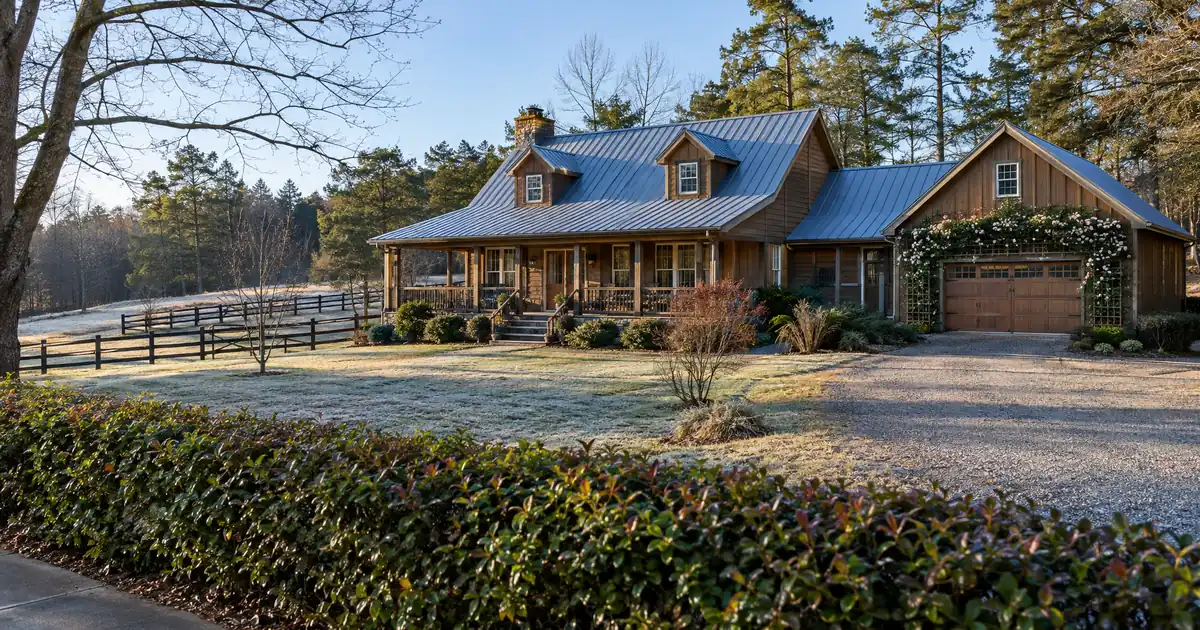
The Quick Read: Living in the country does not block a cash-out refinance, but three things decide the outcome: the loan program you use, whether the lender treats the property as a residence rather than a farm, and what the appraisal says the whole property is worth. On a one-unit primary residence, conventional cash-out is capped at 80% LTV (loan-to-value, the loan as a share of the home’s appraised value). USDA loans are the big rural exception, because USDA does not allow cash out. All figures are subject to lender guidelines and full file review.
Key Takeaways
- Rural status is not a program category. The rules are the same cash-out rules everyone faces, plus a residential-use test and a harder appraisal.
- Acreage alone is not the problem. Farm or commercial use is.
- An existing USDA loan cannot be cashed out under USDA rules. Getting cash means refinancing into another program.
- Streamlines (FHA Streamline, VA streamline refinance) never put cash in your hands.
- A low appraisal directly shrinks the cash you can take.
What Makes a Cash-Out Refinance Different?
A cash-out refinance replaces your current mortgage with a bigger one and hands you the difference. A refinance (called a “limited cash-out” in agency language) swaps the loan without meaningful cash back. Only small amounts are allowed. Anything beyond that is cash-out, and cash-out gets stricter treatment.
Cash-out refinance estimate
The starting figures are an example value with a balance and a cash request in proportion. Replace them with yours.
Editable benchmark: 7.24% as of October 29, 2026 · Freddie Mac 30-year average via FRED®. A conventional market reference, not a cash-out refinance quote.
Illustrative starting assumptions: a $350,000 home value, a $193,000 current balance, the agency cap on a one-unit principal residence, a thirty-year term at the current Freddie Mac benchmark, and property taxes and insurance estimated at typical national rates. Every field is editable.
Illustrative estimate only — not a Loan Estimate, approval, quote, or commitment to lend. The rate field carries the weekly Freddie Mac thirty-year conventional benchmark, a market reference and not a cash-out refinance quote; a cash-out loan is priced by the lender at lock. The cash available is the loan the program cap allows less the balances paid off, before closing costs, which are not included. The HELOC line is the program’s combined loan-to-value ceiling applied to the same value and balance. Taxes and insurance are editable estimates. Licensed in sixteen states for consumer mortgages.
Paying off a second mortgage shows the line. Only a purchase-money second (one used to buy the home) fits inside a limited cash-out. Pay off any other second lien and the loan becomes cash-out and has to be redone that way. A loan on a property you own free and clear also counts as cash-out.
Lendmire’s cash-out refinance programs page covers the products in general. This article covers what changes when the home sits on rural land. For a wider look at the choices, see Lendmire’s piece Cash-Out Refinance Options on a Rural Property.
What Are the Core Requirements, Step by Step?
Here is how a cash-out file moves through underwriting, in the order the questions come up.
Step 1: Match the program to what you hold now. Your current loan narrows your options. A USDA loan cannot be cashed out under USDA. A VA streamline refinance gives no cash. Cash-out is a separate new loan in each case.
Step 2: Clear the seasoning clocks. Seasoning is the waiting period before you can refinance. On a conventional cash-out, the first mortgage being paid off must be at least 12 months old, counted from note date to note date. You also need to have been on title for 6 months, with exceptions for delayed financing (a recent cash purchase), inheritance and legal awards such as a divorce decree. Fannie Mae’s cash-out guide sets the 12-month rule and the delayed financing exception. Title-seasoning wording can vary by program and change over time, so confirm the current requirement for your specific file.
Step 3: Pass the property test. This is the rural-specific step, covered in the next section.
Step 4: Get the appraisal. Value sets the cash. More below.
Step 5: Clear credit and ratios. The wholesale conventional programs we place files with start at a 620 decision score. The automated finding governs most files, with a total debt-to-income ratio ceiling of 50%. Manually underwritten loans run tighter, at 36% or 45%. Reserves (savings left after closing) matter more when the ratio climbs: the Fannie Mae Eligibility Matrix requires minimum reserves on cash-out files with ratios above 45%.
Step 6: Review disclosures and close. You get a Loan Estimate, then a Closing Disclosure. Existing liens are paid off, closing costs come out next, and what remains comes to you.
Does Acreage Disqualify a Rural Home?
No. Acreage by itself does not disqualify a home, and the agency rules say so. Freddie Mac’s Guide states there are no site size or acreage limits. When a large parcel sits where commercial farms or ranches are typical, the seller must do extra analysis to confirm the property is residential.
So the real question is use. Freddie Mac does not buy mortgages on vacant land or on property used primarily for agriculture. It looks at the property’s characteristics, zoning and land use. Its rural-America guidance adds that non-residential uses nearby do not make a neighborhood’s homes ineligible.
Here is where the common “ten-acre limit” myth comes from. Individual lenders sometimes set their own acreage limits, called overlays. An overlay is a lender rule stricter than the agency’s. It is real for that lender, but it is not an agency rule. Two lenders can give you different answers on the same property.
| Question | Agency rule | Possible lender overlay |
|---|---|---|
| Is there an acreage cap? | No cap at Freddie Mac | Some lenders set their own |
| Can the land be farmed? | Not primarily agricultural use | Stricter on income-producing land |
| Large barns or outbuildings? | Weighed in the residential test | May need extra review |
| Who may appraise? | Qualified appraiser | May require rural experience |
Before you pay for an appraisal, ask the lender four things. What acreage limit do you apply? Do you need an appraiser with rural experience? How do you treat outbuildings? Does any part of the land earn income?
How Does the Appraisal Decide Your Cash?
The appraisal is the biggest rural risk. Lenders size the loan as a share of appraised value, so a lower value means less cash. An independent appraiser sets that value, and federal rules give you the right to a copy. Under Regulation Z § 1026.37, the Loan Estimate must say the lender will promptly provide a copy of any appraisal, even if the loan never closes.
Rural comparables are the trouble. Comparables (“comps”) are recent sales of similar properties. In the country they are sparse and far apart. An appraiser can use older or more distant sales with an explanation, but the value is harder to support.
Picture two outcomes on the same house with land, using made-up percentages. In the first, the appraiser finds good comps for the full site and the home appraises where you hoped. You borrow up to the conventional cap of 80% LTV on a one-unit primary residence, and the cash is what’s left after payoff and costs. In the second, the appraiser gives little credit to excess land because no nearby sales support it. The value comes in lower, and 80% of a lower number is a smaller loan. After the payoff and costs, the cash can shrink a lot. Costs rolled into the loan count against the cap too. Final terms depend on lender guidelines, property type, leverage, and the borrower’s complete credit picture.
If the number falls short, you have options:
- Take a smaller cash-out.
- Ask whether a rate-and-term refinance still makes sense.
- Try a different program.
- Wait and reapply.
Appraisal waivers are available on some conventional loans.
Which Programs Allow Cash-Out on a Rural Home?
Conventional, FHA and VA all allow cash-out on rural homes that pass the residential test. USDA does not. Jumbo cash-out lanes also exist above the conforming limit, and leverage there varies by lender.
| Program | Cash-out on a rural home? | What to know |
|---|---|---|
| Conventional | Yes | 80% LTV, one-unit primary residence |
| FHA | Yes | Capped LTV, prior owner-occupancy test |
| VA | Yes, as a separate loan | Loan, including funding fee, up to 100% of reasonable value |
| USDA | No | Cash out not permitted |
| Jumbo | Yes, by lender | Applies above the conforming limit |
Occupancy sets the leverage on conventional files. A one-unit primary residence goes to 80% LTV. Two- to four-unit properties and second homes go to 75%. Rural second homes, such as a cabin, follow that lower tier. A cash-out is not limited to primary residences. These specifics are subject to lender guidelines and a full review of property, leverage, and credit.
One wholesale lane reaches 89.99% LTV with no mortgage insurance. It needs a 680 score, a 50% ratio and a thirty-year fixed rate on a primary residence with a conforming balance, plus six months of seasoning. Ordinarily mortgage insurance is required above 80% LTV, and this lane is the exception. It is not written in Texas. Terms depend on the lender’s guidelines, the property type, the leverage, and a full review of the credit profile.
Texas has its own rule. A cash-out on a homestead there (a Section 50(a)(6) loan) is capped at 80% of the home’s value by the state constitution. Some other states add their own rules, so check yours.
FHA cash-out carries FHA mortgage insurance and caps LTV below 100%. A borrower who inherits and rents a home must live in it for 12 months before an FHA cash-out. Check the current handbook requirements with your lender.
What If You Have a USDA Loan Today?
You cannot take cash out through USDA. Its refinance module carves out only reimbursement of eligible closing costs paid from your own funds, or an overage from your escrow account. USDA refinance is also open only to existing Rural Development borrowers.
If you want cash, you refinance out of USDA into a conventional, FHA or VA cash-out loan. Then that program’s rules apply: its seasoning, its LTV cap and its appraisal. The USDA guarantee and annual fee do not carry over.
There can be a silver lining for veterans. The VA’s refinancing chapter counts eliminating monthly mortgage insurance, including the USDA annual fee, toward the net tangible benefit a VA refinance must show. VA does not restrict how you use the cash. VA-to-VA cash-out requires the first payment on the loan being refinanced to be at least 210 days before the new note date. A VA funding fee applies and sits inside the 100% reasonable-value cap.
Where the General Rule Breaks
Rural properties produce edge cases that city files rarely see. Here are the ones that come up most.
Hobby farms and working land. The home may qualify while income-producing land causes trouble. If the property is primarily agricultural, agency programs won’t buy the loan. Lenders look at outbuildings and zoning to judge the mix.
Barns, barndominiums and big outbuildings. Outbuildings are weighed when deciding whether a property is mainly residential. A large shop can tilt the property toward non-residential. Ask early.
Free-and-clear land. A new loan on a paid-off property still counts as cash-out. Many rural owners are surprised by this. They expect “no mortgage” to mean no cash-out rules.
Inherited property. Inheritance is a named exception to the ownership timing rules. Divorce awards and certain revocable trusts are, too. Do not assume an LLC qualifies for these exceptions. Ask the lender how it treats title held in an entity.
Manufactured homes. The Fannie Mae matrix limits single-width manufactured homes to principal-residence purchase and limited cash-out. A cash-out on a single-width is out. Real-property status and a permanent foundation matter for other manufactured homes.
Losing rural designation. A USDA borrower whose area is no longer rural keeps the existing loan. It still carries no cash-out.
Large balances. Cash-out raises your balance. On big rural properties that can push you above the conforming limit into jumbo, which has its own rules. Jumbo lanes run to $5,000,000, with a 660 decision score and 50% ratio ceiling on the fixed lanes.
A practitioner note: rural files often stall on the property question, not the borrower. Credit and income clear, then the lender asks about the pasture lease or the shop building.
What Does the Decision Look Like in Practice?
Compare cash-out against keeping the loan you have. A cash-out loan replaces your current mortgage with a larger balance. Cash-out is priced differently than rate-and-term, so a lower rate on your old loan may be lost. Weigh what you give up against what the cash does.
Closing costs reduce what you receive. The CFPB treats total closing costs and cash to close as different numbers. “Zero cash to close” does not mean zero costs. Rural appraisals and surveys can add cost and time.
Questions to settle before applying:
1. How large is the gap between your current loan and 80% of a realistic value? 2. Does the cash justify a bigger balance for the life of the new loan? 3. Is your current loan at least 12 months old, and have you been on title long enough? 4. Does any part of the property earn farm income? 5. Does your state add its own cash-out rules?
Mortgage insurance matters too. On conventional loans above 80% LTV it is required, except in the wholesale no-MI lane above. You can request cancellation at 80% of the original value with good payment history, no subordinate liens and no decline in value. The servicer must end it automatically at 78%, under the Homeowners Protection Act. Our conventional program sheet lists typical annual premiums of 0.58% to 1.86% of the balance. The exact numbers vary by lender and program and follow a full review of property, leverage, and credit.
Key Terms Defined
Cash-out refinance: A new, larger mortgage that pays off the old one and gives you the extra as cash.
Limited cash-out (rate-and-term) refinance: A refinance that pays off the loan and closing costs with only a small amount of cash back.
Seasoning: The waiting period a loan or ownership must pass before you can refinance.
Overlay: A lender’s own rule that is stricter than the program’s.
Comparables: Recent sales of similar homes that an appraiser uses to support a value.
LTV: The loan amount as a percentage of the home’s appraised value.
Frequently Asked Questions
Is there a maximum acreage for a cash-out refinance?
Freddie Mac sets no site size or acreage limit. The test is whether the property is residential in character. Individual lenders may set their own acreage limits, so ask before you pay for an appraisal.
Can I cash out of my USDA loan?
No. USDA does not permit cash out on a refinance, apart from reimbursing eligible closing costs paid from your own funds or returning an escrow overage. To take cash, you refinance into a conventional, FHA or VA cash-out loan and meet that program’s rules.
Does a hobby farm qualify?
Often, if the property reads as primarily residential. Agricultural use is the problem. Income-producing land, large outbuildings and local zoning all feed the lender’s judgment.
What if the appraisal comes in low?
Your cash drops with it, because the loan is a percentage of appraised value. You can take less cash, switch to a rate-and-term refinance, try another program or wait. You have a right to a copy of the appraisal.
Can I cash out a home I own free and clear?
Yes. A new loan on a property with no mortgage is treated as cash-out. Seasoning and title rules still apply, and delayed financing covers recent cash purchases.
If you are weighing a cash-out refinance against keeping the loan you have, Lendmire can help you compare the programs and the equity each one reaches. Every program figure here is subject to lender guidelines and full file review, and nothing here is a commitment to lend.
For your own numbers, request a scenario review with Lendmire.
About Lendmire
Lendmire is a mortgage brokerage (NMLS# 2371349) licensed for consumer mortgage lending in 16 states, arranging FHA, VA, conventional and jumbo purchase and refinance loans through a wholesale lending network. Eligibility is determined by the lender on each file. Scotsman Guide named Lendmire a Top Mortgage Workplace in both 2025 and 2026.
Get Started
Ready to find the right loan for you?
See your offer in seconds. No credit pull, no obligation.
Informational only. Not a Loan Estimate, approval, or commitment to lend. Program availability and eligibility are subject to lender guidelines, credit approval, property review, and underwriting.
References
1. USDA Single-Family Housing Guaranteed Loan Program, Chapter 6 Loan Purposes
2. Fannie Mae Selling Guide B2-1.3-03, Cash-Out Refinance Transactions
3. Fannie Mae Eligibility Matrix
4. Freddie Mac Guide FAQ on Site Size and Acreage
5. CFPB Regulation Z § 1026.37, Content of Disclosures for Loan Estimate
6. CFPB Closing Disclosure Explainer
This article is part of Lendmire’s cash-out refinance program — full qualification details, guidelines, and scenarios live on the program page.
Related reading: Cash-Out Refinance Requirements for Appraisals When Funding Renovations · Cash-Out Refinance Requirements and When a Limited Cash-Out Refinance Fits · Cash-Out Refinance Requirements for Another Cash-Out Soon After the Last One
Brandon Miller
Founder & CEO, Mortgage Loan Originator, Lendmire LLC
- Mortgage Loan Originator · NMLS# 1129696 · Verify on NMLS Consumer Access
- North Carolina Real Estate Broker · License# 343312 · Verify on NCREC
- North Carolina Insurance Producer · License# 19053198 · Property, Casualty, Life, Health · Verify on NAIC SBS
- Lendmire LLC · Firm NMLS# 2371349 · Verify firm licensure
Legal disclosures. Lendmire (NMLS# 2371349) is a state-licensed mortgage brokerage that arranges financing through wholesale lender relationships. Lendmire is not a direct lender, depository institution, or registered financial advisor. The discussion above is general informational content about real estate financing — it is not financial, legal, or tax advice, and readers should consult licensed professionals for guidance on their individual circumstances. Loan inquiries are subject to lender underwriting; this article does not represent a commitment to lend. Loan terms, rates, and qualification standards vary by borrower, property, and state, and are subject to change at any time. Equal Housing Opportunity. NMLS Consumer Access: nmlsconsumeraccess.org.