
The Quick Read: Full occupancy does not raise your leverage. A conventional cash-out refinance on a 2–4 unit home you live in is capped at 75% loan-to-value, versus 80% on a one-unit home, no matter how many units are leased. What the leases change is how much rental income counts toward qualifying, and how much paperwork the lender wants to see. All figures are subject to lender guidelines and full file review.
Key Takeaways
- Leases affect your income and documentation. They do not change the leverage cap.
- On a 2–4 unit home you occupy, conventional cash-out tops out at 75% LTV.
- Rent from the tenant units counts at a discount. Rent from your own unit generally does not count.
- Reserves, debt-to-income, title seasoning and the age of your current loan decide most files.
- Leases alone are not enough. The lender wants proof the rent is real.
What Does “All Other Units Leased” Actually Mean?
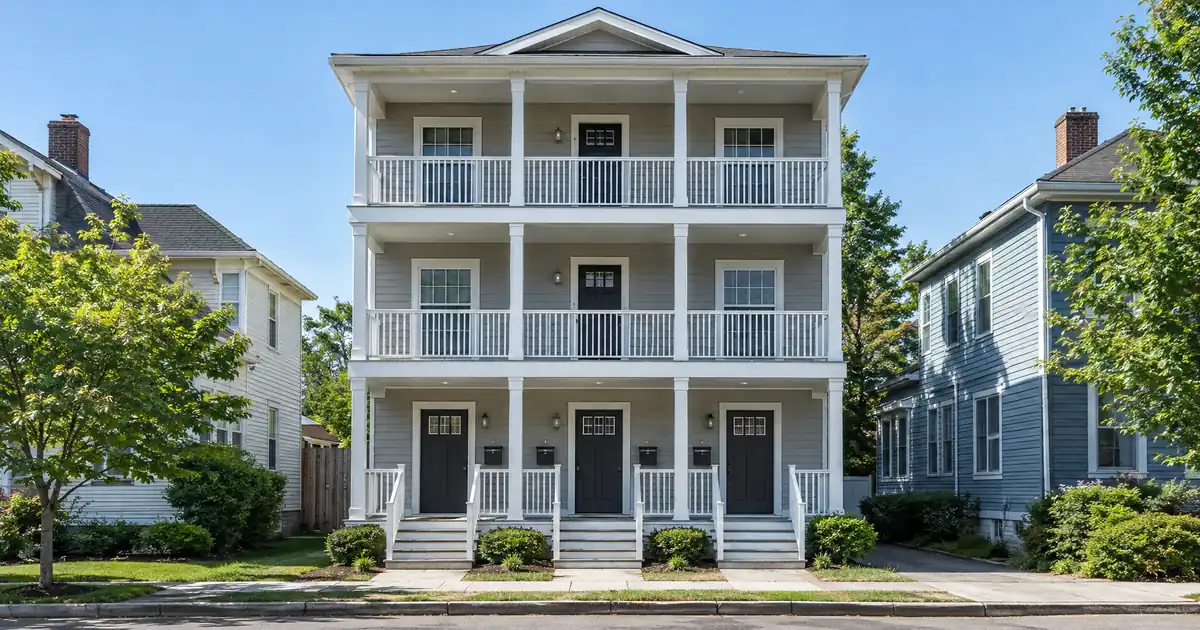
It means you own a two-, three- or four-unit building, you live in one unit, and tenants rent the others. Lenders call this an owner-occupied multi-unit, or a principal residence with rental units.
That occupancy status matters more than the lease count. Because you live there, the loan is priced and capped as a home loan. Across the wholesale programs I place files with, a cash-out on a 2–4 unit principal residence follows the 75% ceiling. A one-unit principal residence gets 80%.
A cash-out refinance replaces your current mortgage with a larger one and hands you the difference in cash. If you want to see how Lendmire’s cash-out refinance programs fit a home like yours, start there. The rest of this piece explains how the file is built.
Which Situation Are You In?
Three situations come up most often. Find yours, because the rules diverge.
| Your situation | What decides leverage | Where leases matter |
|---|---|---|
| You live in one unit | 75% LTV cap, 2–4 units | Rent can help qualify |
| You live in none | Investment rules, 75% cap on 2–4 units | Different rulebook |
| You live in a one-unit home with an ADU | 80% LTV cap, one unit | ADU rent may count |
If you do not live in the building, occupancy decides the leverage, and this article’s rules do not apply. Conventional investment-property cash-out sits at 75% on two to four units. Otherwise, read on.
How Does the Lender Underwrite the Loan, Step by Step?
The lender screens eligibility, orders an appraisal, documents rent, runs your ratios, and checks reserves. Leases touch steps three and four. Everything else is the same as for any owner-occupied cash-out.
Step 1: Eligibility screen. Under Fannie Mae Selling Guide B2-1.3-03, at least one borrower must have been on title for six months before the new loan disburses. If the home was listed for sale, the listing must be off the market on or before the disbursement date. The wholesale programs I work with also want the first mortgage being paid off to be at least 12 months old, measured note date to note date. Fannie Mae’s earlier guide text states that same 12-month test.
Step 2: Appraisal. For a 2–4 unit home, the appraiser completes Form 1025, the small residential income property report. It sets the value that drives your LTV cap. It also reports market rents for each unit. Expect a bigger appraisal scope than a single-family home gets.
Step 3: Documenting the rent. A lease is not self-proving. Fannie Mae’s rental income rules want the lease amount supported by the Form 1025 market rent or by evidence the lease terms are in effect. Evidence can be two consecutive months of bank statements or electronic transfers showing rent arriving. For a brand-new lease, a security deposit and first month’s rent with proof of deposit can do it.
Step 4: Counting the rent. When the lender uses current leases or appraiser market rents, it multiplies gross monthly rent by 75%. The other 25% is a built-in allowance for vacancy and upkeep. That rent is added to your income. Your full housing payment still counts as an expense.
Step 5: Debt-to-income and reserves. Debt-to-income, or DTI, compares your monthly debts to your monthly income. Reserves are liquid funds left after closing. Per Fannie Mae’s cash-out rule, a DTI above 45% on a DU casefile triggers six months of reserves on any cash-out. A 2–4 unit principal residence already carries that six-month requirement, so on your building the DTI test does not add to it. In practice, the automated finding governs most of our files, with a 50% total ratio ceiling across the wholesale conventional programs, subject to lender guidelines.
Step 6: Closing. Your cash proceeds equal the new loan minus the payoff, costs and required items. Your Loan Estimate shows the estimated cash to close.
Does Rent From Your Own Unit Count?
Generally, no. Rental income from the unit you occupy cannot be used to qualify. Only the tenant units count.
There are narrow exceptions. Fannie Mae allows boarder income and properties with accessory units. If you live in a one-unit home with an existing accessory dwelling unit, that unit’s rent may count. Your own living space in a 2–4 unit building does not.
So picture a three-unit building where you live in one unit and two are leased. Lenders look at two units’ worth of rent, take 75% of it, and add that to your qualifying income. Your own unit contributes nothing.
Do You Need the Rent at All?
Sometimes not. If your own income carries the loan comfortably, the rent is reported but not relied on. Fannie Mae requires eligible gross monthly rent on the subject property to be reported in the loan delivery data, even if it is not used to qualify.
Here is how the two paths split.
Income carries the loan. Your DTI works without rental income. The leases still get verified because the rent is reported. Paperwork is lighter, but not zero.
Rent is needed. Your DTI only works when the tenant units’ rent is added. Then the lease evidence, the appraisal rents and your landlord history all become load-bearing.
There is a third use. Counting rent can pull your DTI down and keep you inside the lender’s ratio limits. On a one-unit home, a DTI above 45% adds a six-month reserve requirement. On a 2–4 unit home you live in, six months already applies, so rent helps with the ratio, not the reserves. Treat the effect as something to test with your loan officer, not something to assume. The exact numbers vary by lender and program and follow a full review of property, leverage, and credit.
What About Your Landlord Experience?
Landlord history matters. Under Fannie Mae’s rental income rules, a borrower who owns a principal residence and has at least a one-year history of rental income or documented property-management experience faces no restriction on the amount of rental income used. With less experience, the amount of rent counted may be limited. Programs differ, so ask your loan officer how your history plays out.
You also need a current housing expense or ownership of your principal residence. Fannie Mae’s Quality Insider guidance tells lenders to confirm this before counting rental income.
Why Reserves Catch People Off Guard
Reserves are the quiet requirement. Under Fannie Mae’s minimum reserve rules, a 2–4 unit principal residence transaction requires six months of reserves. So does a cash-out with a DTI above 45%. A one-unit home carries no minimum on its own.
Many owner-occupant borrowers assume a fully leased building means no reserves. It does not. And cash you pull out in the refinance generally cannot double as your reserves. Fannie Mae reduces reserve credit by the cash back on a refinance.
Key Terms Defined
Cash-out refinance: A new mortgage larger than your payoff, with the difference paid to you in cash.
Limited cash-out (rate-and-term) refinance: A refinance that pays off your loan and costs, with only incidental cash back.
Seasoning: The waiting period tied to how long you have owned the home or held your current loan.
Rent roll: A unit-by-unit list of tenants, rents, lease dates and deposits.
Rent used for lender review vs. reported rent: Rent used for lender review is the rent figure the lender counts toward the property’s income when qualifying the loan. Reported rent is the rent disclosed in the loan data, which may differ from the figure the lender uses.
Reserves: Liquid savings left after closing, measured in months of housing payments.
Worked Example: Two Files, One Building
Consider a fourplex you live in, with the other three units leased. You are asking for the 75% LTV cap. Two borrowers apply on that identical building. Final terms depend on the lender’s guidelines, the property type, and the borrower’s complete credit picture.
File one: income carries it. Borrower A has strong traditional employment income. Her DTI works without any rent. The lender documents the leases and reports the gross rent, but the approval does not lean on it. Her file lands well under the 45% line. Reserves still matter because the 2–4 unit structure carries its own six-month requirement.
File two: rent carries it. Borrower B has solid but thinner income. His DTI only clears once 75% of the three tenant units’ rent is added. Now every lease is load-bearing, and he needs the appraiser’s market rents and proof of payment to support them.
The stress test. Suppose one tenant moves out before closing. For Borrower A, little changes. For Borrower B, the lender recalculates with one fewer lease, and his DTI may rise past what the program allows. His reserve requirement stays the same, because six months already applies to this fourplex. What changes is whether the ratio still works, which may mean a smaller loan or no approval on that file. When a unit goes vacant mid-file, tell your loan officer early. The lender will re-verify. Terms vary by lender guidelines, property type, leverage, credit profile, and full file review.
Appraised value still sets the ceiling in both files. The 75% cap applies to the appraised value, and then payoff, costs and required items come out of what is left. That is why “all the equity” is never available.
Why Files Stall
In my experience, these are the usual documentation failures:
- An expired lease with no month-to-month proof.
- Rent paid in cash with no deposit trail.
- A lease amount that does not match the appraiser’s market rent.
- A security deposit that never shows up in the bank statements.
- A unit that sat vacant for a stretch with no explanation.
A rent roll helps. List each unit, tenant, monthly rent, lease start and end, and deposit held. Then match it to bank statements.
Where the General Rule Breaks
Recent purchase. If you bought the home with cash recently, the delayed financing exception may let you refinance sooner. It applies to an all-cash, arm’s-length purchase documented by a settlement statement. The new loan is limited to your documented investment plus costs.
Inheritance and legal awards. The wholesale programs allow seasoning exceptions for these as well, subject to lender guidelines.
Limited cash-out. This is a different product. Fannie Mae’s Eligibility Matrix shows 2–4 unit principal-residence limited cash-out at up to 95%. The catch is that cash back is only incidental. If you want real cash, you are in the cash-out lane at 75%.
Higher-leverage wholesale lane. One wholesale lane reaches 89.99% LTV with no mortgage insurance at a 680 score and a 50% ratio on a 30-year fixed. It is for primary residences with a conforming balance, with its own six months of seasoning. It is aimed at one-unit homes, so ask whether your building fits. Each figure is subject to lender guidelines and a complete review of property type, leverage, and credit.
Government loans. FHA and VA cash-out follow their own rules and are not covered here.
HomeReady and Home Possible. These are purchase and limited cash-out products. Their eligibility excludes cash-out refinances for most borrowers.
Texas. On a Texas homestead, the state constitution caps cash-out at the agency figure, and the wholesale lane above is not written there.
Not living there. If you move out, occupancy changes and the investment-property rules apply instead.
Common Misconceptions
“If every unit is leased, I get one-unit leverage.” No. The 2–4 unit cap stays at 75%.
“One hundred percent of the rent counts.” No. Lenders count 75% of gross rent.
“My own unit’s rent counts.” Generally not.
“A lease is enough.” The lease needs support from the appraisal or proof of payment.
“A recent purchase is always blocked.” Not if the delayed financing exception is met.
What Does This Cost You?
Mortgage insurance does not apply at 75% LTV, because it starts above 80%. Closing costs still do. The CFPB’s research on cash-out refinances notes that costs can include origination fees, appraisal fees, title insurance, and other taxes and fees. Your Loan Estimate itemizes them. Leverage, reserves, and pricing vary by lender and program; the final terms follow the full file review.
The budget catch is this: your new payment rises with every dollar of cash you take, and the full payment counts against you even though only 75% of rent offsets it. Rolling costs into the loan raises the balance too. Tax treatment can depend on your situation; borrowers should speak with a qualified tax professional before relying on any deduction or credit.
What Should You Do Next?
Gather your rent roll, current leases, two months of rent deposits and your current mortgage statement. Confirm how long you have been on title and the age of your first mortgage. Then ask your loan officer to run the file two ways: with the rent and without it.
If you are weighing a cash-out refinance against keeping the loan you have, Lendmire can help you compare the programs and the equity each one reaches. If you are comparing it with borrowing against equity another way, Lendmire’s piece HELOC Rental Income Rules When All Other Units Are Leased walks through that route. Program figures are subject to lender guidelines and full file review, and nothing here is a commitment to lend.
Frequently Asked Questions
Does a fully leased building let me borrow more?
No. The leverage cap depends on unit count and occupancy, not on how many units are rented. A 2–4 unit principal residence is capped at 75% for cash-out, while a one-unit home reaches 80%. Leases only change your qualifying income and paperwork.
Is rent from my own unit ever counted?
Generally not. Rent from the unit you occupy cannot be used to qualify. Exceptions are narrow, such as boarder income or an existing accessory unit on a one-unit home.
How much of the tenant rent counts?
When the lender uses current leases or appraiser market rents, it counts 75% of gross monthly rent. The remaining 25% is an allowance for vacancy and maintenance. Your full housing payment is still counted as an expense.
What if a tenant leaves before closing?
The lender will re-verify the file with the reduced rent. If your income does not depend on that rent, little changes. If it does, your DTI can rise and the loan may shrink or fall away. Your six-month reserve requirement does not change, because it already applies to a 2–4 unit principal residence. Exact terms depend on the lender’s guidelines, property type, leverage, and a full review of the borrower’s file.
Can I refinance soon after buying the home?
Usually you need six months on title. The exception is delayed financing for an all-cash, arm’s-length purchase, where the new loan is limited to your documented investment plus costs.
For your own numbers, request a scenario review with Lendmire.
About Lendmire
Lendmire (NMLS# 2371349) is a mortgage broker licensed for consumer lending in 16 states. Lendmire arranges FHA, VA, conventional and jumbo purchase and refinance loans through wholesale lenders; every file is underwritten by the lender under the applicable program guidelines. Scotsman Guide named Lendmire a Top Mortgage Workplace in both 2025 and 2026.
For the program’s current guidelines, see conventional loan programs.
Get Started
Ready to find the right loan for you?
In about 30 seconds you can review financing options available for your home or investment property. No commitment required.
Informational only. Not a Loan Estimate, approval, or commitment to lend. Program availability and eligibility are subject to lender guidelines, credit approval, property review, and underwriting.
References
1. Fannie Mae Selling Guide B2-1.3-03, Cash-Out Refinance Transactions
2. Fannie Mae Selling Guide B2-1.3-03, earlier version
4. Fannie Mae Selling Guide B3-4.1-01, Minimum Reserve Requirements
5. Fannie Mae Eligibility Matrix
6. CFPB, Cash-Out Refinances and Paydown Behavior
This article is part of Lendmire’s Conventional Loans series — every loan program’s qualification details, guidelines, and scenarios live on the loan options page.
Related reading: How to Get a Conventional Cash-Out When Other Heirs Will Not Sell · Conventional Cash-Out Refinance Requirements for a Clean File · Conventional Cash-Out Refinance Rules With Leased Solar Panels
Brandon Miller
Founder & CEO, Mortgage Loan Originator, Lendmire LLC
- Mortgage Loan Originator · NMLS# 1129696 · Verify on NMLS Consumer Access
- North Carolina Real Estate Broker · License# 343312 · Verify on NCREC
- North Carolina Insurance Producer · License# 19053198 · Property, Casualty, Life, Health · Verify on NAIC SBS
- Lendmire LLC · Firm NMLS# 2371349 · Verify firm licensure
Required disclosures. Lendmire (NMLS# 2371349) operates as a licensed mortgage broker, not a direct lender or depository. The discussion in this article is general in nature and should not be relied upon as financial, legal, or tax advice — every investment scenario is unique and should be reviewed by a qualified professional. Any loan inquiry is subject to lender underwriting, and this article is not a commitment to lend or a guarantee of approval. Mortgage rates, loan terms, and program guidelines vary by borrower, property, and state, and may change without notice. Equal Housing Opportunity. Verify licensure at NMLS Consumer Access.