
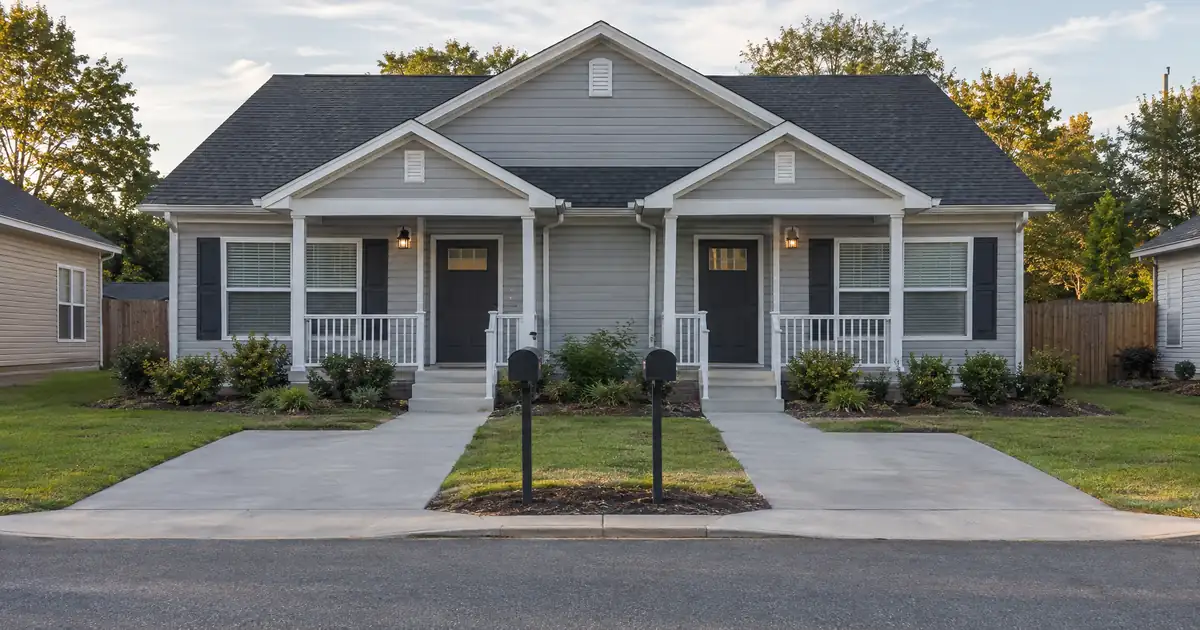
The Quick Read: A vacant unit does not block a conventional cash-out refinance on a 2-4 unit home you live in. Agency guidelines do not turn on vacancy itself. What changes is the income side, because an empty unit has no lease and its rent usually cannot help you qualify. Leverage is capped at 75% of appraised value on a 2-4 unit primary residence, and the usual seasoning clocks still apply, subject to lender guidelines and full file review.
Key Takeaways
- Vacancy is not a stand-alone disqualifier. It mostly decides whether rent from that unit counts as income.
- Plan to qualify without the empty unit’s rent. Then it barely matters.
- Cash-out on a 2-4 unit primary residence tops out at 75% LTV. A one-unit home reaches 80%.
- Two separate clocks apply: the loan being paid off must be 12 months old, and one borrower must have six months on title.
- Live in one unit? You are in the owner-occupied lane. If you do not, the leverage cap and the whole file change. These specifics are subject to lender guidelines and a full review of property, leverage, and credit.
What Is a Conventional Cash-Out Refinance on a Multi-Unit Home?
A cash-out refinance replaces your current mortgage with a bigger one and hands you the difference in cash. Conventional means the loan follows Fannie Mae or Freddie Mac rules. On a duplex, triplex, or fourplex where you live in one unit, the home counts as a principal residence.
Lendmire arranges these loans through wholesale lenders, and Lendmire’s cash-out refinance programs follow the same agency framework. Across the wholesale programs we place files with, a vacant unit comes up often. A tenant moves out, a unit sits empty during repairs, or an owner buys a building that is partly unleased.
Here is the part that surprises people. The agencies do not write a vacancy rule for cash-out. The vacant unit matters in three indirect ways:
- Whether its rent can be counted as income.
- How the appraisal handles it, and whether it is livable.
- Whether your claim that you live in the building holds up.
The “vacant unit” mechanics below reflect how the agency rules fit together, not a line in a guide that says “vacant.” Your lender confirms treatment against the underwriting guide on your file.
How Is the Loan Underwritten, Step by Step?
The lender runs the same sequence it would on any 2-4 unit cash-out. The vacant unit only touches steps three through five.
1. Classify the loan. Taking cash out makes it a cash-out refinance. Living in one unit makes it a principal residence. The Fannie Mae Eligibility Matrix lists the cash-out maximum at 80% LTV for a one-unit principal residence and 75% for a 2-4 unit one. LTV means loan-to-value, the loan as a share of the appraised value.
2. Check the seasoning clocks. Seasoning is a required waiting period. More on both clocks below.
3. Decide whether rent counts. Qualifying without any rental income is the simplest path.
4. Document any rent you do use. Rent from occupied units needs support, such as tax-return rental history or a current signed lease.
5. Treat the vacant unit separately. With no lease, that unit’s rent generally cannot be counted from a lease.
6. Appraise the whole building. The appraiser reports on every unit and values the vacant one like the rest.
7. Run the file. Automated underwriting checks credit, ratios, and reserves.
Pricing and available terms vary by lender, borrower profile, property type, and full underwriting review. The automated finding governs most files, with a total debt-to-income ceiling of 50%. Debt-to-income, or DTI, compares your monthly debts, including the new housing payment, to your monthly income.
Does the Empty Unit’s Rent Count as Income?
Usually not. Rent counts when it is documented, and a vacant unit has no lease to document.
Freddie Mac’s rental income guide allows rental income from units you do not occupy in a 2-4 unit primary residence. That income must meet the documentation and calculation rules, and for a property bought or converted in the current year, the lease must be current and fully executed. Freddie also calculates the housing expense without the rental income. It then adds the net rent to your stable monthly income.
Fannie Mae works the same way in spirit. Per its desktop underwriting job aid on rental income, net rent on a 2-4 unit principal residence is added to qualifying income, and the full payment goes into your DTI.
So what about the empty unit? The lender may or may not accept the appraiser’s market rent on a refinance, and that depends on the lender’s own underwriting guide. Do not plan around it.
Why the caution? Without a lease, only the appraiser’s opinion supports that rent. Lenders trust signed paper and tax history more than opinion.
The Simplest Path: Qualify Without the Vacant Unit
If your own income carries the new payment, the vacant unit barely matters. The lender leaves its rent out, puts the full housing payment into your DTI, and moves on. That is the cleanest file.
Picture a borrower with a fourplex, living in one unit, with two units leased and one empty. The lender can count documented rent from the two leased units. It leaves the empty unit at zero. If the borrower’s income still clears the 50% automated ceiling, or the lower manual limits, the vacancy never becomes a problem.
Now flip it. If the borrower needs the empty unit’s rent to clear the ratio, the file gets fragile. That is the point to lease the unit first or draw less cash. Run the math with the empty unit at zero. If it only works with that rent added, treat it as a warning.
Higher DTI also triggers reserves. Per Fannie Mae’s Selling Guide on cash-out refinances, a DU loan with a DTI above 45% needs six months of reserves. Reserves are liquid funds left after closing, counted in months of housing payments.
The Seasoning Clocks (Two of Them)
People mix these up constantly. There are two separate tests, and a vacant unit changes neither.
- The loan clock. The existing first mortgage must be at least 12 months old, counted from its note date to the new note date.
- The title clock. At least one borrower must have been on title for six months before the new loan is disbursed.
Both Fannie Mae’s guide above and Freddie Mac’s Guide 4301.5 set these. Exceptions exist, such as inheritance or a legal award, and delayed financing covers some borrowers who bought with cash. Our wholesale programs follow the same approach.
A recent purchase is where vacancy and seasoning collide. Say you bought a building with one unit empty and want cash out soon. You have to clear both clocks, and the empty unit gives you no lease to point to. That is a slow combination, not an impossible one.
If the home was listed for sale, it must be taken off the market by the disbursement date.
How Much Can You Borrow? Leverage by Occupancy
Occupancy sets the cap, and vacancy does not.
| Property and use | Conventional cash-out max LTV |
|---|---|
| One-unit principal residence | 80% |
| 2-4 unit principal residence | 75% |
| Second home | 75% |
| Investment property | 75% |
A wholesale lane also reaches 89.99% LTV with no mortgage insurance, at a 680 score and a 50% ratio, on a thirty-year fixed, primary residence with a conforming balance and its own six months of seasoning. That lane is for primary residences, and the table above is the standard cap for 2-4 unit homes. Whether a given lane fits your building depends on the lender’s file review.
Limited cash-out is not an escape hatch. Limited cash-out, also called rate-and-term, pays off the existing mortgage and closing costs with only incidental cash back. It is a different loan with a different purpose, and it allows higher leverage on one-unit homes at 95% LTV, with mortgage insurance above 80%. Terms depend on the lender’s guidelines, the property type, the leverage, and a full review of the credit profile.
Mortgage insurance protects the lender when your equity is thin. It is required above 80% LTV. You can ask to cancel it at 80% of the original value with good payment history, and the servicer must end it automatically at 78%. The exact numbers vary by lender and program and follow a full review of property, leverage, and credit.
The Appraisal: What Happens to the Vacant Unit
The appraiser covers the whole building. For a 2-4 unit home, Fannie Mae’s appraisal form list includes the Small Residential Income Property Appraisal Report, Form 1025, which the lender needs when subject-property rental income is used to qualify. You can find it on Fannie Mae’s forms page.
The vacant unit gets valued and viewed like any other. What it has to be is livable. A unit torn open for renovation is a different conversation from a clean unit between tenants. If the unit is not in livable condition, expect questions. The appraiser may also note condition issues that the lender must resolve.
Where the General Rule Breaks
Four edge cases change the answer.
Occupancy. If you do not live in any unit, the property is not a principal residence. Occupancy sets leverage, and the leverage cap and file requirements shift. This is the single biggest thing that can break the 75% treatment, and it has nothing to do with the empty unit. Claiming owner-occupancy you do not have is a serious problem for any file.
Accessory dwelling units. Per Fannie Mae’s announcement SEL-2025-08, ADU rental income is allowed only on a one-unit principal residence, for purchase and limited cash-out refinances. It is not available on a cash-out. A vacant ADU on a one-unit home cannot help you qualify for cash-out.
Texas homesteads. A cash-out on a Texas homestead is capped by the state constitution at the agency figure. The 89.99% wholesale lane is not written there.
Recent purchase. The six-month title clock can stop a file before vacancy ever comes up.
Situations That Look Alike but Differ
| Situation | What the lender relies on | What to have ready |
|---|---|---|
| Vacant now, no lease | Your other income | Proof you qualify without that rent |
| Between tenants | Prior lease and tax history | Past leases, return history |
| Under renovation | Livable condition | Photos, permit and work status |
| Newly leased | Signed lease | Fully executed lease |
| Month-to-month | Documented history | Payment records |
Treat that table as a starting point. Each lender applies the agency rules through its own overlays.
What to Do Before You Apply
1. Run the file with the vacant unit at zero. Include the full new payment in your DTI.
2. Lease the unit if you can. A signed lease turns opinion into paper.
3. Document why it is empty. Between tenants and under repair read very differently.
4. Gather rental history. Traditional personal-income documentation and current leases support the occupied units.
5. Check both seasoning clocks. Count from the note dates and your title date.
6. Decide how much cash you need. Drawing less leaves more room under the 75% cap.
7. Withdraw any sale listing. It must be off the market by disbursement.
If the Vacancy Blocks the File
You still have options.
- Wait and lease. A signed lease can turn a weak file into a normal one.
- Draw less. A smaller loan can lower your ratios.
- Use a different structure. A home equity loan or line of credit leaves your first mortgage alone. It has its own qualifying rules and costs.
- Pursue a limited cash-out refinance if you mainly want a better loan term and little cash back.
Cash-out loans also carry price adjustments, which show up on your Loan Estimate. Compare the full terms across options before you decide.
Tax treatment can depend on your situation; borrowers should speak with a qualified tax professional before relying on any deduction or credit.
Key Terms Defined
- Cash-out refinance: A new, larger mortgage that pays off the old one and gives you the difference in cash.
- LTV (loan-to-value): The loan balance divided by the appraised value of the home.
- Seasoning: A required waiting period on the existing loan or on your time on title.
- DTI (debt-to-income): Your monthly debts divided by your monthly income.
- Reserves: Liquid funds left after closing, counted in months of housing payments.
- Form 1025: The appraisal report used for 2-4 unit properties.
Frequently Asked Questions
Do I need a lease on the vacant unit to take cash out?
No. Agency rules do not require every unit to be leased. You need a lease only if you want that unit’s rent counted as income, and a vacant unit has none to show. If you qualify without the rent, the empty unit is not a barrier. Your lender confirms treatment against the underwriting guide.
Can I live in one unit and still use a conventional cash-out?
Yes. A 2-4 unit home where you live in one unit is a principal residence. The cash-out cap is 75% LTV, lower than the 80% on a one-unit home. Our piece on FHA versus conventional cash-out for a 2-4 unit primary home compares the programs in more depth. Final terms depend on the lender’s guidelines, the property type, and the borrower’s complete credit picture.
How long must I own the building first?
Two clocks apply. The loan being paid off must be at least 12 months old, and at least one borrower must have been on title for six months. Exceptions exist for inheritance, legal awards, and delayed financing after a cash purchase.
Does a vacant unit lower how much cash I can take?
Not directly. The 75% LTV cap is measured against appraised value and does not change with vacancy. The effect is indirect: if your qualifying income falls short, you may need a smaller loan to fit your ratios. Each figure is subject to lender guidelines and a complete review of property type, leverage, and credit.
Can I use projected rent for the empty unit?
Do not count on it. Rental income generally needs documentation, such as tax-return history or a signed lease. Whether appraiser market rent alone can support income on a refinance of a vacant unit varies by lender and program, so ask your lender early. Our related piece DSCR Cash-Out Requirements When You Occupy One Unit covers a different lane and a different rulebook.
Where This Leaves You
A vacant unit is an income question and a condition question, not a ban. Qualify without its rent, clear both seasoning clocks, stay under the 75% cap, and the empty unit rarely decides the file. If you are weighing a cash-out refinance against keeping the loan you have, Lendmire can help you compare the programs and the equity each one reaches.
For your own numbers, request a scenario review with Lendmire.
About Lendmire
Lendmire is a mortgage brokerage (NMLS# 2371349) licensed for consumer mortgage lending in 16 states, arranging FHA, VA, conventional and jumbo purchase and refinance loans through a wholesale lending network. Eligibility is determined by the lender on each file. Scotsman Guide named Lendmire a Top Mortgage Workplace in both 2025 and 2026.
For the program’s current guidelines, see conventional loan programs.
Get Started
Ready to find the right loan for you?
In about 30 seconds you can review financing options available for your home or investment property. No commitment required.
Informational only. Not a Loan Estimate, approval, or commitment to lend. Program availability and eligibility are subject to lender guidelines, credit approval, property review, and underwriting.
References
1. Fannie Mae Eligibility Matrix
2. Freddie Mac Guide 5306.1, Rental Income
3. Fannie Mae DU Job Aid, Entering Income from Rental Property
4. Fannie Mae Selling Guide B2-1.3-03, Cash-Out Refinance Transactions
7. Fannie Mae’s announcement SEL-2025-08
This article is part of Lendmire’s Conventional Loans series — every loan program’s qualification details, guidelines, and scenarios live on the loan options page.
Related reading: Conventional Cash-Out Refinance Reserves by Occupancy and Unit Count · Conventional Cash-Out Refinance Requirements for a Condo Building · Conventional Cash-Out Credit Requirements When Consolidating Debt
Brandon Miller
Founder & CEO, Mortgage Loan Originator, Lendmire LLC
- Mortgage Loan Originator · NMLS# 1129696 · Verify on NMLS Consumer Access
- North Carolina Real Estate Broker · License# 343312 · Verify on NCREC
- North Carolina Insurance Producer · License# 19053198 · Property, Casualty, Life, Health · Verify on NAIC SBS
- Lendmire LLC · Firm NMLS# 2371349 · Verify firm licensure
Disclosure information. Lendmire is a state-licensed mortgage brokerage under NMLS# 2371349. Lendmire is not a depository institution, direct lender, or financial advisor — all loans referenced are placed through wholesale lender partners and are subject to each lender's underwriting standards. This article is provided for general informational purposes and is not a commitment to lend, nor does it constitute financial, legal, or tax advice. Loan programs, terms, rates, and qualification standards change without notice and depend on borrower profile, property type, and the state in which the subject property is located. Equal Housing Opportunity provider. NMLS Consumer Access: nmlsconsumeraccess.org.