
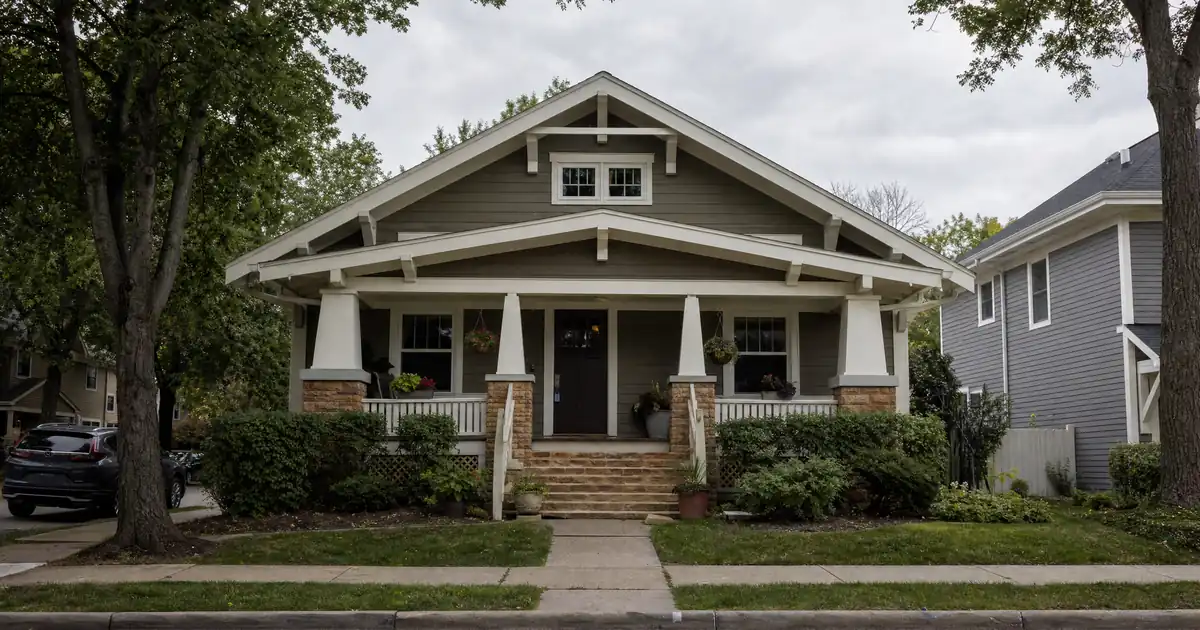
Complete Guide For A 1099-only Loan On 2-4 Unit Properties — The Quick Read: A 1099-only loan looks at a self-employed borrower’s gross 1099 earnings. It does not use two years of traditional personal-income paperwork. This is a personal-income program. It is not a property-cash-flow program. On a duplex, triplex, or fourplex, one question decides if this loan fits: does the borrower live in one of the units? Owner-occupants usually fit 1099-only underwriting. Investors buying a 2-4 unit purely as a rental usually compare DSCR loans instead. With a DSCR loan, the building’s rent drives qualification — not the borrower’s paycheck. This is subject to lender guidelines and program availability.
Key Takeaways
- A 1099-only loan looks at the borrower’s documented 1099 income. It does not look at the property’s rent. That’s the opposite of how a DSCR loan works.
- Occupancy decides the program. Owner-occupied 2-4 unit purchases (house-hacking) fit 1099-only underwriting. Non-owner-occupied 2-4 unit rentals generally fit DSCR instead.
- Underwriting starts from gross 1099 receipts. Lenders apply a lender-specific expense factor. This is not the same as itemized Schedule C deductions a CPA might find.
- Loan sizes across the alt-doc programs commonly run from roughly $125,000 to $3,500,000. Reserves generally land around six months of the full housing payment. This is subject to lender guidelines and file strength.
- FHA’s self-sufficiency test for 3-4 unit owner-occupied purchases is a separate rule. It has no equivalent inside 1099-only or DSCR non-QM underwriting.
Key Terms Defined
- 1099-only loan: A non-QM mortgage that qualifies a self-employed borrower using 1099 earnings. It replaces W-2s and two years of full traditional personal-income documentation.
- Non-QM: Short for “non-qualified mortgage.” This is a loan that doesn’t meet the standard federal documentation checklist. Lenders underwrite it under separate guidelines instead.
- DSCR loan: A business-purpose loan. It qualifies mainly on whether the property’s rental income covers the payment, subject to lender guidelines. It does not rely on the borrower’s personal income.
- Expense factor: A flat percentage a lender subtracts from gross 1099 income. This estimates real take-home earnings. Lenders use it instead of an itemized tax-deduction review.
- PITIA: Principal, interest, taxes, insurance, and association dues. This is the full monthly housing obligation. Income gets measured against this number.
- Owner-occupied vs. non-owner-occupied: This means whether the borrower lives in one of the units, or the property is a pure rental with nobody living on-site. This one distinction decides which loan family fits a 2-4 unit purchase.
What a 1099-Only Loan Actually Is
A 1099-only loan is a non-QM mortgage. It’s built for people paid on IRS Form 1099 instead of a W-2. This includes independent contractors, freelancers, gig-platform workers, real estate agents, consultants, and commissioned salespeople. The loan qualifies the borrower using their own 1099 earnings. It does not use the property’s rent.
What your deposits qualify you for in your market.
Alt-doc programs read 12 months of business or personal bank deposits instead of tax returns. Enter your average monthly deposits and see the income a lender would credit you.
The expense factor is set by the lender from your business type and profit-and-loss statement; it is not a number you choose. This widget quotes no rate and no payment.
Program parameters shown update from Lendmire’s centralized guideline source.
Estimate
Illustrative estimate only — not a quote, Loan Estimate, approval, or commitment to lend. Deposit average, expense factor, and housing ratio are editable assumptions; the expense factor a lender applies is set from your business type and documentation. No interest rate or monthly payment is quoted here. Purchase capacity is a simplified illustration and does not account for taxes, insurance, HOA dues, or other debts. Alt-doc income documentation is available on consumer mortgages in the states where Lendmire is licensed for consumer lending; actual terms vary by lender, borrower, and property.
Here’s something worth clearing up early. This loan does not care about the 1099s a homeowner gets from a servicer, like a 1099-INT for mortgage interest. It also doesn’t care about 1099s from a brokerage account. This program uses income-reporting 1099s instead — mainly 1099-NEC, plus 1099-K for platform workers. These forms show what a contractor actually earned during the year.
It’s easy to lump this in with a DSCR loan. Both sit in the non-QM toolbox. Both skip full traditional personal-income review. But they solve different problems. A DSCR loan removes the borrower’s personal income from the file. It qualifies mainly on whether the property’s rental income covers the payment, subject to lender guidelines. A 1099-only loan does the opposite. It keeps the focus on the borrower. It just swaps which documents prove that income. In practice, the lender reviews documented income under the applicable program, subject to lender guidelines. The 1099s replace traditional personal-income documentation as proof. The complete DSCR loans guide breaks down the property-income side in full. This piece stays on the personal-income side.
Borrowers who’ve filed Schedule C returns for years often assume any alt-doc path looks at their net profit after deductions. A 1099-only file doesn’t work that way. That distinction matters more than most borrowers expect going in. Also worth noting: a 1099-only loan is not a bank-statement loan, even though people confuse the two constantly. A bank-statement program totals deposits across twelve or twenty-four months of business or personal statements. A 1099-only program instead relies on the actual 1099 forms issued by the payer. This tends to produce a cleaner, more document-driven file. It works best for borrowers who work primarily with one or two consistent clients or platforms, rather than a wide spread of smaller payers.
How Does Underwriting Actually Treat 1099 Income?
Underwriting starts from gross 1099 receipts. Lenders apply a lender-specific expense factor. Then they check that income has stayed stable or grown across the lookback period. Four steps drive the file.
Borrower screening. The lender confirms the borrower is genuinely self-employed under IRS rules. This means someone reporting nonemployee compensation and paying self-employment tax, rather than having it withheld. The IRS treats anyone earning $400 or more in net self-employment earnings as owing self-employment tax. That tax rule sits underneath this entire borrower category.
Documentation pull. The file skips two years of 1040s and IRS transcripts. Instead, it runs on 1099 forms covering the most recent one to two years. It also needs a year-to-date earnings statement, current contract, or invoices proving the income is still coming in. Payers generally must issue a 1099-NEC once payments to a contractor cross a modest threshold, per H&R Block’s explanation of the form. That’s part of why this paper trail exists for so many independent workers in the first place.
Income calculation. This is where 1099-only underwriting differs most from traditional personal-income review. A full-doc loan uses net Schedule C income, after every deduction a CPA can legitimately find. A 1099-only program works differently. It starts from gross receipts and subtracts a standardized expense factor to approximate business costs. This factor is never identical across lenders, so it’s never worth assuming in advance. The program skips the itemized deduction review entirely. The exact factor is lender-specific. Different investors in the network land on different figures, depending on the borrower’s line of work and file strength. No single percentage is worth quoting as universal.
Stability check. Underwriters want to see the same line of work across the lookback period. They also want income that isn’t sliding backward. A declining trend usually forces the file to use the lower, most recent year instead of an average. Agencies apply this same conservative instinct elsewhere in self-employment underwriting.
Reserves generally factor into the decision too. Most alt-doc programs, 1099-only included, want to see a cushion of liquid funds left over after closing. Lenders commonly discuss this as being in the neighborhood of six months of the full housing payment. The exact requirement varies by lender, loan size, and overall file strength. Credit history, existing debt, and the size of the down payment or equity position all still matter, the same way they do in any mortgage file. A 1099-only program changes how income gets documented and calculated. It doesn’t change the rest of the underwriting picture.
Occupancy Is the Real Fork in the Road on a 2-4 Unit Purchase
Here’s the part almost nobody explains clearly. Unit count isn’t what decides whether a 2-4 unit purchase runs through 1099-only or DSCR. Occupancy is.
A non-owner-occupied 2-4 unit — a pure rental where the buyer doesn’t live on-site — is DSCR territory. The lender sizes the loan off the building’s combined rent, measured against its full monthly housing obligation. The borrower’s personal income, traditional income documentation, and employment history generally aren’t part of the file at all. That’s the whole appeal of DSCR: qualification runs on the property, not the paycheck. For select DSCR programs, a debt-service coverage ratio as low as 1.00 can serve as a program floor. This varies by lender, property type, and overall file strength. It isn’t a universal standard across the space.
A 2-4 unit purchased as a primary residence sits in owner-occupied territory instead. This is the classic house-hack, where the buyer occupies one unit and rents the rest. DSCR products generally aren’t built for owner-occupants. A self-employed buyer house-hacking a duplex, triplex, or fourplex — who’d rather not hand over two years of conventional personal-income paperwork — is usually the exact profile a 1099-only program is designed to serve. This works as long as the income documentation and stability checks described above hold up.
FHA’s self-sufficiency test deserves a mention here too. It trips up a lot of house-hack shoppers who assume every 3-4 unit owner-occupied purchase works the same way. FHA applies its own separate rule. This rule requires the property’s net rental income to help support the overall payment on 3-4 unit purchases. That test has no equivalent inside 1099-only or DSCR non-QM underwriting. It’s strictly an FHA-specific mechanic. Confusing it with how non-QM programs evaluate a 2-4 unit purchase is a common and avoidable mistake.
Borrowers sometimes ask if they can just pick whichever program sounds easier. In practice, the lender verifies occupancy intent as part of the file. Misrepresenting whether a property will be owner-occupied is not something any lender can work around. The honest starting point is always the borrower’s actual living plan for the property. The loan program follows from there — not the other way around.
How Lendmire Fits Into a 2-4 Unit Purchase
Lendmire is a non-QM mortgage brokerage, not a direct lender. It works across roughly 40 markets to connect self-employed borrowers and real estate investors with lenders offering 1099-only, DSCR, bank-statement, and other alt-doc programs. Lendmire brokers loans rather than underwriting them in-house. That means the specific expense factors, reserve requirements, and loan limits described above always come down to the individual lender and the individual file. A broker’s role is matching a borrower’s situation to a program that fits, then walking that file through the lender’s own guidelines. For 2-4 unit purchases specifically, that means helping a borrower figure out early whether occupancy points toward a 1099-only file or a DSCR file. That decision shapes almost everything else about how the loan gets documented and calculated.
For current guidelines and terms, check Lendmire’s DSCR loan programs page.
FAQ
What’s the difference between a 1099-only loan and a DSCR loan on a 2-4 unit property?
A 1099-only loan looks at the borrower’s own documented 1099 earnings. A DSCR loan looks mainly at whether the property’s rental income covers the payment, subject to lender guidelines. The two aren’t interchangeable. Which one applies depends on whether the borrower plans to occupy one of the units.
How do you qualify for a 1099-only loan on an owner-occupied duplex, triplex, or fourplex?
Generally, a lender reviews one to two years of 1099 forms, a year-to-date earnings statement or current contract, and evidence of stable or growing income in the same line of work. The lender then applies a lender-specific expense factor to gross receipts, instead of reviewing itemized Schedule C deductions. This is subject to lender guidelines.
How do you qualify for a DSCR loan on a non-owner-occupied 2-4 unit rental?
DSCR lender review generally centers on the property’s rent, compared to its full monthly housing obligation. This replaces the borrower’s personal income or standard personal-income documentation, subject to lender guidelines and program availability. Reserves, credit history, and equity position typically still factor into the file.
Does the FHA self-sufficiency test apply to 1099-only or DSCR loans?
No. FHA’s self-sufficiency test for 3-4 unit owner-occupied purchases is an FHA-specific rule. It has no direct equivalent inside 1099-only or DSCR non-QM underwriting. Each of those programs follows its own separate guidelines.
Can a self-employed borrower use bank statements instead of 1099s?
That’s a different program. A bank-statement loan totals deposits across a period of months. A 1099-only loan instead relies on the actual 1099 forms issued by a borrower’s payers. Which one fits better generally depends on how a borrower’s income is documented and how many payers are involved, subject to lender guidelines.
About Lendmire
Lendmire is a non-QM mortgage brokerage (NMLS# 2371349). It connects self-employed borrowers and real estate investors with lenders offering DSCR, 1099-only, bank-statement, and other alt-doc mortgage programs across roughly 40 markets nationwide. Lendmire is a broker, not a direct lender. It does not set rates, underwrite loans in-house, or guarantee approval or closing outcomes. Every file is subject to the guidelines of the individual lender it’s placed with. Not every borrower or property will qualify for every program discussed here. This article is provided for general informational purposes only. It does not give financial, tax, or legal advice. Borrowers should confirm current terms, guidelines, and eligibility directly with a licensed loan officer before making decisions. Scotsman Guide named Lendmire a Top Mortgage Workplace in both 2025 and 2026.
Get Started
Ready to find the right loan for you?
In about 30 seconds you can review financing options available for your home or investment property. No commitment required.
Informational only. Not a Loan Estimate, approval, or commitment to lend. Program availability and eligibility are subject to lender guidelines, credit approval, property review, and underwriting.
References
1. IRS
2. H&R Block’s
Brandon Miller
Founder & CEO, Mortgage Loan Originator, Lendmire LLC
- Mortgage Loan Originator · NMLS# 1129696 · Verify on NMLS Consumer Access
- North Carolina Real Estate Broker · License# 343312 · Verify on NCREC
- North Carolina Insurance Producer · License# 19053198 · Property, Casualty, Life, Health · Verify on NAIC SBS
- Lendmire LLC · Firm NMLS# 2371349 · Verify firm licensure
Legal disclosures. Lendmire (NMLS# 2371349) is a state-licensed mortgage brokerage that arranges financing through wholesale lender relationships. Lendmire is not a direct lender, depository institution, or registered financial advisor. The discussion above is general informational content about real estate financing — it is not financial, legal, or tax advice, and readers should consult licensed professionals for guidance on their individual circumstances. Loan inquiries are subject to lender underwriting; this article does not represent a commitment to lend. Loan terms, rates, and qualification standards vary by borrower, property, and state, and are subject to change at any time. Equal Housing Opportunity. NMLS Consumer Access: nmlsconsumeraccess.org.


