
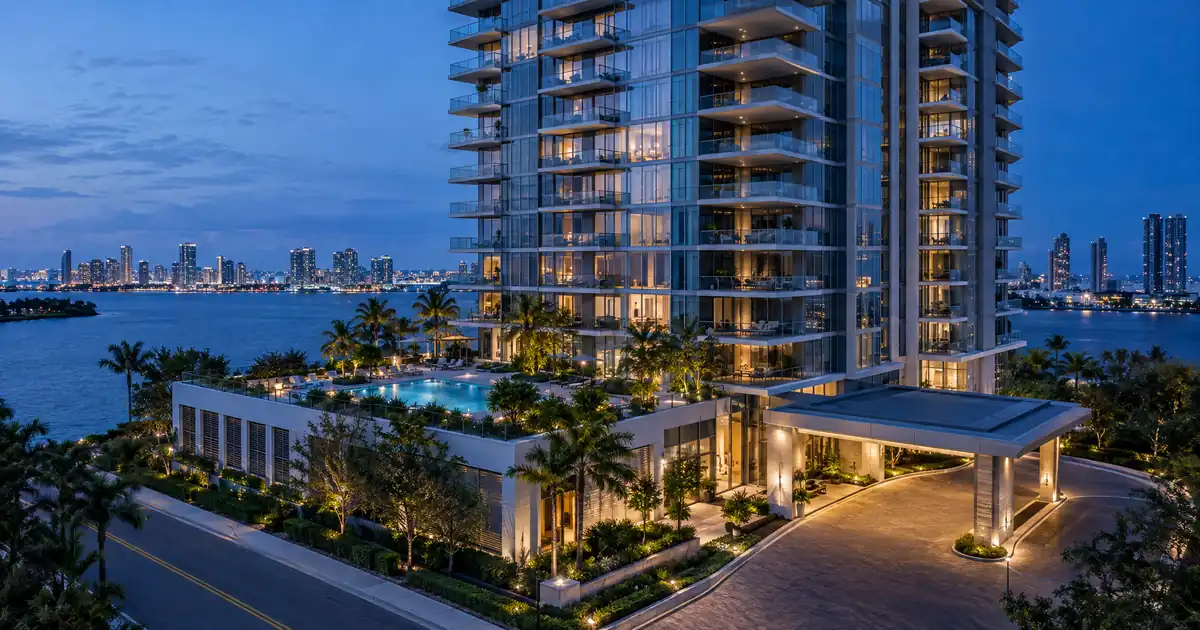
Condotel Qualify Under A Loan-out Bank Statement Loan — The Quick Read: Yes, a condotel can qualify under a loan-out bank statement loan, but the loan-out structure only settles the income side of the file. The condotel itself has to pass a separate property review — HOA questionnaire, appraisal, and rental-pool terms — before leverage and pricing get decided. A borrower can have flawless bank statements and still lose the deal if the building has mandatory rental pooling or hotel-style operations baked into its HOA documents.
Think of it as two gates, not one. Gate one asks whether the borrower’s income is real and stable enough to support the payment. Gate two asks whether the building is even eligible for this kind of financing at all. Passing one says nothing about the other.
What Is a Loan-Out Bank Statement Loan?
A loan-out entity is a corporation or LLC — usually single-owner — that receives contract income on behalf of a self-employed earner before that person pays themselves out of it. Entertainers, athletes, consultants, and commissioned professionals commonly get paid this way, and it produces a W-2 that understates real cash flow relative to what the entity actually took in.
A bank statement loan solves that documentation gap by qualifying income from deposit activity instead of traditional personal-income documentation. Across the wholesale network Lendmire works with, files run on either 12 or 24 months of statements, and transfers from the borrower’s own business account into a personal account count in full toward qualifying income. Personal-account transfers matter here because a loan-out borrower often moves money from the entity to themselves on a set schedule, and that flow needs to show up cleanly in the review.
One mechanical detail catches people off guard: whether the file runs on personal or business statements gets decided once, at the start. It isn’t reworked mid-underwriting, because the expense-ratio math and the transfer analysis depend entirely on which account type is under review. A loan-out borrower whose entity commingles funds across personal and business accounts should nail this down before submitting anything.
What Is a Condotel, and Why Does It Get Treated Differently?
A condotel is a condo unit inside a project that operates, in whole or part, like a hotel — often with rental pooling, a front desk, and centralized management. That operating model is exactly what excludes the project from agency financing.
Fannie Mae’s Selling Guide disqualifies a project from standard financing if it’s operated or managed as a hotel or motel — one trigger being that the HOA is licensed as a hotel, motel, resort, or hospitality entity. A separate provision, laid out in Fannie Mae’s Ask Poli guidance, excludes projects whose HOA documents require owners to put units into a rental pool or share rental profits with the HOA, a management company, or a hotel operator. Fannie Mae also notes that transient projects typically show more than one of these characteristics at once, per its own condo FAQ documentation — the label “condotel” rarely rests on a single feature.
None of this means a condotel can’t be financed. That’s the entire reason non-QM and bank statement lending exists in this corner of the market — to hold loans that don’t fit the agency mold rather than turn the borrower away.
Which Gate Decides Eligibility — Income or Property?
The property, not the borrower’s income documentation, decides whether a condotel can be financed at all. A loan-out bank statement borrower with strong, well-documented deposits still needs the building itself to clear an HOA questionnaire and appraisal review before the deal works forward.
The real screening happens through a questionnaire. The HOA board or management company fills this out — it’s not submitted through a formal agency project review. Standard non-QM condo questionnaires look for the operational signs that separate a condotel from a regular condo project. These signs include on-site check-in services, housekeeping or phone systems run centrally through the HOA, hotel or resort-style activities, mandatory or voluntary rental pooling arrangements, limits on how much an owner can occupy the unit, or franchise agreements with a third-party operator. You can see this in the PennyMac condo questionnaire form, which is used broadly across the non-QM space.
Appraisal adds a second layer. Comparable sales for condotel units are limited mostly to other condotel units in the same or similar buildings, which makes valuation trickier than a standard condo appraisal. For a branded condotel, the hotel management agreement itself becomes part of the underwriting file — reviewers want to see the terms that govern how the unit’s rental activity is handled.
Here’s the part worth sitting with: two loan-out borrowers with nearly identical bank statement files can get opposite outcomes on the same building type. The reason is simple — one target unit sits in a project with voluntary rental participation, while the other sits in a project where the HOA declaration forces pooling. Same income profile. Same documentation. Different property. Different answer.
Voluntary vs. Mandatory Rental Pools — Why It Matters More Than the Label
Rental-pool structure matters more than whether a building calls itself a “condotel” at all. A voluntary rental program, where the owner can opt in or out, gets read very differently by underwriting than a mandatory pooling requirement baked into the HOA declaration.
A unit with an optional rental-management contract may not carry the same weight as one where the governing documents force participation and profit-sharing with a hotel operator. This distinction matters again when a borrower self-manages a unit and has 12 or more months of income history. Some lenders in the network will consider that history on its own merits. Branded condotels, though, more typically rely on the hotel’s own revenue reports to verify income instead.
There’s also a reversal path worth knowing. If a hotel-operator relationship terminates and the HOA amends its documents to strip out mandatory pooling and profit-sharing language, the unit can potentially be re-evaluated as a non-branded condo rather than a condotel going forward. The building’s classification isn’t necessarily permanent — it can shift with governance changes, and that shift can resurface at the next refinance even if it didn’t matter at purchase.
How Leverage and Documentation Actually Work on These Files
Property type sets the leverage ceiling before borrower strength enters the conversation. Through select lenders in Lendmire’s wholesale network, condotels are treated as their own tier below standard non-warrantable condos — capped at 75% LTV on a purchase and 65% on a cash-out on the portfolio program, or 50% on the separate bank portfolio jumbo program that carries twelve-month-statement files to larger sizes. That compares to 85% for warrantable condos and 80% for non-warrantable condos on the same shelf, so the condotel classification itself costs real leverage regardless of how clean the borrower’s income looks. Every figure here varies by lender and program — guidelines, property type, leverage, and credit profile all apply.
On the income side, qualifying income from bank statements comes from eligible deposits divided by the statement period after an expense ratio is applied — lower ratios for service businesses with no employees, higher ratios as staff size grows or for product-based businesses, or an accountant-provided ratio instead. A profit-and-loss method exists too, capped at a set share of stated income. Business-owner transfers into a personal account, which is often exactly how a loan-out borrower moves money, count in full.
Credit floors run 660 on the portfolio non-QM program and 680 on the bank program, stepping up to 700 above the super-jumbo size threshold. Debt-to-income can run to 50%, and reserves scale with loan size — 3 months to $500,000, 6 months to $1,500,000, and 9 months above that, plus 2 months for each additional financed property up to a 12-month maximum. First-time investors are generally held to a 12-month reserve standard regardless of size.
Loan sizes on these programs run from $300,000 to $30,000,000 across two separate wholesale shelves — a portfolio non-QM program carrying files to $6,000,000, and a bank portfolio program carrying twelve-month-statement files on its own ladder up through $30,000,000, stepping down from 65% to $5,000,000, to 60% to $10,000,000, to 55% at the top. Anything above $4,000,000 gets reviewed case by case before submission, and that review applies to condotel purchases at that size just as it applies to any other property type. For the mechanics of how leverage steps down with size on a warrantable or non-warrantable condo purchase, Lendmire’s guide to condo or condotel financing under a super jumbo walks through the full ladder.
Second homes and investment properties typically score about five points lower than a similar primary-residence file, at every size band on these shelves. This matters because most condotel purchases are investment or second-home purchases, not primary residences.
A Practitioner’s Read on These Files
Across files with a loan-out income structure and a condotel target property, one pattern shows up most often: a mismatch in timing. Borrowers often line up their bank statement documentation first and only pull the HOA questionnaire once they’re deep into the purchase contract. That’s backwards. The property review should happen as early as possible. A mandatory rental-pooling clause or an unresolved HOA litigation matter can kill the deal, no matter how strong the income file is. Finding that out late costs time — and sometimes an earnest money deposit.
A condotel with strong headline rental numbers but a fragile HOA balance sheet or unresolved litigation is a structural risk that no income-documentation program can fix. That’s a property problem, not a borrower problem, and no amount of bank statement strength changes it.
What Actually Disqualifies a Condotel — and What Doesn’t
Condotels fall into that bucket by design, not because they’re categorically off-limits.
A loan-out corporation doesn’t disqualify a borrower from bank statement lending. In fact, practitioners often describe this structure as producing some of the stronger bank statement candidates. That’s because business deposits tend to reflect real cash flow better than a W-2 that’s been shaped for tax purposes.
The word “condotel” itself doesn’t make a property ineligible under agency rules. What matters are specific operational details: hotel licensing, mandatory pooling, profit-sharing arrangements, and occupancy restrictions. Two buildings can both get called “condotels” informally, but they can land on opposite sides of the eligibility line. That’s why the definition of condotel changes depending on which lender you ask. A decline from one lender doesn’t mean the building is ineligible everywhere.
Key Terms Defined
Condotel — a condominium unit inside a project that operates in whole or part like a hotel, often featuring rental pooling, centralized management, or front-desk services.
Loan-out entity — a corporation or LLC, typically single-owner, that receives a self-employed earner’s contract income before the owner draws a personal paycheck from it.
Expense ratio — the percentage of gross bank deposits subtracted before calculating qualifying income, varying by business type and employee count.
HOA questionnaire — a form completed by the homeowners association or management company disclosing reserve funding, delinquency rates, litigation, insurance, and rental activity, used by underwriting to classify a project’s eligibility.
Frequently Asked Questions
Can a borrower use both personal and business bank statements on the same file? The account type is chosen once, up front, rather than mixed or switched mid-file, since the expense-ratio math and transfer analysis depend entirely on which type is under review. A loan-out borrower should decide this before submitting statements for underwriting.
Does a condotel ever qualify for a standard 30-year conforming loan? No.
What if the rental pool becomes mandatory after the borrower already owns the unit? A change in the HOA’s rental-pool terms, or the loss of a hotel-brand affiliation, can change how underwriters view the building at the next refinance even if it wasn’t an issue at purchase — building classification isn’t locked in permanently.
Can a self-managed condotel unit use its own rental history instead of hotel revenue reports? Some lenders in the network will consider a borrower’s self-managed income history if it covers 12 or more months, though branded condotels more typically rely on the hotel operator’s revenue reports for income verification instead.
Is a condotel treated the same as any other non-warrantable condo for leverage purposes? No. Condotels sit in their own tier below standard non-warrantable condos, generally capped at 75% LTV on a purchase and 65% on a cash-out on the portfolio program, compared with 80% for non-warrantable condos generally — the condotel classification costs additional leverage on its own.
Investors weighing a condotel purchase against a standard rental building should check Lendmire’s complete DSCR loans guide. It explains how property-income qualification works for straightforward investment purchases. This route can be simpler than a condotel file, especially when the building itself isn’t the main concern.
If you’re evaluating a condotel purchase funded through a loan-out entity, or comparing that path against a straightforward DSCR purchase on a standard investment property, Lendmire can help you look at the numbers — property classification, income documentation, leverage, and credit profile — before you’re deep into a purchase contract. Reach Lendmire at 828-256-2183 or request a quote to see how a specific file lines up.
For current guidelines and terms, see Lendmire’s super jumbo bank statement loan programs page.
Self-employed borrowers can compare both super jumbo programs on Lendmire’s self-employed mortgages page.
About Lendmire
Lendmire, NMLS# 2371349, is a mortgage brokerage focused on investor financing, arranging DSCR loans in 39 states plus Washington, D.C. — 40 markets total. Qualification is based on the property’s income rather than personal income documentation, subject to lender guidelines, making it a fit for LLC-held rentals and scaling portfolios. Scotsman Guide named Lendmire a Top Mortgage Workplace in both 2025 and 2026.
Get Started
Ready to find the right loan for you?
In about 30 seconds you can review financing options available for your home or investment property. No commitment required.
Informational only. Not a Loan Estimate, approval, or commitment to lend. Program availability and eligibility are subject to lender guidelines, credit approval, property review, and underwriting.
References
1. Fannie Mae Selling Guide B4-2.1-03
2. PennyMac Condominium Project Questionnaire
Brandon Miller
Founder & CEO, Mortgage Loan Originator, Lendmire LLC
- Mortgage Loan Originator · NMLS# 1129696 · Verify on NMLS Consumer Access
- North Carolina Real Estate Broker · License# 343312 · Verify on NCREC
- North Carolina Insurance Producer · License# 19053198 · Property, Casualty, Life, Health · Verify on NAIC SBS
- Lendmire LLC · Firm NMLS# 2371349 · Verify firm licensure
Required disclosures. Lendmire (NMLS# 2371349) operates as a licensed mortgage broker, not a direct lender or depository. The discussion in this article is general in nature and should not be relied upon as financial, legal, or tax advice — every investment scenario is unique and should be reviewed by a qualified professional. Any loan inquiry is subject to lender underwriting, and this article is not a commitment to lend or a guarantee of approval. Mortgage rates, loan terms, and program guidelines vary by borrower, property, and state, and may change without notice. Equal Housing Opportunity. Verify licensure at NMLS Consumer Access.


