
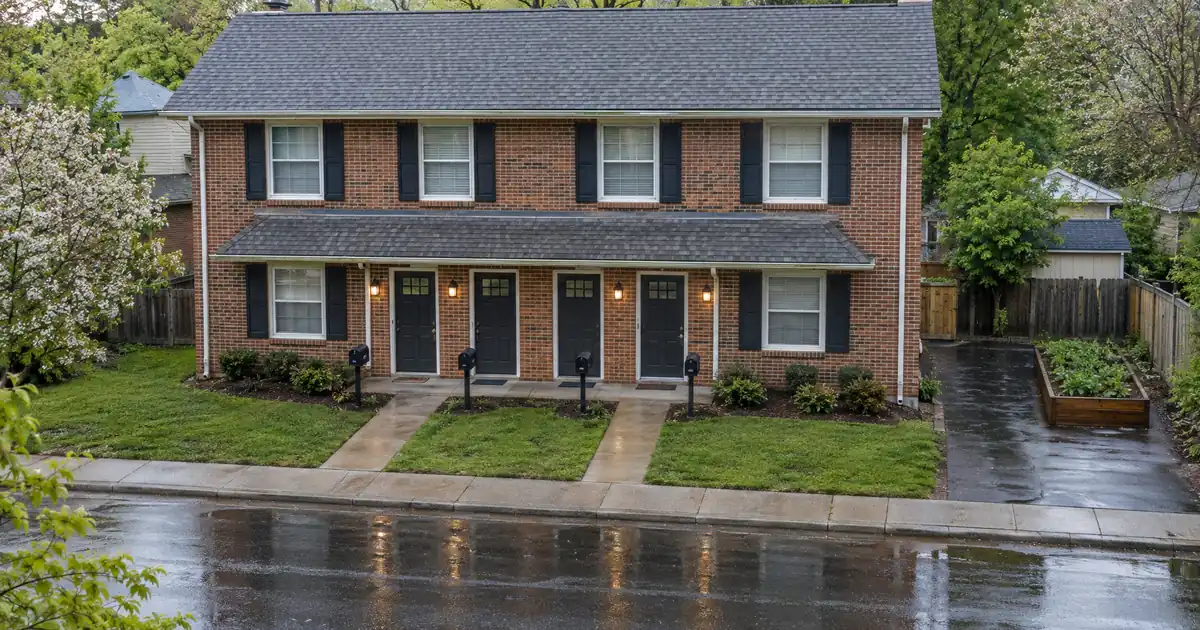
The Quick Read: A conventional loan can include a co-borrower who will not live in the home, even on a two- to four-unit property. At least one borrower still has to live in one of the units as a principal residence. The helper’s income and debts both count, and the helper is fully liable for the loan. Automated underwriting usually allows more leverage than manual underwriting, and Fannie Mae and Freddie Mac differ at the edges.
Key Takeaways
- A non-occupant co-borrower signs the note and shares full responsibility for the loan. This is not a character reference.
- Someone on the loan must occupy one unit. A non-occupant cannot turn a pure rental into an owner-occupied loan.
- Automated underwriting caps leverage at 95% when a non-occupant is on the file. Manual underwriting caps it at 90%.
- On a 2-4 unit purchase, the standard ceiling is already 95%. Adding a helper often costs you nothing in leverage, but it changes the ratio math.
- Fannie Mae and Freddie Mac treat refinances and low-down-payment products differently, so the program you pick matters.
What Is a Non-Occupant Co-Borrower?
A non-occupant co-borrower is a person, often a parent, who is willing and financially able to be a borrower but will not live in the home. Fannie Mae’s Selling Guide governs this under its section on guarantors, co-signers, and non-occupant borrowers.
Conventional payment estimate
The starting figures are an example price at the first-time buyer’s minimum down payment. Replace them with yours.
Editable benchmark: 7.32% as of October 22, 2026 · Freddie Mac 30-year average via FRED®. A conventional market reference, not a conventional loan quote.
Estimate seeded at the low end of Fannie Mae’s published range (0.58%–1.86% a year); the insurer prices the actual premium on the score and the leverage. Applies only above 80% loan-to-value.
Illustrative starting assumptions: a $350,000 price, the first-time buyer’s minimum down payment, a thirty-year term at the current Freddie Mac benchmark, mortgage insurance at the low end of Fannie Mae’s published range, and property taxes and insurance estimated at typical national rates. Every field is editable.
Illustrative estimate only — not a Loan Estimate, approval, quote, or commitment to lend. The rate field carries the weekly Freddie Mac thirty-year conventional benchmark, a market reference and not a conventional loan quote; your rate is set by the lender at lock. The mortgage insurance figure is an editable estimate seeded from Fannie Mae’s published typical range, not a premium quote; the insurer prices the actual premium, and the cancellation month assumes scheduled payments with no extra principal and no change in value. Taxes, insurance and dues are editable estimates; closing costs are not included. Conforming loan limits apply by county. Licensed in sixteen states for consumer mortgages.
Here is the part families miss. The helper is not a guarantor standing off to the side. They are on the loan. The Consumer Financial Protection Bureau says a co-signer or co-borrower takes full responsibility for repaying the mortgage with you. They owe missed payments, and even the full loan amount, if the main borrower does not pay. Their credit and finances are at risk too.
Terms get blurry in practice. Some programs describe a “co-signer” as someone off title with no ownership interest. A “co-borrower” is usually on the note and often on title. Ask your loan officer which role your program uses before anyone signs.
| Role | On the note? | Lives in the home? | Income counted? |
|---|---|---|---|
| Occupying co-borrower | Yes | Yes | Yes |
| Non-occupant co-borrower | Yes | No | Yes |
| Co-signer (off-title style) | Depends on program | No | Depends on program |
Why Do 2-4 Units Change the Picture?
Two- to four-unit homes are principal-residence loans only when a borrower lives in one of the units. That occupancy requirement is the heart of the question.
If no borrower will live there, the property is an investment property. It then follows a different matrix with lower leverage. Occupancy decides the leverage, and a helper’s name on the note does not change that.
The conventional programs we place files with allow purchases of two- to four-unit principal residences up to 95% leverage. The 97% first-time-buyer product applies to one-unit homes only. So with a duplex, triplex, or fourplex, the 97% product is off the table whether or not a helper is on the loan. Final terms depend on the lender’s guidelines, the property type, and the borrower’s complete credit picture.
How Does the Lender Underwrite the File, Step by Step?
Here is the order of operations on a file like this.
Step 1: Occupancy. The lender confirms that at least one borrower will live in one unit as a principal residence. The occupant and the non-occupant are both on the application.
Step 2: Program choice. Fannie Mae allows a non-occupant on a purchase or a limited cash-out refinance. Freddie Mac allows one only on a purchase or a no-cash-out refinance. Neither allows the helper to be an interested party in the sale, such as the seller, builder, or real estate agent.
Step 3: Underwriting path. The lender runs the file through an automated system. Fannie Mae uses Desktop Underwriter, and Freddie Mac uses Loan Product Advisor. Most files get their best outcome here. A file that cannot get an automated approval can go to manual underwriting, which is stricter.
Step 4: Documents for every borrower. Each person on the note provides the usual package: ID, income documents, and bank statements. Self-employed borrowers add business documents. The helper’s debts, including their own mortgage, go into the combined ratio. Fannie Mae’s non-occupant borrower fact sheet says the non-occupant’s income and liabilities are considered and included in the combined debt-to-income ratio.
Step 5: The appraisal. A 2-4 unit gets the Small Residential Income Property Appraisal Report (Form 1025). It states the market rent for each unit, even when no rent is used to qualify.
Step 6: Rental income. Fannie Mae’s rental-income section generally does not let you count rent from the unit you occupy. Boarder income and certain accessory-unit situations are exceptions. Rent from the other units can count, with conditions. The guide spells out documentation and management-experience details, and your loan officer can walk you through them.
Step 7: Closing. The non-occupant signs the note. Title and mortgage documents depend on the program and the state. Confirm title treatment with the closing agent before you sign.
Does this sound heavy? It is a standard conventional file with more people on it. The lender simply has more income, more debt, and more risk to weigh.
How Do Leverage Caps Work When a Helper Is on the Loan?
The agency caps depend on the underwriting path. Fannie Mae’s Eligibility Matrix caps loans with a non-occupant borrower at 90% for manual underwriting and at 95% for Desktop Underwriter casefiles. An exception exists for Community Seconds transactions. Each figure is subject to lender guidelines and a complete review of property type, leverage, and credit.
Freddie Mac’s section 5103.1 matches the picture: up to 95% on Loan Product Advisor loans and up to 90% on manually underwritten loans. It also limits the helper to purchases and no-cash-out refinances.
Now compare those caps with the standard 2-4 unit purchase ceiling of 95%. The automated path lets you keep that full ceiling with a helper on the loan. Manual underwriting trims it to 90%. Mortgage insurance applies above 80% leverage. It can be cancelled at your request at 80% of the original value with a good payment history and no second liens, and the servicer must end it automatically at 78%.
The key point: the 95% ceiling is the most you can borrow, not a target. Putting more down may reduce mortgage insurance and strengthen the file.
How Do Income, Ratios, and Credit Work?
Lenders compare your monthly debts to your monthly income. That is your debt-to-income ratio (DTI), and the helper’s numbers go into the mix.
On an automated file, DTI is calculated using the income and liabilities of all borrowers. There is no separate ratio requirement for the occupant on their own. The wholesale conventional programs we use allow a total ratio ceiling of 50% on the automated finding, and the automated finding governs most files.
Manual underwriting is stricter. Fannie Mae requires the occupant borrower to have a DTI of no more than 43% based on their own income and liabilities alone. Our manual files run 36% or 45% with the reserve and score factors of the Eligibility Matrix. That is why the helper matters less on a manual file: the occupant has to carry a good part of the load alone. Freddie Mac’s manual path also tests the occupant’s housing expense against income. Ask your loan officer how the current guide treats it.
Credit works as a package. Wholesale conventional programs start at a 620 decision score. Minimum score and reserves depend on the leverage and the combined ratios of all borrowers. A strong helper can lift a thin file. A helper with a lot of debt can drag it down.
What Does a Real Decision Look Like?
Picture a buyer with steady income and good credit who wants a triplex and plans to live in one unit. The income is real but the debt ratio is tight, so the buyer asks a parent to join the loan.
The parent has a paid-off home and strong income. The lender adds the parent’s income to the combined total. The ratio drops. On the automated path, the file might now clear at 95% leverage. Leverage, reserves, and pricing vary by lender and program; the final terms follow the full file review.
Rent from the two other units can also help, under the rental-income conditions above. The unit the buyer lives in does not add qualifying income.
Now flip it. Say the parent is carrying a large mortgage on a second home and a few car loans. Those debts come onto the file. The combined ratio may get worse, not better. Pull the parent’s numbers before you ask them to sign anything.
One more twist: if the plan was for the parent to eventually own a unit and rent it out, that is a different conversation. The loan has to match who will live there.
Where the General Rule Breaks
A few edge cases change the answer.
Cash-out refinances. Freddie Mac does not allow one on a primary-residence cash-out. Whether a lender will add a helper to a full cash-out on Fannie Mae’s side is a lender-level question, so ask early. Conventional cash-out on a two- to four-unit principal residence is capped at 75% in the programs we place. That is lower than the 95% purchase ceiling.
High-balance loans. Loans above the standard conforming limit carry lower caps on 2-4 units. Fannie Mae’s matrix cuts them to 85% for a two-unit and 75% for a three- or four-unit. We do not quote loan limits here because they change and vary by county. Your loan officer can confirm the current limit for the county.
Low-down-payment products. HomeReady and Home Possible carry an income limit of 80% of area median income. HomeReady permits non-occupant borrowers, but the helper’s income counts toward the income limit test. That catches high-earning parents. Home Possible limits non-occupant co-borrowers to one-unit properties, so a 2-4 unit with a helper needs standard Freddie Mac or a similar product instead. Freddie Mac’s HFA Advantage fact sheet shows non-occupying borrowers allowed alongside 2-4 unit primary residences.
Own-funds contribution. On low-down-payment 2-4 unit loans, the occupying borrower often must bring some of their own money before gifts count. The exact minimum depends on the program, and lenders confirm it at application.
Accessory units. Accessory dwelling units are not permitted with a two- to four-unit dwelling. A garage apartment on top of a duplex does not help.
Lender overlays. Some lenders set stricter rules than the agencies. A lender may require a higher score or more reserves, or decline non-occupants on certain property types. That is why two lenders can give different answers to the same question. Agency rules are the baseline, and the lender sets the final bar.
| Question | Fannie Mae | Freddie Mac |
|---|---|---|
| Purchase with a non-occupant | Allowed | Allowed |
| Refinance with a non-occupant | Limited cash-out allowed | No-cash-out allowed |
| Full cash-out on a primary home | Lender-specific; ask | Not allowed |
| Automated cap | 95% | 95% |
| Manual cap | 90% | 90% |
| Low-down-payment product, 2-4 units | HomeReady permits a non-occupant | Home Possible limits non-occupants to one unit |
Key Terms Defined
Non-occupant co-borrower: a person on the loan who will not live in the home but whose income and debts are used to qualify.
Debt-to-income ratio (DTI): your total monthly debt payments divided by your gross monthly income.
LTV (loan-to-value): the loan amount as a percentage of the home’s value.
Automated underwriting: a computer system that reviews the full file and issues a finding. Fannie Mae’s version is Desktop Underwriter, and Freddie Mac’s is Loan Product Advisor.
Manual underwriting: a loan reviewed by a person against fixed guidelines, usually with tighter limits.
Form 1025: the appraisal form for two- to four-unit properties. It reports market rent for every unit.
Interested party: someone with a stake in the sale, such as the seller, builder, or real estate agent. The agencies bar these people from serving as the non-occupant.
What Are the Risks for the Helper and the Borrower?
The helper takes on a lot. They owe the debt in full if the main borrower stops paying. Their own credit takes a hit from missed payments. The loan also shows up on their credit file and counts in their debt ratio, which can make it harder to borrow for themselves later.
The borrower takes a risk too. A family member’s money and credit are on the line. If rents drop or a unit sits empty, both people feel it.
Removing a helper later usually means refinancing, and the main borrower must then qualify alone. Whether a servicer allows another route is a question for the lender and servicer. Plan the exit before you sign.
Alternatives exist. The helper could move into a unit and become an occupying co-borrower. The buyer could wait and build income, put more down, or choose a one-unit home where more programs apply. A broker can compare these options against your file.
How Do You Apply Together?
Start by asking the helper to gather the same documents you will: ID, income records, and bank statements. Have a frank talk about the debts that come with them.
Then have the lender run the combined file. Ask three questions: Which underwriting path are we on? What is the combined ratio with and without the helper? What leverage can we reach on this property type? Compare the Loan Estimate you receive with your budget, and compare the full terms before you commit.
Frequently Asked Questions
Can the main borrower have no income at all?
Rarely, and it depends on the path. Automated underwriting looks at the combined income of all borrowers. Manual underwriting requires the occupant to hold a DTI of no more than 43% on their own income at Fannie Mae. A borrower with no income would not meet that test. Lenders also look at reserves and the overall file.
Does the non-occupant have to be a relative?
The agency sources reviewed here do not set a relationship requirement. They do bar interested parties, such as the seller, builder, or real estate agent. Individual lenders may apply their own overlays, so confirm with yours.
Can the helper pay part of the down payment?
Often yes, as a gift or from their own funds, subject to program rules. On 2-4 unit loans, the occupying borrower may need to contribute some of their own funds first. Gift rules and the own-funds minimum vary by program, so ask before you plan the cash.
Does a non-occupant help me get a higher loan amount?
It can help the ratio, so a file that was too tight may now fit. It does not raise the leverage ceiling. The cap on an automated file is 95%, and on a manual file it is 90%. High-balance loans on 2-4 units carry lower caps.
Can I take the helper off the loan later?
Usually that means refinancing into a new loan in your name alone. You would need to qualify without the helper’s income. Ask your lender and servicer what options exist before you sign.
Ready to See How a Helper Changes Your File?
If you are buying a home and want to see whether a conventional loan fits your file, Lendmire can help you compare the options and what each one asks of the file. Our conventional loan programs cover owner-occupied purchases, including two- to four-unit homes. Every figure here is subject to lender guidelines and full file review, and nothing here is a commitment to lend.
For your own numbers, request a scenario review with Lendmire.
About Lendmire
Lendmire is a mortgage brokerage (NMLS# 2371349) licensed for consumer mortgage lending in 16 states, arranging FHA, VA, conventional and jumbo purchase and refinance loans through a wholesale lending network. Eligibility is determined by the lender on each file. Scotsman Guide named Lendmire a Top Mortgage Workplace in both 2025 and 2026.
Get Started
Ready to find the right loan for you?
In about two minutes you can review financing options available for your home or investment property. No commitment required.
Informational only. Not a Loan Estimate, approval, or commitment to lend. Program availability and eligibility are subject to lender guidelines, credit approval, property review, and underwriting.
References
1. Fannie Mae Selling Guide B2-2-04: Guarantors, Co-Signers, or Non-Occupant Borrowers
2. Consumer Financial Protection Bureau: Mortgage Key Terms
3. Fannie Mae Non-Occupant Borrower Fact Sheet
4. Fannie Mae Selling Guide B3-3.1-08: Rental Income
5. Fannie Mae Eligibility Matrix
6. Freddie Mac Guide Section 5103.1: Mortgages Including a Non-Occupying Borrower
7. Freddie Mac’s HFA Advantage fact sheet
This article is part of Lendmire’s conventional loan program — full qualification details, guidelines, and scenarios live on the program page.
Related reading: Conventional Loan Requirements for a Joint Mortgage With a Co-Borrower · Can You Use a Conventional Loan to Buy a Vacation Home? · Conventional Loan Requirements for a Primary Home Purchase
Brandon Miller
Founder & CEO, Mortgage Loan Originator, Lendmire LLC
- Mortgage Loan Originator · NMLS# 1129696 · Verify on NMLS Consumer Access
- North Carolina Real Estate Broker · License# 343312 · Verify on NCREC
- North Carolina Insurance Producer · License# 19053198 · Property, Casualty, Life, Health · Verify on NAIC SBS
- Lendmire LLC · Firm NMLS# 2371349 · Verify firm licensure
Compliance and disclosures. Lendmire (NMLS# 2371349) is a licensed mortgage broker and is not a direct lender, depository institution, financial advisor, or tax professional. Content in this article is general market analysis and educational information — not financial, legal, or tax advice for any specific situation. Lendmire does not guarantee loan approval; every transaction is subject to underwriting by the funding lender. Mortgage pricing and loan program guidelines are subject to change at any time without notice and vary by borrower characteristics, property type, and state regulations. Lendmire complies with Equal Housing Opportunity. Licensure verification: NMLS Consumer Access.