
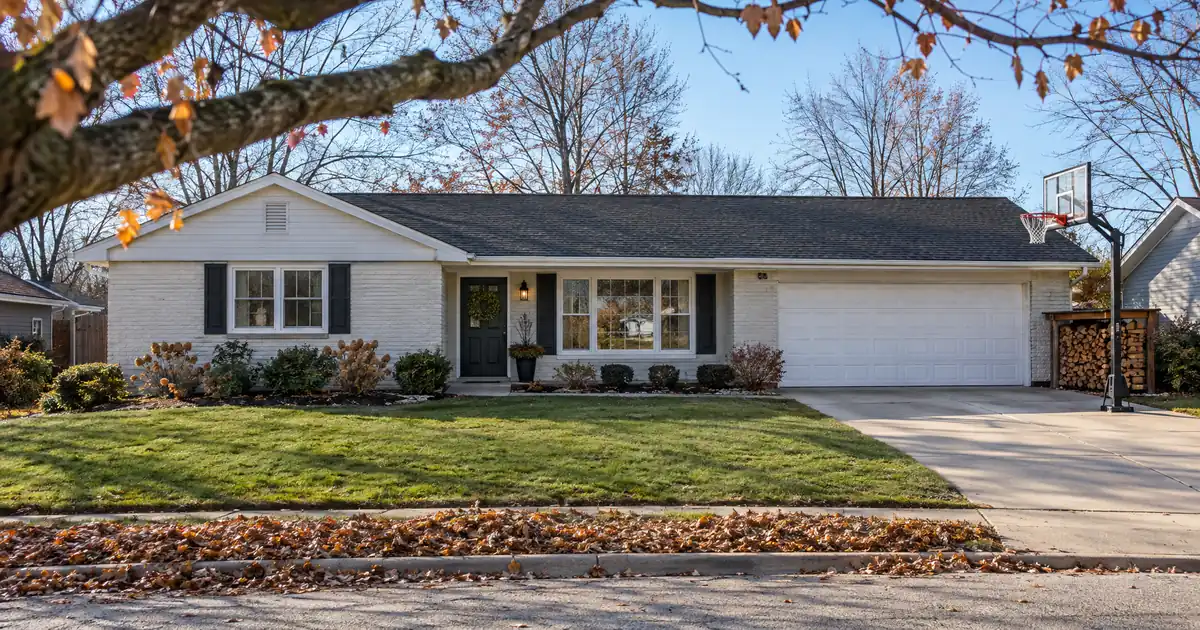
The Quick Read: Retired couples can get a conventional loan, and age is not the test. There is no “retiree loan” and no age cutoff. The lender asks whether your income and assets can be documented as stable, likely to continue, and large enough to carry the new payment. Most trouble on these files comes from paperwork and timing, not from being retired.
Key Takeaways
- Retirement income counts when it is documented. Social Security, pensions, annuities and account distributions each have their own paper trail.
- Income that ends, or that depends on drawing down an account, must be shown to continue for at least three years.
- The old home’s payment usually counts until that home is under a clean, executed sale contract.
- Savings can count as income on some files, but only certain assets qualify, and sale proceeds are not among them.
- Leverage, credit floor and ratio limits for purchases are set by the loan program. Every figure here is subject to lender guidelines and full file review.
What Does “Conventional” Mean for a Downsizing Couple?
A conventional loan is a mortgage that follows Fannie Mae or Freddie Mac rules and is not backed by FHA, VA or USDA. For a couple buying a smaller home to live in, it is the standard owner-occupied purchase loan.
Conventional payment estimate
The starting figures are an example price at the first-time buyer’s minimum down payment. Replace them with yours.
Editable benchmark: 7.32% as of October 22, 2026 · Freddie Mac 30-year average via FRED®. A conventional market reference, not a conventional loan quote.
Estimate seeded at the low end of Fannie Mae’s published range (0.58%–1.86% a year); the insurer prices the actual premium on the score and the leverage. Applies only above 80% loan-to-value.
Illustrative starting assumptions: a $350,000 price, the first-time buyer’s minimum down payment, a thirty-year term at the current Freddie Mac benchmark, mortgage insurance at the low end of Fannie Mae’s published range, and property taxes and insurance estimated at typical national rates. Every field is editable.
Illustrative estimate only — not a Loan Estimate, approval, quote, or commitment to lend. The rate field carries the weekly Freddie Mac thirty-year conventional benchmark, a market reference and not a conventional loan quote; your rate is set by the lender at lock. The mortgage insurance figure is an editable estimate seeded from Fannie Mae’s published typical range, not a premium quote; the insurer prices the actual premium, and the cancellation month assumes scheduled payments with no extra principal and no change in value. Taxes, insurance and dues are editable estimates; closing costs are not included. Conforming loan limits apply by county. Licensed in sixteen states for consumer mortgages.
Lendmire is a mortgage broker. It arranges these loans through wholesale lenders and does not lend itself. Across the wholesale programs placed through Lendmire’s conventional loan programs page, the purchase envelope on a principal residence looks like this:
- 97% loan-to-value (3% down) with a fixed rate when at least one borrower is a first-time buyer, meaning no ownership interest in a residence in the previous three years.
- 95% loan-to-value (5% down) for other buyers on a one-unit home.
- A 620 decision score as the wholesale starting point (640 on an adjustable rate under manual underwriting).
- A total debt ratio ceiling of 50% on files that get an automated approval finding. Leverage, reserves, and pricing vary by lender and program; the final terms follow the full file review.
Most downsizing couples are not first-time buyers, so the 95% line is the usual starting point. Many bring a large down payment from the old home’s equity, which puts them far below those leverage caps. Mortgage insurance applies above 80% loan-to-value. You can request cancellation at 80% of the original value if payment history is good, there are no subordinate liens and the value has not dropped. The servicer must end it automatically at 78% under the Homeowners Protection Act. A big down payment can make the question moot.
All of this is subject to lender guidelines. None of it is a commitment to lend.
What Do Lenders Look At? The Five Factors
Underwriting a retired couple comes down to five things:
1. Documented, continuing income. This includes how much of it depends on drawing down an asset account.
2. Total debt-to-income ratio. Monthly debts, including the new housing payment, measured against monthly income.
3. Whether the old home’s payment counts. More on this below.
4. Loan-to-value against the appraised value. The appraisal supports the number, and the program’s leverage limits depend on it.
5. Credit and reserves. The automated underwriting system decides how much of each it wants to see.
The federal ability-to-repay rule backs this up. Under the CFPB’s ATR/QM small-entity compliance guide, a lender must consider income or assets other than the dwelling, along with debts and a DTI ratio or residual income. Assets count, not only paychecks. The old fixed 43% cap is no longer the qualified-mortgage test, so the agency rules supply the specifics.
On an automated file, the total ratio ceiling is 50%. Manually underwritten loans run tighter, at 36%, or 45% when the Eligibility Matrix’s credit score and reserve factors are met.
How Is Each Retirement Income Source Documented?
Each source has its own paper trail and its own continuance test. The table shows what a processor typically asks for.
| Income source | What the lender wants to see | Common pitfall |
|---|---|---|
| Social Security | Award letter or 1099-SSA | Missing the current-year letter |
| Pension | Benefit or award statement, bank statement | Survivor reduction not documented |
| Annuity | Benefit statement: type, amount, frequency, start date | Term-limited annuity with no end date shown |
| 401(k)/IRA distributions | Account statements, distribution arrangement, 1099s | Variable draws with under 12 months of history |
| Interest and dividends | Tax returns, account statements | Account is also being used for the down payment |
How to read this table: find your source in the left column, then gather what the middle column lists before you apply.
Here is what the agency rules say behind that table. Under Fannie Mae’s annuity, pension and retirement income topic, current receipt can be shown with an award letter, benefit statement, bank or account statement, signed tax return, W-2 or 1099. Fixed payments need no minimum history. Variable distributions need at least 12 months of history. Insurance annuities, personal annuities and retirement-account distributions must be documented as continuing at least three years from the application date.
Freddie Mac’s section 5305.1 takes the same view. Distributions from IRS-recognized retirement accounts that carry no penalty may be considered stable monthly income. Freddie Mac asks for recent account statements, documentation of the distribution arrangement and 1099s showing source, type, frequency, amount and history.
Social Security is the easiest. It generally needs no extra proof that it will continue. A term-limited annuity generally does.
One more point: if your pension or annuity starts on or before the first payment date of the new loan, the lender needs a benefit statement showing the type, amount, frequency and start date. If it starts after closing, expect extra conditions.
Some nontaxable income, such as certain Social Security benefits, can be adjusted upward when verified. The lender decides how much. Ask your loan officer rather than assuming.
What Is the Three-Year Continuance Test?
Income that has a defined end date, or that depends on spending down an account, must be documented as continuing at least three years from the application date. That comes straight from Fannie Mae’s general income information topic.
The same topic has two more rules that matter to retirees. When an asset account is the main source of qualifying income, the lender must also assess your ability to keep repaying after the income ends or the asset is depleted, if that happens before the loan matures. And if you are moving to a lower pay structure, such as a pending retirement, the lender must use the lower amount.
The story has to hold up over time, not only at closing. That is where couples with a plan to start drawing from an IRA next year run into trouble. A distribution that hasn’t started is not income yet.
When Income Is Thin but Assets Are Strong
Some couples own a large retirement balance and take little from it. The market calls this “asset depletion.” Fannie Mae does not use that term. Its topic is employment-related assets as qualifying income, and the rules are narrow.
- Loan-to-value cap. The maximum LTV, CLTV and HCLTV on this path is 70%, or 80% if the owner of the assets is at least 62 at closing.
- Eligible assets. Employment-related assets qualify, such as retirement accounts. Lump-sum retirement packages need a distribution letter (Form 1099-R) and deposit into a verified account.
- Ineligible assets. Sale of real estate, inheritance and lottery winnings do not count. Checking and savings generally don’t either, unless the balance came from an eligible employment-related asset.
- The mechanics. The lender totals the eligible assets and subtracts any penalty that would apply to a full distribution. It then subtracts the funds needed for down payment, closing costs and reserves. What remains is spread over the loan’s term to produce a monthly income figure.
That subtraction step is the one people miss. The money you put down comes out of the pool first. A couple who uses a large share of their account for the purchase has less left to count as income.
Picture a couple who sold a larger home and are buying at a modest price with a large down payment. Their Social Security and pension cover most of the payment, and a mid-sized IRA is untouched. They could document the IRA distributions they actually take, or test the asset path. If the loan misses the asset-path limits, the same assets may still qualify under standard guidelines such as interest and dividend income or retirement income. The right path depends on the file.
Penalties matter for younger retirees. Fannie Mae’s asset calculation subtracts the early-withdrawal penalty from retirement account balances. Couples past the early-withdrawal age rarely hit this.
Qualifying as a Couple: Whose Income, Whose Credit?
When two spouses are both on the loan, the lender looks at both files. Income from both borrowers is combined, and each person’s credit report is pulled. The lowest decision score of the borrowers on the loan typically drives the credit decision, so one spouse with a thin or damaged file can set the floor at the wholesale 620 line.
Three couple-specific questions come up often:
- Should both spouses be on the loan? Adding a spouse brings in income, and also brings in their debts and credit. Leaving a spouse off removes both. Which way is better depends on the numbers.
- What about survivor reductions? If a pension drops when one spouse dies, the benefit statement should show it. Lenders use the amount that is actually paid, so an undocumented reduction can cause a surprise late in the file.
- What if a non-occupant co-borrower, such as an adult child, helps? Their income can trigger lower loan-to-value limits and a tighter debt test on the occupying borrower, per Fannie Mae’s Eligibility Matrix and its DTI rules. It can help, but it is not free.
How Does the Sell-and-Buy Timeline Work?
If you are buying before the old home sells, the old payment usually counts. Fannie Mae’s rule on other real estate owned says that when the current home is pending sale but title will not transfer before the new purchase closes, the default is to count both the current and new housing payment. That payment includes principal, interest, taxes, insurance and association dues.
There is a documented exception. A fully executed sales contract on the current home, plus confirmation that financing contingencies have cleared, supports leaving the old payment out of the ratio. An accepted offer with open contingencies does not. Ask your lender exactly what documents it needs for that exception, since lenders can add their own rules.
For a retired couple on fixed income, the practical sequence looks like this:
1. List the old home and get to an executed contract before you submit the new application, if you can.
2. Ask the buyer’s side whether financing contingencies are still open. That one fact changes whether your old payment counts.
3. Gather the sale contract, and later the settlement statement, for your file.
4. Document where the cash to close will come from. Sale proceeds are fine as cash toward the purchase and reserves. They just aren’t income.
Selling a long-owned home can also have tax consequences. Tax treatment can depend on your situation; borrowers should speak with a qualified tax professional before relying on any deduction or credit. The IRS covers the basics in Topic 701, Sale of Your Home.
If you plan to keep the old home as a second home, an existing second home’s payment is counted. If you plan to rent it out, that is a different set of rental-income rules. Those rules changed recently, so ask your lender how they apply.
Reserves and Cash to Close
Reserves are the money left over after closing. On a one-unit principal-residence purchase, Fannie Mae’s minimum reserve topic sets no minimum, but the automated system can still ask for more based on its overall risk assessment.
Vested retirement-account funds are acceptable for the down payment, closing costs and reserves, per Fannie Mae’s selling FAQs. Funds counted as reserves do not have to be withdrawn from the account. Many couples assume they must cash out an IRA to show it. They don’t.
Funds needed to close come out of your available assets before reserves are counted. If the same account is also the basis for asset-path income, it can only be counted once.
Property Type and Appraisal
The appraisal supports the loan-to-value ratio, and the program’s leverage limits depend on it. A condo or a home in an age-restricted community adds a second review: the lender looks at the association or project as well as the unit, and association dues count in the monthly payment. Ask for the project documents early. Association paperwork is a common source of delay on downsizing files, and a project that doesn’t meet agency review can end the file.
If you are thinking of a two- to four-unit home, a second home or an investment purchase instead, occupancy decides the leverage. Second homes go to 90%, and investment property is capped lower. Those files follow different rules than a primary residence.
Conventional Versus Other Paths
| Option | Fit | Trade-off |
|---|---|---|
| Conventional | Owner-occupied purchase, solid credit | Mortgage insurance above 80% LTV |
| FHA or VA | Lower credit or veteran status | Own premium or fee structure |
| Home equity loan or line | Borrowing against the old home | Second lien, not a purchase loan |
| Reverse mortgage | Age-based, equity-driven | Different product, different obligations |
| Non-QM or portfolio | Files outside agency guides | Terms set by the individual lender |
| All cash | Enough liquid assets | Ties up savings |
How to read this table: it is qualitative. Each option has its own rules, and eligibility depends on the file.
Mortgage versus cash is a real decision for couples who could pay outright. A loan keeps savings liquid. Cash removes the payment and the underwriting. A tax or planning professional can help weigh estate, tax and liquidity effects. A loan officer can show how each choice looks on paper, but that is where the guidance stops.
Where the General Rule Breaks
- Penalized distributions. Freddie Mac’s distribution income covers only distributions not subject to penalty.
- Term-limited annuities. If the documents don’t state a three-year continuance, the lender must find other proof.
- Sale proceeds as income. Not eligible on the asset path, though usable as cash.
- Cash-out refinance instead of a purchase. Different leverage caps, and different seasoning. The asset path is described for purchases and limited cash-out refinances, so confirm before assuming it applies.
- Outdated guide numbers. Fannie Mae restructured its income chapter in March, and many articles still cite the old topic numbers. See Announcement SEL-2026-02. Lenders may also add rules beyond the agency minimums.
- Credit events. Agency waiting periods apply: four years from a chapter 7 discharge, seven from a foreclosure, four from a short sale or deed in lieu, shorter with documented extenuating circumstances.
Why Retirees Get Stuck
Most stuck files fall into five patterns:
- Income that exists on paper but has no continuance proof.
- A pension or annuity that starts after closing, with no benefit statement.
- An old-home payment that still counts because contingencies are open.
- Savings in checking that can’t be traced to an eligible source.
- A lower decision score on one spouse than the couple expected.
Fix these before applying, not after.
Key Terms Defined
Continuance: Documentation that income will keep arriving, generally for at least three years from the application date.
DTI (debt-to-income ratio): Monthly debts, including the new housing payment, divided by monthly income.
PITIA: Principal, interest, taxes, insurance and association dues, the full monthly housing payment.
Reserves: Liquid funds left after closing, such as savings or vested retirement balances.
Asset-based income: A calculation that turns eligible retirement assets into a monthly income figure when little is being drawn.
LTV (loan-to-value): The loan amount divided by the appraised value or price.
Frequently Asked Questions
Is there an age limit for a conventional loan?
No. Retirement income counts as stable income when it is documented, and no age minimum applies to using it. The only age-linked rule here is that the asset-income path allows a higher loan-to-value cap when the asset owner is at least 62 at closing.
Do I have to withdraw money from my IRA for it to count?
No for reserves. Funds counted as reserves do not have to be withdrawn. To count distributions as income, you generally need a distribution arrangement and a documented history, and variable draws need at least 12 months of history.
Will my old home’s payment count if I have an accepted offer?
Probably yes. The default is to count both payments. An executed contract with cleared financing contingencies supports leaving it out.
Can sale proceeds from my old home qualify me as income?
No. Sale of real estate is an ineligible asset on the asset-income path. Proceeds can still serve as cash toward the purchase and reserves.
Is the 43% debt ratio cap still in force?
No. It no longer serves as the qualified-mortgage test. For automated files the agency ceiling is 50%, and manual files run 36% or 45% with the right credit and reserve factors, subject to lender guidelines.
If you are buying a home and want to see whether a conventional loan fits your file, Lendmire can help you compare the options and what each one asks of the file.
For your own numbers, request a scenario review with Lendmire.
About Lendmire
Lendmire (NMLS# 2371349) is a mortgage brokerage serving homeowners and home buyers in 16 states. FHA, VA, conventional and jumbo purchase and refinance loans are arranged through wholesale lending channels; Lendmire brokers the financing and the lender underwrites each application. Scotsman Guide named Lendmire a Top Mortgage Workplace in both 2025 and 2026.
Get Started
Ready to find the right loan for you?
In about two minutes you can review financing options available for your home or investment property. No commitment required.
Informational only. Not a Loan Estimate, approval, or commitment to lend. Program availability and eligibility are subject to lender guidelines, credit approval, property review, and underwriting.
References
1. ATR/QM small-entity compliance guide
2. Fannie Mae Selling Guide B3-3.4-03, Annuity, Pension, or Retirement Income
3. Freddie Mac Guide Section 5305.1
4. Fannie Mae Selling Guide B3-3.1-01, General Income Information
5. Fannie Mae Selling Guide B3-3.4-06, Employment Related Assets as Qualifying Income
6. Fannie Mae Selling Guide B3-6-06 Qualifying Impact of Other Real Estate Owned
7. IRS Topic no. 701, Sale of Your Home
8. Fannie Mae Top Trending Selling FAQs
This article is part of Lendmire’s conventional loan program — full qualification details, guidelines, and scenarios live on the program page.
Related reading: Can You Qualify for a Conventional Loan on One Income? · How to Budget for Prepaids at Closing on a Conventional Loan · How Lenders Count Unemployment Income on a Conventional Loan
Brandon Miller
Founder & CEO, Mortgage Loan Originator, Lendmire LLC
- Mortgage Loan Originator · NMLS# 1129696 · Verify on NMLS Consumer Access
- North Carolina Real Estate Broker · License# 343312 · Verify on NCREC
- North Carolina Insurance Producer · License# 19053198 · Property, Casualty, Life, Health · Verify on NAIC SBS
- Lendmire LLC · Firm NMLS# 2371349 · Verify firm licensure
Legal disclosures. Lendmire (NMLS# 2371349) is a state-licensed mortgage brokerage that arranges financing through wholesale lender relationships. Lendmire is not a direct lender, depository institution, or registered financial advisor. The discussion above is general informational content about real estate financing — it is not financial, legal, or tax advice, and readers should consult licensed professionals for guidance on their individual circumstances. Loan inquiries are subject to lender underwriting; this article does not represent a commitment to lend. Loan terms, rates, and qualification standards vary by borrower, property, and state, and are subject to change at any time. Equal Housing Opportunity. NMLS Consumer Access: nmlsconsumeraccess.org.