
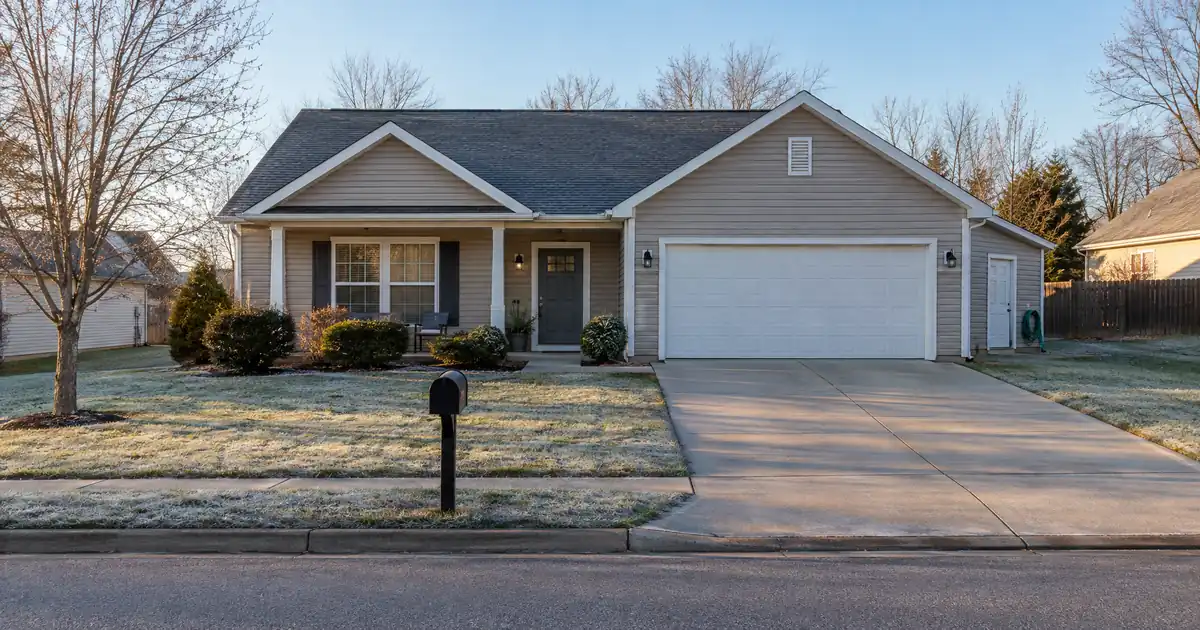
The Quick Read: On a conventional purchase loan, a cosigner signs the note but usually stays off the deed, while a co-borrower signs the note and typically takes title. Lenders also use a third label, the non-occupant borrower, who may or may not be on the deed. A cosigner is the better fit when someone only needs to lend their credit and income. A co-borrower on title fits when two people will share ownership.
Key Takeaways
- The note is the promise to repay. The deed shows who owns the home. They are separate documents, and one person can be on one without the other.
- A cosigner owes the full debt but owns nothing. A co-borrower on the deed owes the full debt and owns part of the home.
- Using a non-occupant’s income generally lowers the leverage available compared with a file where everyone lives in the home.
- Mortgage insurance rules are the same either way. Cancellation depends on the loan balance and the home’s value, not on who is on the deed.
- Coming off the loan later usually takes a refinance or a lender release, not just a new deed.
Three Documents, Three Different Jobs
Most confusion on this topic comes from mixing up the paperwork. A conventional purchase has three pieces that matter here.
Conventional payment estimate
The starting figures are an example price at the first-time buyer’s minimum down payment. Replace them with yours.
Editable benchmark: 7.32% as of October 22, 2026 · Freddie Mac 30-year average via FRED®. A conventional market reference, not a conventional loan quote.
Estimate seeded at the low end of Fannie Mae’s published range (0.58%–1.86% a year); the insurer prices the actual premium on the score and the leverage. Applies only above 80% loan-to-value.
Illustrative starting assumptions: a $350,000 price, the first-time buyer’s minimum down payment, a thirty-year term at the current Freddie Mac benchmark, mortgage insurance at the low end of Fannie Mae’s published range, and property taxes and insurance estimated at typical national rates. Every field is editable.
Illustrative estimate only — not a Loan Estimate, approval, quote, or commitment to lend. The rate field carries the weekly Freddie Mac thirty-year conventional benchmark, a market reference and not a conventional loan quote; your rate is set by the lender at lock. The mortgage insurance figure is an editable estimate seeded from Fannie Mae’s published typical range, not a premium quote; the insurer prices the actual premium, and the cancellation month assumes scheduled payments with no extra principal and no change in value. Taxes, insurance and dues are editable estimates; closing costs are not included. Conforming loan limits apply by county. Licensed in sixteen states for consumer mortgages.
The note is the signed promise to repay the loan. Everyone whose credit is used to qualify signs it.
The security instrument is the mortgage or deed of trust. It pledges the home as collateral. Anyone with an ownership interest signs it.
The deed transfers title. It names the owner or owners of the home.
Fannie Mae’s Selling Guide spells out the split in its rules on signature requirements for notes. A cosigner with no ownership interest signs the note but not the security instrument. A person with an ownership interest signs both. So the real question is not “cosigner or co-borrower.” It is “who owes the debt, and who owns the house?”
Side-by-Side
| Factor | Cosigner (off the deed) | Co-Borrower (on the deed) |
|---|---|---|
| On the note | Yes, fully liable | Yes, fully liable |
| On the deed | Typically no | Yes |
| Signs security instrument | No | Yes |
| Ownership and equity | None | Shared ownership |
| Occupancy | Does not live in the home | Usually lives there; may be non-occupant |
| Leverage | Lower ceiling when their income is used | Full range when everyone occupies |
| Credit floor | Lender reviews each person on the note | Same review for each person |
| Mortgage insurance | Above 80% LTV; same rules | Above 80% LTV; same rules |
| Documentation | Income, assets, credit, ID | Income, assets, credit, ID |
| Exit | Refinance or lender release | Refinance, sale, or buyout |
Leverage deserves a closer look. Across the wholesale programs Lendmire places files with, the top purchase leverage is 97% for first-time buyers on a one-unit principal residence. Standard purchases reach 95%. Those top tiers are built for files where the borrowers live in the home. When a non-occupant’s income carries the file, the lender applies lower limits, and the highest-leverage option is generally off the table. Details vary by program, lender guidelines and full file review.
Why the Labels Do Not Match
Consumers say “cosigner” for anyone who helps. Lenders and agencies sort people into narrower boxes, and the boxes matter for the deed.
Fannie Mae’s Selling Guide, section B2-2-04 defines a co-signer or guarantor as someone with no ownership interest who signs the note and shares liability for it. It describes a non-occupant borrower as someone who does not live in the property, signs the note and shares liability, and who may or may not be on title. That last phrase is the one most online articles miss. A parent who will never live in the home can still be a full co-borrower on the deed.
Freddie Mac’s rule, Guide section 5103.1, speaks of a “non-occupying Borrower” and limits the structure to purchases and no-cash-out refinances. It is not worded the same way as Fannie Mae’s cosigner category. A lender’s own program rules decide how your helper is classified, so ask which label your file will carry.
Neither agency lets the seller, builder, agent or broker serve as the non-occupant. A helper cannot have a stake in the sale.
The Four Combinations
Note and deed can be mixed. Here is what each pairing means.
| On the loan? | On the deed? | What it means |
|---|---|---|
| Yes | Yes | Co-borrower: owes the debt and owns the home |
| Yes | No | Cosigner: owes the debt, owns nothing |
| No | Yes | Owns the home, owes nothing; lender and state rules apply |
| No | No | Not a party to the transaction |
The “on the deed, not on the loan” row is the odd one. Some lenders will want a titleholder to sign the security instrument anyway, and state law shapes the result. Treat that structure as a question for the lender and a real estate attorney, not a shortcut.
The “on the loan, not on the deed” row is the one that surprises people. That person has full liability and no ownership claim. If the home is sold, they have no say and share in no proceeds.
What the Lender Looks At
The mechanics differ depending on how the file is underwritten.
In automated underwriting, the non-occupant’s income and debts join the combined debt-to-income ratio. Fannie Mae’s non-occupant borrower fact sheet describes this combined approach. Across the wholesale conventional programs, the automated finding governs most files, with a total ratio ceiling of 50% and a 620 decision score as the starting floor. That is where a strong helper can turn a “no” into a “yes.”
In manual underwriting, the rules tighten. The occupying borrower’s own ratio, using only their own income and debts, has to pass a lower ceiling than usual. Manually underwritten loans run to 36% or 45%, depending on the reserve and score factors in the Eligibility Matrix. A helper’s income cannot rescue an occupant whose own numbers fall short.
The occupant also generally has to fund a minimum contribution from their own money. Exceptions exist for lower-leverage loans and for eligible gift or grant funds.
Two more points apply either way. The appraisal values the home and sets leverage the same for both structures. And the monthly payment on the loan does not change because someone is on the deed.
When a Cosigner Is the Better Fit
Choose the cosigner structure when the helper wants to support the loan without owning the home. It tends to fit these situations.
A parent helping a first-time buyer. Picture a young buyer with steady pay and a thin credit file, whose parent has strong income and wants no ownership stake. The parent signs the note and stays off the deed. The buyer owns the home outright. Lendmire’s piece Conventional Loan vs. FHA With a Parent Co-Borrower and a High DTI walks through how that choice plays out when ratios are tight.
A helper with their own estate plans. Someone who does not want a deed, a title policy or a property in their name may prefer to carry only the debt. That keeps the home out of their estate and their own ownership picture.
A buyer who wants sole control. The occupant keeps every decision about selling, renting or refinancing, since no one else holds title.
The costs are real. The cosigner takes all the risk and none of the equity. The debt also shows on the cosigner’s credit and counts against their own ability to borrow. Missed payments hurt both credit files.
When a Co-Borrower on the Deed Is the Better Fit
Choose a co-borrower on title when the second person is a real owner of the home. That usually means they share in the purchase, the payments or the plans.
A couple where one partner has weaker credit. Both want to own the home, so both sign the note and both go on the deed. Lenders review each person’s credit and income. The weaker file may limit what the combined application can do, so it helps to see how the lender treats the lower score before you commit to the structure.
Siblings or friends buying together. Shared ownership and shared payments call for shared title. Putting only one name on the deed while both owe the debt invites disputes later. How you hold title, such as joint tenancy or tenants in common, affects what happens at death or sale, so talk to a title professional or attorney about vesting.
A non-occupant who wants equity. A relative who adds income and wants a stake in the home’s appreciation can go on the deed as a non-occupant co-borrower, subject to program rules. Lendmire’s article Conventional Loan vs. FHA With a Co-Borrower on a 2-4 Unit Purchase covers how multi-unit files change the picture.
The tradeoffs are different here. A co-owner has a say in the home. Selling or refinancing needs everyone’s signature. Divorce, death or a falling-out becomes a title problem as well as a loan problem. And the deed does not shrink anyone’s debt. Everyone on the note still owes the whole balance.
What About Mortgage Insurance?
The structure you pick does not change the mortgage insurance rules. Mortgage insurance is required above 80% loan-to-value (LTV), meaning the loan balance as a share of the home’s value. You can request cancellation when the balance reaches 80% of the original value, if you have a good payment history, no second liens and no drop in value. The servicer must end it automatically at 78%. Typical published annual premiums run from 0.58% to 1.86% of the balance. That is a range, not a quote, and your file’s actual cost depends on the lender and the loan.
Higher leverage means insurance lasts longer. Since a non-occupant structure can lower the leverage ceiling, it can also mean a bigger down payment and a shorter insurance period.
Common Misconceptions
“A cosigner is just a character reference.” A cosigner is fully liable for the debt. That is the point of the role.
“The lender must go after the borrower first.” Lenders can generally pursue anyone on the note. Do not count on a required order of collection.
“Being on the deed means paying less.” The deed shows ownership. The note decides who owes the debt. Your share of the title does not reduce your share of the liability.
“The cosigner is off the hook after closing.” Nothing automatic releases them. Removal generally takes a refinance or a lender-approved release. Taking someone’s name off the deed does not remove them from the loan.
“Both agencies treat non-occupants the same.” They do not. Freddie Mac limits non-occupying borrowers to purchases and no-cash-out refinances, while Fannie Mae also permits them on cash-out refinances. Requirements for this structure also change over time, so confirm the current text.
How to Decide
Run through these questions in order.
1. Will the helper live in the home? If yes, they are a regular co-borrower and probably on title. If no, the non-occupant rules apply.
2. Does the helper want ownership? If yes, go on the deed. If no, the cosigner role fits.
3. Does the file work on the occupant’s own numbers? If the occupant’s own income is too thin for manual underwriting, a helper may not be enough. Automated underwriting is more forgiving.
4. What is the exit plan? If the occupant expects to refinance into their own name, a cosigner can come off cleanly later. If the home is jointly owned, plan the buyout up front.
5. Can the helper afford the risk? If the debt would strain their own plans, say so now.
The Balanced Verdict
Neither option is better in the abstract. A cosigner suits a buyer who will own and occupy the home alone and has a helper willing to carry risk without reward. A co-borrower on the deed suits people who really are sharing the home. The worst outcomes come from mismatches: a helper with full debt and no ownership who expected to be treated as an owner, or two owners who never worked out how to sell.
Ask each person two blunt questions before applying. “What do you own?” and “What do you owe?” If the answers are not the same, you are probably describing a cosigner.
If you are buying a home and want to see whether a conventional loan fits your file, Lendmire can help you compare the options and what each one asks of the file. You can also read about conventional loan programs to see how leverage, credit and ratios fit together, subject to lender guidelines and full file review. Nothing here is a commitment to lend.
Key Terms Defined
Note: The signed promise to repay the loan, signed by everyone whose credit is used to qualify.
Security instrument: The mortgage or deed of trust that pledges the home as collateral for the loan.
Deed: The document that shows who owns the home.
Non-occupant borrower: A person on the loan who will not live in the home and may or may not be on the deed.
Debt-to-income ratio (DTI): Your monthly debts divided by your monthly income, which lenders use to gauge what you can carry.
LTV: Loan-to-value, the loan balance as a percentage of the home’s value.
Frequently Asked Questions
Does a cosigner own part of the house?
Not unless they are also on the deed. A cosigner with no title signs the note, owes the debt and holds no ownership interest. If you want a helper to have a stake, they need to be on title as a co-borrower, and the vesting language should be set with a title professional or attorney.
Can someone be on the deed but not on the loan?
Sometimes, though it depends on the lender and state law. A person on title may be asked to sign the security instrument even without signing the note. Ask your lender before you plan this structure, and have an attorney review it.
Can the lender collect from the cosigner first?
Often yes. A cosigner is fully liable, and the lender is not generally required to chase the main borrower before turning to the cosigner. The FTC’s cosigning guidance says the cosigner must pay if the main borrower misses payments.
Does taking my name off the deed take me off the loan?
No. The deed and the note are separate. Leaving the title does not release you from the debt. Getting off the loan generally takes a refinance into someone else’s name or a lender-approved release.
Can a parent be a non-occupant co-borrower on a conventional loan?
Often yes, on a purchase. Agency rules allow non-occupant borrowers, and the parent’s income and debts can count toward qualifying. The parent cannot be the seller, builder or agent, the program may cap leverage lower, and a manual review tests the occupant’s own ratios. Eligibility is subject to lender guidelines.
For your own numbers, request a scenario review with Lendmire.
About Lendmire
Lendmire (NMLS# 2371349) is a mortgage broker licensed for consumer lending in 16 states. Lendmire arranges FHA, VA, conventional and jumbo purchase and refinance loans through wholesale lenders; every file is underwritten by the lender under the applicable program guidelines. Scotsman Guide named Lendmire a Top Mortgage Workplace in both 2025 and 2026.
Get Started
Ready to find the right loan for you?
In about two minutes you can review financing options available for your home or investment property. No commitment required.
Informational only. Not a Loan Estimate, approval, or commitment to lend. Program availability and eligibility are subject to lender guidelines, credit approval, property review, and underwriting.
References
1. Fannie Mae Selling Guide B8-3-03
2. Fannie Mae Selling Guide B2-2-04: Guarantors, Co-Signers, or Non-Occupant Borrowers
3. Freddie Mac Guide Section 5103.1: Mortgages including a non-occupying Borrower
4. Fannie Mae Non-Occupant Borrowers fact sheet
This article is part of Lendmire’s conventional loan program — full qualification details, guidelines, and scenarios live on the program page.
Related reading: Can a Repeat Buyer Get a Homeready Conventional Loan? · Conventional Loan Requirements for a Joint Mortgage With a Co-Borrower · Can an Unemployed Person Get a Conventional Loan?
Brandon Miller
Founder & CEO, Mortgage Loan Originator, Lendmire LLC
- Mortgage Loan Originator · NMLS# 1129696 · Verify on NMLS Consumer Access
- North Carolina Real Estate Broker · License# 343312 · Verify on NCREC
- North Carolina Insurance Producer · License# 19053198 · Property, Casualty, Life, Health · Verify on NAIC SBS
- Lendmire LLC · Firm NMLS# 2371349 · Verify firm licensure
Disclosure information. Lendmire is a state-licensed mortgage brokerage under NMLS# 2371349. Lendmire is not a depository institution, direct lender, or financial advisor — all loans referenced are placed through wholesale lender partners and are subject to each lender's underwriting standards. This article is provided for general informational purposes and is not a commitment to lend, nor does it constitute financial, legal, or tax advice. Loan programs, terms, rates, and qualification standards change without notice and depend on borrower profile, property type, and the state in which the subject property is located. Equal Housing Opportunity provider. NMLS Consumer Access: nmlsconsumeraccess.org.