
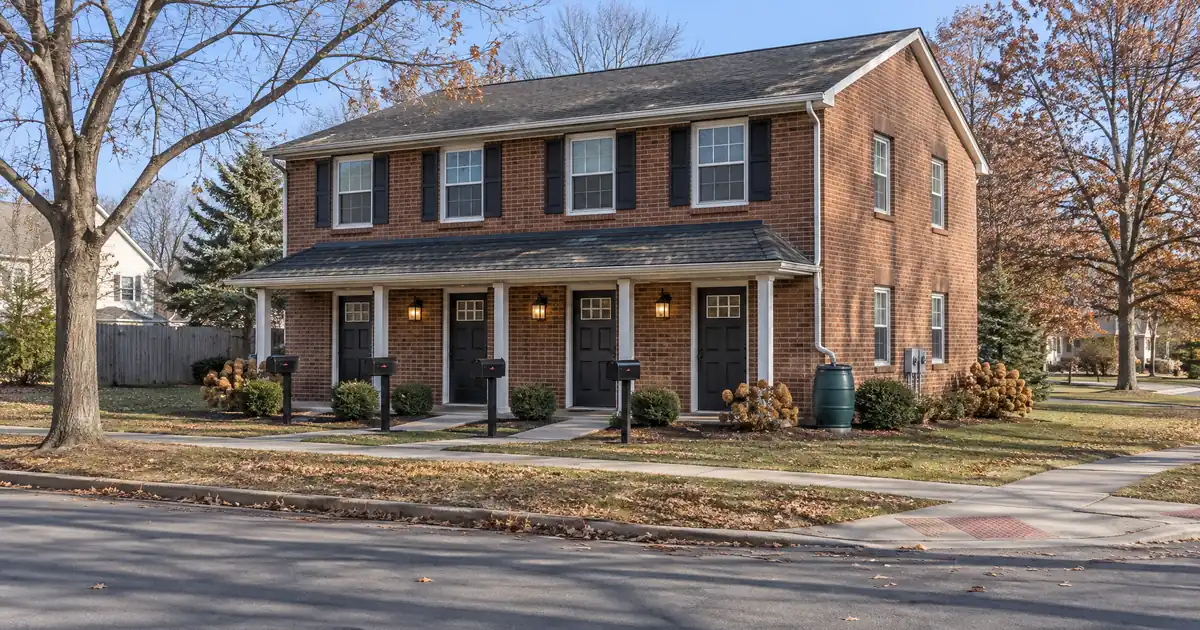
The Quick Read: On an FHA cash-out for a 2-4 unit home you live in, credit tiers decide whether a file gets approved far more than how much equity you can reach. Your decision score sets the score floor and how much ratio room compensating factors can add above the base pair. The leverage cap does not move: a cash-out tops out at 80% loan-to-value no matter how high the score is. Unit count changes the property tests, not the score bands.
What Is a Credit Tier on an FHA Cash-Out?
A credit tier is a score band that triggers different rules. On an FHA cash-out, the tiers mostly affect approval and qualifying ratios. They do not stack new leverage on top.
FHA cash-out estimate
Seeded with an example value, a balance to match, and a round cash request; change any field.
Editable benchmark: 7.18% as of November 5, 2026 · Freddie Mac 30-year average via FRED®. A conventional market reference, not an FHA cash-out refinance quote.
Illustrative starting assumptions: a $350,000 home value, a $193,000 current balance, the FHA cap on a principal residence with the upfront premium financed, a thirty-year term at the current Freddie Mac benchmark, and property taxes and insurance estimated at typical national rates. Every field is editable.
An illustration, not a Loan Estimate, an approval, a quote, or a commitment to lend. The rate shown is the weekly Freddie Mac thirty-year conventional benchmark, used as a market reference; an FHA cash-out is priced by the lender at lock, and this is not an FHA cash-out refinance quote. HUD’s cap limits the base loan; the upfront premium is financed on top of the capped base loan; the monthly premium for the first year follows the snapshot’s schedule. Cash available means the base loan the cap permits less the balances retired, before closing costs, which this calculator leaves out. The line figure applies the line program’s combined loan-to-value ceiling to the same value and balance. Taxes and insurance are estimates you can edit. Licensed in sixteen states for consumer mortgages.
HUD sets the baseline in its Mortgagee Letter 2026-11. Three points from it matter here:
- A transaction needs a decision score of at least 500.
- A score of 580 or higher is eligible for maximum financing.
- A score of 500-579 is limited to 90% loan-to-value on the general table, which applies to loans other than cash-out. A cash-out stays at 80% loan-to-value in every tier.
That is the whole HUD tier structure. There is no separate set of “2-4 unit cash-out tiers.” A fourplex and a single-family home share the same score bands. What changes with units is the appraisal, the rental income treatment, and the reserve tests.
Across the wholesale programs behind Lendmire’s FHA cash-out refinance program, the working floor is 580. HUD’s lower 500-579 band is a HUD rule, but the network does not reach below 580. So for a borrower working with Lendmire, the practical tier question is whether the decision score sits at or above 580, and how far above.
Which Score Does the Lender Use?
The lender uses one decision score for the whole loan: the lowest borrower-level score among everyone on the file. HUD’s letter defines it that way.
Say two spouses apply together. One scores comfortably above the floor and the other falls short of it. The file is underwritten at the lower score. Adding a co-borrower with a stronger score does not rescue the file, because the weaker score still controls it. Adding a co-borrower with a weaker score can pull the file down, since the lowest score becomes the decision score.
Two more mechanics trip people up:
- FHA still requires a tri-merge credit report, so three bureaus feed the file.
- If more than one scoring model is submitted, the lowest selected score per borrower is taken first, then the lowest across borrowers. All borrowers must use the same model type.
HUD has also added VantageScore 4.0 and FICO 10T alongside Classic FICO. Per HUD’s FHA TOTAL page, implementation is tied to case numbers assigned on or after January 1, 2027. The thresholds themselves do not change by model. A new scoring model does not lower the bar. The case number date decides which regime a file falls under, not the application or closing date.
What Tiers Change and What They Don’t
On this loan, the score moves some things and leaves others alone. Here is the split.
| Item | Does the tier change it? |
|---|---|
| Approval by lender or automated finding | Yes |
| Manual-underwriting ratio room | Yes |
| Lender overlays (extra minimums) | Yes |
| Cash-out leverage cap (80%) | No |
| Upfront mortgage insurance (1.75%) | No |
| Annual premium length at 80% LTV | No |
| Owner-occupancy and 12-month rules | No |
Misconceptions cluster here. Some borrowers read the 96.5% maximum financing and the 3.5% minimum investment and assume they apply to a cash-out. They don’t, because those figures belong to purchase loans. A cash-out on an owner-occupied home reaches 80% of the home’s adjusted value. A 580 borrower and a 640 borrower hit the same ceiling.
For case numbers assigned on or after September 1, 2019, the cap is 80%.
How the Loan Is Underwritten, Step by Step
The score is one gate in a sequence. Here is the order a 2-4 unit file moves through.
1. Eligibility clock. The cash-out reaches 80% LTV on a home you owned and occupied for 12 months before the case number. The building must be your principal residence: you live in one unit, and the others are rented or vacant. A non-occupant co-borrower’s income cannot be used on a cash-out. Confirm the current Handbook wording before relying on occupancy details, since some published summaries are old. Each figure is subject to lender guidelines and a complete review of property type, leverage, and credit.
2. Credit pull and decision score. A tri-merge report is pulled. The lowest borrower score controls the file.
3. Automated finding or manual path. FHA files run through the TOTAL Scorecard. An approve finding generally governs the file. A refer finding goes to manual underwriting, where the ratio tiers below apply.
4. Appraisal on a multi-unit home. The appraiser reports fair market rent on a small residential income property form. HUD’s Mortgagee Letter 2023-17 calls for it. The appraiser’s rent figure, not an owner’s rent roll, drives the rental income counted. Maximum loan is 80% of adjusted value, subject to county loan limits.
5. Rental income and the 3-4 unit test. Rent from the other units can count toward qualifying. For three- and four-unit homes, HUD’s knowledge base describes a net self-sufficiency test on form HUD-92561. It compares the payment against the appraiser’s rent from all units, including yours, after a vacancy factor. Older HUD guidance may also tie this test and a reserve requirement to 3-4 unit cash-outs, so the lender confirms against current Handbook wording before applying either to a cash-out. A duplex does not face the self-sufficiency test. Leverage, reserves, and pricing vary by lender and program; the final terms follow the full file review.
6. Reserves. HUD’s letter excludes cash taken at settlement from counting as reserves on a cash-out. The money you are pulling out cannot be the money that proves you have a cushion.
7. Closing. The new FHA loan pays off the old one, and you receive the difference. The CFPB describes a cash-out as replacing your mortgage with a larger one and taking the difference in cash.
How Ratios Change by Tier
Ratios are where the score shows up in the underwriting. The base pair is 31/43: housing payment to income, and total debts to income. With no compensating factors, that is the line.
HUD’s manual underwriting ratio page lists the same 31/43 pair for both the 580-and-above tier and the 500-579 tier, so the base ratios do not change with the band. What changes is the room above them. Higher ratios need documented compensating factors, and those reach 40/50 at the top tier. Strong reserves, a clean payment history, and a low payment shock are examples of factors a reviewer weighs.
Remember the path. Ratio tiers govern manually underwritten files. A file that gets an approve finding from the automated system follows a different path, where the scorecard weighs the whole picture.
Agency Rules vs. Lender Overlays
Agency rules are HUD’s. Overlays are what a lender adds on top, and HUD allows them. A lender can require a higher minimum score than HUD’s floor, tighter ratios, or extra documentation.
This is why “HUD’s floor is 500” does not mean a 500 gets approved. Lenders can set their own floors above HUD’s, and those floors differ from one lender to the next, which is why score alone never settles the question. Through the wholesale programs Lendmire works with, the practical line is 580. A borrower just under it should expect that no program in the network reaches them.
Edge Cases Where the Rule Breaks
The general rule is that score affects approval, not leverage. Here is where specific files bend.
- Split scores between co-borrowers. The lowest controls. A borrower with a high score and a spouse below 580 is a sub-580 file.
- Case number straddling the model change. A file with a case number assigned before January 1, 2027, follows the old model rules even if it closes after.
- Non-occupant co-borrower. Allowed on a purchase, but their income does not count on a cash-out.
- Paid-off home. A home owned free and clear is treated as a cash-out, not a rate-and-term.
- Investment property or second home. Not eligible for FHA cash-out. Occupancy decides the leverage, and a rental fails the owner-occupied test.
- Not a cash-out at all. An FHA-to-FHA Streamline does not need an appraisal and runs on a limited credit review, so score tiers matter far less there. An FHA rate-and-term with an appraisal reaches 97.75% on a principal residence you occupied for the previous twelve months.
- Insufficient or non-traditional credit. This is a manual path and sits on the 31/43 line.
- Recent credit events. HUD’s waiting periods apply: two years from a chapter 7 discharge, three years from a foreclosure. Those are HUD rules, not a promise of approval after the clock runs out.
What a Borrower Near a Tier Boundary Should Do
Two scenarios show the decision in practice. Both use percentages and plain words, not dollar figures.
Picture a borrower whose lowest score sits just under 580 on a fourplex they have lived in for two years. Leverage is not the problem. The 80% cap is the same either way. The problem is eligibility: below the working floor, the wholesale programs do not reach the file. Paying down card balances and correcting report errors may move the score, and a lender can order a rescore after documented changes. The borrower waits until the number clears, rather than applying early and carrying a denied file.
Now consider a borrower with a 700-range score and a spouse in the low 600s. The couple’s decision score is the spouse’s. Two options exist: apply together at the lower score, or apply alone if the income supports the loan. Applying alone is only possible when the borrower’s income alone carries the ratios, and when the property and occupancy rules are met by that borrower.
A higher tier does not always mean a cheaper loan on FHA. The upfront premium is 1.75% of the base loan, financed into the balance. The annual premium falls between 0.15% and 0.75% depending on term, amount, and LTV. Because a cash-out caps at 80%, the annual premium ends after eleven years rather than lasting the full term. Those are program mechanics, not prices, and they apply regardless of whether the score is 590 or 740.
FHA or Conventional Cash-Out at Each Tier
The choice turns on score, equity, and how long you plan to stay.
| Situation | Direction to weigh |
|---|---|
| Score near the FHA floor | FHA is often the workable path |
| Strong score, ample equity | Conventional may avoid ongoing insurance |
| Little equity beyond 20% | FHA’s 80% cap is the same ceiling |
| Plans to sell within a few years | Compare total insurance cost carefully |
Some lenders cap conventional cash-out on 2-4 unit homes lower than on single-unit homes, so the equity each program reaches can differ. Comparing both on the same property is the only reliable test.
What Borrowers Should Weigh Before Pulling Cash
The 80% cap leaves at least 20% equity after closing. The CFPB’s guide on using home equity says lenders typically expect borrowers to keep 10-20% equity on these products, so the cap sits at the top of that range. The same guide notes that a cash-out replaces your loan with a larger one, so the payment may rise and the payoff may stretch out. Treat the cash as borrowed against your home, not as free money.
Key Terms Defined
Decision score: The single credit score the lender uses, taken as the lowest borrower-level score on the loan.
Credit tier: A score band that triggers different approval or ratio rules.
Compensating factor: A documented strength, such as reserves or a clean payment history, that supports higher ratios.
Overlay: A requirement a lender adds on top of HUD’s minimums.
Net self-sufficiency test: A 3-4 unit check comparing the payment to net rent from all units.
Adjusted value: The appraised value figure the 80% cap is applied to.
Frequently Asked Questions
Does a higher credit score let me borrow more on an FHA cash-out?
No. The cash-out cap is 80% loan-to-value at every score. A higher score improves the odds of approval and may reduce reliance on manual underwriting, but it does not raise the ceiling. County loan limits also apply.
What credit score do I need for a 2-4 unit FHA cash-out?
HUD’s general floor is 500, but most lenders require more. Across the wholesale programs Lendmire places FHA loans with, the practical starting point is 580. Every figure is subject to lender guidelines and full file review.
Which score counts if my co-borrower has a lower one?
The lowest borrower-level score on the loan controls. A co-borrower with a weaker score can pull the entire file down, so the combined application is only as strong as that number.
Do the new scoring models make approval easier?
No. HUD’s letter adds VantageScore 4.0 and FICO 10T alongside Classic FICO, but the minimum thresholds stay the same. The case number date decides which rules apply.
Do I need to live in the building?
Yes. An FHA cash-out is only for your principal residence, and you must have owned and lived in it for 12 months before the case number. Investment properties and second homes are not eligible.
If you are weighing a cash-out refinance against keeping the loan you have, Lendmire can help you compare the programs and the equity each one reaches. Everything here is subject to lender guidelines and full file review, and nothing is a commitment to lend.
For your own numbers, request a scenario review with Lendmire.
For current guidelines and terms, see Lendmire’s FHA loan programs page.
About Lendmire
As a mortgage broker (NMLS# 2371349), Lendmire helps homeowners and home buyers in 16 states with FHA, VA, conventional and jumbo purchase and refinance loans arranged through wholesale lenders. Lendmire is never the lender; program terms are set by the lender and the agency guidelines. Scotsman Guide named Lendmire a Top Mortgage Workplace in both 2025 and 2026.
Get Started
Ready to find the right loan for you?
See your offer in seconds. No credit pull, no obligation.
Informational only. Not a Loan Estimate, approval, or commitment to lend. Program availability and eligibility are subject to lender guidelines, credit approval, property review, and underwriting.
References
1. HUD Mortgagee Letter 2026-11
3. HUD Mortgagee Letter 2023-17
4. CFPB
5. HUD Answers: manual underwriting ratios
6. CFPB guide on using home equity
This article is part of Lendmire’s FHA cash-out refinance program — full qualification details, guidelines, and scenarios live on the program page.
Related reading: FHA Cash-Out vs Waiting for Probate on an Inherited Home · How to Qualify and Apply for an FHA Cash-Out Refinance on a Home With No Mortgage · How to Buy Out Co-Heirs With an FHA Cash-Out on a 2-4 Unit Home You Live In
Brandon Miller
Founder & CEO, Mortgage Loan Originator, Lendmire LLC
- Mortgage Loan Originator · NMLS# 1129696 · Verify on NMLS Consumer Access
- North Carolina Real Estate Broker · License# 343312 · Verify on NCREC
- North Carolina Insurance Producer · License# 19053198 · Property, Casualty, Life, Health · Verify on NAIC SBS
- Lendmire LLC · Firm NMLS# 2371349 · Verify firm licensure
Compliance and disclosures. Lendmire (NMLS# 2371349) is a licensed mortgage broker and is not a direct lender, depository institution, financial advisor, or tax professional. Content in this article is general market analysis and educational information — not financial, legal, or tax advice for any specific situation. Lendmire does not guarantee loan approval; every transaction is subject to underwriting by the funding lender. Mortgage pricing and loan program guidelines are subject to change at any time without notice and vary by borrower characteristics, property type, and state regulations. Lendmire complies with Equal Housing Opportunity. Licensure verification: NMLS Consumer Access.