
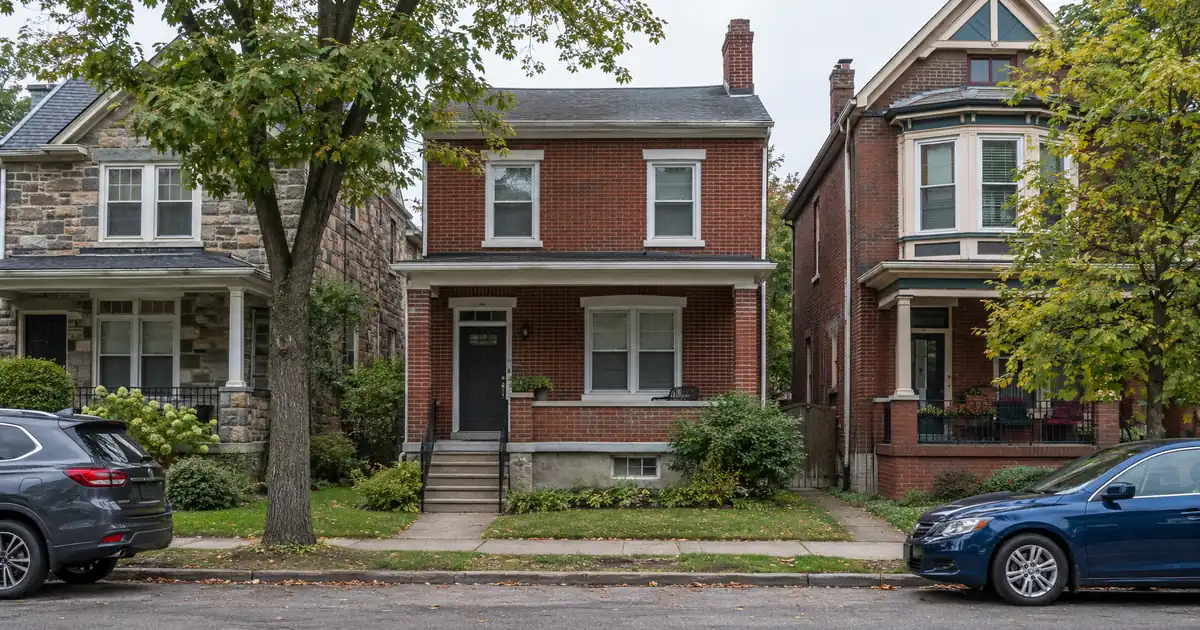
The Quick Read: Delayed financing and an asset qualifier loan solve different problems, so the choice is less either-or than it looks. Delayed financing is a timing exception that lets a cash buyer refinance without waiting out the usual ownership clock. An asset qualifier loan is a way of proving repayment from your balances instead of income documents. Delayed financing is for the buyer who wants to recycle cash soon after closing. The asset qualifier is for the buyer whose wealth is large and whose documented income is thin.
The two tools also work against each other in one spot. Paying cash shrinks the very account balances an asset-based loan counts.
Key takeaways:
- Delayed financing is an exception inside cash-out rules, not a separate loan. It waives the ownership waiting period and nothing else.
- An asset qualifier loan is a qualifying method. On this program’s qualifier path, eligible assets must cover the entire loan, and no income is documented.
- Every dollar of cash spent on the house leaves your asset pool, which can weaken an asset-based file after a cash purchase.
- On a pure rental, DSCR (a loan qualified on the property’s rent) usually fits better than either option.
- The decision is mostly about timing and what you want out of the refinance: cash back, or a loan qualified on your balance sheet.
Side-by-Side
The delayed financing column reflects published industry norms, which vary by program. The asset qualifier column reflects the asset-based program Lendmire’s wholesale network places, subject to underwriting. Both options are available through select programs, and every file is underwritten individually.
| Factor | Delayed financing (industry norms) | Asset qualifier (qualifier path) |
|---|---|---|
| What it is | Exception to a cash-out waiting rule | A method of qualifying on assets |
| Review basis | Rental cash flow on a DSCR file; borrower income or assets otherwise | Eligible assets equal to or above the whole loan |
| Income documented | Depends on the underlying program | None |
| Key documents | Settlement statement, source-of-funds trail, clean title | Two months of statements per account |
| Property types | Primary, second home, or rental, by program | Principal residence or second home |
| Entity vesting | Borrower-owned LLC may work, depending on program | Built around individual borrowers |
| Seasoning clock | Waives the ownership wait only | 60 days of seasoning on qualifying funds |
| Reserves | Set by the underlying program | None at or below 75% loan-to-value |
| Cash back at closing | Yes, capped near documented cost | Not published for this path |
Two rows deserve a second look. The first is cash back, because only one of these options is built to return your purchase money. The second is property type, because investment property sits on a different asset-based path, covered below.
Key Terms Defined
Delayed financing: An exception that lets a buyer who paid all cash take a cash-out refinance soon after purchase instead of waiting for the standard ownership period.
Seasoning: The waiting period a lender wants between two events. For ownership it is time since purchase. For assets it is how long funds have sat in your accounts.
Asset qualifier path: A way of qualifying where eligible assets, after the program’s credit percentages, must equal or exceed the whole loan. No income is documented.
Asset depletion path: A way of qualifying where usable assets divided by 60 months become monthly income. That income then runs through the debt-to-income test, which compares monthly debts to monthly income.
Arm’s-length purchase: A sale between unrelated parties at market terms. Sales between relatives, business partners, or with seller financing generally fail this test.
Cash-out refinance: A new loan larger than the old balance, with the difference paid to you.
When Delayed Financing Is the Better Fit
Delayed financing fits the buyer who used cash as a tactic and wants most of it back. Paying cash can win a deal, and the exception lets you replace those dollars with a loan afterward. You are not borrowing against a bargain price or a rehab. You are recouping what you spent.
It is an exception inside the cash-out rules, not its own product. The Fannie Mae Selling Guide names the delayed financing exception as part of its cash-out refinance section. Under that text the loan is still a cash-out refinance, and only the ownership wait is waived. The agency version also ties the loan amount to the documented initial investment, plus certain financed costs. That is agency policy, not a rule for the programs in Lendmire’s network. It does show the typical logic, which many programs borrow and then adjust with their own terms.
Here is where it fits best:
- A rental you bought with cash. The loan typically is reviewed on the property’s rent covering its payment, subject to lender guidelines. Your personal balance sheet matters less, so spending your savings does less damage.
- A cash buyer who planned ahead. The file wants a settlement statement showing no mortgage financing, a title search showing no liens, and a traceable source for the purchase funds. Collecting these at closing costs little. Rebuilding them later costs a lot.
- Someone who wants cash back more than a bigger loan. Delayed financing returns cost, not appreciation. If the house is worth more than you paid, waiting out the seasoning period can return more, based on appraised value, but later. The choice is about timing, not about one option being better.
Common ways the plan breaks:
- Financing between purchase and refinance. A mortgage or lien recorded after the cash closing can turn the file into a standard cash-out with a fresh clock.
- Related-party sales and seller financing. These fail the arm’s-length and no-financing tests.
- Bridge or hard-money purchases. Refinancing the bridge itself is one thing. Pulling extra cash out on top of it is another, and seasoning rules usually apply to that extra cash.
- Title and deed mismatches. A deed recorded months late, or title held in a different name than the borrower’s, creates file risk.
- Rehab spending. Money put into the house after closing is generally not reimbursed under a cost cap, though some programs treat improvements differently. Confirm against the specific program.
Entity vesting matters too. Purchasing through a borrower-owned LLC may be acceptable, subject to program terms. Confirm the structure before you close on the cash purchase, not after.
One more point. Delayed financing waives only the clock. Credit, appraisal, leverage limits, and the program’s own coverage or income test all still apply. Eligibility for the exception is not approval of the loan.
When an Asset Qualifier Loan Is the Better Fit
An asset qualifier loan can suit retirees, people who sold a business, recipients of an inheritance or settlement, early-retired professionals, and households living off a portfolio. It also helps self-employed borrowers whose traditional personal-income documentation understates their real cash position.
On the qualifier path, your eligible assets, after the program’s credit percentages, must equal or exceed the entire loan amount. No employment or income is documented. Through select programs, the credit percentages typically look like this:
- Brokerage accounts, certificates of deposit, money market, and savings count at 100%.
- Retirement accounts count at 90% if you are under 59½ and 100% at 59½ or older.
- Accounts combine into one pool.
Here is an illustrative example. An $800,000 loan with $330,000 in brokerage accounts (100% counts, so $330,000), $300,000 in a 401(k) under 59½ (90% counts, so $270,000), and $200,000 in savings (100% counts, so $200,000) shows $800,000 of usable assets. That is reviewed on assets alone, subject to underwriting. The lender’s own calculation governs.
The assets are documented even though income is not. The program typically wants 60 days of seasoning and two months of statements per qualifying account. Credit starts at a 600 minimum score. Leverage runs up to 80% on a purchase and up to 75% on a refinance of a principal residence or second home. Loan amounts go up to $4,000,000. Reserves are not required at or below 75% loan-to-value, and above that the lender sets them. These are ceilings and floors, not offers, and every file is reviewed individually.
Documentation deserves attention. Morty’s broker-education page notes that lenders may ask for explanations of recent changes in asset balances. A large transfer into the qualifying account shortly before the application is the classic trigger. Keep the paper trail clean.
The asset-pool problem after a cash purchase
Picture a retiree who pays cash for a Pennsylvania home, then applies for an asset qualifier loan. The cash that bought the house is gone from the account. What remains must still cover the whole loan amount after the credit percentages. A buyer with a large portfolio can pass that test. A buyer who spent most of their liquid funds on the house usually cannot.
This follows from how the pool is counted. It is a logical consequence, not a published rule for this exact situation.
There is a second limit. The qualifier path’s refinance leverage figure is 75%, but whether it permits cash-out proceeds, and at what leverage, is set by the lender and is not published. Do not plan on pulling your purchase money back out through this path. It is better suited to a rate-and-term refinance or a purchase.
The depletion path, and investment property
If the house will be a rental, the asset qualifier path is not the route, because investment property sits on the asset depletion path. There, usable assets divided by 60 months become qualifying income. For example, $1,500,000 in securities (80% counts, so $1,200,000) plus $300,000 in cash (100% counts) gives $1,500,000 of usable assets. Divided by 60 months, that is $25,000 of monthly qualifying income. That income then carries the housing payment and other debts through the debt-to-income test.
The depletion path counts assets differently from the qualifier path:
- Cash and certificates of deposit count at 100%.
- Securities count at 80%.
- Private stock counts at 75%.
- Retirement accounts count at 70% at any age.
- Real-estate equity counts at 60%.
Depletion path leverage differs by use. On a principal residence or second home, it runs up to 80% on a purchase or rate-and-term refinance and 60% on a cash-out refinance. Cash-out proceeds never count as qualifying assets.
The minimums are stricter than on the qualifier path. Qualified assets must be at least the lesser of $1,000,000 or 1.25 times the loan balance, and never below $250,000 liquid when depletion is your only income source. A first-time investor needs a 700 score. Statements must be at least 120 days old at application, plus a recent statement within 45 days. Loan amounts run from $125,000 to $3,500,000.
Compare that to the cash you just spent. Most borrowers who paid cash for a rental will find DSCR a better match. DSCR qualifies primarily on property-level rental income covering the payment, subject to lender guidelines. Your depleted balances matter less on that file.
DSCR loans are designed for non-owner-occupied investment properties. Because they are business-purpose investor loans, they are reviewed differently from a standard owner-occupied mortgage. The CFPB’s ability-to-repay rule excludes credit extended primarily for business purposes, even when a dwelling secures it. For consumer loans it lets a lender base repayment ability on income, on assets other than the dwelling, or on both. That is the logic behind asset-based qualification.
Can You Use Both?
Not on the same loan. A borrower is qualified on one path at a time, and delayed financing is not a path. It is a timing exception that can sit on top of a program.
In practice, a homeowner might use delayed financing on a principal residence or second home whose underlying program reviews the file on assets. The asset test then has to survive the cash purchase, because the pool is measured after the money leaves.
If you have already taken cash out through delayed financing, how to time an asset depletion mortgage after a delayed financing cash-out is a separate question. The new loan may change both your asset pool and your debts.
Across the programs Lendmire’s wholesale network places, the common failure is a buyer who treats cash purchase and asset qualifying as independent decisions. They are linked. Plan the refinance, and the asset math behind it, before you wire the purchase funds.
Which Buyer Fits Which Option
| Buyer profile | Usually the stronger starting point |
|---|---|
| Investor who paid cash for a rental | Delayed financing on a DSCR file |
| Retiree with a large portfolio, bought a second home with part of it | Asset qualifier, if the remaining pool still covers the loan |
| Self-employed buyer, thin traditional personal-income documentation, bought a primary residence with cash | Asset-based refinance or another alternative-documentation program |
| Cash buyer who wants to recover purchase money for the next deal | Delayed financing |
| Buyer who spent most liquid savings on the house | Neither asset path is likely to be strong; compare other programs |
These are starting points, not predictions. Credit, title, property condition, and the program’s own limits all shape the result.
The Verdict
Choose delayed financing when the goal is getting cash back after a cash purchase, especially on a rental that is reviewed on its own rent. Choose an asset qualifier loan when your balances are large, your documented income is not, and the loan itself is the goal. Do not choose the asset qualifier to recover your purchase money, because its cash-out terms are not published.
If you are torn, ask two questions. First, do you need the cash back, or just a loan? Second, after paying for the house, will your remaining assets still cover what you want to borrow? Those answers usually decide it.
Tax treatment varies; consult a qualified professional. For the full framework behind these programs, see Lendmire’s complete DSCR loans guide.
If you are qualifying on assets rather than income and want to see how the numbers work, Lendmire can help you compare asset-based mortgage options based on your statements, the property, credit profile, leverage, and your goals. Lendmire is a mortgage broker whose consumer mortgage lending is licensed in 16 states, including Pennsylvania. Program figures do not change by state.
Frequently Asked Questions
Is delayed financing a loan?
No. It is an exception that waives the ownership waiting period on a cash-out refinance. The loan you receive is still an ordinary cash-out loan under whichever program you use, with its own credit, appraisal, and leverage limits.
Can I use an asset qualifier loan to get my cash back after buying a house with cash?
Not reliably. On the qualifier path, cash-out proceeds and their leverage are set by the lender and are not published, so do not plan around them. On the depletion path, cash-out is available at 60% on a principal residence, second home, or investment property, subject to underwriting.
Does paying cash hurt my chances of qualifying on assets?
Yes, it can. The cash that bought the house leaves your accounts, so the pool that remains must still meet the program’s test. On the qualifier path, that pool must cover the entire loan. On the depletion path, it must clear the minimum-asset rule.
Does an asset qualifier loan work for a rental property?
Not on the qualifier path, which is for principal residences and second homes. Investment property is eligible only on the asset depletion path. A rental that earns enough to cover its payment is often a better fit for DSCR.
What documents should I keep from a cash purchase?
Keep the settlement statement showing no mortgage financing and a title search showing no liens. Keep a clear record of where the funds came from, plus proof the sale was arm’s-length. Two months of statements on any account you plan to use for asset qualifying round out the file.
Lendmire’s asset-based mortgage in Pennsylvania page presents the program for Pennsylvania borrowers.
About Lendmire
Lendmire — NMLS# 2371349 — is a mortgage broker that arranges bank statement, P&L-only, 1099-only and asset-based home financing in 16 states through wholesale lenders, on primary residences, second homes and investment properties. Every option is subject to the lender’s guidelines and full underwriting. Scotsman Guide named Lendmire a Top Mortgage Workplace in both 2025 and 2026.
Get Started
Ready to find the right loan for you?
In about 30 seconds you can review financing options available for your home or investment property. No commitment required.
Informational only. Not a Loan Estimate, approval, or commitment to lend. Program availability and eligibility are subject to lender guidelines, credit approval, property review, and underwriting.
References
1. Fannie Mae Selling Guide B2-1.3-03
2. Morty: Asset depletion for brokers
This article is part of Lendmire’s asset-based mortgage program — full qualification details, guidelines, and scenarios live on the program page.
Related reading: Asset Seasoning Rules on an Asset Qualifier vs. an Asset Depletion Loan · Dividend Income vs Asset Depletion for a Second Home Jumbo Loan · Asset Qualifier vs Asset Depletion for a Tech Employee
Guides: Asset-Based Mortgage in Pennsylvania
Brandon Miller
Founder & CEO, Mortgage Loan Originator, Lendmire LLC
- Mortgage Loan Originator · NMLS# 1129696 · Verify on NMLS Consumer Access
- North Carolina Real Estate Broker · License# 343312 · Verify on NCREC
- North Carolina Insurance Producer · License# 19053198 · Property, Casualty, Life, Health · Verify on NAIC SBS
- Lendmire LLC · Firm NMLS# 2371349 · Verify firm licensure
Important disclosures. Lendmire (NMLS# 2371349) is a licensed mortgage brokerage. Lendmire is not a direct lender, depository institution, or financial advisor. All loan inquiries are subject to lender underwriting; this article does not constitute a commitment to lend. Rates, terms, and program guidelines are subject to change without notice and vary by borrower profile, property type, and state. Information in this article is general in nature and is not financial, legal, or tax advice. Equal Housing Opportunity. NMLS Consumer Access: nmlsconsumeraccess.org.