
The Quick Read: Delayed financing is a timing exception that lets a cash buyer take out a cash-out loan without the usual waiting period, while an asset qualifier loan is a way of proving repayment with assets instead of income, so they solve different problems and a cash buyer may need one, the other, or both. The two are not rival products. One answers “how soon can I pull my cash back out?” The other answers “how do I qualify when my income is not on paper?”.
- Delayed financing is a seasoning exception, not a loan type. Its terms are set by each lender’s policy.
- The asset qualifier path covers the entire loan with eligible assets and documents no employment or income.
- Cash spent on the purchase is gone. It cannot count as an asset afterward.
- Through select programs, the qualifier path reaches 80% on a purchase and 75% on a refinance. It applies to principal residences and second homes.
- A rental in Ohio is a different story. Investment property runs through the asset depletion path, which has lower leverage.
Why These Two Get Compared
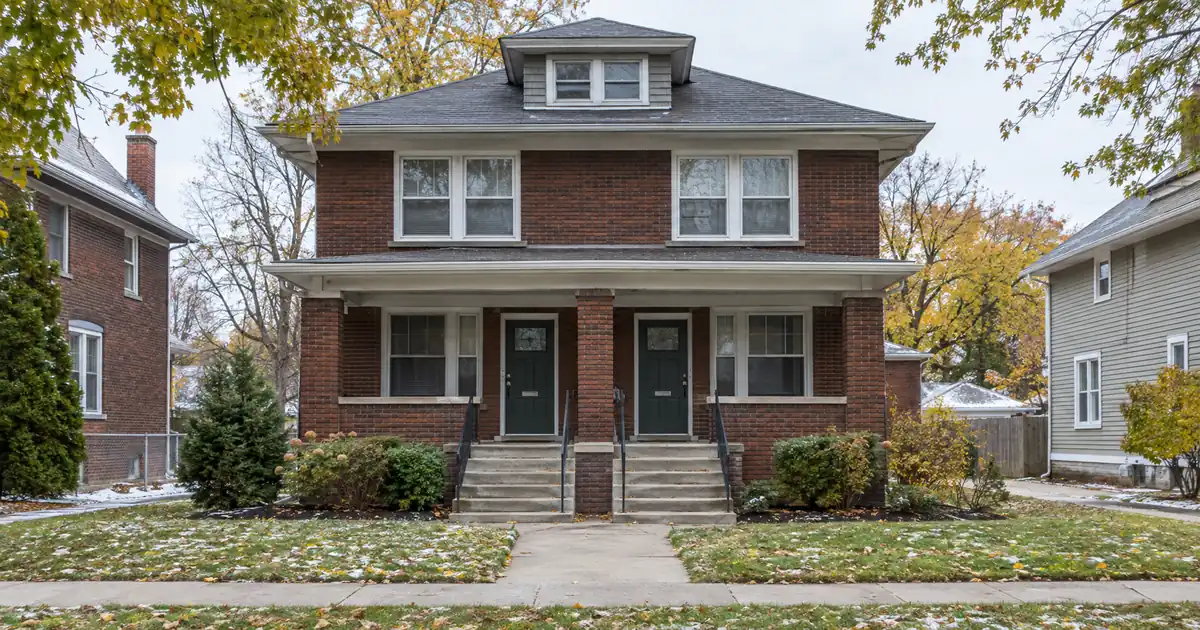
A cash buyer in Ohio ends up with a paid-off house and a thin liquid balance. The next move is usually one of two: get the cash back out, or qualify for a loan without documented income. People hear both terms and assume they are alternatives.
They are not. Delayed financing is a rule about the clock on a cash-out refinance. An asset qualifier loan is a rule about how the borrower proves repayment. A file can use either, both, or neither.
Across Lendmire’s wholesale network, the confusion shows up most often on files where the buyer paid cash first and planned the financing second. The order of those two decisions matters more than the choice between them. This piece covers the borrower’s version of the question: Ohio home, cash already spent or about to be, and an income picture that does not fit a standard loan application.
The program figures below belong to asset-based consumer mortgages placed through select lenders. Lenders review every file individually, and none of this is a commitment to lend.
Side-by-Side
The table puts the two options on the same rows. The delayed financing column shows published industry norms with qualifiers. The asset qualifier column shows the qualifier path in the network.
| Factor | Delayed financing (industry norms) | Asset qualifier path |
|---|---|---|
| What it is | Exception to cash-out waiting period | Method of qualifying on assets |
| Review basis | Whatever the lender’s loan uses | Eligible assets cover the whole loan |
| Income documented | Depends on the loan paired with it | None; assets are documented |
| Key documents | Settlement statement, source of funds, clean title | Two months of statements per account |
| Seasoning | Clock runs from the cash purchase | 60 days on qualifying assets |
| Leverage | Tied to documented cost plus costs | 80% purchase, 75% refinance |
| Property types | Set by lender policy | Principal residence, second home |
| Entity vesting | Some norms allow a wholly owned LLC | Individual borrower typical |
| Reserves | Lender-set, often for cash-out | None at or below 75% LTV |
| Credit | Lender-set | 600 minimum score |
Every row on the right is subject to underwriting. The leverage row on the left is not a number at all, because the cap follows the documented investment rather than a flat percentage.
How Delayed Financing Works
Delayed financing is an exception inside the cash-out refinance rules. Fannie Mae’s Selling Guide lists it as a carve-out from the normal waiting period. Agency rules do not govern the non-agency loans most investors and asset-rich borrowers use. They are useful as a template, because most lenders borrow the same ideas into their own policy.
The common conditions look like this:
1. The purchase was arm’s-length. A related-party seller is the classic failure.
2. The settlement statement shows no mortgage financing was used to buy the property.
3. The source of the purchase funds is documented.
4. Title is clean, with no liens.
5. The new loan is capped near the documented investment plus eligible costs, not at the appraised value.
The archived version of the same guide spells out who may have bought the property. The list includes an individual, an eligible trust, and an LLC or partnership the borrowers fully own. Whether a non-agency lender follows that list is lender-specific, and entity files are reviewed subject to program terms.
The exception waives the clock only. It does not waive anything else. It remains a cash-out refinance, so the appraisal, credit review, reserves, and cash-out leverage limits still apply.
Two limits matter for planning. Renovation money spent after closing is generally not reimbursable under the exception. Appreciation also adds no borrowing room, because proceeds track what the buyer documented paying.
How the Asset Qualifier Path Works
The asset qualifier path covers the whole loan with eligible assets. No employment or income is documented. The assets are documented, though, and that distinction matters. Alt-doc does not mean no documentation.
Eligible assets count at a percentage of their balance. Brokerage accounts, certificates of deposit, money market, and savings count at 100%. A 401(k) or IRA counts at 90% under age 59½ and 100% at 59½ or older. Accounts combine.
Here is the sanctioned shape of the math, and it is illustrative only. Take an $800,000 loan with $330,000 in brokerage accounts (100%, so $330,000), $300,000 in a 401(k) under 59½ (90%, so $270,000), and $200,000 in savings (100%, so $200,000). That counts $800,000 of usable assets. The loan is reviewed on assets alone, subject to underwriting. The lender’s own calculation governs.
Other requirements on this path:
- Leverage runs up to 80% on a purchase and up to 75% on a refinance, for a principal residence or second home.
- Loan amounts run up to $4,000,000.
- The credit floor is a 600 score.
- Seasoning is 60 days on qualifying assets, with two months of statements for each account.
- No reserves are required at or below 75% loan-to-value. Above that, the lender sets them.
Whether cash-out proceeds are allowed on this path, and at what leverage, is set by the lender and is not published. Do not plan around a specific figure.
The Cash-Already-Spent Problem
This is where the two options collide. The qualifier path needs eligible assets that equal or exceed the entire loan amount. A cash purchase drains those assets.
Say a retiree sells a business and pays cash for an Ohio home. The brokerage balance that would have qualified the loan is now a house. The borrower may pass the credit test and still fall well short of the asset test.
Delayed financing is the tool that moves cash back out. Cash-out proceeds are not a clean fix for the asset test, though. On the depletion path, cash-out proceeds never count as qualifying assets. On the qualifier path, how the lender treats fresh proceeds is not published. Fresh deposits also face the 60-day seasoning requirement and the two-month statement rule. Ask the lender how it treats them before building a plan around returned cash.
The better sequence is to model both steps before the cash purchase closes. Know what balance will remain, which accounts it sits in, and how those accounts will be documented. That is a planning step, not a rescue step.
When Delayed Financing Is the Better Fit
Delayed financing fits when the goal is getting capital back out of a house just bought with cash. It is the right lens when the borrower can already qualify on whatever basis the lender uses and only the waiting period is in the way.
It fits best when:
- The purchase was clean: arm’s-length, no mortgage, funds traceable to a single source.
- The documented cost is close to the appraised value, so the capped proceeds do not leave much equity behind.
- The borrower wants liquidity for the next property without waiting out standard seasoning.
- The borrower has other income documentation and does not need assets to carry the qualification.
It fits poorly when the buyer used hard money or a bridge loan, because the no-financing condition fails. It also fits poorly when the buyer bought from a relative, or when the buyer spent heavily on a rehab and expects proceeds to reflect the work. A borrower who borrowed part of the down payment should expect to pay that debt down first, which is lender policy and not a universal rule.
One honest drawback: the cap follows cost, not value. If the house appreciated a lot, waiting out standard seasoning may return more cash, with the trade-off that the cash stays tied up longer.
When the Asset Qualifier Loan Is the Better Fit
An asset qualifier loan fits when assets are large, income is not documented, and the property is a principal residence or second home. It suits retirees, people who sold a business, recipients of an inheritance or settlement, and households living on a portfolio.
It fits best when:
- Eligible assets, after the percentages above, cover the full loan amount.
- The borrower would rather not document employment or income at all.
- Leverage of 75% on a refinance or 80% on a purchase is enough.
- Statements are in good order and the accounts have been seasoned for 60 days. Leverage, reserves, and pricing vary by lender and program; the final terms follow the full file review.
It fits poorly when the cash purchase drained most liquid assets. It also fits poorly when the money sits in categories not published as eligible: cryptocurrency, precious metals, collectibles, pledged or borrowed funds. The documented route for those is converting them to a seasoned cash balance in a regulated account, with the source reviewed by the lender. They never count at a percentage.
Now the investor case. If the Ohio home is a rental, the qualifier path does not apply, because it covers principal residences and second homes. Investment property runs through the asset depletion path instead. That path divides usable assets by 60 months to create a monthly qualifying income, which then runs through the debt-to-income test.
The sanctioned example: $1,500,000 in securities (80%, so $1,200,000) plus $300,000 in cash (100%, so $300,000) is $1,500,000 usable. Divided by 60 months, that is $25,000 of monthly qualifying income. That income carries the housing payment and other debts through the debt-to-income test.
The depletion path has its own tighter terms. Haircuts are cash and certificates of deposit at 100%, securities at 80%, private stock at 75%, retirement accounts at 70% at any age, and real-estate equity at 60%. Leverage on investment property is up to 65% on a purchase or rate-and-term refinance and 60% on a cash-out. Qualified assets must reach at least the lesser of $1,000,000 or 1.25 times the loan balance, and never less than $250,000 liquid when asset depletion is the only income source. A first-time investor needs a 700 score. These are the depletion path’s numbers and never blend with the qualifier path’s.
A borrower sits on one path at a time. Mixing the qualifier path’s percentages into a depletion file is a worksheet error to avoid. For the follow-on timing question, Lendmire’s article How to Time an Asset Depletion Mortgage After a Delayed Financing Cash-Out covers the reverse order.
Can the Two Work Together?
Yes, in sequence, though not as a single bundled product. The delayed financing exception handles the clock. The asset qualifier path handles the qualification. A lender has to accept both in the same file, and that is a lender-level decision.
A realistic combination looks like this. The borrower pays cash for a principal residence or second home. The borrower keeps enough eligible assets in seasoned accounts to cover the new loan. The borrower then refinances at up to 75% on the qualifier path, with no income documented. Whether the lender treats that refinance as having waived seasoning is something to confirm in writing before the cash purchase closes.
It gets harder when the borrower needed the cash back to rebuild the asset balance. That loop is circular. The returned cash may not count, and the remaining assets may not cover the loan.
Documents that keep both options open include:
- the settlement statement from the cash purchase;
- proof of the source of the purchase funds;
- statements for every account the borrower expects to count;
- the recorded deed and a title report showing no liens;
- records showing the seller was an unrelated party.
Ask the title company for the recorded deed and settlement statement as soon as they exist. Ohio county recording practice affects when those papers are available, and the lender will want them in the file.
Where Files Stall
Most delays on these files are preventable documentation gaps. A few come up repeatedly.
- Statement age. Statements go stale. The qualifier path wants two months per account and 60 days of seasoning. The depletion path wants statements at least 120 days old at application plus the most recent within 45 days.
- Large withdrawals. A cash purchase shows up as a large outflow. Lenders want the source of funds and the purpose documented, not left to inference.
- Mixed paths. The qualifier path and the depletion path use different percentages and leverage. Quoting one table on a file that belongs to the other creates a mismatch the lender will catch.
- Assuming returned cash counts. It does not count on the depletion path. Treatment on the qualifier path is lender-set.
- Wrong occupancy. A rental routed to the qualifier path is routed wrong.
The depletion path’s one flexible piece is that sale-of-business, inheritance, and legal-settlement funds are excused from the 120-day statement seasoning. That helps borrowers whose cash arrived recently from a one-time event.
Key Terms Defined
Delayed financing: An exception that lets a cash buyer take a cash-out loan without the usual waiting period, subject to lender conditions.
Asset qualifier loan: A loan qualified on eligible assets that cover the whole loan amount, with no employment or income documented.
Asset depletion: A method that divides usable assets by 60 months to create monthly qualifying income, which then runs through the debt-to-income test.
Seasoning: The length of time funds or ownership have been in place, shown through statements or the settlement paperwork.
The Verdict
Pick delayed financing when the question is timing: the house is bought, the cash is spent, and the borrower wants capital back without waiting. Pick the asset qualifier path when the question is proof: assets are large, income is not documented, and the property is a principal residence or second home. A rental needs the depletion path, which takes lower leverage and a higher asset bar.
The two answer different questions, so the choice is partly false. The real decision is the order. Model the post-purchase asset balance before closing on the cash deal, because a drained balance cannot carry a qualifier loan, and returned cash may not count as an asset.
For the full map of program types, Lendmire’s complete DSCR loans guide covers how the investor side differs. If you are qualifying on assets rather than income and want to see how the numbers work, Lendmire can help you compare asset-based mortgage options based on your statements, the property, credit profile, leverage, and your goals. Consumer lending runs in 16 states, Ohio included.
Frequently Asked Questions
Can I use an asset qualifier loan right after paying cash for a home?
It depends on what is left in your accounts. The qualifier path needs eligible assets that cover the entire loan, so the cash you spent cannot count. If your remaining balances, after the credit percentages, still equal the loan amount, the path can work on a principal residence or second home, subject to underwriting.
Is delayed financing a separate loan?
No. It is an exception to the cash-out waiting period, not a product. The loan underneath still has its own rules for credit, appraisal, reserves, and leverage. Lenders set their own version of the exception, so conditions vary.
Do cash-out proceeds count as assets afterward?
Not on the asset depletion path, where cash-out proceeds never count as qualifying assets. On the qualifier path, treatment of fresh proceeds is set by the lender and is not published. Fresh deposits also face the 60-day seasoning and two-month statement rules.
Which path covers an Ohio rental?
The asset depletion path. The qualifier path covers principal residences and second homes only. On investment property, depletion leverage is up to 65% on a purchase or rate-and-term refinance and 60% on a cash-out, subject to underwriting.
Does an asset qualifier loan mean no documentation?
No. Employment and income are not documented, but assets are. The lender reviews two months of statements per qualifying account and checks 60 days of seasoning.
For current guidelines and terms, see Lendmire’s asset-based mortgage programs page.
Lendmire’s asset-based mortgage in Ohio page presents the program for Ohio borrowers.
About Lendmire
As a mortgage broker (NMLS# 2371349), Lendmire helps self-employed and high-net-worth borrowers in 16 states qualify on bank statements, a profit-and-loss statement, 1099s or liquid assets instead of tax returns, through wholesale lenders. Lendmire is never the lender; program terms are set by the lender and its guidelines. Scotsman Guide named Lendmire a Top Mortgage Workplace in both 2025 and 2026.
Get Started
Ready to find the right loan for you?
In about 30 seconds you can review financing options available for your home or investment property. No commitment required.
Informational only. Not a Loan Estimate, approval, or commitment to lend. Program availability and eligibility are subject to lender guidelines, credit approval, property review, and underwriting.
References
1. Fannie Mae Selling Guide, B2-1.3-03 Cash-Out Refinance Transactions
2. Fannie Mae Selling Guide, B2-1.3-03 (archived version)
This article is part of Lendmire’s asset-based mortgage program — full qualification details, guidelines, and scenarios live on the program page.
Related reading: Asset Qualifier Mortgage vs Bank Statement Mortgage · Asset Qualifier vs Asset Depletion for a Cash-Out Refinance · Asset Qualifier vs Asset Depletion for a Snowbird
Guides: Asset-Based Mortgage in Ohio
Brandon Miller
Founder & CEO, Mortgage Loan Originator, Lendmire LLC
- Mortgage Loan Originator · NMLS# 1129696 · Verify on NMLS Consumer Access
- North Carolina Real Estate Broker · License# 343312 · Verify on NCREC
- North Carolina Insurance Producer · License# 19053198 · Property, Casualty, Life, Health · Verify on NAIC SBS
- Lendmire LLC · Firm NMLS# 2371349 · Verify firm licensure
Legal disclosures. Lendmire (NMLS# 2371349) is a state-licensed mortgage brokerage that arranges financing through wholesale lender relationships. Lendmire is not a direct lender, depository institution, or registered financial advisor. The discussion above is general informational content about real estate financing — it is not financial, legal, or tax advice, and readers should consult licensed professionals for guidance on their individual circumstances. Loan inquiries are subject to lender underwriting; this article does not represent a commitment to lend. Loan terms, rates, and qualification standards vary by borrower, property, and state, and are subject to change at any time. Equal Housing Opportunity. NMLS Consumer Access: nmlsconsumeraccess.org.