
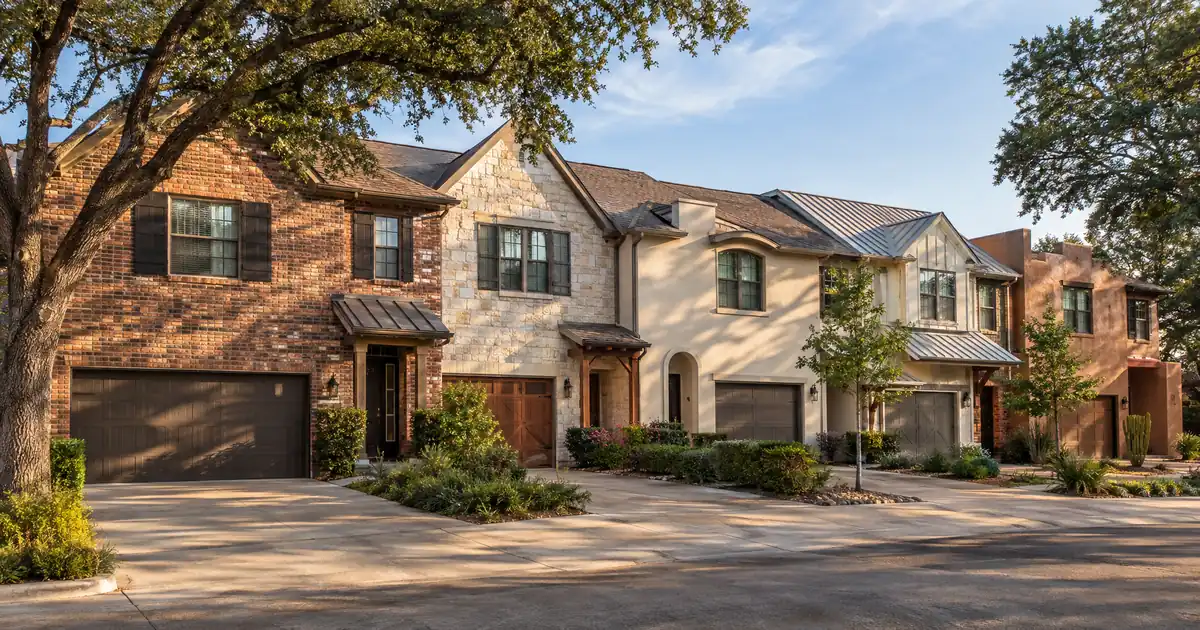
A cash-out refinance on an investment property in Central Colleyville hits the DSCR math like this. An investor owns a house near the neighborhood’s $763K median sale price and leases it near the citywide $3,522 median rent. At 75 percent LTV, including taxes and insurance, modeled coverage lands around 0.55x. That’s well short of the 1.00 benchmark. The equity is real. The rent just doesn’t carry the debt.
The Short Version: A DSCR cash-out refinance on a Colleyville, Texas investment property is underwritten primarily on the property’s rental income measured against its full monthly obligation, with proceeds capped by the program’s 75 percent LTV ceiling. Coverage, not equity, is the binding constraint here.
DSCR Cash-Out Calculator
Run the cash-out numbers in Colleyville, TX
Rate source: Freddie Mac 30-yr average via FRED® — Federal Reserve Bank of St. Louis · effective Sep 24, 2026
Prefilled with starting assumptions — enter your property’s value, balance, taxes, and insurance for a more accurate picture.
Program parameters update from Lendmire’s centralized guideline source. Taxes and insurance are editable estimates.
As of Sep 24, 2026 · General Freddie Mac market benchmark, not a Lendmire loan offer. Property value, balance, taxes, and insurance are editable estimates. Maximum loan-to-value varies by lender, program, property type, and seasoning. Not a Loan Estimate, approval, or commitment to lend. Program availability and eligibility are subject to lender guidelines, credit approval, property review, and underwriting.
- Zillow’s citywide average home value is $925,491, up just 1.6 percent year over year.
- Modeled full-PITIA coverage on a typical single-family rental runs roughly 0.55x at 75 percent LTV.
- Seasoning runs about 6 months from title recording.
- Multi-unit stock is nearly absent, so income stacking isn’t a workaround.
Colleyville Market Snapshot
A quick read on the Colleyville investor landscape — figures come from the cited sources below. Confirm current property-level numbers before underwriting.
| Metric | Detail |
|---|---|
| Home prices | $1.0M median (Redfin housing market) |
| Typical rents | $3,520 median gross rent (2024) (City-Data Colleyville) |
| Recent appreciation | +11.0% yoy (Redfin housing market) |
Where the Coverage Math Breaks
Colleyville fails the standard cash-flow test at nearly every price tier. A typical single-family rental covers only about half of its full monthly obligation at maximum leverage.
Lendmire (NMLS# 2371349) places DSCR investor loans on Colleyville, Texas properties through wholesale lending channels reaching 41 markets, including D.C. Even so, the broker can’t engineer around arithmetic.
Run the numbers on a house valued at Zillow’s average with rent at the Zumper median. These are modeled assumptions, not sourced market data. Divide rent by full PITIA, meaning principal, interest, taxes and insurance, and the result sits near 0.55x at 75 percent LTV. Cutting leverage to 50 percent lifts it only to about 0.75x. I rounded both bands down. Even half-leveraged, the typical house doesn’t reach the 1.00x baseline.
That’s the contrarian read on this city. Colleyville looks like a rich equity pool, and it is. But Census-derived median household income of $218,328 tells you who lives here: owners, not renters. Prices are set by owner-occupant demand, and rents trail far behind. Investors holding large-lot homes here are carrying an appreciation bet, not a yield position.
Most standard DSCR programs are built around a 1.00x benchmark because rent covers the payment at that level. Some lenders review lower ratios, but those files usually need lower leverage, different pricing or more cash behind them. Exact eligibility depends on guidelines, credit, reserves and property review. The guide “What Is a DSCR Loan” is worth reading before you order an appraisal.
Equity Is Real, but the Comps Disagree
The equity story in Colleyville is noisy, and the cash-out amount hinges on which source the appraiser’s comps resemble. Treat the low-growth reading as the planning case.
Redfin’s ZIP-level median rose 11.1 percent year over year to about $1.0M, on roughly 99 sales across three months. The citywide median, meanwhile, fell 17.0 percent year over year in an earlier reading, on only about 20 sales. Zillow’s index says 1.6 percent. All three describe the same city.
Thin volume explains it. Medians swing when a handful of $1.5M estates close or don’t. Orchard’s trailing-30-day report showed a $960,000 median, down 6.5 percent, with 16 sales against 37 a year earlier and 37.5 percent of listings cutting price. Days on market conflict too. Redfin shows 24, and Zillow shows homes going pending in about 7.
So the planning case is simple. Don’t size a cash-out on peak-price comps. An investor who bought about 6 months ago at the top of a spike may find the appraisal lands under expectation. Seasoning is measured from title recording, and a fresh purchase doesn’t qualify until it clears. The 75 percent ceiling then applies to appraised value, not to what you hoped it would be.
Central Colleyville Versus the Million-Dollar Tier
Rent-to-value improves as price falls, which makes the older central stock the only segment with a plausible path toward 1.00x. Everything above roughly $1M is the thinnest coverage in the city.
Central Colleyville’s $763K median and $298 per square foot compare with a citywide median near $1.0M. Against a rent level similar to the citywide median, that’s about 0.44 percent rent-to-price monthly. The citywide figure on Zillow’s value runs near 0.38 percent. These are my own calculations, mixing sources and dates, so read them as directional.
At the far end, HAR reports an average price of $1,575,390 and a 4-bedroom average rent of $4,864. That’s roughly 0.31 percent. Different method, since HAR uses averages and the others use medians or an index. But the direction is the same. Rent climbs with price at a fraction of the pace.
Rent trends add another wrinkle. Zumper’s median showed a 12 percent decline over the prior year, from a small listing-based sample. City-Data’s Census-derived median gross rent of $3,520 lines up with Zumper’s level, so the figure is probably right even if the trend is noisy. Rents that soft don’t rescue a coverage ratio.
Even a more affordable central house, modeled at full PITIA and 75 percent LTV, comes out around 0.65x. At 50 percent leverage it approaches 0.85x. Better, still short. That’s the honest ceiling for this market.
Townhomes and Duplexes: Don’t Count on Them
Multi-unit stock is nearly nonexistent in Colleyville, so the usual fix for thin coverage isn’t available. A recent Redfin sales mix showed 2 condos, 4 townhouses and 1 multi-family property among roughly 26 sales.
Townhome rents are the one bright spot. Apartments.com shows an average townhome rent of $2,140, a far lower rent than large houses, and a smaller price might offer better coverage per dollar. But I found no sourced townhome sale prices to confirm it. Appraisals on those products will also rest on thin comp sets, which cuts both ways for cash-out sizing.
A duplex search turned up nothing worth citing. Investors who want unit-count income stacking will need to look outside the city, and this article doesn’t make claims about where.
Tenant Demand Without a Local Employer Base
Colleyville’s rental demand is regional. The tenant pool commutes in from, or relocates for, jobs elsewhere in the metro. There’s no verifiable major in-city employer campus.
Census Reporter puts population at 26,012, and the city is built out. City-Data shows 4,582 workers, 36.8 percent, who both live and work in the city. Everyone else commutes out. Data Commons shows unemployment near 3.4 percent. Nearby DFW International Airport and the airline and aerospace employers around it are plausible demand anchors, though I couldn’t verify headcounts or tenant mix. Anyone underwriting here should treat that as inference, not data.
Working DSCR brokers see a recurring pattern in affluent, owner-dominated suburbs like this one. Appraised values and achievable rents drift apart, and the file that looked fine on equity alone stalls at the coverage test. The files that move usually arrive with lower leverage already built in, and with reserves documented before the appraisal gets ordered.
Vacancy data is a gap. I found no reliable vacancy rate and no 2-3 bedroom rent series, so nobody can honestly quote one for this city.
Structuring Around a Sub-1.00 Result
When coverage falls short on long-term rent, several paths exist, and a lender would review each on its own terms. None of them is a promise.
- Lower leverage. Pulling LTV well below the 75 percent ceiling shrinks the debt, though as shown above it may still not reach 1.00x on a million-dollar house.
- Sub-1.00 programs. Some lenders in the network review ratios below the benchmark, typically with more reserves, a higher credit tier or adjusted pricing.
- Interest-only structuring. This can improve the coverage number on paper, subject to program terms.
- A lower-priced asset. Central stock near the $763K median is the closest thing to a fit.
Program parameters worth knowing, always subject to lender guidelines: credit scores generally start at a 620 floor, with better tiers at 660, 680 and 700. Reserves run about 6 months of PITIA, rising to about 9 months above $1,500,000. That second threshold matters in Colleyville, where many properties sit near or over it. Loan amounts go up to $3,000,000 on standard programs. Available equity depends on rent used for lender review, PITIA, reserves and the 75 percent cap, so it’s never a guaranteed cash figure. How the cash-out works and the refinance side cover mechanics, and the guide “Where DSCR and Conventional Diverge” shows why some Colleyville owners look at the non-QM route at all. Investors wanting to compare DSCR options can also review the statewide picture, and Lendmire’s broader Texas DSCR financing page lists program coverage.
Here’s a genuine toss-up. Is Colleyville a hold-and-borrow market or a sell-and-redeploy market? Owners with large embedded equity and strong personal cash flow may prefer to keep the asset and pull a modest amount out. Owners who need the cash to cover a negative carry should probably run the sale math first. Verify current local rental rules, property taxes and insurance with qualified local professionals before committing either way.
Frequently Asked Questions
How do you qualify for a DSCR cash-out refinance in Colleyville, Texas?
Qualification centers on the property’s rent against its full monthly obligation, plus credit, reserves and about 6 months of ownership seasoning. Most programs use a 1.00x benchmark, and the credit floor is 620. In Colleyville, the coverage test is usually the hard part, since high prices push rent-to-value low. Final eligibility rests on lender review.
DSCR vs. conventional financing
There are two common ways to finance an investment property in Colleyville, TX, and they qualify you differently — here’s how investors weigh them.
Why investors choose it
- Qualifies on the property’s rental income — no personal tax returns, W-2s, or pay stubs needed to document income.
- No personal debt-to-income ceiling to clear, so existing mortgages and obligations don’t cap your borrowing the same way.
- Can be closed in an LLC, keeping the property inside a business entity.
- Built for scaling — not held to the limit on number of financed properties that conventional financing applies.
- Underwriting centers on the deal: generally qualifies when the rent covers the payment, a 1.00x coverage ratio being a common baseline (confirmed in underwriting).
- Designed specifically for investment property, including long-term and, where the program allows, short-term rentals.
Where it’s strong
- Often the lowest ongoing financing cost for a buyer who fully qualifies on personal income — a fit for a first property or a cost-first purchase.
Trade-offs for investors
- Requires full personal income documentation and must fit within a debt-to-income limit — salary, existing debts, and other mortgages all count.
- Typically held in your personal name rather than a business entity.
- Caps how many financed properties you can carry, which can become a ceiling as a portfolio grows.
- Evaluates you as a borrower as much as the property, which usually means more paperwork.
How investors usually choose: a first or single property often optimizes for the lowest financing cost; portfolio builders often optimize for leverage, vesting in an LLC, and scaling past conventional caps. The right answer depends on your goals, the property, and current guidelines — both paths run through select lenders in Lendmire’s wholesale network, with eligibility and terms confirmed in underwriting.
What are the requirements for an investment property loan in Colleyville, Texas?
Expect a credit score at or above 620, reserves around 6 months of PITIA, and a loan amount up to $3,000,000 on standard programs. Cash-out is capped at 75 percent LTV. Properties above $1,500,000 generally need closer to 9 months of reserves. Manufactured homes, log homes and barndominiums fall outside these programs.
Can a Colleyville single-family rental clear 1.00x coverage?
Rarely at typical pricing. Modeled full-PITIA coverage runs near 0.55x at 75 percent LTV on a house valued near Zillow’s average, and around 0.75x at 50 percent LTV. Lower-priced central stock does better, but still tends to land under 1.00x. Sub-1.00 programs or interest-only structures may be reviewed, subject to guidelines.
Why do Colleyville home values look so different across sources?
Redfin reports a median near $1.0M, Zillow an index-based average of $925,491, and HAR an average above $1.5M. Methodology explains most of the gap, and low monthly sales volume makes medians swing. For cash-out sizing, plan around an appraisal that may lean conservative.
What documents matter most for a Colleyville DSCR cash-out review?
Lease or market-rent evidence, proof of seasoning, tax and insurance details, and reserve statements matter most. Lendmire arranges DSCR investor loans and qualification is reviewed primarily around the property’s income. Subject to lender program eligibility, LLC-titled holdings can be considered.
For current guidelines and terms, see Lendmire’s DSCR loan programs page.
What to Track Next Quarter
Three indicators will show whether Colleyville’s equity can be borrowed against on better terms.
1. Sales volume against price drops. If monthly closings climb back from the teens and the 37.5 percent price-cut share eases, comps get deeper and cash-out appraisals get more reliable.
2. Median rent versus the Zillow value index. Rents stabilizing while values hold near 1.6 percent growth would nudge coverage upward. Further rent softening would push it down.
3. Central Colleyville’s median relative to the citywide figure. If the $763K tier holds while the million-dollar tier softens, the coverage gap narrows from the top down.
Colleyville is a built-out, owner-dominated suburb where the equity is already in place, and what’s left to watch is whether rents ever move up to meet it.
About Lendmire
Lendmire, NMLS# 2371349, is a non-QM mortgage broker working with real estate investors in 41 markets, Washington, D.C. included, through DSCR investor loan programs. Review generally centers on the subject property’s rental income rather than the borrower’s W-2 history, which suits LLC-titled portfolios and self-employed investors. Every scenario stays subject to lender review and program guidelines. The firm has been recognized as a 2025 Scotsman Guide Top Mortgage Workplace and a 2026 Scotsman Guide Top Mortgage Workplace. Questions can go to 828-256-2183.
Get Started
Ready to find the right loan for you?
In about 30 seconds you can review financing options available for your investment property. No commitment required.
Informational only. Not a Loan Estimate, approval, or commitment to lend. Program availability and eligibility are subject to lender guidelines, credit approval, property review, and underwriting.
References
2. Zumper — Rent Research Colleyville TX
3. $925,491
4. Redfin — Colleyville Housing Market
6. Census Reporter puts population at 26,012
7. Redfin — ZIP 76034 Housing Market
8. Orchard’s trailing-30-day report
9. HAR reports an average price of $1,575,390 and a 4-bedroom average rent of $4,864
10. Redfin — Colleyville New Listings
11. Apartments.com shows an average townhome rent of $2,140
12. Data Commons shows unemployment near 3.4 percent
13. a 2025 Scotsman Guide Top Mortgage Workplace
14. a 2026 Scotsman Guide Top Mortgage Workplace
This article is part of Lendmire’s investment property cash-out refinance program — full qualification details, guidelines, and scenarios live on the program page.
Related reading: Cash Out Refinance Investment Property in Colleyville, Texas: What It Takes to Refinance a Colleyville Rental · DSCR Cash Out Refinance in Mcallen, Texas: Sizing Equity on Flat Rents · DSCR Cash Out Refinance in El Paso, Texas: Will El Paso Rents Cover a Bigger Loan Payment?
Guides: Investment Property Cash-Out Refinance in Texas
Brandon Miller
Founder & CEO, Mortgage Loan Originator, Lendmire LLC
- Mortgage Loan Originator · NMLS# 1129696 · Verify on NMLS Consumer Access
- North Carolina Real Estate Broker · License# 343312 · Verify on NCREC
- North Carolina Insurance Producer · License# 19053198 · Property, Casualty, Life, Health · Verify on NAIC SBS
- Lendmire LLC · Firm NMLS# 2371349 · Verify firm licensure
Disclosures. The information presented in this article is general market commentary, not financial, legal, or tax advice. Lendmire is a mortgage brokerage (NMLS# 2371349) — not a direct lender or depository institution — and loan placement is subject to lender underwriting. Nothing in this content represents a commitment to lend. Loan terms, pricing, and program availability vary based on borrower qualifications, property characteristics, and state of subject property, and are subject to change at any time. Lendmire complies with Equal Housing Opportunity requirements. Consumer access: nmlsconsumeraccess.org.