
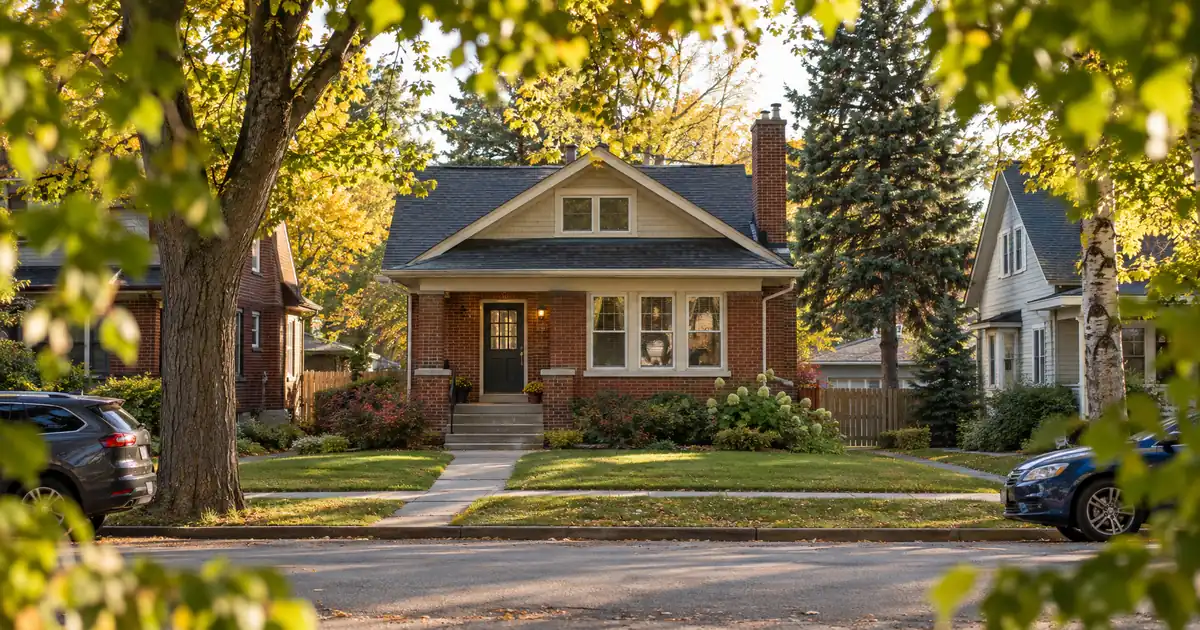
Downtown De Pere is being rebuilt while investors watch. The Lockside project alone adds 173 residential units on the east side of the Fox River, and a four-project redevelopment of the former Shopko site is landing beside it. Over the next 6-18 months, that new supply will change how older rentals get appraised, rented, and compared. For an owner weighing a DSCR cash out refinance in De Pere, Wisconsin, the timing of the appraisal now matters as much as the equity itself.
TL;DR: A DSCR cash-out refinance on a De Pere investment property is underwritten primarily on the property’s rental income measured against its full monthly obligation, not on the owner’s personal income, and it converts existing equity into capital, subject to lender guidelines.
DSCR Cash-Out Calculator
Run the cash-out numbers in De Pere, WI
Rate source: Freddie Mac 30-yr average via FRED® — Federal Reserve Bank of St. Louis · effective Sep 24, 2026
Prefilled with starting assumptions — enter your property’s value, balance, taxes, and insurance for a more accurate picture.
Program parameters update from Lendmire’s centralized guideline source. Taxes and insurance are editable estimates.
As of Sep 24, 2026 · General Freddie Mac market benchmark, not a Lendmire loan offer. Property value, balance, taxes, and insurance are editable estimates. Maximum loan-to-value varies by lender, program, property type, and seasoning. Not a Loan Estimate, approval, or commitment to lend. Program availability and eligibility are subject to lender guidelines, credit approval, property review, and underwriting.
- Duplexes and small multifamily are the realistic path to 1.0x coverage; median single-family homes rarely get there.
- The cash-out ceiling is 75% of appraised value, after seasoning of about 6 months from title recording.
- Multi-family inventory in De Pere is thin, so appraisal comps can be sparse.
- New downtown apartments may cap rent growth on older one- and two-bedroom units nearby.
De Pere Market Snapshot
A quick read on the De Pere investor landscape — figures come from the cited sources below. Confirm current property-level numbers before underwriting.
| Metric | Detail |
|---|---|
| Home prices | 87 sales in may (Redfin De Pere Housing Market) |
| Recent appreciation | +19.2% yoy (Redfin De Pere Housing Market) |
| University enrollment | ~500-student drop (Fox 11 SNC enrollment article) |
Downtown and East De Pere: Where the Appraisal Story Gets Written
East De Pere is the submarket most likely to move your appraisal, up or down. The Daily Reporter describes the former Shopko site as becoming a five-story apartment building, a city parking garage, a new five-story hotel, and a restored street grid. Pricing and available terms vary by lender, borrower profile, property type, and full underwriting review.
Here’s the thing for a cash-out borrower. New luxury product is not your comp. It is your competition, and it is also your best evidence that buyers and renters are choosing this corridor. Older duplexes and small rentals near the river sit between those two facts. That’s the value-add lane, though you should treat any specific east-side number you hear as unverified until an appraiser or rent survey backs it up.
The city’s development projects page also lists proposed apartment and three-unit projects in the pipeline. Project status changes, and pipeline is not the same as delivered. Still, an investor holding an older one- or two-bedroom building near downtown should underwrite conservatively and check current concessions before assuming rents keep climbing.
West De Pere and the College Edge
West De Pere reads as newer construction and owner-occupant territory. Builder activity around Waterview Heights, per Best Built, points to buyers who intend to live in the house. Skip it if you’re hunting for a duplex to hold.
The St. Norbert College area is a smaller story than it looks. The college is in De Pere, and U.S. News reports 1,695 undergraduates. Fox 11 reported an enrollment drop of roughly 500 students in recent years, with two rounds of layoffs. The college also carries a four-year on-campus residence requirement, which limits off-campus student demand. Faculty and staff tenants are a steadier draw than students. But this is a modest demand anchor, not a thesis.
The deeper tenant base is regional. De Pere is a commuter suburb of Green Bay, and the metro’s economy, per HUD, is anchored by paper and food-product manufacturing and described as stable. The Greater Green Bay Chamber points to four major hospital systems and to UnitedHealth and Humana as insurers with 1,000+ employees each. Schneider National, Georgia-Pacific, Bellin Health, and American Foods Group round out the local employer names. Long-term leases tied to that employment base are what a DSCR file wants to see.
What Do the Rents Actually Support?
Rents in De Pere depend heavily on which source you read, and the choice changes the coverage number. Zumper puts the average at $1,532 a month across all property types, with the listing-based trend pointing up. That sample is small, and the average likely includes larger single-family homes.
Apartment-style rents run lower. Apartments.com shows an average of $1,120, in a range of $953 to $1,708. For older one- and two-bedroom units, underwriting nearer the $1,100-$1,300 band is the sober choice. Running coverage on the Zumper headline average would flatter the file.
Housing stock explains why small-building strategies fit. Rentcafe, citing Census estimates, says 35% of De Pere housing is rented and 70% of apartments sit in complexes under 50 units. A duplex competes with existing small buildings, not institutional complexes. The U.S. Census Bureau and Census Bureau QuickFacts put the population near 25,301, with median household income around $84,869. That is a solid, middle-income base.
Modeled Math: Duplex Versus Single-Family
The gap between duplex and single-family coverage in De Pere is wide, and it decides which properties can support a cash-out at all. Coverage means monthly rent divided by the full monthly obligation: principal, interest, taxes, insurance, and any HOA dues. The guide “What Is a DSCR Loan” is worth a read if you want the mechanics.
Run the numbers on a single-family home at the Redfin median sale price of $406K, using the $1,532 Zumper average as rent. Modeled at 75% LTV with taxes and insurance included, coverage lands below 0.60x. That is nowhere near the standard 1.00x benchmark. (Redfin’s 19.2% year-over-year jump in the median looks like a shift toward pricier homes selling, since price per square foot rose only 5.8% to $202. Don’t read it as appreciation.) Final terms depend on lender guidelines, property type, leverage, and the borrower’s complete credit picture.
Now a duplex. Compass shows 2-4 unit asking prices between $289,900 and $439,999. Assume a $360,000 value and two-bedroom units at $1,225 each, or $2,450 in total rent. These are modeled assumptions, not sourced figures for any specific building. At 75% LTV with taxes and insurance included, coverage sits right around 1.0x, and modestly better if rents reach the $1,300 end of the band. These specifics are subject to lender guidelines and a full review of property, leverage, and credit.
Now drop rents to $1,100 per unit. Coverage slips below 1.00x, into the low-0.9s. The paths a lender may review from there include a sub-1.00 program, an interest-only structure, or lower leverage with a smaller cash-out. Each involves tradeoffs in pricing, proceeds, or reserves, and eligibility stays subject to lender guidelines, credit approval, and property review. A borrower reaching for sub-1.00 to make a single-family median-priced house work should probably question the property, not the loan type.
DSCR files in markets like this one typically look like a small-building, modest-rent story where the lease documentation and the appraisal carry most of the weight. The files that move smoothly usually arrive with signed leases or a rent schedule, clean payoff figures, and proof of when title was recorded. The files that stall tend to have unit counts or rents that don’t match what the appraiser’s rent schedule shows.
Seasoning, Documents, and Where Files Stall
- Seasoning. Cash-out generally requires about 6 months of ownership, measured from title recording, not from closing paperwork or contract date.
- Leverage. The ceiling is 75% of appraised value, and proceeds are whatever remains after the existing payoff. Equity is never a guaranteed cash figure. It depends on rent used for lender review, the full monthly obligation, reserves, and that cap.
- Coverage. Most standard programs are built around a 1.00x benchmark. Some lenders review lower ratios with stronger credit, lower leverage, or more reserves.
- Credit and reserves. A 620 score is the floor, with tiers stepping up at 660, 680, and 700. Reserves typically run about 6 months of full monthly obligation.
- Loan size. Standard programs run up to $3,000,000, with smaller balances routed to select lenders in the network.
The De Pere-specific friction is comps. A Homes.com snapshot showed only 2 multi-family listings, and LoopNet and Trulia showed 2 and 3, respectively. Multi-family also took longer to sell than Redfin’s overall market average. Few, slow-moving comps mean an appraiser may reach for single-family or Green Bay sales, which can cap the value and the equity you can pull.
When the property is titled in an LLC, entity documents come into the file too, subject to lender program eligibility. Wisconsin properties are also worth cross-checking against Lendmire’s DSCR loans in Wisconsin page, since some overlays vary by state. Investors should also verify current local rental rules, property taxes, and insurance costs with qualified local professionals before underwriting.
Where Should the Proceeds Go?
Pulling equity only helps if the next deal pencils. Reinvesting in another De Pere 2-4 unit means bidding into thin inventory and slow sales. Reinvesting in Green Bay, where Zumper shows 3-bedrooms at $1,549 and a lower price base, may offer better rent-to-price.
Honestly, this one’s a toss-up. Staying local means familiar comps and management logistics. Crossing the river to Green Bay may mean better coverage but a different tenant market. A borrower who can’t identify a next deal at 1.0x or better may be better off leaving equity in the property.
For a single rental owned personally by a salaried borrower with strong income, a conventional refinance may cost less and avoid non-QM friction. The side-by-side comparison shows where the flip point sits. It tips toward the DSCR route for entity-owned properties, self-employed borrowers, and files where the property’s rent is the cleaner underwriting basis. Broader investor refinance options and pulling equity with a DSCR cash-out cover the mechanics in more depth.
Frequently Asked Questions
How long do I need to own a De Pere property before a cash-out refinance?
Typically about 6 months, measured from the date title was recorded. A recently renovated or newly acquired duplex may need to wait out that window before proceeds are available. Lender guidelines can vary by program.
Can a duplex near downtown De Pere support a cash-out when comps are thin?
Often yes, though the appraiser may draw on single-family sales or Green Bay comps, which can hold the value down. Homes.com, LoopNet, and Trulia all show very few multi-family listings, so a well-documented rent schedule helps. Proceeds still depend on the 75% ceiling and on coverage.
DSCR vs. conventional financing
Two common ways to finance an investment property in De Pere, WI. They qualify you differently — here’s how investors weigh them.
Why investors choose it
- Qualifies on the property’s rental income — no personal tax returns, W-2s, or pay stubs needed to document income.
- No personal debt-to-income ceiling to clear, so existing mortgages and obligations don’t cap your borrowing the same way.
- Can be closed in an LLC, keeping the property inside a business entity.
- Built for scaling — not held to the limit on number of financed properties that conventional financing applies.
- Underwriting centers on the deal: generally qualifies when the rent covers the payment, a 1.00x coverage ratio being a common baseline (confirmed in underwriting).
- Designed specifically for investment property, including long-term and, where the program allows, short-term rentals.
Where it’s strong
- Often the lowest ongoing financing cost for a buyer who fully qualifies on personal income — a fit for a first property or a cost-first purchase.
Trade-offs for investors
- Requires full personal income documentation and must fit within a debt-to-income limit — salary, existing debts, and other mortgages all count.
- Typically held in your personal name rather than a business entity.
- Caps how many financed properties you can carry, which can become a ceiling as a portfolio grows.
- Evaluates you as a borrower as much as the property, which usually means more paperwork.
How investors usually choose: a first or single property often optimizes for the lowest financing cost; portfolio builders often optimize for leverage, vesting in an LLC, and scaling past conventional caps. The right answer depends on your goals, the property, and current guidelines — both paths run through select lenders in Lendmire’s wholesale network, with eligibility and terms confirmed in underwriting.
Will the new downtown apartments hurt rents on my older units?
They can cap rent growth on older one- and two-bedroom units close to the river and college. Newer buildings sit at the top of Rentcafe’s range, so older units usually price well below them. Underwrite at the band older stock actually rents for, and check current concessions.
Does a median-priced single-family rental in De Pere clear 1.00x?
Not on the modeled numbers. At the Redfin median sale price and the Zumper average rent, coverage lands below 0.60x including taxes and insurance. Investors in that position often look at lower purchase bases, older duplexes, or reduced leverage instead.
Does St. Norbert College’s enrollment drop change the rental thesis?
It weakens the student-housing angle, but it doesn’t touch the broader Green Bay employment base. The on-campus residence requirement already limits off-campus student rentals. Treat the college as a small demand anchor, not the core of the strategy.
For current guidelines and terms, see Lendmire’s DSCR loan programs page.
Before You Pull Equity
The downtown rebuild will keep raising the bar for what a De Pere rental has to compete with, and the appraisal, not the loan, is where that shows up first. So look at the building you already own: does it carry enough rent and enough documented comps to support a 75% cash-out, and is there a next deal on the other side of the Fox River that justifies pulling the equity at all? Terms vary by lender guidelines, property type, leverage, credit profile, and full file review.
About Lendmire
As a non-QM mortgage broker (NMLS# 2371349), Lendmire facilitates DSCR investor loans across 41 markets, including Washington, D.C. DSCR eligibility is generally reviewed around property-level rental income rather than personal income documentation, subject to lender guidelines, which serves LLC-structured portfolios and self-employed borrowers who don’t fit conventional boxes. Lendmire is a two-time Scotsman Guide honoree: a 2025 Scotsman Guide Top Mortgage Workplace and recognized by Scotsman Guide as a 2026 Top Workplace. To test a specific De Pere property, see how the math pencils or call 828-256-2183.
Get Started
Ready to find the right loan for you?
In about 30 seconds you can review financing options available for your investment property. No commitment required.
Informational only. Not a Loan Estimate, approval, or commitment to lend. Program availability and eligibility are subject to lender guidelines, credit approval, property review, and underwriting.
References
1. nbc26.com — De Pere Scales Back Major Downtown Development Council Advances Project
2. Redfin
3. Fox 11
5. deperewi.gov — Development projects page
6. Best Built
7. HUD
9. Zumper
10. Apartments.com
12. Compass
13. Homes.com
14. Zumper
15. a 2025 Scotsman Guide Top Mortgage Workplace
16. recognized by Scotsman Guide as a 2026 Top Workplace
This article is part of Lendmire’s investment property cash-out refinance program — full qualification details, guidelines, and scenarios live on the program page.
Related reading: Cash Out Refinance Investment Property in De Pere, Wisconsin: How the Rent Math Clears at 75% LTV · DSCR Cash Out Refinance in West Allis, Wisconsin: Six Points Duplex Equity Strategy · Cash Out Refinance Investment Property in Oconomowoc, Wisconsin: How the Rent Math Clears at 75% LTV
Guides: Investment Property Cash-Out Refinance in Wisconsin
Brandon Miller
Founder & CEO, Mortgage Loan Originator, Lendmire LLC
- Mortgage Loan Originator · NMLS# 1129696 · Verify on NMLS Consumer Access
- North Carolina Real Estate Broker · License# 343312 · Verify on NCREC
- North Carolina Insurance Producer · License# 19053198 · Property, Casualty, Life, Health · Verify on NAIC SBS
- Lendmire LLC · Firm NMLS# 2371349 · Verify firm licensure
Important disclosures. Lendmire (NMLS# 2371349) is a licensed mortgage brokerage. Lendmire is not a direct lender, depository institution, or financial advisor. All loan inquiries are subject to lender underwriting; this article does not constitute a commitment to lend. Rates, terms, and program guidelines are subject to change without notice and vary by borrower profile, property type, and state. Information in this article is general in nature and is not financial, legal, or tax advice. Equal Housing Opportunity. NMLS Consumer Access: nmlsconsumeraccess.org.