
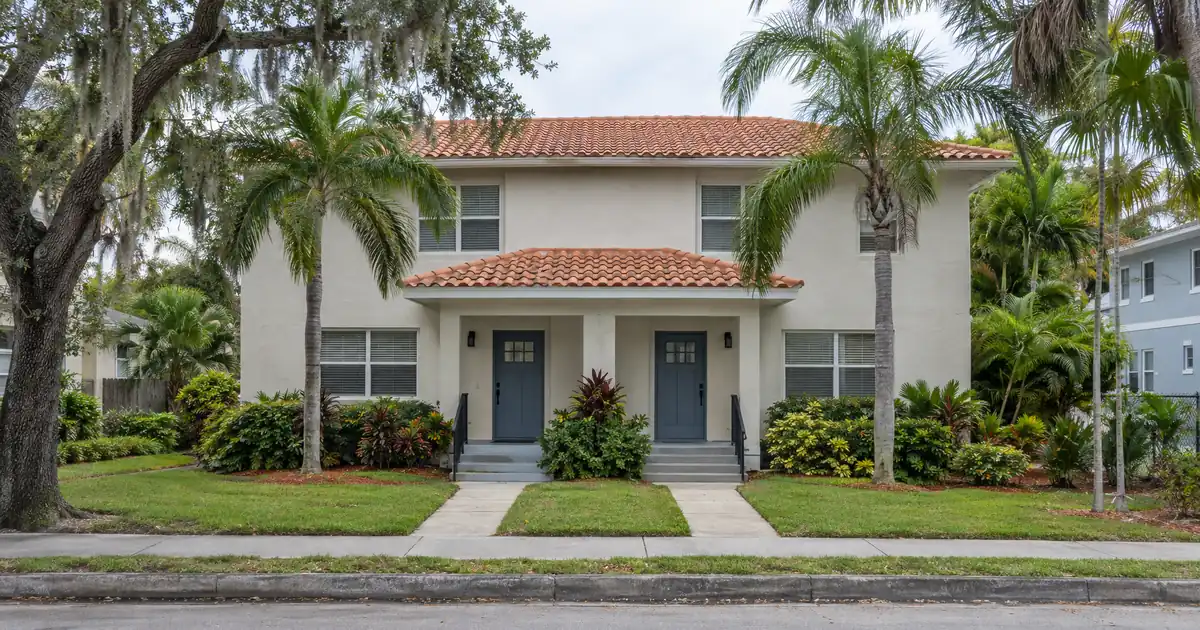
The Zillow Home Value Index for zip 33442 sits at $182,437, down 10.7% over the past year. Zip 33441, a few miles east, reads $399,979, down 1.0%. Same city, more than a 2x gap in basis, and both moving the wrong way for anyone counting on appreciation to fund a refinance. Deerfield Beach is a rent-coverage market, not an equity-build market, and a cash-out file here has to be built that way.
Through Lendmire’s DSCR program footprint — 41 markets, including Washington, D.C. — lenders may review qualifying rental income subject to program guidelines for Deerfield Beach, Florida investors. Lendmire (NMLS# 2371349) is a DSCR-focused mortgage broker, so it arranges these loans through wholesale lenders rather than funding them. The rest of this piece is about the plumbing: what the appraisal will do, which property types carry the coverage number, and what sinks a file.
DSCR Cash-Out Calculator
Run the cash-out numbers in Deerfield Beach, FL
Rate source: Freddie Mac 30-yr average via FRED® — Federal Reserve Bank of St. Louis · effective Sep 24, 2026
Prefilled with starting assumptions — enter your property’s value, balance, taxes, and insurance for a more accurate picture.
Program parameters update from Lendmire’s centralized guideline source. Taxes and insurance are editable estimates.
As of Sep 24, 2026 · General Freddie Mac market benchmark, not a Lendmire loan offer. Property value, balance, taxes, and insurance are editable estimates. Maximum loan-to-value varies by lender, program, property type, and seasoning. Not a Loan Estimate, approval, or commitment to lend. Program availability and eligibility are subject to lender guidelines, credit approval, property review, and underwriting.
The Short Version: A DSCR cash-out refinance on a Deerfield Beach, Florida rental is underwritten primarily on the property’s rental income measured against its full monthly obligation, with the lender sizing proceeds off the appraised value, a 75% LTV ceiling, about six months of seasoning and reserves documented for the file, all subject to lender guidelines.
- Zip 33442 values sit near $182,437 versus $399,979 in 33441, so basis varies widely by address.
- A duplex with two 2BR units grossing $4,400 a month stacks rent against one payment.
- Condo dues are the main coverage drag on North Broward files.
- A local brokerage update shows the median price down about 18% year over year.
- Cash-out caps at 75% LTV, with roughly 6 months of seasoning from title recording. Final terms depend on lender guidelines, property type, leverage, and the borrower’s complete credit picture.
Deerfield Beach Market Snapshot
A quick read on the Deerfield Beach investor landscape — figures come from the cited sources below. Confirm current property-level numbers before underwriting.
| Metric | Detail |
|---|---|
| Home prices | $279,525 avg. home value (Zillow Home Values) |
| Typical rents | $2,700 median (Zillow Rental Manager Market) |
| Cap rates | 8% cap rate (Redfin Deerfield Beach) |
| Employment | 7,592 employees (systemwide) (Wikipedia – Broward Health) |
Why Equity Is the Constraint Here
Equity, not coverage, is usually what limits a Deerfield Beach cash-out. Rents run healthy against prices, but values have softened, and the 75% LTV ceiling applies to the appraised number, not the number an investor remembers paying or hoping for.
The price data is scattered, so pick one yardstick. Zillow’s average home value is $279,525, down 5.8% over the past year. Redfin’s median sale price reads $366,000, a higher figure that reflects a different method and a different mix of homes sold. Neither is wrong. They measure different things.
The local brokerage read helps explain the gap. A July market update from TrueOak Realty puts the median sale price down roughly 18% year over year while price per square foot held at $248, unchanged. That pattern says the mix of homes selling shifted, not that every house lost value. The same update notes homes are drawing about one offer on average.
For a refinance, that matters in one specific way. A soft, low-competition resale market means appraisers lean on closed sales, not asking prices. Investors who bought near a peak and assume the value followed will be disappointed. Investors who bought in the last several years at today’s basis, or who own low-basis small multifamily, are closer to the ratio the lender wants.
A rental-analytics source describes the city as a cash flow market, where “the checks come in every month” but rapid appreciation shouldn’t be expected. Underwrite to that. Coverage today, not forced appreciation.
What the Appraiser Does to Your Proceeds
An appraisal that lands 10% under expectation does not cut proceeds by 10%. It cuts available equity by roughly half in a typical scenario, because the 75% ceiling is a fixed line and the existing balance doesn’t move.
Run the numbers on percentages. Say an investor owes 60% of what they believed the property was worth. That leaves 15 points of value between the existing balance and the 75% cap. If the appraisal comes in 10% lower, the same balance now sits at about 67% of the new value, and the room drops to roughly 8 points. Proceeds shrink by nearly half on a 10% valuation miss. Modeled figures, not market data.
That is why appraisal reconsideration is a routine tool here, not a last resort. A reconsideration packet that holds up has recent in-neighborhood sales, condition adjustments and a clear argument about which comps match the unit type. Duplex collateral helps, since it is appraised against multifamily comps and, in lender practice, often on the rental income approach. Single-family collateral in a market with mixed-type sales is more exposed to the mix-shift problem the TrueOak update describes.
Seasoning is the other gate. Lenders generally want about six months of ownership, measured from title recording and documented by the settlement statement. Files that assume the clock started at contract date get kicked back. Plan the timeline from the recording date, and keep the settlement statement handy for settlement reconciliation.
Program guidelines also run typical minimums: 1.00 coverage on rent used for lender review versus full PITIA, credit tiers generally starting at a 620 floor, and reserves around six months of PITIA. Loan sizes commonly run up to $3,000,000 on standard programs. All of that varies by lender, borrower and property. The DSCR qualification mechanics page covers the ratio itself.
Duplexes and Small Multifamily Carry the Math
Two-to-four unit properties are the strongest cash-out collateral in Deerfield Beach because rent stacks across units against one monthly obligation. Single-family workforce rentals can work. Condos usually fight the ratio.
The listing evidence is consistent. One active duplex with two 2BR/1BA units shows $4,400 a month in gross rent with both units rented. A comparable duplex shows gross revenue near $72,000 a year. On the Redfin multifamily listings, a four-unit with 2BR units at $1,900 shows $90,180 gross and $67,921 net, an 8% cap rate on in-place rents. Duplex price points in the area run roughly $260,000 to $400,000 per the same research. The lender activity matches. A national private lender funded a $407,750 first-lien rental loan on a duplex in Deerfield Beach, a sign that this product already moves.
Now a modeled scenario. Assume a duplex valued at $350,000, a 75% LTV refinance and $4,400 in combined rent. Including taxes and insurance at Florida-average assumptions, coverage lands around 1.8x, rounded down. Haircut the rent to $3,600 to reflect a vacant-unit turn or a below-market lease, and coverage still runs in the mid-1.5 range. Double the insurance line on top of that and it holds near 1.4x. The cushion is wide. The 75% LTV ceiling, not the ratio, sets the proceeds. Those are modeled assumptions, not quoted terms. These specifics are subject to lender guidelines and a full review of property, leverage, and credit.
The skeptical read: listing rents are asking rents. A lender will want leases, and sometimes proof of payment, before crediting $4,400. Duplexes with month-to-month tenants and no paper are the files that get haircut at review.
Working DSCR brokers see a recurring pattern in coastal South Florida markets like this one: the ratio is rarely what stops a multifamily file. The stops are the appraisal, missing leases and entity paperwork that doesn’t match the title. Clean documents and a realistic value expectation do more than a higher rent number.
Condos Are Where Files Stall
Condos in Century Village, Deer Creek and Palm Aire are the weakest cash-out collateral in the city. The reason is HOA dues, not rent.
A non-QM lender analysis of North Broward (Pompano Beach, Deerfield Beach and Margate) puts typical coverage in the 1.00–1.20 band and flags HOA fees as the main variable pushing deals from standard programs toward no-ratio structures. The fix is mechanical. Put the actual dues into PITIA before anything else, not after the rent looks good.
Take the Century Village corridor. The Homes.com neighborhood guide shows a median sale price of $112,000, down 22% over the prior 12 months, with condo units ranging from $85,000 for units needing work up to $340,000 for renovated ones. Low entry price, weak equity trend, heavy dues. Cash-out on a unit that lost a fifth of its value in a year is not a realistic capital source. Terms vary by lender guidelines, property type, leverage, credit profile, and full file review.
Beyond coverage, condo files add paperwork. The HOA questionnaire has to be complete, the condo certification has to clear the lender’s project review, and any litigation, special assessment or reserve shortfall in the association can stop the file regardless of the borrower. Questionnaires that come back half-filled cost weeks of back-and-forth. Order them early.
Skip condos for cash-out unless the dues are modest and the project documents are clean. Not ideal otherwise.
The Submarket Read
The neighborhoods that pencil for cash-out are the workforce-priced ones, where rent holds against a lower basis. The lifestyle submarkets run the other way.
Rent.com’s neighborhood breakdown shows 1BR averages of $1,627 in The Cove, $1,725 in Downtown and Village at Tivoli, $1,800 in West Deerfield Beach, $1,949 in Crystal Lake and $3,097 in Deer Creek. That is nearly a 2x spread inside one small city.
- West Deerfield Beach and Crystal Lake. The workforce tier. Lower entry price against stable rents gives the best ratio per dollar of collateral. The caveat is equity. West of I-95 values have fallen the most, so proceeds are constrained even when coverage is fine. – The Cove and Downtown. The Cove is the Intracoastal district with dockside dining and a boating draw, and Downtown is the revitalizing historic core. Both show modest rents against moderate acquisition cost. Small multifamily here is the most natural refinance target. – Deer Creek. Priced for lifestyle. A 1BR average near $3,097 looks strong until the purchase price is on the other side of the ratio. It will underperform on pure coverage relative to basis. Don’t expect a cash-out here to behave like Crystal Lake.
Thinking out loud: the stronger play may be a low-basis duplex near Downtown over a coastal-adjacent unit in 33441, where the $399,979 zip value and softer year-over-year drop suggest better appraisal support. But coverage on the pricier asset is thinner. A genuine toss-up, decided by how much equity the investor actually holds.
Tenant Demand: Payroll, a Hospital and a 36% Renter Share
Rental demand in Deerfield Beach rests on employment and a large renter base, not on seasonal tourism. That supports the hold-and-refinance approach over flip math.
The Greater Fort Lauderdale Alliance lists corporate headquarters in the city including JM Family Enterprises, Don King Productions, Health Communications, List Industries, Moving Waters Industries and MAPEI-Western Hemisphere, plus distribution centers for Publix and Rooms-to-Go. JM Family employs more than 5,000 associates and ranks as the 13th largest privately held U.S. company, headquartered here since 1981. Headcounts vary by source, so read that as directional.
Healthcare adds a second anchor. Broward Health North is a 409-bed hospital and Level II trauma center, and the parent system employs 7,592 people systemwide. The system has also broken ground on a new medical office building on the North campus.
The income picture points to workforce rentals. Per U.S. News, median household income is $61,565 against $83,181 nationally. Population is an estimated 90,507 per the U.S. Census Bureau. RentCafe puts 36% of households as renters (12,960 units), with average rent at $2,169 and 3BR units at $3,016. Zillow’s rental data gives a median rent of $2,700. Different methods, different numbers. A lender will use its own rent schedule or appraisal rent figure, not any of these.
No vacancy dataset for the city turned up in this review pass, so treat vacancy qualitatively and let the lease file speak.
Where the Proceeds Go Next
Cash-out proceeds are acquisition capital, and in Deerfield Beach the next purchase is usually a low-basis duplex or small multifamily, since that is where the coverage math is strongest. Pulling equity from one property to fund another is the point of pulling equity with a DSCR cash-out, but the proceeds are never a fixed figure. They depend on rent used for lender review, PITIA, reserves and the 75% ceiling.
One trap: reserves. The lender generally wants about six months of PITIA documented on the file, and cash-out proceeds may not count toward that if they are the source. Investors who plan to fund reserves from the very loan they’re applying for are the files that stall at the reserves documentation step. Keep the reserve balance in a separate, seasoned account.
For owners considering a rate-and-term move or a mix of goals, the differences between conventional and DSCR financing are worth weighing before choosing a path. On the conventional side, the tradeoffs versus DSCR matter mainly for portfolio investors who have hit financed-property limits. For statewide program context, see Florida DSCR financing.
Investors can start a quote or call 828-256-2183 to talk through a specific file.
What the File Needs Before It Goes In
Most preventable gaps on Deerfield Beach cash-out files are paperwork. Assemble these before submission.
1. Settlement statement and recording date. This proves the roughly six-month seasoning clock. Gaps in the chain of ownership get flagged when title is being cleared.
DSCR vs. conventional financing
Two common ways to finance an investment property in Deerfield Beach, FL. They qualify you differently — here’s how investors weigh them.
Why investors choose it
- Qualifies on the property’s rental income — no personal tax returns, W-2s, or pay stubs needed to document income.
- No personal debt-to-income ceiling to clear, so existing mortgages and obligations don’t cap your borrowing the same way.
- Can be closed in an LLC, keeping the property inside a business entity.
- Built for scaling — not held to the limit on number of financed properties that conventional financing applies.
- Underwriting centers on the deal: generally qualifies when the rent covers the payment, a 1.00x coverage ratio being a common baseline (confirmed in underwriting).
- Designed specifically for investment property, including long-term and, where the program allows, short-term rentals.
Where it’s strong
- Often the lowest ongoing financing cost for a buyer who fully qualifies on personal income — a fit for a first property or a cost-first purchase.
Trade-offs for investors
- Requires full personal income documentation and must fit within a debt-to-income limit — salary, existing debts, and other mortgages all count.
- Typically held in your personal name rather than a business entity.
- Caps how many financed properties you can carry, which can become a ceiling as a portfolio grows.
- Evaluates you as a borrower as much as the property, which usually means more paperwork.
How investors usually choose: a first or single property often optimizes for the lowest financing cost; portfolio builders often optimize for leverage, vesting in an LLC, and scaling past conventional caps. The right answer depends on your goals, the property, and current guidelines — both paths run through select lenders in Lendmire’s wholesale network, with eligibility and terms confirmed in underwriting.
2. Leases and rent evidence. Signed leases for every unit, plus deposit or payment history where rents exceed the appraiser’s schedule. Month-to-month tenancies should be documented in writing.
3. Entity documents. If the property is held in an LLC, the operating agreement, articles and EIN letter should match the title, subject to lender program eligibility. A mismatch between the vesting deed and the borrowing entity is a common hold-up.
4. HOA or condo package. For condos and townhomes, a completed questionnaire, current dues statement and project certification. See above.
5. Reserves documentation. Two months of statements showing roughly six months of PITIA, in accounts that aren’t the source of the loan.
6. Insurance binder. Current quote in hand so the PITIA number doesn’t shift mid-review. Verify current local rental rules, taxes and insurance requirements with qualified local professionals.
Review details remain subject to lender overlays, credit approval and property review.
Frequently Asked Questions
How do you qualify for a DSCR cash-out refinance in Deerfield Beach?
The property’s rent has to cover its full monthly obligation (principal, interest, taxes, insurance and any HOA dues) at a ratio the lender accepts, typically 1.00 or better. Pricing and available terms vary by lender, borrower profile, property type, and full underwriting review. The final LTV is capped at 75% of the appraised value. Terms vary by lender and borrower.
What are the requirements for an investment property loan in Deerfield Beach, Florida?
Most files need a documented rent figure (leases or an appraiser’s rent schedule), entity documents if the title is in an LLC, reserves, and a property type the program covers. Manufactured homes, log homes and barndominiums fall outside these DSCR programs. Loans commonly run up to $3,000,000 on standard programs, and smaller balances route through select lenders in the network.
Does a falling median price make a cash-out impossible in Deerfield Beach?
No, but it shrinks the proceeds. The 75% ceiling applies to the new appraised value, so a lower appraisal reduces the room between the existing balance and the cap. Owners with low balances relative to current value, or those holding small multifamily on a low basis, are best placed. Owners near the ceiling already may find little or nothing available.
Are Century Village condos workable for a DSCR cash-out?
They are difficult. HOA dues count toward PITIA and compress coverage, the condo certification and questionnaire add review steps, and the area’s median sale price of about $112,000 has fallen roughly 22% year over year. Some units may still work if dues are modest and the project is clean, but duplexes usually make a stronger file.
Can Lendmire help arrange DSCR financing for an investment property in Deerfield Beach?
Yes. Lendmire arranges DSCR investor loans through its wholesale lender network. A key feature for cash-out files is that qualification is reviewed primarily on the property’s rental income, with LTV generally capped at 75% on refinances, subject to lender guidelines.
The Number to Underwrite Against
Keep one figure in front of you. The zip-level gap of $182,437 in 33442 against $399,979 in 33441 tells you that a cash-out in Deerfield Beach is decided at the address level, and a duplex grossing $4,400 a month on a modest basis is the file that holds up when the comps don’t.
For current guidelines and terms, see Lendmire’s DSCR loan programs page.
About Lendmire
Lendmire (NMLS# 2371349) is a DSCR and non-QM mortgage brokerage with investor loan programs in 41 markets, including Washington, D.C. Lenders commonly review DSCR eligibility around the property’s rent rather than personal income documentation, subject to lender guidelines, and the brokerage helps arrange financing for LLC-owned portfolios beyond conventional financed-property limits. The firm was recognized by Scotsman Guide as a 2026 Top Workplace and is also a 2025 Scotsman Guide Top Mortgage Workplace.
Get Started
Ready to find the right loan for you?
In about 30 seconds you can review financing options available for your investment property. No commitment required.
Informational only. Not a Loan Estimate, approval, or commitment to lend. Program availability and eligibility are subject to lender guidelines, credit approval, property review, and underwriting.
References
1. Zillow Home Value Index for zip 33442
2. Zillow — Home Values Deerfield Beach FL
3. list-a-house.com — Deerfield Beach Homes for Sale Multi Family Homes
4. trueoakrealty.com — Deerfield Beach Real Estate Market Update July 2026
5. Zillow Home Values: Deerfield Beach
6. Zillow — Market Trends Deerfield Beach FL
7. Redfin multifamily listings
10. rentalranked.com — Market Deerfield Beach FL
11. Homes.com neighborhood guide
12. Rent.com’s neighborhood breakdown
13. Greater Fort Lauderdale Alliance: Deerfield Beach
14. JM Family
16. Broward Health: medical office building groundbreaking
17. U.S. Census Bureau QuickFacts: Deerfield Beach
18. RentCafe: Deerfield Beach rent trends
19. recognized by Scotsman Guide as a 2026 Top Workplace
20. a 2025 Scotsman Guide Top Mortgage Workplace
This article is part of Lendmire’s investment property cash-out refinance program — full qualification details, guidelines, and scenarios live on the program page.
Related reading: Luxury Rental DSCR Loans In New Jersey · Jersey Shore Vacation Rental Loans: DSCR Financing In Ocean City, Cape May And Long Beach Island · DSCR Cash-out Refinance In New Jersey: Pulling Equity From A Rental
Guides: Investment Property Cash-Out Refinance in Deerfield Beach, FL · Investment Property Cash-Out Refinance in Florida
Brandon Miller
Founder & CEO, Mortgage Loan Originator, Lendmire LLC
- Mortgage Loan Originator · NMLS# 1129696 · Verify on NMLS Consumer Access
- North Carolina Real Estate Broker · License# 343312 · Verify on NCREC
- North Carolina Insurance Producer · License# 19053198 · Property, Casualty, Life, Health · Verify on NAIC SBS
- Lendmire LLC · Firm NMLS# 2371349 · Verify firm licensure
Required disclosures. Lendmire (NMLS# 2371349) operates as a licensed mortgage broker, not a direct lender or depository. The discussion in this article is general in nature and should not be relied upon as financial, legal, or tax advice — every investment scenario is unique and should be reviewed by a qualified professional. Any loan inquiry is subject to lender underwriting, and this article is not a commitment to lend or a guarantee of approval. Mortgage rates, loan terms, and program guidelines vary by borrower, property, and state, and may change without notice. Equal Housing Opportunity. Verify licensure at NMLS Consumer Access.