
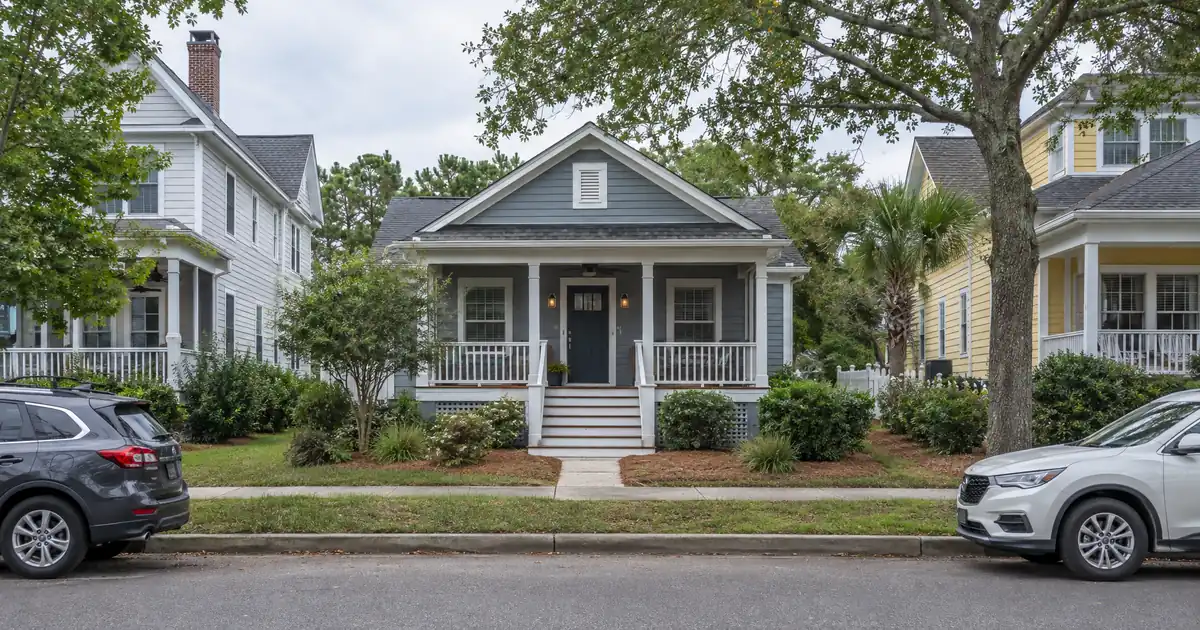
Scroll Duck listings from another state and two things jump out. The prices are high, and the housing stock outnumbers the residents several times over. Census Reporter lists 669 residents across 2.4 square miles, while Point2Homes counts 3,007 housing units. Redfin showed a median sale price of $914K. What the listings don’t show is the number a coverage test cares about: a year-round tenant paying rent. For an investor who already owns here, the cash-out question is mostly one of structure. How much equity is there, and what does the rent actually support? Lendmire (NMLS# 2371349), a DSCR-focused mortgage broker, sees this mismatch on resort-town files regularly.
DSCR Cash-Out Calculator
Run the cash-out numbers in Duck, NC
Rate source: Freddie Mac 30-yr average via FRED® — Federal Reserve Bank of St. Louis · effective Sep 24, 2026
Prefilled with starting assumptions — enter your property’s value, balance, taxes, and insurance for a more accurate picture.
Program parameters update from Lendmire’s centralized guideline source. Taxes and insurance are editable estimates.
As of Sep 24, 2026 · General Freddie Mac market benchmark, not a Lendmire loan offer. Property value, balance, taxes, and insurance are editable estimates. Maximum loan-to-value varies by lender, program, property type, and seasoning. Not a Loan Estimate, approval, or commitment to lend. Program availability and eligibility are subject to lender guidelines, credit approval, property review, and underwriting.
The Quick Read:
A DSCR cash-out refinance in Duck, North Carolina, is underwritten primarily on the property’s rental income measured against its full monthly obligation, and that is exactly where this resort town strains: a median sale price near $914K sits against a county two-bedroom fair market rent of about $1,430, so equity is plentiful while coverage is not.
- Cash-out tops out at 75% LTV, with about 6 months of seasoning measured from title recording.
- Minimum coverage is 1.00x; reserves run about 6 months PITIA, about 9 months above $1,500,000. Redfin logged only 6 Duck sales in its latest snapshot, so appraisal comps are thin. Redfin showed zero multi-family listings in Duck; condos and single-family homes dominate.
- Long-term rent demand sits south, in Kill Devil Hills and Nags Head, not in Duck itself.
- Every figure here varies by lender and program — guidelines, property type, leverage, and credit profile all apply.
Duck Market Snapshot
A quick read on the Duck investor landscape — figures come from the cited sources below. Confirm current property-level numbers before underwriting.
| Metric | Detail |
|---|---|
| Home prices | $914K median (Redfin) |
| Typical rents | $1,895 avg (Zillow) |
| Population | 669 population (Census Reporter (ACS 2024 5-yr)) |
| Employment | 45%+ tourism jobs (TriplePundit) |
Duck Village and the Soundside: Where the Equity Sits
Duck Village and the soundside homes are the most defensible collateral in town, and the weakest long-term rental product. Equity is real here, but demand is driven by visitors, not residents, so a coverage ratio built on year-round rent is thin.
The village is a walkable mix of independent shops and eateries. The 11-acre Town Park and a boardwalk of about 0.78 miles along Currituck Sound anchor it. Per Wikipedia, the town runs more than 60 summer events and programs, and its beach has been named among the Top 15 residential Beaches in America. That is a visitor story. The resident profile is different: the median age is 61.6, and Data USA puts median household income at $118,750. These are owners with money, not renters competing for apartments.
Why does that matter for a cash-out? Because the appraiser values the house as a house, while the lender’s coverage test values the lease. Soundside cottages can appraise well and still produce a long-term lease that barely dents the monthly obligation. The equity you built through appreciation is genuine. Redfin showed the median sale price up 7.5% year over year. Turning it into cash through a DSCR program is the hard part.
The sample is also tiny. Six sales in the snapshot month, and homes taking 158 days to sell versus 52 the year before. Treat that as directional, not as a trend line.
Oceanside Duck and the Loan-Size Ceiling
Oceanfront Duck is luxury inventory, and that creates its own cash-out friction. Large oceanfront homes and gated communities such as Carolina Dunes show up in the Redfin listings, and standard DSCR programs top out at loan amounts up to $3,000,000. Balances above that ceiling narrow the field to select lenders in the network, so the cap matters for high-end oceanfront owners. Final terms depend on lender guidelines, property type, leverage, and the borrower’s complete credit picture.
Two parameters shift once values climb. The 75% LTV cap is a hard limit on cash-out, never the 80% sometimes available on purchases. And reserves step up from about 6 months of PITIA to about 9 months above $1,500,000. On a luxury property, that reserve line can matter as much as the coverage ratio. (Experienced investors often forget it until the file is in review.) Credit guidance on these programs generally starts at a 620 floor, with better positioning at 660, 680, and 700 tiers, all subject to lender guidelines.
Equity available is not a guaranteed cash figure. It depends on rent used for lender review, the full monthly obligation, reserves, and the 75% ceiling working together. Oceanfront owners tend to have the equity and run short on the rent side.
Why Does Coverage Fall So Far Short?
Duck’s price level is two to three times what a year-round tenant can pay, so a median-priced home produces coverage far below the 1.00x benchmark on long-term rent alone. Redfin’s North Carolina page shows a statewide median of $373,465, so Duck runs roughly two and a half times the state level.
The rent side has a hard ceiling. NC State’s College of Natural Resources reports that Dare County’s two-bedroom fair market rent is about $1,430 a month, requiring roughly $27.50 an hour to afford. A few years earlier, it was $1,151 and $22.13 an hour. Rent is rising, but from a low base. Statewide, Zillow puts the North Carolina average rent at $1,895 and calls the market cool.
Run the numbers on a modeled case. Assume a home priced near the area’s median, a cash-out refinance at 75% LTV, and standard program terms with taxes and insurance included. Now assume a rent equal to the county’s two-bedroom fair market rent. Coverage would likely land well below 1.00x. These inputs are assumptions, not Duck market data. Against values this high, long-term rents tend to sit far from the level a 1.00x ratio would require. These specifics are subject to lender guidelines and a full review of property, leverage, and credit.
So what do owners with sub-1.00 files actually do? A lender would review a few structures, none of them guaranteed: a program that accepts coverage below 1.00x with compensating strength (lower leverage, higher reserves, stronger credit), an interest-only structure to lower the monthly obligation, or a file that documents vacation-rental income for the property. Each depends on lender guidelines, credit review, and property review. The cleanest answer for many Duck owners is a smaller cash-out, or a different asset. The DSCR calculation divides qualifying monthly rent by the full monthly obligation: principal, interest, taxes, insurance, and any HOA dues. The result tells you quickly whether the property or the structure has to change.
The Appraisal Problem (Thin Comps, Big Swings)
Thin sales volume is the hidden risk in a Duck cash-out. With six sales in a month, an appraiser has few comparable closings, and a conservative value hits cash-out proceeds harder than it hits the house.
Here is the mechanism, in percentages. Say an investor owns a property with an existing payoff equal to 50% of the value they expect. At the 75% cap, the cash-out room is 25% of expected value. Now the appraisal comes in 10% lower. The 75% ceiling applies to the lower value, so room shrinks to 17.5% of the original expectation. A 10% valuation miss becomes a 30% reduction in available proceeds. Leverage works that way: small value errors compound into large cash errors.
That is why plan-for-conservative is practical advice here, not a hedge. Days on market of 158 and a six-sale month are signals appraisers read too. An owner who needs a specific cash figure for the next purchase should model proceeds at an appraised value below expectations, then see whether the plan still works.
Seasoning is the other timing parameter. Cash-out programs typically look for about 6 months of ownership measured from title recording. An investor who bought recently, renovated, and wants to pull the cash out will find the clock runs from recording, not from when the work finished. For the mechanics, the cash-out qualification details cover seasoning and LTV in full.
Northern Duck and the Most-Measured Beach in America
The north end of Duck hosts something no other North Carolina beach town has: a federal coastal laboratory. The U.S. Army Corps of Engineers Field Research Facility was established in 1977 per NTIS records, and a DVIDS report says the site has made Duck beach the best-studied beach in the world. Its pier runs 1,840 feet.
Why does a research station matter to a lender or investor? Decades of shoreline measurement means coastal change here is documented, not guessed at. That is useful context for an owner thinking about how long to hold. It does not change the DSCR math, since the lender reviews rent against obligation, not research data. But it is a point of transparency this market has that others lack. The facility itself employs about a dozen people, so it is a curiosity, not an economic engine.
Duck’s Economy: Visitors Pay, Workers Commute
Duck’s economy is the Outer Banks’ economy: tourism, hospitality, vacation-rental management, construction, and retail. According to TriplePundit, over 45% of Dare County jobs are tied to tourism, and the three Outer Banks counties reported almost $2.8 billion in combined visitor spending in one recent year. The same article profiles Twiddy & Company, a vacation-rental firm that opened its first headquarters in Duck in 1978 and now manages 1,000 homes with 135 full-time employees and over 300 in summer.
So the largest local employer type serves vacation guests. For a landlord, that cuts two ways. Seasonal employers need housing for hundreds of workers. But most of those workers can’t afford Duck prices, and they live elsewhere on the Banks or on the mainland.
Where Coverage Lives: The Workforce Corridor South
The long-term rental case is stronger south of Duck, in Kill Devil Hills, Kitty Hawk, and Nags Head. Neilsberg lists Kill Devil Hills at 7,809 residents, Kitty Hawk at 3,763, and Nags Head at 3,199. One broker blog, Agents Gather, places Kill Devil Hills, Manteo, and Southern Shores closer to long-term rental profiles and treats Duck as a visitor-first beach market. That is an opinion, so read it qualitatively.
Tenant demand is documented, though. The Island Free Press reports that about 30% of Dare households are cost-burdened, roughly 4,977 of 16,445, and that 48% of renters report difficulty affording housing versus 26% of homeowners. Dare County’s own housing page acknowledges massive staffing shortages caused by the lack of workforce housing. NC State adds that rising home prices and conversion of long-term rentals into vacation properties have created a shortage for seasonal workers.
Two things follow for a DSCR investor. First, year-round supply is structurally scarce, which supports occupancy for a well-priced unit. Second, tenants’ ability to pay is capped, so underwriting luxury-level rents for workforce tenants invites turnover. The sweet spot is a property priced for workforce rent, not resort rent.
Property type matters too. Redfin showed zero multi-family listings in Duck against 28 condos and 2 townhouses, so small multi-unit inventory lives in neighboring towns. Outer Banks renters historically leaned on attached accessory units, and many of those have been converted to vacation use, per Outer Banks Voice. A duplex, a fourplex, or a house with a legal separate unit lifts coverage more than any single-family home at resort prices. Rules differ by town and unit, so verify current local rental rules, taxes, and flood and wind insurance with qualified local professionals before underwriting a second unit.
The hospital anchor sits in the same corridor. The Outer Banks Hospital in Nags Head is the first and only major hospital on the islands, a critical access facility owned 60/40 by ECU Health and Chesapeake Regional Healthcare per Wikipedia. Healthcare workers need year-round housing too.
Recycling Duck Equity Into the Next Deal
The most logical use of Duck equity is a purchase where rent can cover the debt. Picture an investor who owns a Duck condo outright and takes the 75% LTV cash-out. The proceeds become down payment capital on a workforce rental in Kill Devil Hills, where the lease supports the new obligation. Duck then becomes the equity source, not the cash-flow engine. Terms vary by lender guidelines, property type, leverage, credit profile, and full file review.
The catch is that both loans have to clear on their own. The Duck property carries a new obligation and needs its own coverage story. The workforce purchase needs rent above 1.00x. If the Duck refinance lands below 1.00x, the investor is back to reviewing sub-1.00 structures, a smaller cash-out, or a lower-leverage option. For a view of refinance paths, see Lendmire’s refi programs; a comparison of DSCR and conventional financing is also worth reading for owners comparing paths.
Here’s a pattern from Lendmire’s deal desk on files from resort markets like this one. The friction point tends to be the gap between appraised value and lease income, not credit or documentation. The cleaner files arrive with a signed long-term lease or a documented income history, a reserve statement sized to the program, and a realistic target cash figure. Files that assume the headline appreciation will convert into proceeds at full value usually need rework once the appraisal lands.
Honestly, this is a close call between a smaller cash-out and a sub-1.00 structure on Duck property. The structure keeps more cash but costs more on leverage and reserves. A smaller draw keeps the file clean. An investor with strong liquidity might favor the first, while one chasing a specific purchase might choose the second.
DSCR vs. conventional financing
There are two common ways to finance an investment property in Duck, NC, and they qualify you differently — here’s how investors weigh them.
Why investors choose it
- Qualifies on the property’s rental income — no personal tax returns, W-2s, or pay stubs needed to document income.
- No personal debt-to-income ceiling to clear, so existing mortgages and obligations don’t cap your borrowing the same way.
- Can be closed in an LLC, keeping the property inside a business entity.
- Built for scaling — not held to the limit on number of financed properties that conventional financing applies.
- Underwriting centers on the deal: generally qualifies when the rent covers the payment, a 1.00x coverage ratio being a common baseline (confirmed in underwriting).
- Designed specifically for investment property, including long-term and, where the program allows, short-term rentals.
Where it’s strong
- Often the lowest ongoing financing cost for a buyer who fully qualifies on personal income — a fit for a first property or a cost-first purchase.
Trade-offs for investors
- Requires full personal income documentation and must fit within a debt-to-income limit — salary, existing debts, and other mortgages all count.
- Typically held in your personal name rather than a business entity.
- Caps how many financed properties you can carry, which can become a ceiling as a portfolio grows.
- Evaluates you as a borrower as much as the property, which usually means more paperwork.
How investors usually choose: a first or single property often optimizes for the lowest financing cost; portfolio builders often optimize for leverage, vesting in an LLC, and scaling past conventional caps. The right answer depends on your goals, the property, and current guidelines — both paths run through select lenders in Lendmire’s wholesale network, with eligibility and terms confirmed in underwriting.
Owners comparing options can review DSCR loan options for North Carolina investors, or request a quote or call 828-256-2183 to talk through a specific property.
Frequently Asked Questions
How much cash can I pull out of a Duck property?
It depends on the appraised value, the existing payoff, and whether the new obligation clears 1.00x on rent used for lender review. The ceiling is 75% LTV, and that figure is a cap, not a promise. Reserves of about 6 months PITIA (about 9 months above $1,500,000) also have to be in place. Lender guidelines and property review decide the final figure. Exact terms depend on the lender’s guidelines, property type, leverage, and a full review of the borrower’s file.
Can a Duck vacation home qualify on long-term rent?
At the median price, usually not. Against a county two-bedroom fair market rent of about $1,430 per NC State, modeled coverage with taxes and insurance falls well under 1.00x. Some lenders review sub-1.00 programs, interest-only structures, or documented vacation income, all subject to credit review and lender guidelines.
Do Duck’s thin sales numbers affect a cash-out?
Yes. Six sales in a month, per Redfin, leave appraisers with few comps and raise the chance of a conservative value. Because proceeds come from the gap between value and payoff, a modest valuation miss cuts cash by a larger percentage. Modeling proceeds at a lower value is the safer way to plan.
Can I use Duck equity to buy workforce rentals nearby?
That is the logical path, since cash-out proceeds can fund a down payment elsewhere. Kill Devil Hills, Kitty Hawk, and Nags Head have documented year-round renter demand. Each loan has to qualify on its own, so the new purchase needs rent that covers its full obligation.
How long must I own before a cash-out refinance?
Programs generally look for about 6 months of ownership, measured from title recording rather than from the end of renovation work.
What a Local Appraiser Would Tell You
Duck prices houses for the view and the beach, not the lease, and the lease is what the coverage test reads. Owners here hold plenty of equity, but the cash they can pull out is usually set by rent and a handful of comps, so plan the next purchase around the lower number.
For current guidelines and terms, see Lendmire’s DSCR loan programs page.
About Lendmire
Lendmire, NMLS# 2371349, is a mortgage brokerage focused on investor financing, arranging DSCR loans in 40 states plus Washington, D.C. — 41 markets total. Qualification is based on the property’s income rather than personal income documentation, subject to lender guidelines, making it a fit for LLC-held rentals and scaling portfolios. Lendmire is recognized as a 2026 Scotsman Guide Top Mortgage Workplace and was a top-ranked workplace in 2025.
Get Started
Ready to find the right loan for you?
In about 30 seconds you can review financing options available for your investment property. No commitment required.
Informational only. Not a Loan Estimate, approval, or commitment to lend. Program availability and eligibility are subject to lender guidelines, credit approval, property review, and underwriting.
References
1. Point2Homes, Duck demographics
2. Redfin, Duck housing market
3. NC State College of Natural Resources, Outer Banks workforce
4. Redfin
5. Zillow
6. Census Reporter (ACS 2024 5-yr)
7. TriplePundit, Outer Banks employee housing
8. Town Park
9. Wikipedia
11. Redfin, North Carolina housing market
12. NTIS records
13. DVIDS, USACE Field Research Facility
14. Island Free Press, Dare and Currituck housing costs
15. Dare County, Housing in Dare County
17. Wikipedia
18. a 2026 Scotsman Guide Top Mortgage Workplace
19. Scotsman Guide — Top Workplaces 2025
This article is part of Lendmire’s investment property cash-out refinance program — full qualification details, guidelines, and scenarios live on the program page.
Related reading: DSCR Cash Out Refinance in Hatteras, North Carolina: The 2026 DSCR Financing Guide to Hatteras Village · Cash Out Refinance Investment Property in Garner, North Carolina: The 2026 DSCR Financing Guide to US-70 · DSCR Cash Out Refinance in Pinehurst, North Carolina: Equity Recycling Near Golf House
Guides: Investment Property Cash-Out Refinance in Duck, NC · Investment Property Cash-Out Refinance in North Carolina
Brandon Miller
Founder & CEO, Mortgage Loan Originator, Lendmire LLC
- Mortgage Loan Originator · NMLS# 1129696 · Verify on NMLS Consumer Access
- North Carolina Real Estate Broker · License# 343312 · Verify on NCREC
- North Carolina Insurance Producer · License# 19053198 · Property, Casualty, Life, Health · Verify on NAIC SBS
- Lendmire LLC · Firm NMLS# 2371349 · Verify firm licensure
Important disclosures. Lendmire (NMLS# 2371349) is a licensed mortgage brokerage. Lendmire is not a direct lender, depository institution, or financial advisor. All loan inquiries are subject to lender underwriting; this article does not constitute a commitment to lend. Rates, terms, and program guidelines are subject to change without notice and vary by borrower profile, property type, and state. Information in this article is general in nature and is not financial, legal, or tax advice. Equal Housing Opportunity. NMLS Consumer Access: nmlsconsumeraccess.org.