
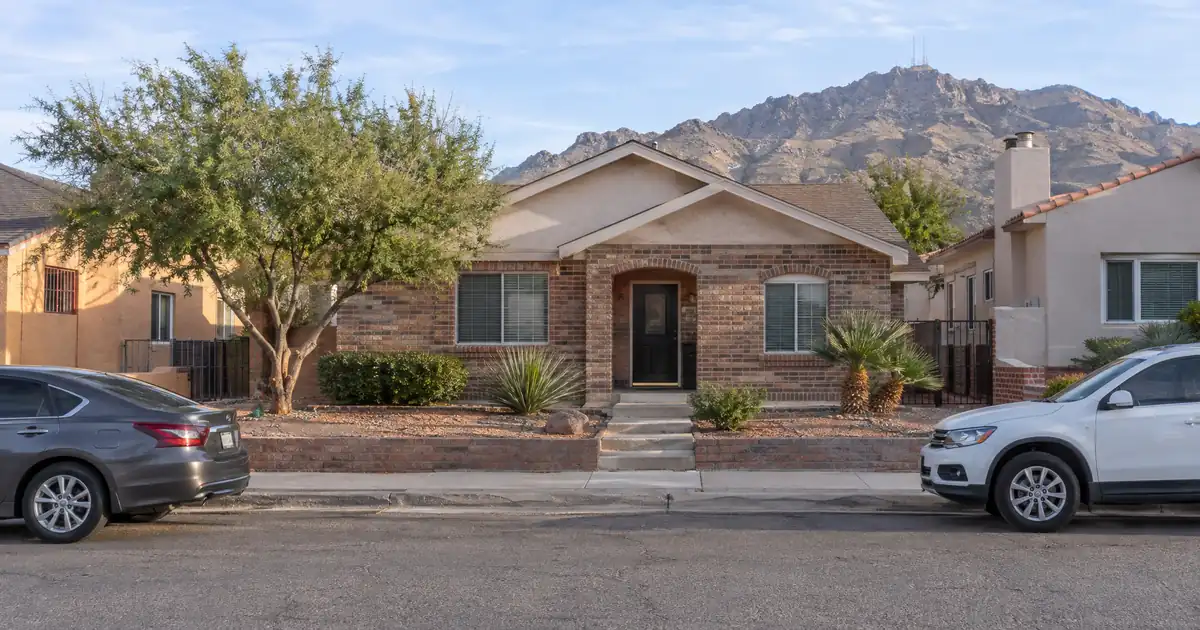
Most investors sizing a cash-out refinance in El Paso start with appreciation. That is the wrong first question. The equity that clears a 75% loan-to-value ceiling here comes mostly from a low original basis and from stacking rent across multiple units. A median-priced single-family house on a thin basis tends to model just under the 1.00x coverage line once taxes and insurance are counted.
DSCR Cash-Out Calculator
Run the cash-out numbers in El Paso, TX
Rate source: Freddie Mac 30-yr average via FRED® — Federal Reserve Bank of St. Louis · effective Sep 24, 2026
Prefilled with starting assumptions — enter your property’s value, balance, taxes, and insurance for a more accurate picture.
Program parameters update from Lendmire’s centralized guideline source. Taxes and insurance are editable estimates.
As of Sep 24, 2026 · General Freddie Mac market benchmark, not a Lendmire loan offer. Property value, balance, taxes, and insurance are editable estimates. Maximum loan-to-value varies by lender, program, property type, and seasoning. Not a Loan Estimate, approval, or commitment to lend. Program availability and eligibility are subject to lender guidelines, credit approval, property review, and underwriting.
The Quick Read:
A cash-out refinance on an El Paso, Texas rental is underwritten primarily on the property’s rental income measured against its full monthly obligation. That makes multi-unit stacking in Central and the Lower Valley the structure worth testing first against the 1.00x benchmark, ahead of single-family appreciation plays.
- Median-priced single-family at 75% LTV models just under 1.00x including taxes and insurance.
- Fourplex rent stacking beats single-family on rent per dollar of value in Central and the Lower Valley.
- Cash-out typically requires about 6 months of ownership from title recording, capped at 75% LTV.
- Rent growth is mixed across sources, so equity comes from basis and condition, not rent increases.
- Coverage is calculated on the lesser of actual rent and the appraiser’s market rent.
El Paso Market Snapshot
A quick read on the El Paso investor landscape — figures come from the cited sources below. Confirm current property-level numbers before underwriting.
| Metric | Detail |
|---|---|
| Home prices | $250,975 median price (SoFi price-to-rent) |
| Typical rents | $1,056 (MMG Real Estate Advisors) |
| Recent appreciation | +8.0% yoy (Zillow Home Values) |
| University enrollment | 26,297 students (fall 2025) (UTEP Newsfeed, enrollment) |
| Employment | T&t staff management 7,800 employees (Dallas Fed — Heart Elpaso) |
Central and the Lower Valley: Where Stacking Does the Work
Central El Paso and the Lower Valley offer the lowest entry basis in the city, which is why small multifamily here converts rent into cash-out capacity better than a single-family house in the Northeast or West Side. The tradeoff is older buildings and more capex.
Redfin’s neighborhood rent table shows how wide the spread runs: Westside median rent of $1,772 and Eastside of $1,685, against $1,125 in Central. The page is dated, so treat it as a ranking signal rather than an underwriting input. The pattern still matters. Central and the Valley can’t match East Side coverage on a single-family house unless the purchase price is much lower, and that is why they work as stacking plays. Rent.com puts one-bedroom asking rent in Mission Valley near $719, among the lower-priced in the city.
Demand fits the product. Point2’s Census-based data shows two-bedroom units are the largest slice of El Paso rentals at 36%, and a 2BR/1BA in a fourplex is exactly that unit. Roughly a third of the rental stock is also at least a few decades old. Older stock means appraisers may flag condition, and a prudent investor budgets capex reserves before ordering an appraisal.
Central also sits near UTEP, downtown and the medical district. That gives a renter pool tied to campus and hospital employment rather than to base cycles. Multi-unit supply is thin in a metro dominated by single-family houses, so the few duplexes, triplexes and fourplexes that do trade tend to hold tenants well.
The Northeast and East Side matter too. Duplexes near Fort Bliss and along the Loop 375 corridor work, though newer East Side product usually trades at a higher basis. That compresses the stacking advantage.
Run the Coverage: Fourplex vs. Median House
On modeled inputs, a fourplex clears the 1.00x benchmark with room to spare, while a median-priced single-family house at 75% LTV lands just under it. The difference comes from stacking four rent streams against one property value. Final terms depend on lender guidelines, property type, leverage, and the borrower’s complete credit picture.
Here is the modeled math. The inputs are assumptions, not sourced comps. Coverage is rent divided by full monthly PITIA at standard 30-year terms with Texas-average tax and insurance loads.
| Scenario | Modeled inputs | Coverage incl. Taxes and insurance |
|---|---|---|
| Fourplex, 75% LTV | $500,000 value; four 2BR at $1,192 | About 1.3x-1.4x |
| Median house, 75% LTV | $257,000 value; 3BR at $1,650 | Just under 1.00x |
| Median house, 65% LTV | Same house, lower leverage | Right around 1.0x |
The $257,000 is Redfin’s median sale price for El Paso. The $1,192 two-bedroom figure is HUD’s Fair Market Rent as cited by a local broker analysis, and it should be checked against HUD’s own FMR page. The 3BR figure sits near the same broker’s HUD number of $1,647 and is corroborated by portal data, with Rentometer showing 3-bedroom house medians near $1,650.
If the number comes in under 1.00x, the structures a lender may review include lower leverage, a sub-1.00 program, or an interest-only structure. Each carries tradeoffs in pricing, reserves and credit requirements, and qualification stays subject to lender guidelines, credit approval and property review. Before reaching for sub-1.00, ask whether the property itself is the problem. A house that only works on exception terms is a signal to look at stacking, not at the loan type.
DSCR files in markets like this one typically look like a stack of near-identical 2BR units, rents that sit at or slightly above the appraiser’s schedule, and a property condition conversation. The coverage ratio is rarely the pinch point. The binding constraint is usually the gap between what the investor charges and what the appraisal’s market rent supports, because the lesser figure usually governs. An investor who raised rents recently may not get credit for them until the appraisal supports the increase.
This is where how rental-income qualification works matters in practice. Another wrinkle: whether a 3-4 unit building is handled as residential DSCR or pushed toward commercial financing depends on the lender, so confirm the product path before ordering an appraisal.
What 75% LTV Actually Leaves You
These specifics are subject to lender guidelines and a full review of property, leverage, and credit.
The 75% ceiling means appreciation alone rarely funds a meaningful cash-out within the first year. Forced appreciation from rehab and rent repositioning, plus paydown on the original loan, does most of the lifting in El Paso.
Run the percentages. Say an investor bought a property with 20% down, so the original loan sits at 80% of the purchase price. If the appraisal comes in 10% above basis, 75% of the new value equals 82.5% of the original price. That leaves a cash-out of about 2.5% of the original price, which is a thin result. Terms vary by lender guidelines, property type, leverage, credit profile, and full file review.
At a 20% appraisal gain, 75% of the new value equals 90% of the original price, leaving roughly 10% of the original price. That works. The jump from 10% to 20% appreciation quadruples the proceeds, which is why basis and condition matter more than market drift.
El Paso offers an awkward preview of this tension. Zillow’s typical home value index is $211,055, up 8.0% year over year, while Redfin’s median sale price rose only 0.8%. They measure different things: an index of typical values against actual sale medians. Underwrite on the lower number.
Rent growth won’t rescue the math either. RentCafe shows average apartment rent up 1.19% in its 50-plus-unit universe, Point2 shows a 2.7% increase, and Zillow’s all-property average shows a $50 decrease. Zillow’s dip may reflect listing mix, not a real decline. Still, underwrite on today’s rents with zero growth assumed. SoFi’s price-to-rent table puts El Paso near 13, a gross yield around 7.6%, and notes the ratio drifted up as prices rose. A cash-out on an older, cheaper basis can look better than a new acquisition would.
On the program side, typical guidance runs about 6 months of seasoning measured from title recording, reserves around 6 months of PITIA, a 620 credit floor, and loan amounts up to $3,000,000 on standard programs. The usable proceeds depend on rent used for lender review, PITIA, reserves and the 75% ceiling together, and none of it is a promised figure. Full mechanics sit in cash-out refinance details and the investor refinance breakdown. Exact terms depend on the lender’s guidelines, property type, leverage, and a full review of the borrower’s file.
The Demand Base Behind the Rent Roll
El Paso’s rental demand rests on a military base, a border trade corridor and two large education systems, none of which track Texas boom-bust cycles. That makes coverage ratios steadier than appreciation here, though it caps upside.
The Census puts the city at 683,012 residents, essentially flat. The Dallas Fed describes Fort Bliss as the metro’s largest employer, contributing $27.9 billion to the Texas economy, and notes that government, healthcare and logistics are major drivers. TxEDC reports the Paso del Norte region handled $126.7 billion in US-Mexico trade, 18.5% of all cross-border commerce.
The education and health anchors diversify away from the base. UTEP enrolled 26,297 students last fall, and El Paso Community College enrolled 25,612. Texas Tech Health Sciences Center El Paso carries about 2,000 faculty and staff, and University Medical Center serves as its primary teaching hospital. That supports Central and East Side small multifamily separately from Northeast base demand.
Supply is light, which helps tenant retention on a refinanced property. Buildium notes comparatively few rental units added in recent years. Rent-burden pressure caps how hard rents can be pushed, so supply scarcity supports stability rather than growth.
Where Pulled Equity Should Go (and Where It Shouldn’t)
Proceeds work best when redeployed into another stacking property in the same corridors, where coverage still clears at current pricing. Deploying them into a market where the math doesn’t pencil is a different decision, and it deserves a stress test first.
The stronger play is probably a second small multifamily in Central or the Valley, not a single-family house in the Northeast, though an investor leaning on military tenancy near Fort Bliss could argue otherwise. Honestly, it’s close. The Northeast offers steadier occupancy, while the Valley offers a lower basis and more capex risk.
One generic reminder: confirm current local rental rules, taxes and insurance with qualified local professionals before committing proceeds.
To see how a specific property’s coverage and equity position might look, investors can request a scenario quote or call 828-256-2183.
Frequently Asked Questions
How do you qualify for a DSCR cash-out refinance in El Paso, Texas?
Qualification centers on the property’s rent covering its full PITIA, with 1.00x as the common baseline. Credit tiers start at a 620 floor, and the lender reviews reserves, seasoning and the appraisal’s rent schedule. Because coverage uses the lesser of actual rent and appraised market rent, documenting leases alone doesn’t settle the number. Approval stays subject to lender guidelines.
DSCR vs. conventional financing
There are two common ways to finance an investment property in El Paso, TX, and they qualify you differently — here’s how investors weigh them.
Why investors choose it
- Qualifies on the property’s rental income — no personal tax returns, W-2s, or pay stubs needed to document income.
- No personal debt-to-income ceiling to clear, so existing mortgages and obligations don’t cap your borrowing the same way.
- Can be closed in an LLC, keeping the property inside a business entity.
- Built for scaling — not held to the limit on number of financed properties that conventional financing applies.
- Underwriting centers on the deal: generally qualifies when the rent covers the payment, a 1.00x coverage ratio being a common baseline (confirmed in underwriting).
- Designed specifically for investment property, including long-term and, where the program allows, short-term rentals.
Where it’s strong
- Often the lowest ongoing financing cost for a buyer who fully qualifies on personal income — a fit for a first property or a cost-first purchase.
Trade-offs for investors
- Requires full personal income documentation and must fit within a debt-to-income limit — salary, existing debts, and other mortgages all count.
- Typically held in your personal name rather than a business entity.
- Caps how many financed properties you can carry, which can become a ceiling as a portfolio grows.
- Evaluates you as a borrower as much as the property, which usually means more paperwork.
How investors usually choose: a first or single property often optimizes for the lowest financing cost; portfolio builders often optimize for leverage, vesting in an LLC, and scaling past conventional caps. The right answer depends on your goals, the property, and current guidelines — both paths run through select lenders in Lendmire’s wholesale network, with eligibility and terms confirmed in underwriting.
What are the requirements for an investment property loan in El Paso, Texas?
Typical guidance for a cash-out includes about 6 months of ownership from title recording, a 75% LTV ceiling, and reserves near 6 months of PITIA. Standard programs run up to $3,000,000, with smaller balances placed through select lenders. Manufactured homes, log homes and barndominiums fall outside these programs. Exact terms vary by borrower, property and lender. Every figure here varies by lender and program — guidelines, property type, leverage, and credit profile all apply.
Which El Paso property type clears 1.00x most easily?
Small multifamily in Central, the Lower Valley and parts of the East Side tends to pencil best because several rents sit against one property value. A median-priced single-family house at 75% LTV models just under 1.00x including taxes and insurance. Lower leverage can bring it closer to the line, at the cost of less cash out.
How does flat rent growth affect cash-out sizing in El Paso?
It means proceeds depend on basis, condition and appraisal, not on rent increases. Portal sources disagree on direction, ranging from a small rise to a modest dip, so underwriting on today’s rents with no growth is the safer posture. If the appraiser’s market rent comes in below actual rent, the lower number governs coverage.
What documents matter most for an El Paso DSCR cash-out review?
Leases, the property’s insurance and tax details, entity documents for LLC borrowers, and proof of reserves usually carry the most weight. Lendmire arranges DSCR programs, where coverage is based on property income rather than personal income documentation, subject to program terms.
For current guidelines and terms, see Lendmire’s DSCR loan programs page.
About Lendmire
Lendmire (NMLS# 2371349) is a mortgage brokerage focused on DSCR investor financing. It arranges programs through wholesale and investor-lending channels in 41 markets, including Washington, D.C. Lenders evaluate DSCR loans on property cash flow rather than personal income, subject to lender guidelines, which supports LLC closings and investors holding four or more financed properties. Lendmire is a Scotsman Guide Top Mortgage Workplace in both 2025 and 2026.
Against a pricier Texas metro like Austin, where a cash-out case leans on appreciation, El Paso’s low basis and base-and-border demand favor coverage-driven cash-out math right now, and the Lower Valley fourplex is where that edge shows up first.
For broader investor-financing rules and property-type coverage across the state, see Texas DSCR loans.
Get Started
Ready to find the right loan for you?
In about 30 seconds you can review financing options available for your investment property. No commitment required.
Informational only. Not a Loan Estimate, approval, or commitment to lend. Program availability and eligibility are subject to lender guidelines, credit approval, property review, and underwriting.
References
3. Zillow’s typical home value index is $211,055, up 8.0% year over year
4. UTEP enrolled 26,297 students
5. Dallas Fed
6. Westside median rent of $1,772 and Eastside of $1,685, against $1,125 in Central
7. Rent.com puts one-bedroom asking rent in Mission Valley near $719
8. U.S. Census Bureau (census.gov) — QuickFacts
9. Redfin’s median sale price for El Paso
10. Internationalrealestate.biz — Structuring Small Multi Family Investment IN El
11. Rentometer showing 3-bedroom house medians near $1,650
12. RentCafe shows average apartment rent up 1.19%
13. Zillow’s all-property average shows a $50 decrease
14. TxEDC
15. El Paso Community College enrolled 25,612
16. Buildium notes comparatively few rental units added
17. 2025
18. 2026
This article is part of Lendmire’s investment property cash-out refinance program — full qualification details, guidelines, and scenarios live on the program page.
Related reading: DSCR Loans in El Paso, Texas: Investor Financing for the East Side, West Side, Upper Valley & Real Estate Investor · Banks That Offer HELOC on Investment Property in El Paso, TX · DSCR Cash Out Refinance in Laredo, Texas: Can Your Rent Cover a Bigger Loan?
Guides: Investment Property Cash-Out Refinance in El Paso, TX · Investment Property Cash-Out Refinance in Texas
Brandon Miller
Founder & CEO, Mortgage Loan Originator, Lendmire LLC
- Mortgage Loan Originator · NMLS# 1129696 · Verify on NMLS Consumer Access
- North Carolina Real Estate Broker · License# 343312 · Verify on NCREC
- North Carolina Insurance Producer · License# 19053198 · Property, Casualty, Life, Health · Verify on NAIC SBS
- Lendmire LLC · Firm NMLS# 2371349 · Verify firm licensure
Compliance and disclosures. Lendmire (NMLS# 2371349) is a licensed mortgage broker and is not a direct lender, depository institution, financial advisor, or tax professional. Content in this article is general market analysis and educational information — not financial, legal, or tax advice for any specific situation. Lendmire does not guarantee loan approval; every transaction is subject to underwriting by the funding lender. Mortgage pricing and loan program guidelines are subject to change at any time without notice and vary by borrower characteristics, property type, and state regulations. Lendmire complies with Equal Housing Opportunity. Licensure verification: NMLS Consumer Access.