
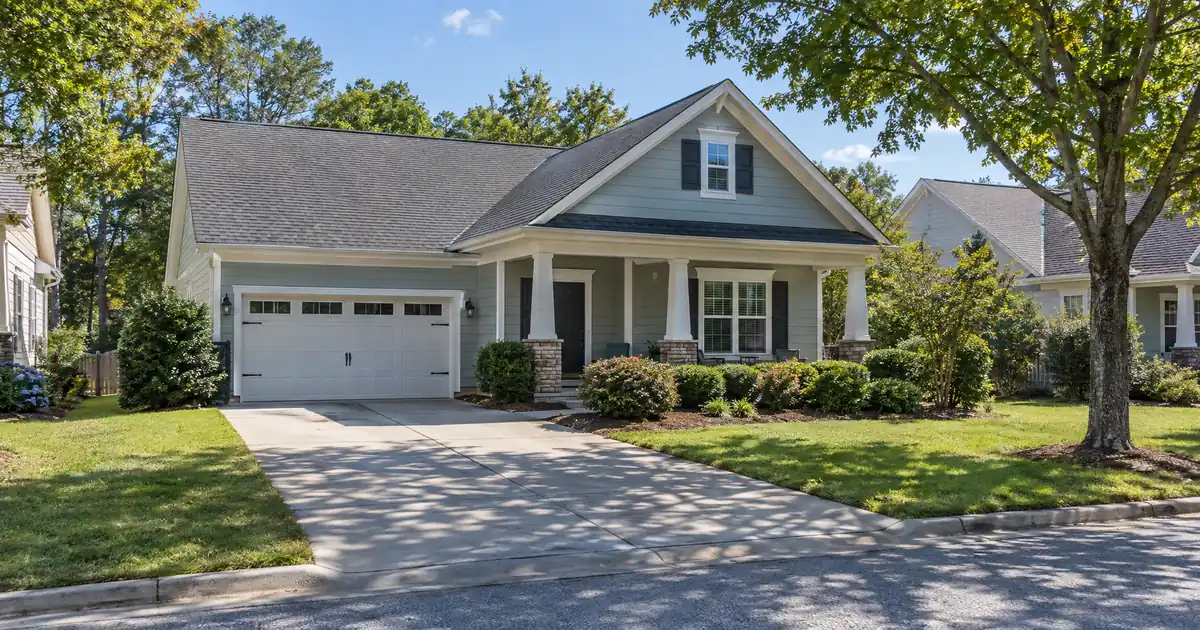
Picture an investor holding a three-bedroom beach house bought years ago, financed, renovated once, and now appraised well above the purchase price. The equity is on paper. The tenant pays a fair annual rent. The investor wants to pull cash out and buy the next property. The appraisal supports it. The debt coverage number, in most cases, does not. That gap is the whole story on Emerald Isle cash-out files.
Lendmire (NMLS# 2371349) is a DSCR-focused mortgage broker. It works with investors buying or refinancing in Emerald Isle, North Carolina, helping place DSCR financing across 41 markets, including Washington, D.C. This article covers the equity-extraction side only: seasoning, the 75% ceiling, appraisal spread, and why coverage is the real constraint on a resort-priced island.
DSCR Cash-Out Calculator
Run the cash-out numbers in Emerald Isle, NC
Rate source: Freddie Mac 30-yr average via FRED® — Federal Reserve Bank of St. Louis · effective Sep 24, 2026
Prefilled with starting assumptions — enter your property’s value, balance, taxes, and insurance for a more accurate picture.
Program parameters update from Lendmire’s centralized guideline source. Taxes and insurance are editable estimates.
As of Sep 24, 2026 · General Freddie Mac market benchmark, not a Lendmire loan offer. Property value, balance, taxes, and insurance are editable estimates. Maximum loan-to-value varies by lender, program, property type, and seasoning. Not a Loan Estimate, approval, or commitment to lend. Program availability and eligibility are subject to lender guidelines, credit approval, property review, and underwriting.
At a Glance:
A DSCR cash-out refinance in Emerald Isle, North Carolina is underwritten primarily on the property’s rental income measured against its full monthly obligation, and with Redfin’s median sale price near $817K against modest long-term rents, coverage is the binding constraint, not equity.
- Cash-out ceiling is 75% LTV, after roughly 6 months of ownership from title recording. Zumper’s average rent is $2,500, up only 2% year over year.
- Modeled coverage on median-priced single-family at 75% LTV lands near 0.5x.
- Townhouses and condos are the likelier route to a coverage number near 1.0x.
- Multi-unit comps are scarce, which matters for appraisal support. Final terms depend on lender guidelines, property type, leverage, and the borrower’s complete credit picture.
Emerald Isle Market Snapshot
A quick read on the Emerald Isle investor landscape — figures come from the cited sources below. Confirm current property-level numbers before underwriting.
| Metric | Detail |
|---|---|
| University enrollment | 1,614 total (Data USA) |
| Employment | 151 full-time and 239 part-time employees (Carteret Community College) |
| Vacancy | 2% (AffordableHousingOnline) |
The Equity Is Real. The Coverage Isn’t.
Emerald Isle is an appreciation market, not a cash-flow market. Redfin’s local housing data shows sale prices climbing year over year and outpacing rent growth on a per-square-foot basis, while Zumper’s rental listings show average rent rising far more slowly over the same stretch. Equity grows faster than rent. That helps the LTV side of a refinance and hurts the coverage side.
Here’s the arithmetic, stated as a modeled assumption and not a market fact. Take a property at the $817K median, rented at $2,500. Divide rent by the full monthly obligation (principal, interest, taxes, insurance, and any association dues) at a 75% LTV. With taxes and insurance included, coverage lands around 0.5x. Drop leverage to 50% and it still sits only in the low 0.7x range. A typical beachfront single-family rental does not reach the 1.00x benchmark that most standard DSCR programs are built around. It is not close. These specifics are subject to lender guidelines and a full review of property, leverage, and credit.
So what do you do with a sub-1.00 file? A few structures get reviewed. A sub-1.00 program exists at some lenders, usually with lower leverage, stronger credit, and larger reserves. Interest-only structuring can change the coverage math on the same property. A smaller cash-out request, or no cash-out at all, changes it more. Whether any of these fits depends on the lender, the credit profile, the reserves, and the property review. None is a given.
Coverage math is explained in detail in this breakdown of how DSCR coverage is calculated. The short version: monthly rent over monthly obligation. The town’s price level is what breaks it here.
What Has to Be True Before the File Goes In
Cash-out eligibility comes down to four mechanical items. Miss one and the file gets kicked back.
1. Seasoning. About 6 months of ownership, measured from title recording. The settlement statement documents it. Investors who bought recently and assume an immediate cash-out get pended on this.
2. LTV ceiling. 75% on a cash-out. The 80% figure that applies to purchases does not carry over. On a home valued at the Redfin median, that ceiling is often far more equity than the coverage number will let the investor use.
3. Coverage. The baseline is 1.00x on rent used for lender review against full PITIA. Some lenders review lower ratios, but typically with compensating factors: more reserves, less leverage, different pricing.
4. Reserves and credit. Reserves run about 6 months of PITIA on most files, and about 9 months above $1,500,000 in loan size. Credit tiers step at 620, 660, 680, and 700, with 620 as the floor. Better tiers typically open more leverage. Loan sizes go up to $3,000,000 on standard programs.
All of this is subject to lender guidelines, credit approval, and property review. The equity available depends on rent used for lender review, PITIA, reserves, and the 75% cap. It is not a guaranteed cash figure. The mechanics of the product are laid out on the page covering how the cash-out works, and a side-by-side against bank products appears in a comparison of DSCR loans.
For anyone weighing a plain rate-and-term instead, rate-and-term and cash-out refi details cover the difference. On Emerald Isle, a rate-and-term sometimes clears where a cash-out does not.
The Appraisal Is the Variable
The value number on this island moves more than on almost any comparable-size town. Redfin’s headline median for the three-month window is $817K. A different Redfin page shows a June median of $904,508, up 10.0%. Zillow’s average value for the 28594 zip is $770,603, up 3.8%. Same town, three numbers, a spread of more than $130K. That’s not an error. It’s a resort market where mix and seasonality swing the median.
Time on market tells the same story. Redfin shows homes averaging 78 days on market, against 26 a year earlier, and scores the market 19 out of 100 on competitiveness. Prices are still rising, but sellers no longer get instant offers. An appraiser choosing comps in that setting has room to land high or low.
Working DSCR brokers see a recurring pattern in resort and second-home markets like this one: the appraisal, not the coverage ratio, decides how much equity is accessible, and it is the step with the widest variance. Files that plan around a conservative value, with a documented appraisal reconsideration packet ready (recent nearby sales, condition adjustments, any upgrades since purchase), tend to recover more of the gap than files that argue after the fact.
Multi-unit comps make this worse. Redfin’s inventory snapshot counted 42 condos, 20 townhouses, and 3 multi-family units for sale in a month. Three. An appraiser valuing a duplex or fourplex on the island may have to reach across Bogue Banks, or to the mainland, for support. Investors should expect that and plan on an underwriting value, not a hoped-for one.
Which Property Types Actually Pencil
Townhouses and condos pencil better than beachfront single-family. Not dramatically, but consistently.
Homes.com shows townhouse rents around $2,150, while its single-family median is about $2,650. The rent gap is roughly $500 a month. The price gap is likely wider than that. So a condo or townhouse owner often carries a lower obligation per dollar of rent, and that is what moves coverage.
Run it on a modeled $450,000 townhouse, an assumption for illustration and not a sourced price, renting at $2,150. At 75% LTV, including taxes and insurance, coverage lands around 0.8x. At 50% LTV it moves to slightly above 1.0x. That’s the pattern across this island: the property can clear 1.00x, but only after the investor accepts pulling out materially less cash than the 75% ceiling allows. Terms vary by lender guidelines, property type, leverage, credit profile, and full file review.
Three other property-type notes:
- Oceanfront single-family. Housing stock is 60.09% single-family, per NeighborhoodScout. Oceanfront homes sit at the top of the price range and the bottom of the rent-to-value range. These are equity holds, not coverage plays.
- Sound-side and mid-island. Owner-heavy, residential. No neighborhood-level price or rent data was found, so any claim about workforce tenancy there is a guess. Treat it as an open question to test with local comps.
- Mainland, across the bridge. Cape Carteret is the nearest mainland pocket. Older Census-derived data shows its median gross rent slightly above Emerald Isle’s. Single-family workforce rentals on the mainland side are likely the cleanest long-term-rental fit, though no price data was gathered to confirm it.
Manufactured homes, log homes, and barndominiums fall outside these DSCR programs. On a barrier island with some older and non-standard housing, confirm the property type before anything else.
Who Rents Here (and Why It Caps the Rent)
The permanent population is about 3,800 to 3,900. The Town of Emerald Isle puts permanent residents at 3,797 and peak-season population at 50,000. Census Reporter’s estimate is 3,934 with a median household income of $89,773. The renter share is only 16.7%, per a regional health system. This is an owner’s island.
Annual-lease tenants come from three places. First, the resort and hospitality economy on Bogue Banks. Second, the Carteret County job base: Carteret Health Care in Morehead City (a 135-bed not-for-profit hospital and Mayo Clinic Care Network member), county government, county schools, and Carteret Community College, which reports 1,614 students. Third, the military commuter shed. Carteret County’s workforce page describes proximity to Camp Lejeune and MCAS Cherry Point as a constant pipeline of separating Marines and dependents. The Center Square reports about 6,400 active duty and 5,300 civilian employees at Cherry Point, and about 37,000 active duty and 5,500 civilians at Camp Lejeune. Neither base is on the island, and no commute times were sourced, so these are regional draws.
Local property manager Bluewater Real Estate manages over 200 Crystal Coast long-term rentals and markets them to commuters headed to New Bern, Jacksonville, Camp Lejeune, and Cherry Point. That is a real niche with professional managers behind it.
The catch is that these tenants set the rent. Military and workforce housing budgets do not track resort prices. That is why rents are up 2% while prices run 4% to 10% depending on source. One secondary aggregator reports a 2% rental vacancy rate and 0.97 rental units per renter household for Carteret County. It’s a county figure, undated, and there is no Emerald Isle-specific vacancy rate. Read it as directional: tight supply supports occupancy on a well-priced unit. It does not lift rent to the price level.
Sub-1.00 Files: What a Lender Would Look At
Most Emerald Isle single-family cash-outs will land below 1.00x on long-term rent alone. That is the file type to plan for, not the exception.
A lender reviewing a sub-1.00 file typically looks at:
- Leverage. Lower LTV on the refinance is the most common adjustment. Asking for 50% to 60% instead of 75% can change the coverage number more than any other lever.
- Program fit. Some programs in the wholesale network accept coverage below 1.00x with compensating factors. Expect stronger credit, larger reserves, and different pricing terms than a file at or above the baseline.
- Interest-only structure. An interest-only period lowers the monthly obligation in the coverage test. It is a structure, not a fix, and the file still gets full review.
- Lease evidence. A signed annual lease with documented rent, or a rent schedule supported by an appraiser, is the qualifying income. Thin listing samples on this island (seven single-family listings in one snapshot) make the appraiser’s rent schedule more important, not less.
None of these is a promise. Eligibility depends on lender guidelines, credit approval, and property review. Investors on this island should run two or three leverage scenarios before ordering an appraisal.
Where Files Stall
The documentation failures on Emerald Isle files are mostly ordinary ones, just more common in a second-home market.
DSCR vs. conventional financing
Two common ways to finance an investment property in Emerald Isle, NC. They qualify you differently — here’s how investors weigh them.
Why investors choose it
- Qualifies on the property’s rental income — no personal tax returns, W-2s, or pay stubs needed to document income.
- No personal debt-to-income ceiling to clear, so existing mortgages and obligations don’t cap your borrowing the same way.
- Can be closed in an LLC, keeping the property inside a business entity.
- Built for scaling — not held to the limit on number of financed properties that conventional financing applies.
- Underwriting centers on the deal: generally qualifies when the rent covers the payment, a 1.00x coverage ratio being a common baseline (confirmed in underwriting).
- Designed specifically for investment property, including long-term and, where the program allows, short-term rentals.
Where it’s strong
- Often the lowest ongoing financing cost for a buyer who fully qualifies on personal income — a fit for a first property or a cost-first purchase.
Trade-offs for investors
- Requires full personal income documentation and must fit within a debt-to-income limit — salary, existing debts, and other mortgages all count.
- Typically held in your personal name rather than a business entity.
- Caps how many financed properties you can carry, which can become a ceiling as a portfolio grows.
- Evaluates you as a borrower as much as the property, which usually means more paperwork.
How investors usually choose: a first or single property often optimizes for the lowest financing cost; portfolio builders often optimize for leverage, vesting in an LLC, and scaling past conventional caps. The right answer depends on your goals, the property, and current guidelines — both paths run through select lenders in Lendmire’s wholesale network, with eligibility and terms confirmed in underwriting.
- Entity paperwork. Properties held in an LLC, subject to lender program eligibility, need operating agreement, EIN letter, and good-standing documents. Second-home buyers often hold title personally and then move it late.
- Seasoning proof. Title recording date and settlement statement. A recent purchase with a deed recorded late confuses the 6-month count.
- Lease evidence. A seasonal or month-to-month arrangement does not read the same as a 12-month lease. Underwriters look for a clean annual term.
- Reserves. Six months of PITIA on a high-priced property is a large number. Document the source and account balance early. Reserves that are thin on paper are a common late-stage pend.
- Condo questionnaires. Condos are a big part of the island’s stock. HOA questionnaire completeness and condo certification gaps hold files up more often than coverage does.
Also worth one line: verify current local rental rules, taxes, and insurance with qualified local professionals before committing. This is a barrier island, and those items vary by property.
Where the Proceeds Go
Cash-out proceeds only matter if the next deal works. Pulling equity from an appreciation-led island and redeploying it into a cash-flow market is the logical shape of the trade. The investor keeps the coastal asset, which has been appreciating, and uses the extracted capital where rent-to-price is stronger.
The alternative is to hold the equity. Given that Emerald Isle’s coverage gets thinner as prices outrun rents, waiting does not improve the DSCR side of a future refinance. It improves the LTV side. Those two pull in opposite directions, and the tension is the whole decision.
For investors comparing this island with other options in the state, the hub page for North Carolina DSCR investor loans covers the statewide picture. To talk through a specific file, reach Lendmire at 828-256-2183.
Frequently Asked Questions
How do you qualify for a DSCR loan in Emerald Isle?
Qualification runs on the property’s rental income against its full monthly obligation, with a 1.00x baseline on standard programs. Credit tiers start at a 620 floor, and reserves run about 6 months of PITIA. On Emerald Isle, the coverage test is the hard part because median prices sit near $817K against rents around $2,500. Everything is subject to lender guidelines and property review.
What are the requirements for a cash-out refinance on an investment property in Emerald Isle, North Carolina?
Cash-out is capped at 75% LTV, with about 6 months of ownership measured from title recording. The property must meet the coverage test and the reserve requirement, and it must be an eligible property type. Manufactured homes, log homes, and barndominiums fall outside these programs. Exact terms depend on the lender’s guidelines, property type, leverage, and a full review of the borrower’s file.
How much cash can an Emerald Isle investor actually pull out?
Less than 75% of value suggests, in most single-family cases. The binding limit is coverage, not equity. A median-priced home at 75% LTV models near 0.5x including taxes and insurance, so the usable cash-out is often set by how much leverage the rent can support. The appraisal is the other variable, since sources put the median anywhere from about $770K to over $900K.
Does a townhouse or condo work better than a beachfront house for a DSCR cash-out?
Usually, yes. Homes.com shows townhouse rents around $2,150 against about $2,650 for single-family, and townhouse prices are likely lower by more than that. A modeled $450,000 townhouse at 50% LTV clears just above 1.0x including taxes and insurance. Condo files add HOA questionnaire and certification review.
Can Lendmire help arrange DSCR financing for an investment property in Emerald Isle?
Yes. Lendmire is a mortgage broker arranging DSCR investor loans. Its DSCR programs review eligibility around property-level rental income, which suits LLC-held and self-employed investors, subject to program terms.
One Last Comparison
Set Emerald Isle next to Jacksonville, where rental demand rides on the Camp Lejeune workforce and prices sit well below a resort island’s. No Jacksonville price data was gathered here, so this is a directional read, but on long-term rent alone the math leans toward the mainland workforce market. Emerald Isle is the place to hold equity and pull it out; Jacksonville-type markets are where that cash is more likely to earn coverage.
About Lendmire
Lendmire is a non-QM mortgage brokerage (NMLS# 2371349) that arranges DSCR investor loans across 41 markets, including Washington, D.C. Eligibility is generally reviewed around property-level rental income rather than personal income, subject to lender and program guidelines. That fits self-employed investors and LLC-owned portfolios. Lendmire was named a 2026 Scotsman Guide Top Mortgage Workplace and a top-ranked workplace in 2025.
Get Started
Ready to find the right loan for you?
In about 30 seconds you can review financing options available for your investment property. No commitment required.
Informational only. Not a Loan Estimate, approval, or commitment to lend. Program availability and eligibility are subject to lender guidelines, credit approval, property review, and underwriting.
References
1. Redfin’s median sale price near $817K
5. Affordable Housing Online — North Carolina Carteret County
7. Zillow — Home Values Emerald Isle NC
9. Homes.com
10. Homes.com — Emerald Isle NC Houses for Rent
13. carteretcountync.gov — Work Force Development
16. a 2026 Scotsman Guide Top Mortgage Workplace
17. Scotsman Guide — Top Workplaces 2025
This article is part of Lendmire’s investment property cash-out refinance program — full qualification details, guidelines, and scenarios live on the program page.
Related reading: Cash Out Refinance Investment Property Emerald Isle North Carolina · Cash Out Refinance Investment Property in Isle of Palms · DSCR Cash Out Refinance in Davidson, North Carolina: How Rent Clears 1.0 DSCR at 75% LTV
Guides: Investment Property Cash-Out Refinance in Emerald Isle, NC · Investment Property Cash-Out Refinance in North Carolina
Brandon Miller
Founder & CEO, Mortgage Loan Originator, Lendmire LLC
- Mortgage Loan Originator · NMLS# 1129696 · Verify on NMLS Consumer Access
- North Carolina Real Estate Broker · License# 343312 · Verify on NCREC
- North Carolina Insurance Producer · License# 19053198 · Property, Casualty, Life, Health · Verify on NAIC SBS
- Lendmire LLC · Firm NMLS# 2371349 · Verify firm licensure
Important disclosures. Lendmire (NMLS# 2371349) is a licensed mortgage brokerage. Lendmire is not a direct lender, depository institution, or financial advisor. All loan inquiries are subject to lender underwriting; this article does not constitute a commitment to lend. Rates, terms, and program guidelines are subject to change without notice and vary by borrower profile, property type, and state. Information in this article is general in nature and is not financial, legal, or tax advice. Equal Housing Opportunity. NMLS Consumer Access: nmlsconsumeraccess.org.