
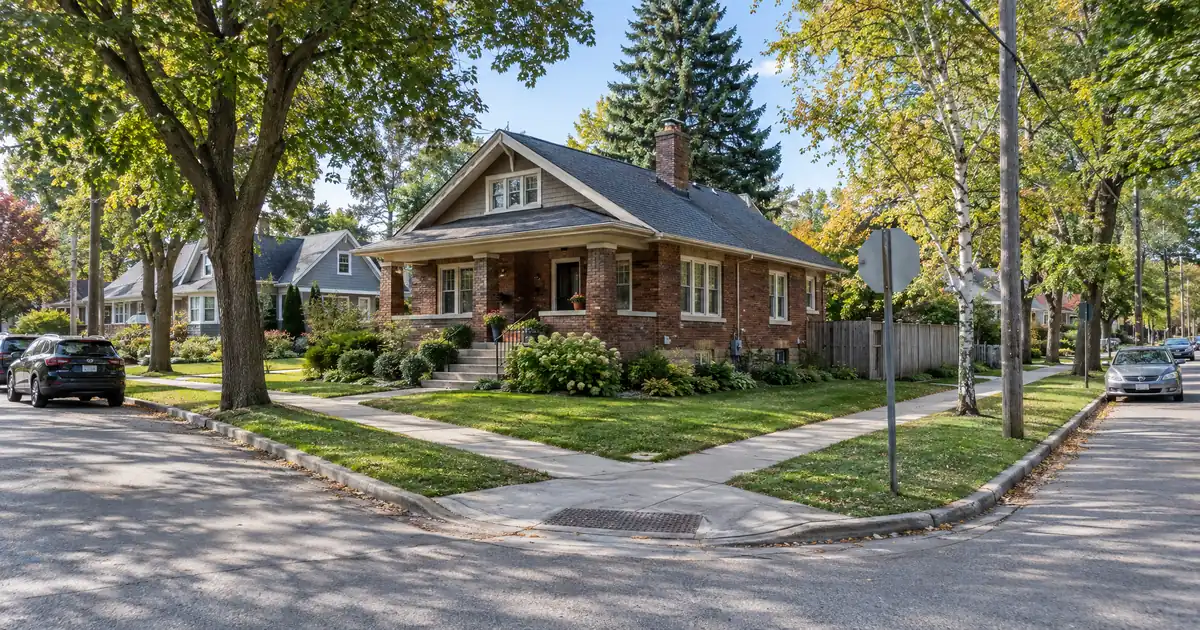
Two things stall most investor refinances before a lender ever reviews coverage: an appraiser with few recent comps, and rent that looks strong on a listing site but thin against a full monthly obligation. Franklin has both problems. Recent sales run in the dozens per month, according to Redfin’s Franklin market data, and rent-to-price ratios sit well below what Midwestern investors expect. A DSCR cash out refinance in Franklin, Wisconsin can still work. The structure has to be built around those two frictions, not around appreciation.
Lendmire (NMLS# 2371349) is a DSCR-focused mortgage broker, and Lendmire’s DSCR program footprint covers Franklin, Wisconsin as part of a 41-market reach that includes Washington, D.C. The brokerage arranges these loans through wholesale and investor-lending channels. Lenders review eligibility and approve.
DSCR Cash-Out Calculator
Run the cash-out numbers in Franklin, WI
Rate source: Freddie Mac 30-yr average via FRED® — Federal Reserve Bank of St. Louis · effective Sep 24, 2026
Prefilled with starting assumptions — enter your property’s value, balance, taxes, and insurance for a more accurate picture.
Program parameters update from Lendmire’s centralized guideline source. Taxes and insurance are editable estimates.
As of Sep 24, 2026 · General Freddie Mac market benchmark, not a Lendmire loan offer. Property value, balance, taxes, and insurance are editable estimates. Maximum loan-to-value varies by lender, program, property type, and seasoning. Not a Loan Estimate, approval, or commitment to lend. Program availability and eligibility are subject to lender guidelines, credit approval, property review, and underwriting.
Key Takeaways:
A DSCR cash-out refinance on a Franklin, Wisconsin rental is underwritten primarily on the property’s rental income measured against its full monthly obligation, so the process runs from a seasoned title, to an appraisal and lease documentation, to a lender coverage review that sets how much equity can actually be pulled.
- Only 23% of Franklin households rent, per ClearGov’s ACS-based profile, so rental comps are scarce.
- House rents near $2,295 against sale prices near $385K put single-family coverage below 1.00x at full leverage.
- Duplexes and small buildings are just 4.72% of units, per NeighborhoodScout. Stacked units are the coverage lever.
- Appreciation is soft here, so proceeds depend on the 75% LTV ceiling and forced equity, not price growth. Final terms depend on lender guidelines, property type, leverage, and the borrower’s complete credit picture.
Franklin Market Snapshot
A quick read on the Franklin investor landscape — figures come from the cited sources below. Confirm current property-level numbers before underwriting.
| Metric | Detail |
|---|---|
| Home prices | 39 sales (Redfin Franklin housing market) |
| Recent appreciation | +40.6% (2021–2026) (NBC26 / Wisconsin REALTORS) |
| Employment | Almost 250 city employees (City of Franklin) |
Ballpark Commons Sets the Rent Ceiling
Ballpark Commons in southwest Franklin is the most important pricing reference in the city for any investor thinking about refinance value. The city’s project documents describe a $130 million mixed-use development around the Rock Sports Complex, anchored by a 4,000-seat stadium. The city’s TIF district page identifies it as TID No. 5. The apartment side includes Velo Village at 265 units, per Business View Magazine, and ROC Ventures markets it as a walkable, bikeable community.
Here’s the catch. Ballpark Commons is mostly institutional-scale product, so it is not where a small investor’s DSCR file lives. It matters because it defines what a renter can get for the money. Per RentCafe’s Franklin data, 46% of rental buildings in the city were built since 2000, with an average building age of 28 years. An older single-family rental or duplex nearby has to price beneath that newer supply. Underwrite the rent assumption accordingly.
The nearby single-family and townhome stock is where small-balance DSCR files tend to land. Demand there comes from renters who want space or a quieter setting while staying close to the amenities, and from households working in the employment nodes covered below.
The S. 27th Street Corridor (and the Campus Exit)
The S. 27th Street and Drexel Avenue corridor carries the strongest employment-driven rental demand in Franklin, and also the sharpest watch item. Ascension SE Wisconsin Hospital – Franklin Campus offers specialty care that includes cancer care, orthopedics, heart and vascular health, stroke care, and women’s health. Midwest Orthopedic Specialty Hospital sits in the same corridor. Clinicians, including travel staff on assignment, form a real tenant pool that rents by the lease term and doesn’t depend on a local sale market.
The corporate side is shifting. BizTimes reports that Northwestern Mutual plans to leave its Franklin campus and move about 2,000 employees to downtown Milwaukee, while a Florida developer plans multifamily housing just west of the campus. That pairing is unusual: employment demand may thin while new supply arrives.
The stronger play might be the hospital side of the corridor over the corporate side. Healthcare demand doesn’t hinge on one tenant’s real estate decision. Still, this is a genuine toss-up until the campus timeline and the new apartments’ lease-up become clearer. The move is a risk to monitor, not a prediction of vacancy, and no sourced vacancy figure exists for Franklin. Anyone refinancing here should test the rent against a scenario where the corporate commuter share shrinks.
Loomis Road and the Industrial Belt
Loomis Road (Highway 36) and the business park nodes are the third demand anchor. The city’s TIF page lists TID No. 6 as a mixed-use district covering Loomis Business Park. Business View Magazine describes an industrial and business park of more than 650 acres, employing over 2,000 people across more than 80 businesses. Named tenants include Quad Graphics, Carma Labs, Strauss Brands, Carlisle IT, and Lubrizol. Those figures come from a trade-press profile that predates the current market, so treat them as directional.
Manufacturing and logistics workers are the likely tenants, and they tend to rent workforce single-family homes and townhomes at moderate price points. That aligns with the asset class DSCR lenders in this network see most often. No neighborhood-level rent source exists for these areas, and the labels Homes.com applies to popular rental pockets (Honey Creek Manor, Walker’s Point, and Castle Manor) come with no per-area figures. Treat them as unverified.
Why Does the Coverage Math Bite Here?
Coverage bites because rent-to-value is thin. Homes.com puts the median house rent at $2,295, though from a sample of only 19 listings. The median home value is $364,200 per ClearGov’s ACS-based profile (owner-occupied stock of all vintages). Redfin’s recent-sale median runs higher at $385K, and NeighborhoodScout’s $459,584 uses yet another method. Rent divided by price lands roughly between 0.50% and 0.60% monthly, which is below the 1% rule of thumb.
Now the modeled scenarios. These use assumed inputs, not cited market data: a 30-year amortization with property taxes and insurance built into the full monthly obligation, and coverage rounded down.
| Scenario (modeled) | LTV | Coverage (incl. Taxes and insurance) |
|---|---|---|
| House at $385K value, $2,295 rent | 75% | About 0.90x |
| Same house, lower leverage | 65% | About 1.00x |
| Duplex at $400K value, $1,400 + $1,400 rent | 75% | About 1.05x |
| Same duplex, $1,750 + $1,400 rent | 75% | Just under 1.20x |
Read that table carefully. The house at full leverage falls below 1.00x. Most standard DSCR programs are built around a 1.00x benchmark because rent covers the payment at that level. Some lenders review lower-coverage files, but usually with lower leverage, different pricing, or more cash in reserve. For a sub-1.00 file, the paths a lender might review include a sub-1.00 program, an interest-only structure, or a reduced loan amount. Whether any of these apply depends on lender guidelines, credit profile, reserves, and property review.
The duplex row shows why unit stacking matters. The $1,400-$1,750 band comes from RentCafe’s 1-bedroom average of $1,402 and 2-bedroom average of $1,758, which cover buildings with 50 or more units only, so read it as an upper reference for older small buildings. The Zumper median is $1,570 across all property types, down 6% over the last year. Sources conflict on direction, so the file shouldn’t need rent growth to clear. For a plain explanation of the ratio itself, see the guide “What Is a DSCR Loan”. These specifics are subject to lender guidelines and a full review of property, leverage, and credit.
Appreciation Won’t Do the Work
Franklin is a high-price, slow-appreciation market, and any refinance plan built on price growth is built on sand. NeighborhoodScout ranks Franklin’s latest annual appreciation lower than 80% of other Wisconsin cities and towns. Redfin shows the median sale price down 1.0% year over year, with price per square foot up 6.4%, about 50 days on market, and 39 sales in the most recent month reported. Statewide, per NBC26 citing the Wisconsin REALTORS Association, listings under $350,000 are down 33.2% over five years.
Two consequences follow. First, if the appraised value holds flat, cash-out is capped at 75% of that value. On most files that ceiling applies to a refinance, and it isn’t the 80% figure some purchase programs allow. Second, the proceeds are limited by coverage before LTV comes into play, as the table shows. Most files also need roughly six months of ownership measured from title recording before a cash-out refinance is available.
So where does equity come from? Forced equity. A renovation that lifts rent and value, or a conversion that adds a unit, moves both sides of the ratio. A low-basis purchase would help too, but sub-$350K stock is getting harder to find, so plan for the improvement path.
Working DSCR brokers see a recurring pattern in thin-comp suburban markets: the appraisal, not the borrower’s credit, determines how much equity reaches the closing table. Files that anchor value to close, recent sales of similar bedroom counts and vintage tend to hold up. Files that lean on a single high list price from the neighborhood tend to come back lower. With the sources here disagreeing on median price by tens of thousands of dollars, that dispersion is the main risk.
Franklin’s Property Mix Favors Scarcity Plays
The housing mix explains why small multifamily commands attention. NeighborhoodScout reports single-family detached homes at 61.69% of units, large apartment complexes at 25.54%, row houses and other attached homes at 7.55%, and duplexes and small buildings at 4.72%. ClearGov shows 77% of households own. RentCafe reports that 74% of rental units sit in buildings under 50 units, though that figure likely includes townhome and condo communities and not only duplexes.
The inference here is Lendmire Research’s own: with so few 2-4 unit buildings, there are few comparable sales, and an appraiser will lean heavily on whatever exists. A duplex owner may hold something scarce, but the appraisal may still be harder. Townhomes and condos offer a middle path for the workforce-rental thesis. Large complexes are effectively institutional and outside the small-investor lane.
What Does a Franklin Refinance File Need?
A typical file needs about six months of title seasoning, coverage of at least 1.00x on rent used for lender review against full obligations, and reserves of roughly six months of PITIA (about nine months above $1,500,000 in loan size). Credit tiers on most files run from a 620 floor up through 660, 680, and 700, with pricing and leverage improving at higher tiers. Loan amounts run up to $3,000,000 on standard programs, and smaller balances route through select lenders in the network. Manufactured homes, log homes, and barndominiums fall outside these programs. Details are subject to lender overlays and change with the file.
For the mechanics of how cash-out works on a rental, see the cash-out refinance walkthrough and the investor refinance breakdown. Investors weighing this against a conventional route can review the key differences. LLC-titled borrowers should confirm entity eligibility, since it depends on program guidelines. Investors wanting a Franklin-specific read can start with Lendmire’s Wisconsin DSCR loan programs or call 828-256-2183. Verify current local rental rules, taxes, and insurance with qualified local professionals before committing.
Frequently Asked Questions
Can a Franklin single-family rental clear 1.00x on a cash-out refinance?
At the median house rent and a sale price near $385K, coverage lands around 0.90x at 75% LTV once taxes and insurance are counted. Dropping leverage toward 65% brings it near 1.00x. Larger four-bedroom rents, which Homes.com shows near $3,400, can change the picture. Any outcome remains subject to lender review.
DSCR vs. conventional financing
Two common ways to finance an investment property in Franklin, WI. They qualify you differently — here’s how investors weigh them.
Why investors choose it
- Qualifies on the property’s rental income — no personal tax returns, W-2s, or pay stubs needed to document income.
- No personal debt-to-income ceiling to clear, so existing mortgages and obligations don’t cap your borrowing the same way.
- Can be closed in an LLC, keeping the property inside a business entity.
- Built for scaling — not held to the limit on number of financed properties that conventional financing applies.
- Underwriting centers on the deal: generally qualifies when the rent covers the payment, a 1.00x coverage ratio being a common baseline (confirmed in underwriting).
- Designed specifically for investment property, including long-term and, where the program allows, short-term rentals.
Where it’s strong
- Often the lowest ongoing financing cost for a buyer who fully qualifies on personal income — a fit for a first property or a cost-first purchase.
Trade-offs for investors
- Requires full personal income documentation and must fit within a debt-to-income limit — salary, existing debts, and other mortgages all count.
- Typically held in your personal name rather than a business entity.
- Caps how many financed properties you can carry, which can become a ceiling as a portfolio grows.
- Evaluates you as a borrower as much as the property, which usually means more paperwork.
How investors usually choose: a first or single property often optimizes for the lowest financing cost; portfolio builders often optimize for leverage, vesting in an LLC, and scaling past conventional caps. The right answer depends on your goals, the property, and current guidelines — both paths run through select lenders in Lendmire’s wholesale network, with eligibility and terms confirmed in underwriting.
Does the Northwestern Mutual move affect refinance underwriting?
Lenders underwrite the property’s rent and appraisal, not the employer map, so the move doesn’t directly change eligibility. It affects the rent assumption. With about 2,000 employees slated to relocate downtown and new apartments planned west of the campus, a conservative file tests rent against softer demand near S. 27th Street.
How much do Ballpark Commons apartments influence rents on older rentals?
Directly, they set the ceiling. Newer, amenity-rich units at Velo Village give renters an alternative, so older single-family homes and duplexes nearby need to price below that product. Build that discount into the rent figure before running coverage.
Is a duplex better than a house for cash-out here?
On coverage, usually yes. Two units in the $1,400-$1,750 band stack to more rent than one house at around $2,300, and the modeled duplex clears 1.00x at full leverage where the house doesn’t. The tradeoff is scarcity: duplexes are 4.72% of units, so appraisal comps are thinner.
How long must I own before pulling equity?
Most programs look for about six months of ownership measured from title recording. Beyond seasoning, the appraised value, rent used for lender review, and reserves set the proceeds, capped at 75% LTV.
For current guidelines and terms, see Lendmire’s DSCR loan programs page.
Where the Asymmetry Sits
The mispricing in Franklin is scarcity. Duplexes and small buildings make up under 5% of units while renters here already pay $1,400-$1,750 per unit, so a well-located two-unit property near the hospital corridor or the Ballpark Commons edge is the one asset type priced as a single-family home but rented like an income property.
About Lendmire
Lendmire (NMLS# 2371349) is a mortgage brokerage focused on DSCR investor financing, helping arrange programs through wholesale and investor-lending channels in 41 markets, including Washington, D.C. DSCR loans are evaluated by the lender on property cash flow rather than personal income, subject to lender guidelines, supporting LLC closings and accommodating investors with four or more financed properties. Lendmire was named a Scotsman Guide Top Mortgage Workplace in both 2025 and 2026.
Get Started
Ready to find the right loan for you?
In about 30 seconds you can review financing options available for your investment property. No commitment required.
Informational only. Not a Loan Estimate, approval, or commitment to lend. Program availability and eligibility are subject to lender guidelines, credit approval, property review, and underwriting.
References
1. Redfin’s Franklin market data
2. ClearGov’s ACS-based profile
4. NBC26 citing the Wisconsin REALTORS Association
6. franklinwi.gov — Ballpark Commons
9. ROC Ventures
11. Ascension SE Wisconsin Hospital – Franklin Campus
12. BizTimes
13. Homes.com — Franklin WI Houses for Rent
14. Zumper median
15. 2025
16. 2026
This article is part of Lendmire’s investment property cash-out refinance program — full qualification details, guidelines, and scenarios live on the program page.
Related reading: Cash Out Refinance Investment Property in Franklin, Tennessee: How DSCR Coverage Works on a Franklin Refi · DSCR Cash Out Refinance in Franklin, Tennessee: How DSCR Coverage Works on a Franklin Refi · DSCR Loans In Franklin / Williamson County, Tennessee
Guides: Investment Property Cash-Out Refinance in Wisconsin
Brandon Miller
Founder & CEO, Mortgage Loan Originator, Lendmire LLC
- Mortgage Loan Originator · NMLS# 1129696 · Verify on NMLS Consumer Access
- North Carolina Real Estate Broker · License# 343312 · Verify on NCREC
- North Carolina Insurance Producer · License# 19053198 · Property, Casualty, Life, Health · Verify on NAIC SBS
- Lendmire LLC · Firm NMLS# 2371349 · Verify firm licensure
Legal disclosures. Lendmire (NMLS# 2371349) is a state-licensed mortgage brokerage that arranges financing through wholesale lender relationships. Lendmire is not a direct lender, depository institution, or registered financial advisor. The discussion above is general informational content about real estate financing — it is not financial, legal, or tax advice, and readers should consult licensed professionals for guidance on their individual circumstances. Loan inquiries are subject to lender underwriting; this article does not represent a commitment to lend. Loan terms, rates, and qualification standards vary by borrower, property, and state, and are subject to change at any time. Equal Housing Opportunity. NMLS Consumer Access: nmlsconsumeraccess.org.