
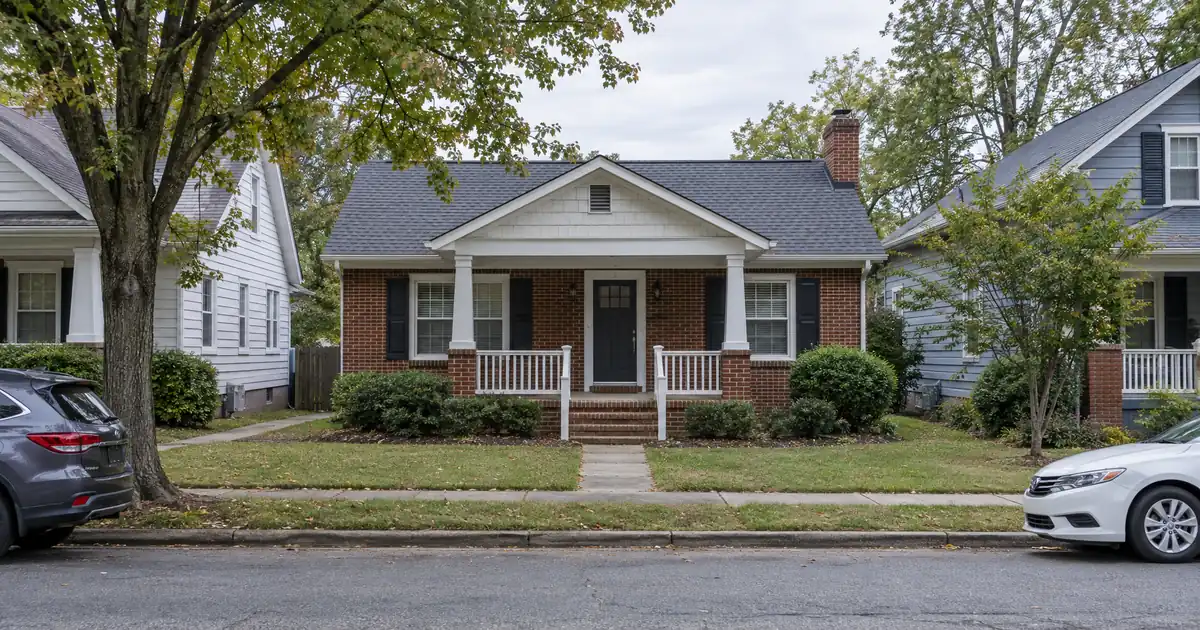
Downtown High Point is a more affordable sourced submarket in the city. Redfin shows a median sale price of $215K over the last three months, up 1.7% year over year, with homes sitting 47 days on average. That price level is what makes it interesting for a cash-out. A modest balance against a seasoned rental leaves room under the lender’s loan-to-value ceiling. It also keeps the monthly obligation low enough for the rent to cover it.
This article is about the second move. The reader already owns the rental and wants to turn equity into capital for the next deal. Purchase mechanics are a separate topic.
DSCR Cash-Out Calculator
Run the cash-out numbers in High Point, NC
Rate source: Freddie Mac 30-yr average via FRED® — Federal Reserve Bank of St. Louis · effective Sep 24, 2026
Prefilled with starting assumptions — enter your property’s value, balance, taxes, and insurance for a more accurate picture.
Program parameters update from Lendmire’s centralized guideline source. Taxes and insurance are editable estimates.
As of Sep 24, 2026 · General Freddie Mac market benchmark, not a Lendmire loan offer. Property value, balance, taxes, and insurance are editable estimates. Maximum loan-to-value varies by lender, program, property type, and seasoning. Not a Loan Estimate, approval, or commitment to lend. Program availability and eligibility are subject to lender guidelines, credit approval, property review, and underwriting.
At a Glance: A DSCR cash-out refinance on a High Point, North Carolina rental is underwritten primarily on the property’s rental income measured against its full monthly obligation. The lender sizes proceeds off appraised value up to a 75% LTV ceiling, after roughly six months of title-recorded ownership and a reserves review. Every figure here varies by lender and program — guidelines, property type, leverage, and credit profile all apply.
- Downtown High Point’s median sale price is $215K, the lowest sourced price in the city.
- Citywide rent sources run from $1,075 to $1,400, so the appraiser’s rent schedule decides coverage.
- Cash-out is capped at 75% LTV, with seasoning measured from recording.
- Two-to-four-unit inventory is thin, which limits both listings and appraisal comps.
- Final terms depend on lender guidelines, property type, leverage, and the borrower’s complete credit picture.
How the Cash-Out Math Works, Step by Step
Proceeds are the lesser of what the 75% ceiling allows and what the rent can carry. Most borrowers focus on the first limit. The second one is the one that actually binds in High Point.
Take the first limit. A lender multiplies the appraised value by 75%, then subtracts the existing payoff and closing costs. What remains is the maximum proceeds. If your payoff already sits near 60% of the appraised value, only about 15 points of value are available. If it sits near 45%, there are about 30. That is why the same neighborhood can produce very different cash-outs on two similar houses. Equity available depends on rent used for lender review, PITIA, reserves, and the 75% ceiling, so it is never a guaranteed figure.
Now the second limit. The coverage number is monthly rent divided by the full monthly obligation: principal, interest, taxes, insurance, and any HOA dues. Most standard programs are built around a 1.00 benchmark. Some lenders will look below that with compensating factors, lower leverage, different pricing, or more cash down. Eligibility turns on lender guidelines, credit profile, reserves, and property review. The guide “What Is a DSCR Loan” covers the mechanics in general. This article stays on how they behave in High Point.
Other parameters to know, framed as typical guidance for select wholesale lenders rather than commitments:
- Seasoning is generally about six months of ownership, measured from title recording. A settlement statement documents it.
- Credit tiers generally start at a 620 floor, with better terms commonly available at 660, 680, and 700.
- Reserves are typically about six months of PITIA. They rise to about nine months on balances above $1,500,000.
- Standard programs go up to $3,000,000. Smaller balances route through select lenders in the network.
Modeled Coverage Math on High Point Rentals
Run the numbers on a downtown-priced house, treating every input as a modeled assumption and not a market fact. Assume a $215,000 value, a 75% cash-out loan, and a $1,400 rent. The rent borrows the Zumper median, which spans all bedroom counts and property types. The monthly obligation uses 30-year principal and interest at a rate in the high-6s, plus taxes near 0.82% of value per year and insurance near 0.40%, the North Carolina averages. Including taxes and insurance, coverage lands just above 1.05. That is thin but at the benchmark. These specifics are subject to lender guidelines and a full review of property, leverage, and credit.
Now cut leverage to 65% on the same house. Coverage moves into the low 1.2s, because the smaller balance drops principal and interest while taxes and insurance stay put.
Next, a median-priced house. Redfin puts the citywide median sale price at $271,071, down 3.2% year over year. Zillow’s typical home value is lower at $230,221, up 3.9%. The two measure different things, a median of sales versus a value index. Together they show flat to modest appreciation and not a clear trend. Model a 75% cash-out on the $271,071 figure against RentCafe’s $1,481 three-bedroom average, which is an apartment average. Coverage comes out in the low 0.9s including taxes and insurance. That is below 1.00. Terms vary by lender guidelines, property type, leverage, credit profile, and full file review.
That does not end the file. A lender may review sub-1.00 programs, a lower LTV, interest-only structuring, or more reserves and a higher credit tier. Qualification stays subject to lender guidelines, credit approval, and property review. The practical lesson is that cash-out proceeds in High Point are often sized by coverage, not by the 75% cap. Taking less than the maximum is a legitimate way to get the file to clear.
Rent Data Conflicts, and What the Appraiser Decides
The published rent figures disagree, and the appraisal rent schedule outranks all of them. RentCafe reports a $1,241 average, up 1.99%. Zumper reports a $1,400 median, up 7%. Apartment List shows $1,075, up 2.3%. Redfin’s rental page shows $1,310. Zumper’s 7% is the outlier, and the sources that agree cluster around 2%.
The lower figures are apartment-weighted, so treat them as a floor and a stress test. The lender will order a rent schedule for the actual property, and an owner whose lease sits above the appraiser’s number will see coverage computed on the lower one. Bring the executed lease, proof of deposits, and any rent-roll detail up front. A lease at $1,500 with no payment history is a weaker document than a lease at $1,400 with twelve months of deposits behind it.
Single-family tilts the picture. Doorstead reports that single-family homes led the metro in its rental market report, with a $1,753 median rent and 20 days on market, 16.5% above the blended metro median. That figure covers the whole Greensboro–High Point metro, not just the city. Still, it points to why a 2-3 bedroom house usually underwrites more cleanly than a per-door duplex unit priced like an apartment.
Older Stock vs. Newer Product
Older submarkets can show stronger gross rent-to-value but carry more collateral risk. A local broker’s duplex write-up describes East Lexington, Oakview, and Kivett renting for about $1,031 to $1,176, against $1,413 to $1,450 in the newer Overlook and Premier Center areas. It also says entry duplexes start under $130,000. Treat this as a directional pattern from one source. It is not verified market data, and its cap-rate claims do not belong in underwriting.
The pattern makes sense. The rent gap between old and new is smaller than the price gap. That helps coverage. But cheap stock brings condition issues, thin comps, and appraisal pushback, and those hit a cash-out harder than they hit a purchase. A purchase can be re-priced. A refinance with a low appraisal just returns less cash, or none.
An appraisal reconsideration is a routine step on these files, not an emergency move. A packet with recent in-neighborhood sales, condition adjustments, and documented improvements can recover value on older housing stock. Build it before the appraisal lands, not after.
The same broker blog attributes a 0.8% year-over-year rent dip to temporary oversupply from new construction in the Overlook and Premier Center areas. This is one broker’s claim, and no independent High Point absorption data backs it. Doorstead separately counts about 2,800 rental units under construction or recently completed across the metro, with its named corridors in Greensboro. New apartment supply may cap growth on newer product. Older houses compete less directly with it. Carry a conservative vacancy factor in your own stress test and treat oversupply as a risk flag, not a proven fact.
Where Cash-Out Candidates Actually Sit
Downtown and the furniture district (ZIP 27260). This is the lowest-priced sourced pocket. The tenant base includes market-related workers and downtown residents, and the Market creates a seasonal demand spike. Underwrite long-term lease rent only. Lenders review the lease and the appraiser’s schedule, not Market-week income. Slower sales than a year earlier (47 days versus 38) suggest buyers have room to negotiate. That matters if you plan to sell a refinanced asset later, because liquidity is not instant.
Emerywood. Historic stock near High Point University. A commercial blog calls it ownership-dominated with limited rental inventory. Fine for a single rental already owned. Not a volume market.
Florence, Delmar, and Deep River. A local broker names these as investor areas, and they are described only qualitatively. Florence is newer construction, and Delmar is north-side suburban. With no sourced prices or rents, run your own comps before assuming anything.
Newer-construction suburbs. Redfin’s new-homes page lists Adams Farm, James Landing, Grandover, Hillsdale Estates, and Sedge Field, so check the page directly for current inventory and listing prices. These communities skew owner-occupant and build-to-rent. They are not a more affordable entry point, and a recent build has little equity to pull.
The Multifamily Question
Small multifamily would be the stronger play for stacking income, except there is almost none to buy. A Homes.com listing page showed four multifamily properties priced from $107,000 to $350,000, averaging 43 days on market, in a dated snapshot. Redfin’s new-homes page noted five multifamily units for sale in a recent month. Counts move, but the shape holds: only a handful of 2-4 unit listings exist at any time.
For a cash-out, this has two effects. First, appraisal comps for duplexes are scarce, which raises the odds of a conservative value. Second, a property with separate entrances and separate meters helps the lender underwrite each unit’s income individually. A duplex with shared utilities leaves more questions in the file.
Do the duplex math per unit. If two doors rent near the two-bedroom apartment averages, the total has to beat what one house would rent at the same price. At similar prices, the single-family premium can win, and the house also has more exit liquidity.
Why Rental Demand Holds Up
Tenant demand rests on employers and a deep renter base. Data USA puts manufacturing at 8,571 resident workers, health care and social assistance at 7,642, and retail at 5,636. Employment grew 2.35% in the latest year. RentCafe says 42% of households, or 18,866, rent, and 78% of rentals fall between $1,001 and $1,500. That narrow band is what workforce single-family leans on.
The anchors are specific. High Point University reached a record 6,550 students, up from 6,335 the prior year, and is building new professional-school facilities. High Point Medical Center serves a region of more than 600,000 people. The High Point Market reports $6.73 billion in annual economic impact and more than 75,000 attendees. The mayor called it the largest economic engine in the city, per FOX8. Spectrum News has covered tariff concerns around the industry, and a furniture-heavy economy carries that exposure. The city also spans four counties, so confirm which one your property sits in. Verify current local rental rules, taxes, and insurance with qualified local professionals.
Working DSCR brokers see a recurring pattern in mid-priced manufacturing-and-trade markets like this one. The owner’s lease rent sits above the appraiser’s rent schedule, so coverage comes in lower than the owner modeled. The loan is sized to the lender’s number, not the lease. Files that carry a lease, deposit history, and a short rent comparison tend to arrive with fewer open questions.
Seasoning, Reserves, and Entity Paperwork
Seasoning is where files get kicked back. The roughly six-month clock runs from title recording, and a settlement statement proves it. An owner who closed in March and applies in August is short, whatever the calendar feels like. Check the recording date before ordering the appraisal.
Reserves are the second snag. About six months of PITIA is typical, held in documented accounts. The cash-out proceeds themselves may not count toward reserves. That surprises borrowers who plan to use the new proceeds for the cushion.
If the property sits in an LLC, subject to lender program eligibility, expect to provide the operating agreement, a good-standing certificate, and the EIN letter, with title vesting that matches. Mismatched vesting is the quiet reason entity files stall. The brokerage can arrange financing for LLC-owned portfolios beyond conventional financed-property limits. For how this compares with a traditional loan, see the guide “Where DSCR and Conventional Diverge”. For the broader refinance menu, it is worth looking at the different ways to refinance an investment property, and for the cash-out mechanics specifically, pulling equity out goes deeper. Investors can browse North Carolina DSCR investor loans for state-level context.
DSCR vs. conventional financing
There are two common ways to finance an investment property in High Point, NC, and they qualify you differently — here’s how investors weigh them.
Why investors choose it
- Qualifies on the property’s rental income — no personal tax returns, W-2s, or pay stubs needed to document income.
- No personal debt-to-income ceiling to clear, so existing mortgages and obligations don’t cap your borrowing the same way.
- Can be closed in an LLC, keeping the property inside a business entity.
- Built for scaling — not held to the limit on number of financed properties that conventional financing applies.
- Underwriting centers on the deal: generally qualifies when the rent covers the payment, a 1.00x coverage ratio being a common baseline (confirmed in underwriting).
- Designed specifically for investment property, including long-term and, where the program allows, short-term rentals.
Where it’s strong
- Often the lowest ongoing financing cost for a buyer who fully qualifies on personal income — a fit for a first property or a cost-first purchase.
Trade-offs for investors
- Requires full personal income documentation and must fit within a debt-to-income limit — salary, existing debts, and other mortgages all count.
- Typically held in your personal name rather than a business entity.
- Caps how many financed properties you can carry, which can become a ceiling as a portfolio grows.
- Evaluates you as a borrower as much as the property, which usually means more paperwork.
How investors usually choose: a first or single property often optimizes for the lowest financing cost; portfolio builders often optimize for leverage, vesting in an LLC, and scaling past conventional caps. The right answer depends on your goals, the property, and current guidelines — both paths run through select lenders in Lendmire’s wholesale network, with eligibility and terms confirmed in underwriting.
To see what a specific property might support, pull a DSCR quote or call 828-256-2183. All terms are subject to change and to lender overlays.
The Real Choice
Most High Point owners end up weighing two paths. One is to pull less than the cap, around 65% LTV, on an older or downtown rental. Coverage stays comfortable in the low 1.2s on the modeled numbers, but proceeds are smaller, so the next purchase needs more of your own cash. The other is to take the full 75% and fund a second property sooner, accepting coverage near the 1.00 benchmark and a file that depends on the appraiser’s rent number holding up. In a city where the data shows flat-to-modest appreciation and a rent trend that sources cannot agree on, each path buys something and costs something. Exact terms depend on the lender’s guidelines, property type, leverage, and a full review of the borrower’s file.
Frequently Asked Questions
How do you qualify for a DSCR cash-out refinance in High Point, North Carolina?
The property’s rent has to cover its full monthly obligation, with 1.00 as the common benchmark, subject to lender guidelines. Expect a credit floor around 620, about six months of seasoning from title recording, and roughly six months of PITIA in reserves. The LTV ceiling for cash-out is 75%. The appraiser’s rent schedule, not your lease, sets the coverage number.
What are the requirements for an investment property loan in High Point, North Carolina?
A lender reviews credit, reserves, appraised value, rent evidence, and entity documents if an LLC holds title. Standard programs go up to $3,000,000. Manufactured homes, log homes, and barndominiums fall outside these programs. Details vary by borrower, property, and lender.
Does the High Point Market count toward rent used for lender review?
No. The Market is a demand spike that supports the local economy, but lenders underwrite long-term lease rent from the lease and the appraiser’s rent schedule. Treat Market-week income as unrelated to the file.
Why might a High Point cash-out come back smaller than expected?
Three things shrink proceeds. The appraisal can land below your expected value, the rent schedule can fall below your lease, or the existing payoff can leave little room under 75% LTV. Thin duplex comps make the first problem more likely on small multifamily. Lower leverage or an appraisal reconsideration packet can help.
For current guidelines and terms, see Lendmire’s DSCR loan programs page.
About Lendmire
Lendmire, NMLS# 2371349, is a DSCR and non-QM mortgage brokerage with investor loan programs in 41 markets, including Washington, D.C. Lenders commonly review DSCR eligibility around property-level rent instead of personal income documentation, subject to lender guidelines. The brokerage helps arrange financing for LLC-owned portfolios beyond conventional financed-property limits. Lendmire is recognized by Scotsman Guide as a 2026 Top Workplace and a 2025 Scotsman Guide Top Workplace.
Get Started
Ready to find the right loan for you?
In about 30 seconds you can review financing options available for your investment property. No commitment required.
Informational only. Not a Loan Estimate, approval, or commitment to lend. Program availability and eligibility are subject to lender guidelines, credit approval, property review, and underwriting.
References
1. Redfin: Downtown High Point
2. $1,075
3. $1,400
5. Zillow Home Values: High Point
8. doorstead.com — Greensboro High Point Metro Rental Market Report
15. High Point Market: Economic Impact
16. FOX8
17. spectrumlocalnews.com — Charlotte High Point Furniture Market Returns
18. recognized by Scotsman Guide as a 2026 Top Workplace
19. a 2025 Scotsman Guide Top Workplace
This article is part of Lendmire’s investment property cash-out refinance program — full qualification details, guidelines, and scenarios live on the program page.
Related reading: Cash Out Refinance Investment Property High Point North Carolina · Cash Out Refinance Investment Property in Monroe, North Carolina: Pulling Equity From Older Workforce Rentals · Cash Out Refinance Investment Property in Kannapolis, North Carolina: The 2026 DSCR Guide to Cannon Village
Guides: Investment Property Cash-Out Refinance in High Point, NC · Investment Property Cash-Out Refinance in North Carolina
Brandon Miller
Founder & CEO, Mortgage Loan Originator, Lendmire LLC
- Mortgage Loan Originator · NMLS# 1129696 · Verify on NMLS Consumer Access
- North Carolina Real Estate Broker · License# 343312 · Verify on NCREC
- North Carolina Insurance Producer · License# 19053198 · Property, Casualty, Life, Health · Verify on NAIC SBS
- Lendmire LLC · Firm NMLS# 2371349 · Verify firm licensure
Required disclosures. Lendmire (NMLS# 2371349) operates as a licensed mortgage broker, not a direct lender or depository. The discussion in this article is general in nature and should not be relied upon as financial, legal, or tax advice — every investment scenario is unique and should be reviewed by a qualified professional. Any loan inquiry is subject to lender underwriting, and this article is not a commitment to lend or a guarantee of approval. Mortgage rates, loan terms, and program guidelines vary by borrower, property, and state, and may change without notice. Equal Housing Opportunity. Verify licensure at NMLS Consumer Access.