
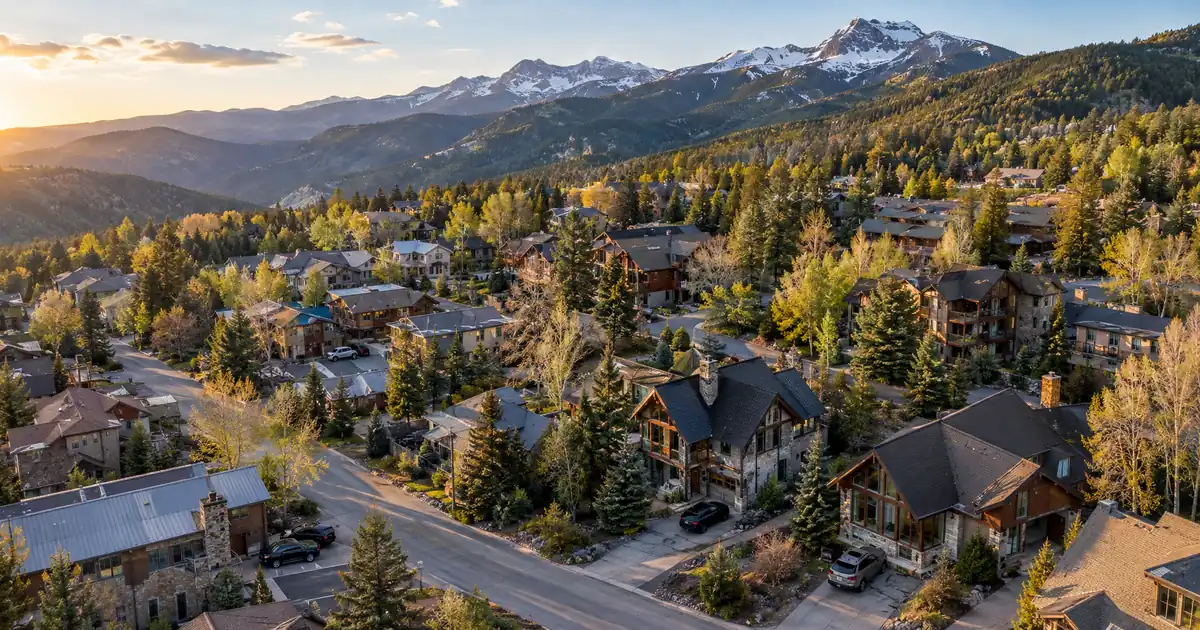
If you own a rental in Highlands that appraises near the Redfin median of $1.2M, here’s what most brokers won’t tell you: your equity is probably real, but your rent-to-debt ratio is the obstacle. Extracting that equity through a DSCR cash-out refinance is a coverage problem before it is an appraisal problem. Lendmire (NMLS# 2371349), a DSCR-focused mortgage broker, frames it that way. Through Lendmire’s DSCR program footprint — 41 markets, including Washington, D.C. — lenders may review qualifying rental income subject to program guidelines for Highlands, North Carolina investors.
DSCR Cash-Out Calculator
Run the cash-out numbers in Highlands, NC
Rate source: Freddie Mac 30-yr average via FRED® — Federal Reserve Bank of St. Louis · effective Sep 24, 2026
Prefilled with starting assumptions — enter your property’s value, balance, taxes, and insurance for a more accurate picture.
Program parameters update from Lendmire’s centralized guideline source. Taxes and insurance are editable estimates.
As of Sep 24, 2026 · General Freddie Mac market benchmark, not a Lendmire loan offer. Property value, balance, taxes, and insurance are editable estimates. Maximum loan-to-value varies by lender, program, property type, and seasoning. Not a Loan Estimate, approval, or commitment to lend. Program availability and eligibility are subject to lender guidelines, credit approval, property review, and underwriting.
The Quick Read:
A DSCR cash-out refinance on a Highlands, North Carolina investment property is underwritten primarily on the rental income the property can support measured against its full monthly obligation, then sized to a 75 percent loan-to-value ceiling after roughly six months of ownership, subject to lender guidelines, credit approval, and property review.
- Redfin shows a $1.2M median sale price, while Zillow puts typical value at $859,151.
- Census-based median rents of $535 to $664 sit far below current asking levels.
- Modeled coverage including taxes and insurance only nears 1.0 at roughly 45 percent LTV.
- Duplexes, converted homes, and small apartment buildings are just 11.00 percent of housing units.
Highlands Market Snapshot
A quick read on the Highlands investor landscape — figures come from the cited sources below. Confirm current property-level numbers before underwriting.
| Metric | Detail |
|---|---|
| Home prices | $1.2M median (Redfin Highlands Housing Market) |
| Typical rents | $664 asking (City-Data Housing) |
| Recent appreciation | +28.0% yoy (Redfin Highlands Housing Market) |
Why Highlands Is a Coverage Problem, Not an Equity Problem
Highlands has plenty of equity and very little rent. Per NeighborhoodScout, prices rose 120.22 percent over ten years, an average of 8.21 percent a year, though the latest twelve-month rate was 3.23 percent. Redfin reports the median sale price up 28.0 percent year over year at $1.2M. Homes.com shows a trailing twelve-month median of $1,350,000, up 16 percent. Zillow’s typical-value index reads $859,151, essentially flat. The spread reflects methodology: Zillow smooths a typical-home index, while Redfin and Homes.com track actual sales dominated by higher-end closings.
Either way, the owner has equity. The question is whether rent supports a loan sized against it.
Per City-Data, median contract rent is $535 and median asking rent on vacant units is $664. Those are census-based medians, so they skew toward long-standing local tenancies and understate what a newly listed unit commands. Local reporting in The Highlander put apartment rents at $2,000 a month or more. Underwrite to current asking rents, not the census medians. Even then, the rent-to-value ratio stays thin against a value range of roughly $860K to $1.35M.
The Coverage Math (Modeled, Not Sourced)
At a $600,000 value, coverage reaches roughly 1.0 only near 45 percent LTV. At the full 75 percent ceiling, it lands near 0.7. These figures are modeled assumptions, not market data. Coverage is monthly rent divided by full PITIA (principal, interest, taxes, and insurance) on a 30-year term, using North Carolina average tax and insurance loads.
Run the numbers on a hypothetical site-built 3-bedroom valued at $600,000, the low end of the cabin and older-home range. Assume a modeled rent of $2,500. At 75 percent LTV, coverage comes out near 0.7. At 50 percent, it sits just under 1.0. At 45 percent, it reaches roughly 1.0. Change only the value to $1.2M and the same rent produces coverage in the 0.3s at 75 percent, and around 0.5 even at 45 percent.
Most standard DSCR programs are built around a 1.00 benchmark because rent covers the obligation at that level. Some lenders review lower-ratio scenarios, but those typically require lower leverage, different pricing, or stronger reserves. On a Highlands basis, a sub-1.00 file has three paths a lender may review:
- A sub-1.00 program.
- An interest-only structure.
- A lower loan amount, meaning less cash out.
None is automatic. Eligibility depends on lender guidelines, credit profile, reserves, and property review.
Which Property Types Can Carry the Debt
Small multifamily and converted homes are the natural fit, but they are scarce. NeighborhoodScout puts single-family detached homes at 75.08 percent of units, duplexes, converted homes, and small apartment buildings at 11.00 percent, and large apartment complexes at 8.66 percent. That thin 11 percent slice is where income stacking (two units under one basis) can lift rent against value. No duplex, triplex, or fourplex comps surfaced in the research, so investors should expect a local broker to source them.
Single-family at $1M or more with rents near $1,000 is a hard structure to cover at any meaningful leverage. The better candidates are lower-basis condos, townhomes, or older cabins closer to the $600K mark, and any unit with a legal second income source.
One correction on comps. A workforce community of roughly 170 manufactured homes is going up on a 35-acre tract off Cherrywood Lane, with a 3-bedroom cited at about $2,500 a month split among roommates. Manufactured homes fall outside the network’s DSCR programs, along with log homes and barndominiums. The development still matters as a demand signal. Per The Highlander, it supports per-room underwriting of site-built 3-bedrooms, and roughly 170 below-market units may cap rents on lower-end product.
Who Rents Here (Employment and Institutions)
Tenant demand rests on hospitality, retail, and a small institutional base. Data USA lists the top resident employment sectors as Accommodation and Food Services (56 people), Retail Trade (55), and Manufacturing (54). Census Reporter counts 1,074 residents across 6.2 square miles, so this is a tiny labor pool. The Town of Highlands names real estate and home construction among its top industries.
The clearest named institutional employer is Highlands-Cashiers Hospital, an accredited Critical Access Hospital offering 24/7 emergency care, acute inpatient care, rehabilitation, and long-term care through Eckerd Living Center. Highlands Biological Station, a Western Carolina University center founded in 1927, is a smaller employer. No reliable headcounts exist for either, so the research stays qualitative.
The scarcity signal is real but anecdotal. Regional reporting in the Smoky Mountain News quoted local business owners saying even upper-level managers struggle to find long-term housing. That is not a measured vacancy rate. It does suggest a compliant year-lease unit competes against very little supply.
Where Most Investors Get It Wrong in Highlands
Investors usually assume the headline value sets the loan. In a cash-out, the appraised value sets the ceiling and the rent sets the actual loan amount. Working DSCR brokers see a recurring pattern in resort-second-home markets: the owner arrives with a large appraisal and a modest lease, and the file stalls at the coverage test. The files that move usually pair a lower requested LTV with a documented rent at current asking levels, and they order the appraisal with rental analysis in mind. Lenders weigh the appraisal’s rent schedule, not a number quoted at a dinner party.
This is also a genuine toss-up for some owners. Extracting less cash at a lower LTV can produce a cleaner file than chasing the full ceiling, though owners wanting maximum proceeds will argue the other way.
Appraisal depth matters too. Redfin counted only 14 home sales in the latest month versus 17 a year earlier, and it shows median price per square foot at $578, down 13.9 percent year over year. A sample that small makes the median swing, so comp support can thin out exactly when you need it. Most lots also run on septic and private water systems, which belongs on the property-review checklist.
The Mechanics of Pulling Equity Out
Program terms in this section are typical guideline ranges, not commitments.
- Seasoning: roughly six months of ownership, measured from title recording.
- LTV ceiling: 75 percent on a cash-out. The 80 percent purchase figure does not apply.
- Minimum coverage: 1.00 on rent used for lender review versus PITIA.
- Credit: tiers at 620, 660, 680, and 700, with 620 the floor. Better scores improve pricing and leverage options.
- Reserves: typically about six months of PITIA, rising to about nine months above $1,500,000. Many Highlands loans could cross that line, so reserves deserve early attention.
- Loan size: up to $3,000,000 on standard programs, with smaller balances routed through select lenders.
Loans to LLC-titled borrowers are available subject to lender program eligibility. The available equity is never a guaranteed figure. It depends on rent used for lender review, PITIA, reserves, and the 75 percent ceiling. For the general mechanics, see DSCR cash-out refi mechanics, and for how this differs from bank underwriting, the guide “Where DSCR and Conventional Diverge”. The guide “What Is a DSCR Loan” covers the ratio itself. Unlike balance-sheet lenders that treat investor files as portfolio-risk exercises, non-QM channels review the property’s income directly, which is why a thin-rent mountain file can still be evaluated on its merits.
Where do the proceeds go? In a market this thin on rent, the logical destination is usually a lower-basis rental where rent-to-price ratios clear comfortably. Refinancing here to buy there is the pattern Lendmire’s refi programs are built around, and the North Carolina DSCR investor loans page covers the state-level picture. For a Highlands-specific scenario, you can run the numbers with Lendmire or call 828-256-2183. Verify current local rental rules, taxes, and insurance with qualified local professionals.
DSCR vs. conventional financing
Two common ways to finance an investment property in Highlands, NC. They qualify you differently — here’s how investors weigh them.
Why investors choose it
- Qualifies on the property’s rental income — no personal tax returns, W-2s, or pay stubs needed to document income.
- No personal debt-to-income ceiling to clear, so existing mortgages and obligations don’t cap your borrowing the same way.
- Can be closed in an LLC, keeping the property inside a business entity.
- Built for scaling — not held to the limit on number of financed properties that conventional financing applies.
- Underwriting centers on the deal: generally qualifies when the rent covers the payment, a 1.00x coverage ratio being a common baseline (confirmed in underwriting).
- Designed specifically for investment property, including long-term and, where the program allows, short-term rentals.
Where it’s strong
- Often the lowest ongoing financing cost for a buyer who fully qualifies on personal income — a fit for a first property or a cost-first purchase.
Trade-offs for investors
- Requires full personal income documentation and must fit within a debt-to-income limit — salary, existing debts, and other mortgages all count.
- Typically held in your personal name rather than a business entity.
- Caps how many financed properties you can carry, which can become a ceiling as a portfolio grows.
- Evaluates you as a borrower as much as the property, which usually means more paperwork.
How investors usually choose: a first or single property often optimizes for the lowest financing cost; portfolio builders often optimize for leverage, vesting in an LLC, and scaling past conventional caps. The right answer depends on your goals, the property, and current guidelines — both paths run through select lenders in Lendmire’s wholesale network, with eligibility and terms confirmed in underwriting.
Frequently Asked Questions
How do you qualify for a DSCR cash-out refinance in Highlands, North Carolina?
Qualification centers on the property’s rent against its full obligation, with a 1.00 benchmark common on standard programs. Borrowers typically also need a credit score of at least 620, about six months of ownership since title recording, and reserves of roughly six months of PITIA. Final eligibility rests with the lender.
What are the requirements for an investment property loan in Highlands, North Carolina?
Expect a rent-based coverage test, a credit floor near 620, reserves, and an appraisal with rental support. Loan amounts run up to $3,000,000 on standard programs. Manufactured homes, log homes, and barndominiums fall outside these programs. Details vary by lender, borrower, and property.
Why do Highlands values make coverage so hard to reach?
Values in the roughly $860K to $1.35M range sit against rents far lower than the 0.6 to 1.0 percent of value investors usually look for. Modeled on full PITIA, a $600,000 property with a $2,500 modeled rent reaches about 1.0 only near 45 percent LTV, which means less cash out.
What can slow down a Highlands DSCR cash-out refinance?
Thin comps, a low rent schedule, or reserves that rise above $1,500,000 are the usual friction points. Lendmire arranges DSCR investor loans, and its programs cap cash-out at 75 percent LTV. Ordering the appraisal with rental support and current asking rents can reduce surprises.
Does a small multifamily in Highlands improve the numbers?
It can, since two income streams against one basis lift rent relative to value. Duplexes, converted homes, and small apartment buildings make up only 11.00 percent of units, so supply is scarce and a local broker usually has to source them.
What to Watch Over the Next 6-24 Months
Three indicators will decide how Highlands cash-outs pencil. The first is sales volume: if closings stay in the mid-teens a month, appraisal comps stay thin and value swings stay large. The second is asking rent on the few long-term units, since movement toward or past $2,000 a month is what improves coverage, not price growth. The third is how the roughly 170-unit workforce community performs, because it may cap lower-end rents while confirming roommate-driven demand for larger site-built units.
The likeliest pattern is that appreciation cools toward the ten-year average while rents stay scarce and firm. That would favor owners who seasoned their purchase, hold a duplex or converted home, and ask for moderate leverage rather than the 75 percent ceiling. Highlands is likely to keep producing equity faster than it produces coverage, so the owners who extract capital will be the ones who size the loan to the rent and redeploy the proceeds somewhere that rents more per dollar of basis.
For current guidelines and terms, see Lendmire’s DSCR loan programs page.
About Lendmire
Lendmire is a DSCR-focused mortgage brokerage, NMLS# 2371349, placing investor loans across 41 markets, including Washington, D.C. Lenders generally review DSCR eligibility around a property’s rental income instead of personal income documentation, which suits LLC-held rentals, self-employed investors, and portfolios growing past conventional financed-property limits. Lendmire has been named a top-ranked workplace in 2026 by Scotsman Guide.
Get Started
Ready to find the right loan for you?
See your offer in seconds. No credit pull, no obligation.
Informational only. Not a Loan Estimate, approval, or commitment to lend. Program availability and eligibility are subject to lender guidelines, credit approval, property review, and underwriting.
References
1. Redfin, Highlands Housing Market
2. Zillow, Highlands Home Values
3. City-Data, Highlands Housing
4. NeighborhoodScout, Highlands Real Estate
5. Homes.com, Highlands Local Guide
8. Highlands-Cashiers Hospital
9. Highlands Biological Station
10. Scotsman Guide — Top Workplaces 2026
This article is part of Lendmire’s investment property cash-out refinance program — full qualification details, guidelines, and scenarios live on the program page.
Related reading: Cash Out Refinance Investment Property in Highlands Ranch, Colorado: Southridge Coverage Math · DSCR Cash Out Refinance in Highlands Ranch, Colorado: Southridge Rents Versus $700K Equity · Cash Out Refinance Investment Property in Brevard, North Carolina
Guides: Investment Property Cash-Out Refinance in Highlands, NC · Investment Property Cash-Out Refinance in North Carolina
Brandon Miller
Founder & CEO, Mortgage Loan Originator, Lendmire LLC
- Mortgage Loan Originator · NMLS# 1129696 · Verify on NMLS Consumer Access
- North Carolina Real Estate Broker · License# 343312 · Verify on NCREC
- North Carolina Insurance Producer · License# 19053198 · Property, Casualty, Life, Health · Verify on NAIC SBS
- Lendmire LLC · Firm NMLS# 2371349 · Verify firm licensure
Compliance and disclosures. Lendmire (NMLS# 2371349) is a licensed mortgage broker and is not a direct lender, depository institution, financial advisor, or tax professional. Content in this article is general market analysis and educational information — not financial, legal, or tax advice for any specific situation. Lendmire does not guarantee loan approval; every transaction is subject to underwriting by the funding lender. Mortgage pricing and loan program guidelines are subject to change at any time without notice and vary by borrower characteristics, property type, and state regulations. Lendmire complies with Equal Housing Opportunity. Licensure verification: NMLS Consumer Access.